Many early-childhood intakes still start with age-based checklists and a few quick milestone questions. Those tools can help, but they can also miss the texture of real life. A child may lag on a skill simply because they rarely get to practice it, or look “on track” while ordinary routines are quietly hard.
Families also bring their own rhythms, values, and traditions around food, sleep, play, and movement. A stronger intake begins there, then uses milestone signposts as a guide—not the whole story.
Key Takeaway: A strong physical-development intake follows a practical, participation-first sequence that blends family wisdom with milestone signposts. Start by noticing patterns in appetite, sleep, play, and energy across the week. Then watch large movement in real play, hand use in everyday tasks, sensory access and environmental fit, and finally how all of this shapes dressing, eating, transitions, and play. The goal is not to label the child, but to understand what supports ease, what creates friction, and what next steps make sense.
Check 2: Large movement and postural control in real play
Watch the child in motion before asking them to “do a skill.” Real play shows how they start, stop, experiment, adapt, and recover.
Picture this: at the park, 20-month-old Leo pulls to stand at a bench, lets go for two wobbly steps, then drops to a crawl to chase a leaf. In seconds, you’ve learned about balance, timing, confidence, and problem-solving.
Look for the movement story. How does the child get from floor to stand? Step over an object? Turn while running? Rise from a squat? Milestones can still orient you: around 1 year, many children pull to stand or cruise while holding furniture; by 4 years, many can catch a large ball most of the time. These signposts help you place what you’re seeing in context.
Quality matters, too. Do you see smooth weight shifts? Can the child manage uneven ground? Do they try new movement with curiosity, hesitation, or avoidance? When they avoid something, consider confidence, sensory comfort, and opportunity, not only ability.
Concrete example: “During free play, Riya (3) stepped up a curb while lightly grasping an adult’s hand, then stood to look for her sibling before stepping down. She paused to steady herself, smiled, and repeated.”
- Watch transitions: floor-to-stand, squat-to-stand, stand-to-sit.
- Notice starts and stops: sprint, freeze, redirect.
- Scan the setting: slopes, grass, sand, stairs, curbs.
- Invite playful challenges: “Can you tiptoe to the tree?” “Can you step over the rope?”
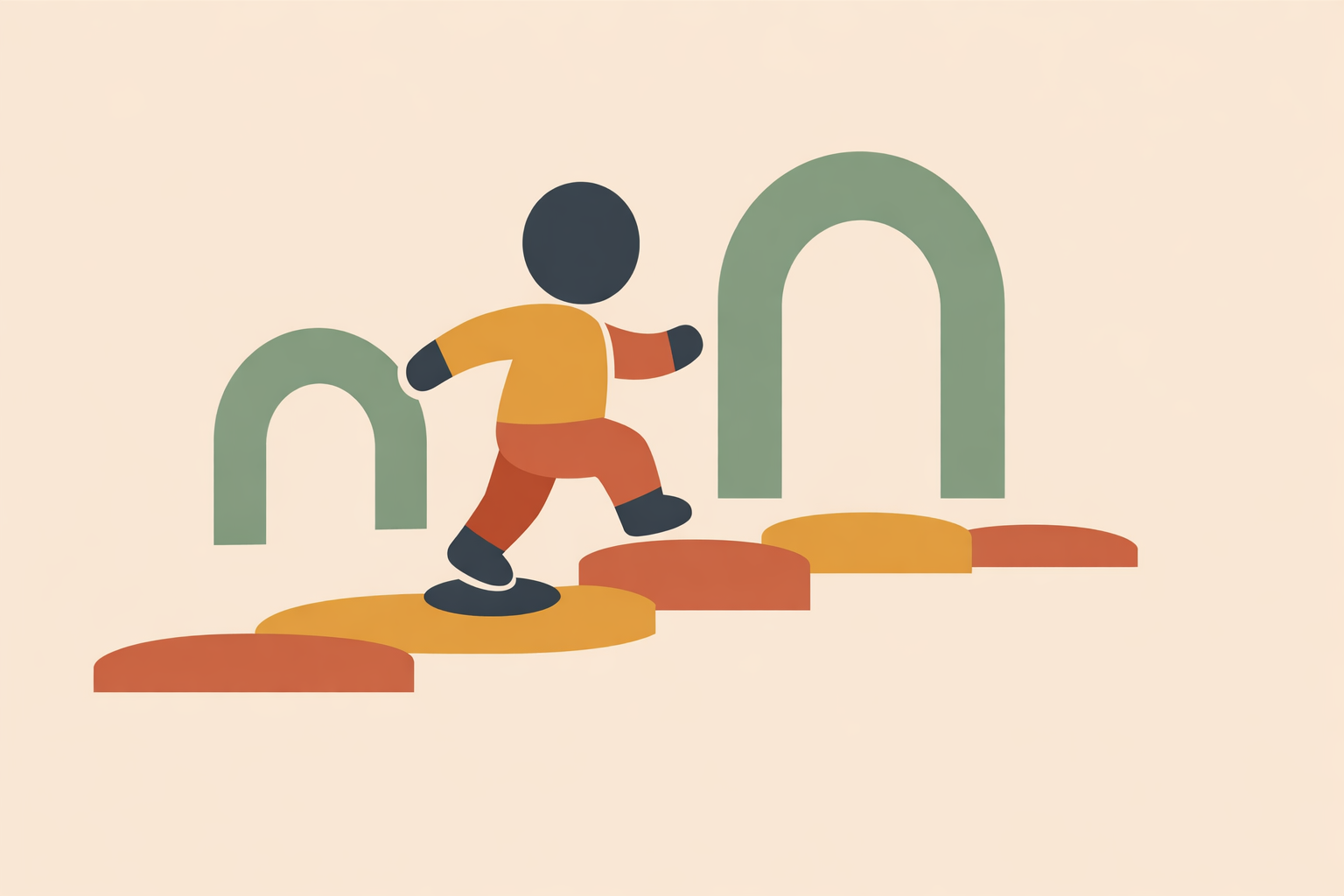
Traditional movement games make excellent prompts because they’re familiar and meaningful: hopping stones, circle dancing, balancing on a log, carrying a small basket, or joining simple household chores. Ask families what feels joyful and culturally familiar, then observe how the child organizes their body within that.
Check 3: Hand skills, coordination, and self-care movement
It’s tempting to jump straight to pencil grip, but hands make the most sense when you start with daily routines. Feeding, page-turning, stacking, twisting lids, buttoning, and pulling up socks show how coordination works in real life.
Across early development, hand use usually moves from broad grasping toward more refined coordination. By 9 months, many babies move objects between hands or rake food with their fingers. Around 1 year, many show a pincer grasp in everyday eating. By 30 months, many turn book pages one at a time or twist lids. These are signposts of what most children can do, and they help you choose sensible next steps.
Watch how the hands cooperate. Does one stabilize while the other manipulates? Can the child hold paper while drawing, brace a bowl while stirring, or steady a container while opening it?
Scenario: Amir (2.5) resists finger paint, shies away from sticky foods, and drops small blocks. Adapt the setup: a firm brush, a shallow tray to contain mess, and chunky blocks with grooves. A helpful coaching cue might be, “Let’s hold the bowl steady with this hand and stir with the other. Feel the bowl press into your palm.”
- Self-care prompts: “Show me how you pull up your socks.” “Can you push the zipper tab to the top?”
- Play prompts: “Hold the book with one hand; turn the page with the other.” “Pinch here, twist there—how does it feel?”
- Environment: smaller spoons, slip-resistant bowls, looser lids, and simple setups that allow early success.
Document patterns neutrally: “Uses left hand to hold, right to twist; avoids sticky textures; drops beads after a few seconds of pinch; stays calm with firm brush.” If a strong early preference comes with clear one-sided use, neglect of one side, or noticeable loss of function, document what you see and encourage the family to seek further input through an appropriate local pathway.
Check 4: Sensory access, body awareness, and environmental fit
Before deciding a task is “too hard,” check whether the child can comfortably use the sensory information around them. Squinting, bringing toys very close, turning one ear toward speech, bumping into low obstacles, or startling in noisy rooms can point to access difficulties.
Ask about different settings: “At home, can they find favorite toys without help? In the park, do they track siblings or bikes? In group settings, do they catch directions over background noise?” Then ask what already helps, such as preferred seating, a quiet corner, visual prompts, or familiar routines.
Small environmental shifts can change participation quickly. Early sensory-support guidance highlights adapting the environment to support participation. In day-to-day terms, that can look like predictable transitions, softer lighting, less clutter, clearer boundaries, or short movement breaks.
Scenario: Oliver (4) crawls under a table during circle time and refuses to rejoin. Consider what his body might be asking for: less noise, more containment, a clearer edge. Try a carpet square at the side of the group, a picture schedule, and permission to squeeze a soft ball. A clean note might read: “Rejoined after five minutes in a quieter spot; followed two of three actions with picture support.”
- Respect preferences: hats to block sun, textured mats under bare feet, quieter corners, or noise-dampening headphones.
- Check consistency: does the child respond to their name similarly in quiet and in noise?
- Stay curious: inconsistent response can reflect attention, language difference, anxiety, fatigue, or communication style as much as sensory load.
Many everyday and traditional practices already build body awareness over time. Movement-rich play helps children map what different body parts can do, and responsive practices such as carrying, rocking, and touch can nurture body awareness. When families value barefoot walking, hip carrying, or infant massage, these can often be woven into support plans with care, respect, and cultural humility.
Check 5: Functional participation and self-care in context
Now bring everything back to daily participation: dressing, washing hands, carrying belongings, joining play, moving from car to classroom, and settling into routines. This is where an intake becomes genuinely useful.
Morning routines are especially revealing. Socks, breakfast, and getting out the door show where a child is independent, where they need support, and where the setup itself creates friction. Sometimes the obstacle is the context: a crowded hallway, a sink that’s too high, a zipper that sticks, or too many spoken steps at once.
Try a simple participation audit using three lenses:
- Do: What the child currently manages on their own.
- Support: What prompts, tools, or setup help right now.
- Place: Where the child does best—kitchen or classroom, quiet or lively, indoors or outdoors.
Example note: “Toileting—enters bathroom independently; needs verbal prompt to pull shorts down; sits securely on child seat; needs help with wiping; washes hands with picture sequence; calmer with towel under feet.”
Set goals that are concrete and encouraging. “Joins outdoor play for ten minutes with planned rest” is easier to act on than “improve motor skills.” A GROW structure can keep planning grounded:
- Goal: what we’re aiming for
- Reality: what today looks like
- Options: what could help
- Will: what we’ll try this week
For example: “Goal: Zip jacket before school three mornings a week. Reality: Can insert zipper with help; gets frustrated quickly. Options: Larger zipper pull, calm practice during play, steady hand at chest for stability. Will: Two playful zipping reps after snack, Monday to Thursday.”
It also helps to name when the picture calls for more input. One simple frame is FIDSP:
- Frequency: The challenge shows up most days or across settings.
- Intensity: The support needed is far beyond what the family would expect in similar situations.
- Distress: The child or family shows marked stress, avoidance, or shutdown.
- Safety: There are clear risks, such as repeated hard falls or unsafe wandering.
- Persistence: The difficulty continues despite thoughtful adaptations and practice.
Scenario: Sora (5) resists getting dressed and regularly misses morning playtime. The audit shows tight sleeves, a crowded hallway, and rushing at the door. The family tries a small redesign: softer clothes, dressing on the carpet, a picture list, and a drumbeat game for “one beat per step.” Two weeks later, mornings feel calmer and Sora has time to join block play.
Conclusion: A participation-first intake that families can use
Together, these five checks create a clear, compassionate pathway. Start with rhythm and daily energy. Watch how the body organizes for large movement. Notice how hands support feeding, play, and self-care. Check sensory access and environmental fit. Then anchor everything in real routines, a practical foundation for child and adolescent development work.
Keep the center of gravity steady: family wisdom, the child’s felt experience, and participation over perfection. Neutral, specific notes such as “walked five steps while holding the rail; paused to steady; smiled and repeated” or “turned two book pages individually while the other hand held the book” make patterns visible and give families practical next steps.
Milestone checklists still have a place as orientation tools, especially when paired with everyday observation. If your notes show persistent difficulty, repeated hard falls, noticeable skill loss, major barriers to participation, or significant distress despite reasonable adaptations, encourage the family to seek further input through appropriate local services.
Build from what already works. A child who settles with rhythmic rocking, moves freely barefoot on the porch, or eats better from a warm bowl with familiar flavors is already showing the conditions that support ease. When you notice those conditions and shape goals around them, families leave with something more useful than a label: a workable way forward, and a strong base for child psychology coaching.
Explore Child Psychology Coaching
Apply these intake insights in the Child Psychology Coach Certification to support children’s participation across routines.
Explore Child Psychology →