Most facilitators learn quickly that the riskiest minutes of eco-spiritual work often come at the end. The drum stops, the room feels bigger, and someone tries to turn vivid imagery into an immediate life decision. Another person goes quiet and distant. A third wants the facilitator to declare what an animal ally “means.” In that gap, empathy can slide into over-interpretation, scope lines blur, and cultural respect can weaken. Without a repeatable close and clear aftercare, people can go home keyed up, act impulsively, or feel abruptly dropped when the peak fades.
Key Takeaway: Effective eco-spiritual aftercare turns intense or meaningful experiences into grounded, ethical daily choices through simple, repeatable structures. A brief Return Ritual supports re-entry, sit-spot practice builds steady relationship with place, Meaning Maps help separate facts from interpretation, reciprocity turns gratitude into care, and a three-day integration rhythm helps insight settle into real life.
1. Return Ritual: a steady way to close and re-enter
A short, repeatable Return Ritual helps people land. It protects the value of the experience without forcing meaning-making on the spot, and it lowers the chance that important insight gets lost in the rush back to ordinary life.
A useful sequence takes 5 to 15 minutes and can follow drumming, guided imagery, solo land-based practice, or any deep symbolic work. The structure matters more than the style.
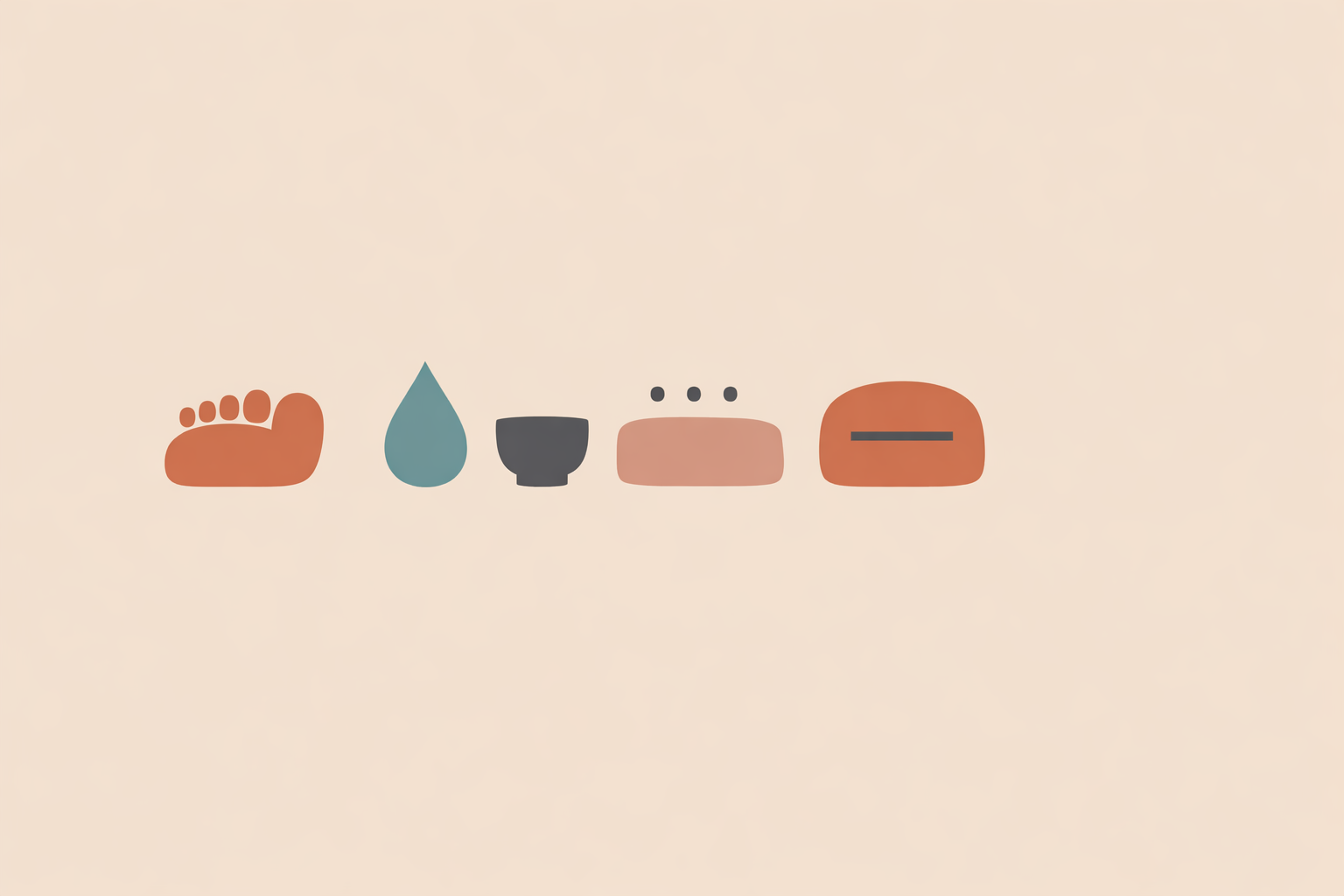
- Feet: invite awareness into heel, arch, and toes.
- Water: offer a sip and a slow exhale.
- Food: a small snack can help bring attention back into the body.
- Orientation: name simple present-time facts.
- Closing line: write one sentence about what happened, what is needed now, and what comes next.
This kind of closing is ordinary on purpose. Grounding and integration have been described as especially helpful when people are finding their way back to stability after overwhelming altered-state experiences. Long before that language existed, many traditions held the same practical truth: small, steady actions support safe return.
Right after symbolic work or rhythmic drumming, people often swing between elation and fear. A bright image can start sounding like a literal instruction: quit the job, end the relationship, move across the country. A Return Ritual gives the group a container strong enough to hold both excitement and uncertainty without rushing anyone into conclusions.
If someone is activated, sensory orientation usually helps more than interpretation. Use a low voice, slow the pace, and anchor to present-tense facts. Invite them to look around and name a few colors, textures, or shapes in the room. The aim is to help them return to where they are now while keeping the experience respected.
A clean boundary supports this: no life-changing decisions for 72 hours. People can still honor what they experienced, but with enough time for meaning to settle.
Facilitator restraint is part of the ethics. You do not need to declare what someone’s hawk, river, ancestor, or animal ally means. Let interpretation stay personal and provisional so agency remains intact and insight has room to ripen.
2. Sit-spot practice: building relationship with place over time
After a powerful session, many people want another peak. A steadier path is quieter: returning to the same small place again and again, and letting relationship deepen through familiarity. This is the heart of sit-spot practice.
It does not require wilderness. A bench near a street tree, a balcony with plants, a courtyard, or the same patch of sky from the front step can work. Repetition matters more than grandeur.
Place-relationship tends to grow through repeated return. Practitioners see this all the time: a place becomes more “alive” as attention becomes consistent and respectful.
A simple 10- to 20-minute sit-spot can include:
- Arrive and greet the place silently or aloud.
- Notice two things you can see, two you can hear, and one you can feel.
- Watch one more-than-human process: leaves moving, birds feeding, ants traveling, clouds shifting.
- Name one feeling in plain language.
- Offer thanks and leave the place as you found it.
This practice helps people shift from extraction to relationship. Over time, intensity-seeking softens, steadiness strengthens, and noticing becomes its own kind of nourishment.
Accessibility matters. Encourage people to choose a place they can truly revisit two to four times each week. A modest place that is easy to reach usually supports more growth than an ideal location that rarely happens.
Cultural humility matters too. A sit-spot is not ownership and not a claim to special status. Encourage respect for local guidance, awareness of whose traditional lands one is on, and language of relationship rather than possession.
3. Meaning Maps: making sense without overreaching
Meaning-making needs structure. Without it, sensation, feeling, symbol, and next steps can blur until everything feels urgent and certain. A Meaning Map keeps insight grounded.
Use four simple headings:
- Sensory Facts
- Emotions
- Symbols
- Next Steps
This separation is modest but powerful. It helps people track what actually happened, what they felt, what meaning they are making, and what action belongs in everyday life.
For example, a participant might write:
- Sensory Facts: saw a hawk, felt wind, smelled cut grass.
- Emotions: awe, sadness, relief.
- Symbols: bigger perspective, an ending, watching carefully.
- Next Steps: call my sister, wait 30 days before revisiting the job decision.
This structure reduces over-interpretation by design. It’s especially useful when someone is tempted to treat vivid imagery as a literal directive or starts spiraling into fear. Intense preoccupation can follow unusual states of consciousness, so giving people a practical way to sort experience from interpretation offers real protection.
Practitioner restraint matters here too. Symbolic language can be welcomed without being fixed in place. Archetypal frameworks can be offered as possibilities, not verdicts. The facilitator’s role is to support reflection, not to hand down meaning.
One helpful line is: let the symbol be true as a symbol before deciding whether it asks anything concrete of your life.
4. Reciprocity: turning gratitude into care for place
Insight matures when it enters relationship. In many land-based traditions, gratitude is more than a feeling; it becomes action. Reciprocity is one practical way to keep eco-spiritual work from ending at private inspiration.
The action does not need to be grand. Small and repeatable usually works best.
- Pick up litter for 15 minutes on a familiar path.
- Water a native plant or join a local planting day.
- Learn whose traditional lands you live on and follow public guidance about respectful engagement.
- Reduce one waste stream at home.
- Introduce yourself to a local stewardship group.
These acts move a person from intensity into belonging. They also interrupt the habit of turning spiritual experience into private consumption. The question shifts from “What did I get?” to “How do I respond with care?”
Reciprocity can also support connection in everyday social life. Small stewardship actions often create openings for friendship, shared purpose, and relief from helplessness, especially for people carrying climate grief or disconnection.
Keep the tone humble. Reciprocity is not a moral scoreboard. It’s a simple way of answering an experience with care.
5. A three-day integration rhythm people actually use
People follow through when aftercare is light, clear, and time-bound. A three-day rhythm offers enough structure to hold the experience while still fitting real life.
Day 0: Ground now.
Hydrate, eat something steady, lower stimulation, and get to bed at a reasonable hour. If possible, spend a little time outdoors. Many people benefit from aiming for at least 120 minutes per week outside, and short, regular sessions can be enough to feel more settled and connected.
On the same day, ask for one plain-language note about the experience. Not a grand retelling, just a simple record in human words.
Day 1: Reflect in ordinary language.
Return to the Meaning Map. Add a short sit-spot or a quiet walk. Keep the focus on what feels true now rather than building a bigger story. If one value-based action is clear, take it.
Day 2 or 3: Review what endures.
Look back at the map and cross out what no longer fits. Circle what still feels alive. Then choose one small next step, one conversation, or one reciprocity action. By this point, the emotional charge has usually eased, and discernment comes more naturally.
This rhythm holds the energy of a journey without turning it into a project. Integration shows up in daily choices, not in how extraordinary the experience sounded.
Closing well is part of the work
Eco-spiritual aftercare is the bridge between a meaningful experience and a livable one. A steady Return Ritual, a modest sit-spot, a clear Meaning Map, simple reciprocity, and a three-day integration rhythm create support that stays grounded and respectful.
These practices protect what most needs protecting: personal agency, cultural humility, and emotional steadiness. Clear boundaries and reliable follow-through help people carry insight without turning it into performance, confusion, or extraction.
As with any deep inner work, people vary. Some will feel tender or energized for a few days, and a small percentage may feel unusually unsettled. That’s why strong closure, a 72-hour decision pause, and a plan for extra support when needed belong in every facilitator’s toolkit, especially in spirituality and ritual work. Closing well is part of the work, and it’s often what allows the deeper value of eco-spiritual practice to keep unfolding after the circle has closed.
Explore Shamanism Certification
Deepen your integration skills with structured practice and ethics in the Shamanism Certification course.
Explore Shamanism →