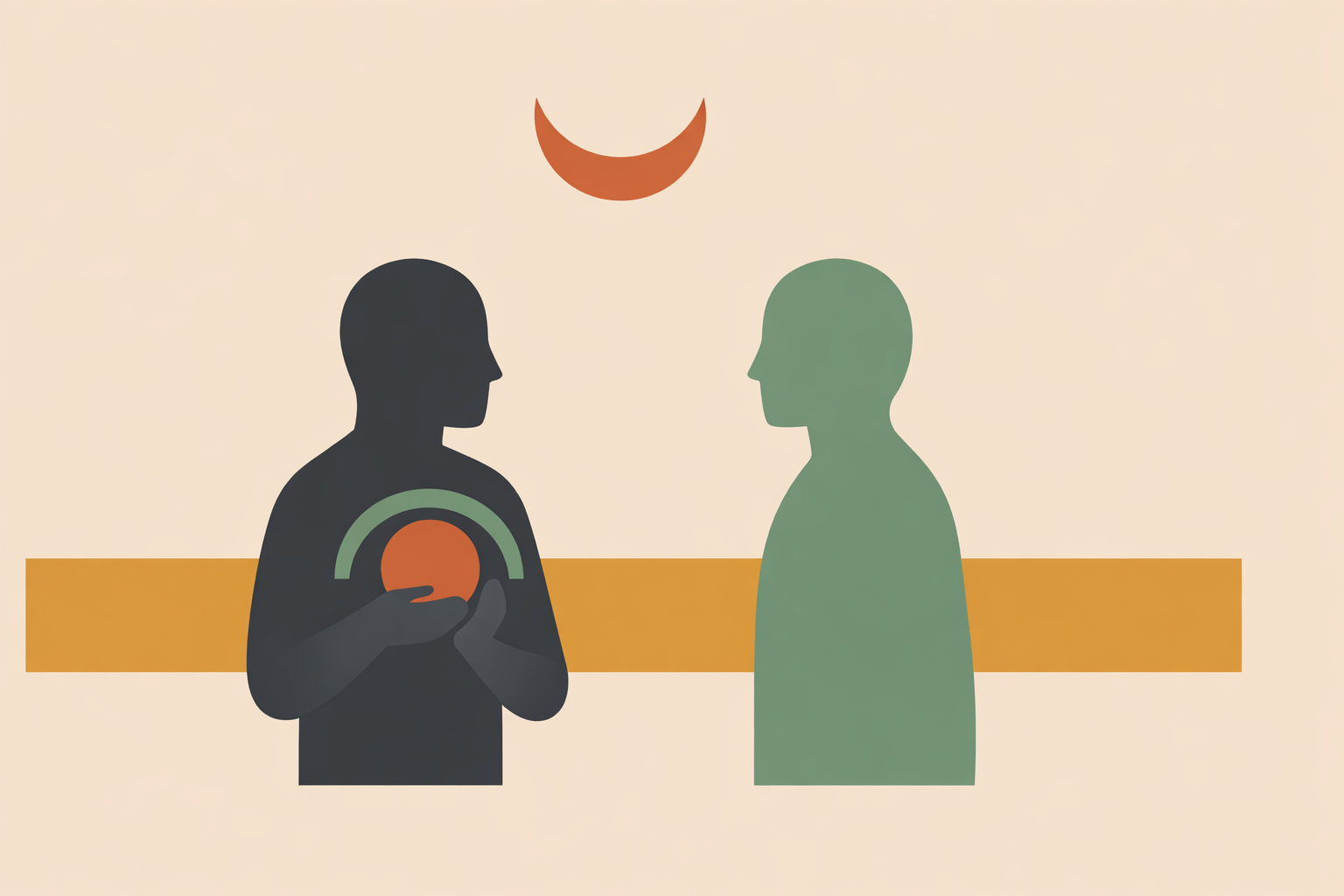
Most coaches eventually sit with a thoughtful client who whispers, “What if I snap?” The images can be graphic, the fear is real, and the pull to calm them with certainty is strong. Yet quick reassurance can backfire.
In these moments, the goal is not a moral verdict. It is to lower shame, stay firmly within scope, and help the client relate differently to the loop driving the fear—so they can move forward with steadier choices.
Key Takeaway: Coaching around harm-themed intrusive thoughts works best with steady, scope-aware process support rather than certainty or moral verdicts. Validate distress, avoid feeding reassurance loops, and help clients practice small, values-led experiments that build tolerance for uncertainty over time.
Seeing the pattern instead of the content
Harm-themed anxiety often runs on two well-known processes: inflated responsibility and thought–action fusion. Essentially, one says “It’s all on me to prevent even unlikely harm,” and the other says “Thinking it is dangerously close to doing it.”
From there, the loop is usually recognizable:
- an intrusive image or urge appears
- the person interprets it as meaningful or dangerous
- anxiety and shame rise
- they try to get relief through checking, avoiding, confessing, or asking for certainty
- relief comes briefly, then the loop returns
Common relief strategies include checking, avoidance, and confessing. They can feel protective in the moment, but they also teach the mind that the thought was important enough to require action—so it comes back louder.
A more freeing reframe becomes possible here: instead of “What kind of person am I?” the question becomes “What loop is happening?” That shift often softens shame and makes skill-building feel doable.
“Gently remind yourself that everyone has intrusive thoughts. It is part of the human experience.”
Your role as a coach: steady, clear, and within scope
Coaching can be deeply supportive here when the role stays clear. You are not there to declare someone safe, settle moral questions, or take on specialized risk decisions. You are there to help the client notice patterns, practice grounded responses, and build more workable habits around uncertainty.
In practice, that means:
- supporting reflection without acting as an authority on danger
- using language that reduces shame without feeding compulsions
- helping clients practice skills between sessions
- coordinating with licensed support when context or risk goes beyond coaching
It also means being careful with reassurance. Specific guarantees can pull you out of process support and into compulsive relief-seeking—where the loop gets stronger, not weaker. Clear boundaries protect the client and the integrity of your work.
Traditional practice has long held this wisdom: know what is yours to hold, and know when to widen the circle. Good coaching is not about doing everything. It is about doing your part well.
How to open the conversation without increasing shame
Many people delay sharing harm-themed intrusive thoughts because they expect judgment or misunderstanding. It is common for people with taboo or aggressive obsessions to delay disclosure for exactly that reason.
A strong opening does three things at once:
- it acknowledges the distress
- it respects the person’s values
- it names the loop without trying to settle the fear
Useful language might sound like:
- “Thank you for trusting me with this.”
- “I can hear how upsetting this is, especially because harming others matters so much to you.”
- “Let’s slow it down and look at the pattern together.”
- “We don’t need to decide what the thought means in order to work with how it affects you.”
- “Many people have frightening, unwanted mental images. What matters here is how the loop is operating.”
A matter-of-fact tone often reduces shame. A flinch, visible alarm, or rushed reassurance can unintentionally make the person feel even more “contaminated” by the thought.
One simple values-based normalization can be: “I hear how much you value not harming anyone. That strong value is showing up here as fear, not intent.”
How to avoid the reassurance trap
When a client asks, “Are you sure I’m not dangerous?” they are usually reaching for immediate relief. The problem is that reassurance can soothe the moment while strengthening the cycle. Guidance on OCD consistently notes that reassurance brings short-term ease but maintains symptoms over time.
So the aim is not coldness—it is a different kind of support: validate the distress, but do not answer the compulsive question.
Try responses like:
- “I can hear how frightening this feels.”
- “Notice the urge for certainty showing up right after the image.”
- “I’m not going to give the loop the answer it wants. I will stay with you while we choose a different response.”
- “Let’s see what happens if we do not solve the question for the next 60 seconds.”
Think of it like stepping off a spinning carousel: you are not arguing with the painted horses (the content). You are helping the client notice the spin and practice getting their feet back on the ground (the process).
Validating distress without giving moral guarantees can reduce shame without reinforcing compulsive relief-seeking. That balance is a cornerstone of effective support and helps avoid reassurance traps.
Supporting small, values-led experiments
Once the loop is named, clients can practice a new relationship with it. The goal is not to eliminate the image, but to respond with less urgency and more choice. OCD guidance emphasizes that responding differently is often more workable than fighting the thought itself.
In coaching terms, this becomes micro-experiments: small, values-led actions that gently approach fear while resisting familiar rituals. Over time, these steps can build tolerance for uncertainty.
Examples might include:
- standing near kitchen knives during meal prep without checking repeatedly
- driving a usual route without circling back for certainty
- sitting with a loved one while allowing an intrusive image to be present without confessing it for relief
- writing down the feared thought and noticing the body’s reaction without immediately neutralizing it
The point is not to overwhelm. It is to choose a step that is challenging enough to matter and gentle enough to repeat. Consistency is often where confidence is rebuilt.
“Exposure therapy sounds scary, but you do it in baby steps.”
Keep the frame anchored in values: loving presence, integrity, participation in family life, freedom of movement, honesty without compulsive confession. The experiment serves life. Life does not serve the loop.
Using body-based and traditional supports wisely
Body-based practices can help clients stay engaged when fear rises. Used well, they build steadiness; used as secret neutralizing rituals, they can become part of the loop. Intention is the difference.
Simple supports may include:
- diaphragmatic breathing
- longer exhales
- grounding through touch or texture
- gentle movement or shaking
- orienting to the room with the eyes
These practices can support engagement with anxious moments when they help the person stay present rather than trying to “cancel” the thought.
Daily rhythms matter, too. Sleep, movement, nature time, and steady meals tend to support mood regulation, making it easier to follow through on skills when life gets busy.
Traditional teachings can also be a powerful anchor—especially when they come from the client’s own roots and are held with respect. A remembered proverb, a commitment to non-harm, a short recitation, or a family teaching can reconnect someone with identity and meaning. What this means is: use tradition as orientation, not as a “protective spell” against thoughts.
Between sessions, digital tools can extend practice. Timers, check-ins, and trackers may support between-session practice when expectations, consent, and privacy are clear.
When to refer or pause coaching
Some situations call for support beyond stand-alone coaching. This is not a failure—it is good judgment and strong ethics.
Harm fears in postpartum or caregiving contexts deserve particular care and are best supported with qualified specialist involvement; guidance for perinatal OCD recommends specialist support because these situations can be easily misunderstood.
Likewise, if substance use, active violence, or self-harm urges are present, exposure-style work should stop. In those cases, stabilization first is the priority.
A simple triage can help you decide what to do next:
- Content: What exactly is being described?
- Context: What is happening in the person’s life right now?
- Capacity: What support, stability, and follow-through are realistically available?
Helpful boundary scripts include:
- “This goes beyond what I can responsibly hold in coaching alone. Let’s bring in the right support.”
- “Because this is showing up in a postpartum context, I want you supported by someone with that specific expertise.”
- “We’re going to pause experiments for now and focus on connecting you with appropriate help.”
- “If you feel at immediate risk of harming yourself or someone else, contact your local emergency support right away.”
Clear referral protects the client, respects scope, and keeps your work grounded in integrity.
A steadier way to support harm-themed intrusive thoughts
Harm-themed intrusive thoughts can feel explosive in the room, yet they often soften when met with calm, clarity, and respect. The coach does not need to solve the morality riddle. What helps is steadiness: seeing the pattern, speaking to the process, and helping the client practice a less reactive response.
Honor the person’s values. Avoid feeding the demand for certainty. Build skill through small, repeatable experiments. Use body-based and traditional supports as anchors, not rituals. And when the situation calls for wider support, widen the circle without hesitation.
In the end, the most effective stance is both firm and kind: confident process guidance, clear boundaries, and a deep respect for the person behind the fear.
Train in OCD Coaching Skills
Build ethical, scope-aware support skills with the Obsessive Compulsive Disorder (OCD) Coach Certification.
Explore the OCD Certification →