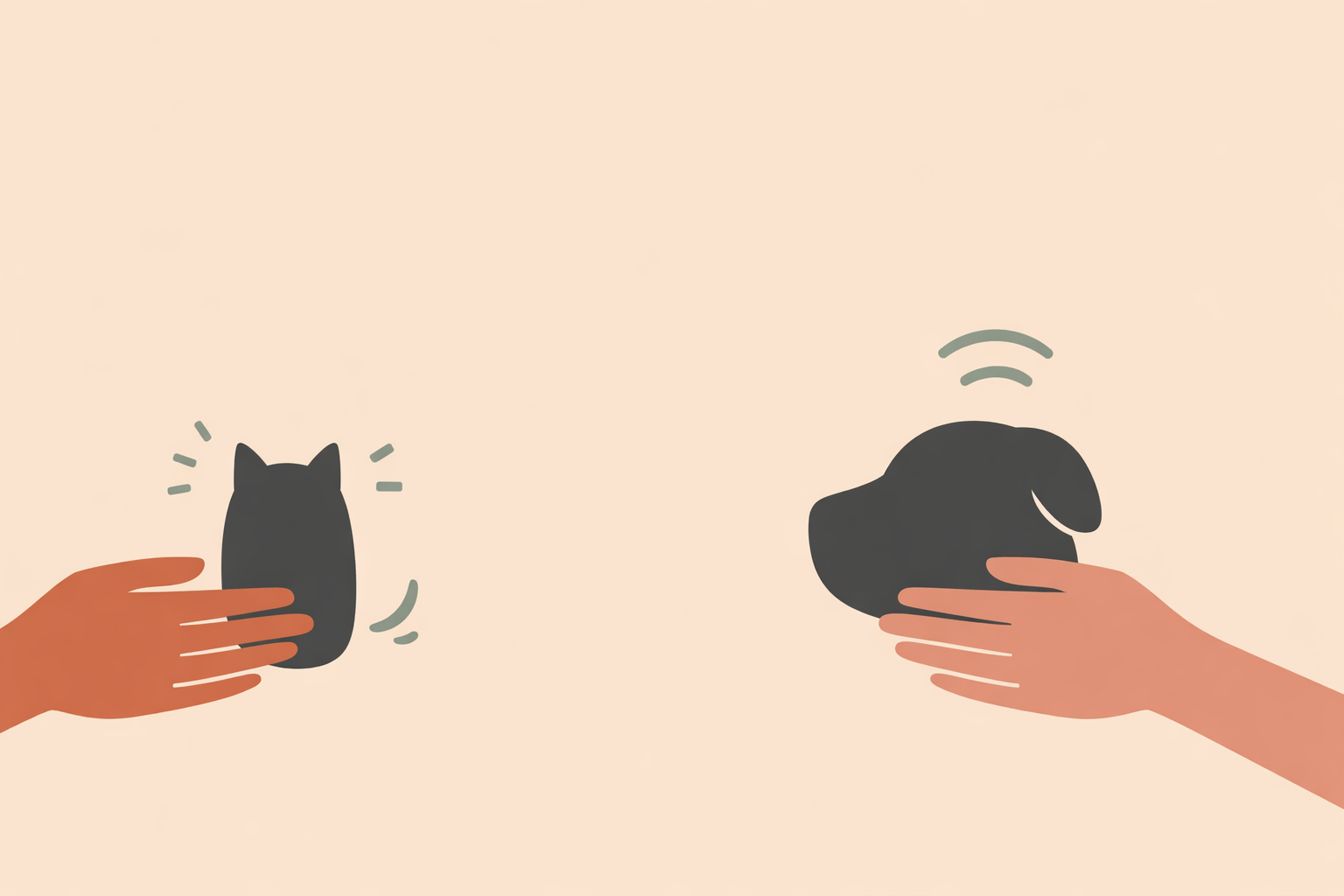
Many practitioners rely on a familiar canine sequence. It works beautifully—until it doesn’t. A cat turns away after the second stroke; a senior retriever settles, then starts panting when pressure quietly increases. Most of the time, the challenge isn’t skill. It’s that cats and dogs receive touch through different rules of consent, pacing, and feedback.
Cats and dogs often agree to contact differently, tolerate it differently, and communicate their comfort on very different scales. When those differences are honored, sessions feel calmer, clearer, and far easier to repeat well.
Key Takeaway: Feline massage and canine work call for different consent habits, different touch maps, and different pacing. Cats usually do best with brief, specific contact and close attention to subtle feedback. Dogs often allow a longer, more gradual unfolding. When your approach matches the species in front of you, sessions become calmer, clearer, and easier to repeat well.
How cats and dogs give feedback
Once contact begins, the next big difference is how change shows up. Cats are often micro-responders, while dogs tend to offer bigger, easier-to-spot shifts.
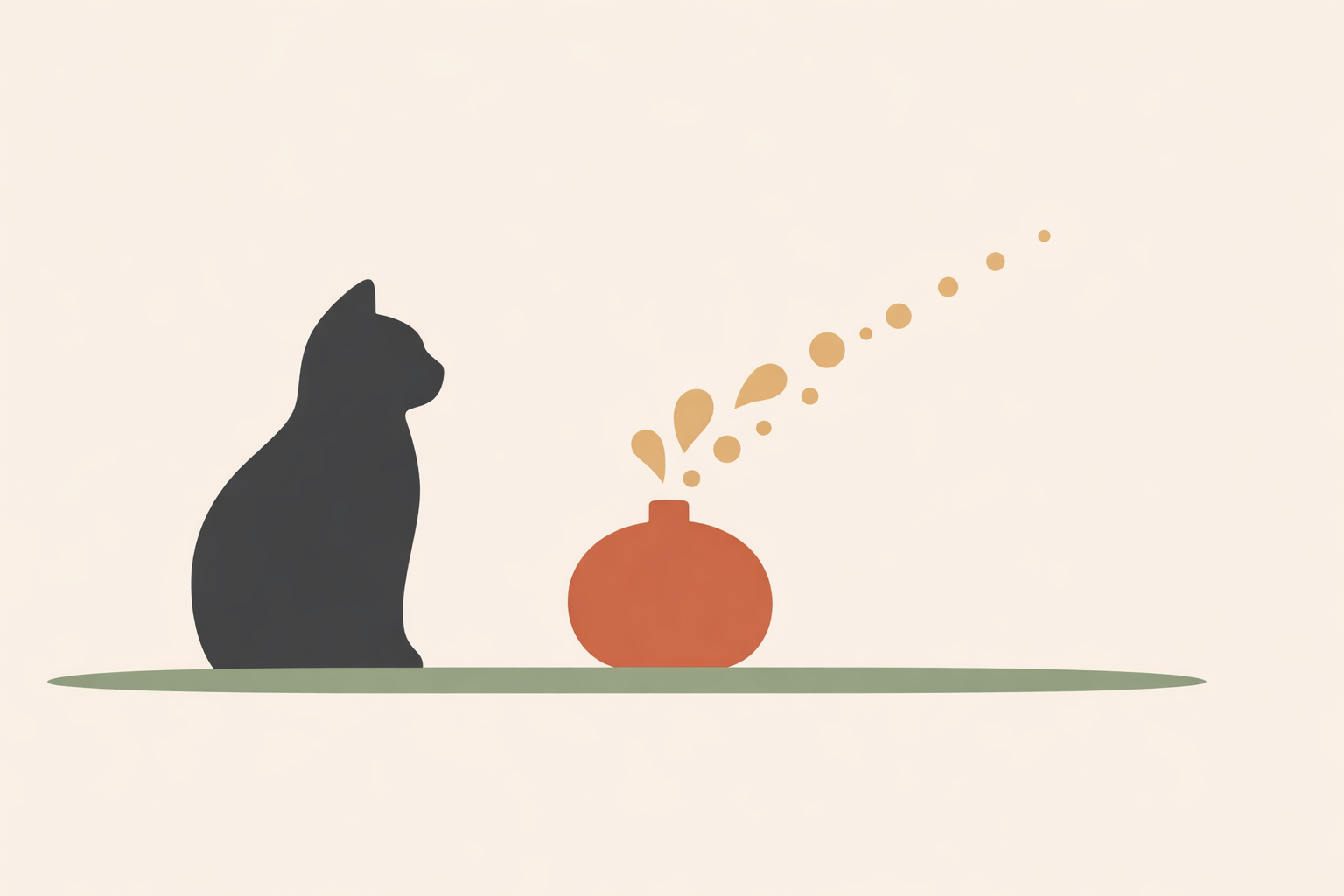
With cats, the first answer may be tiny: a tail-tip flick, whisker change, a small ear rotation, a slight lean away, or a change in facial tension. These aren’t “small details.” They’re often the whole conversation. Feline body language guidance highlights tail, ear, and whisker changes as meaningful signs of stress or irritation, which makes them practical stop-or-soften signals during hands-on work.
When you notice those early changes, adjust right away:
- lighten pressure
- slow the pace
- pause briefly
- or end the interaction
Dogs often answer in larger patterns: a deeper exhale, visible softening through the eyes and jaw, settling onto one hip, resting more body weight, or choosing to stay in contact longer. If panting starts, yawning repeats, the gaze pulls away, or the body keeps repositioning to escape contact, the pressure or pace has likely gone too far.
A simple way to train your perception is to rest your hand lightly and count a few breaths before doing more. Cats may give a subtle answer almost immediately. Dogs often unfold their response over a slightly longer arc.
Feline work rewards restraint. If you miss the first whisper, the cat may not offer a second one.
Touch zones and pressure: where your hands land
For most cats, smaller areas and lighter pressure create better sessions. For most dogs, broader contact is often easier to receive.
Many cats prefer touch on the head, cheeks, chin, and shoulders, reflecting social rubbing and grooming patterns. Research on feline preferences supports preferred touch areas around the head and neck for many cats.
So feline bodywork is often strongest when it stays local, brief, and clearly voluntary. Head, cheeks, jawline, shoulders, and upper back are typically more workable than the belly or other vulnerable regions.
Dogs often welcome a larger map: neck, shoulders, back, and larger limb muscles can all be workable when the dog remains relaxed and engaged. Individual build still matters. A broad-coated mountain dog and a fine-boned sighthound won’t receive pressure the same way, and some sensitive dogs need a surprisingly light hand.
- With cats, begin lighter than you think you need to.
- With dogs, begin gently and let the body invite more.
- If you are unsure, reduce pressure and shorten the stroke.
Low-intensity styles such as TTouch often suit sensitive animals well, especially within animal wellness approaches. Tiny circles or very small areas of skin movement can keep an animal engaged when a full massage stroke feels like too much.
Session length and pacing
Cats and dogs usually differ as much in timing as they do in touch.
Cats generally do best with miniature sessions: short, intermittent, and easy to leave. Dogs often relax into longer, steadier routines with a more predictable rhythm.
With cats, think in brief bursts rather than one continuous flow. A few strokes, a pause, one or two small circles, another pause, then done. Many cats prefer extremely brief contact, and sustained dog-style strokes can exceed tolerance quickly.
Dogs often settle into a repeatable sequence: a few slow gliding strokes, a pause, gentle focused work over a shoulder or along the back, then another pause. The structure can stay simple; the main difference is that the settling phase can be longer.
- Cats often prefer short and discontinuous contact.
- Dogs often prefer a slower build and a longer settling phase.
- Fragile or aging animals usually need shorter sessions, lighter pressure, and more breaks.
With senior, delicate, or easily fatigued animals, shorten everything: stroke length, total time, and expectations. A well-received four-minute session is better than a ten-minute session that asks too much.
Holistic maps without losing behavioral realism
Traditional touch practices often include energetic maps such as meridians, quiet holds, and breath-led pacing. Used well, these are practical tools for attention, rhythm, and sensitivity—as long as they stay anchored in what the animal is showing you.
Many practitioners find dogs and cats respond well to calm work alongside the spine and to still, attentive holds placed with care. In that context, energetic frameworks can support steadiness and focus, helping you stay present rather than mechanical.
The animal still leads. If a quiet hold near the shoulders helps softening, stay with it. If ears tighten, the tail sharpens, or the body shifts away, adjust immediately.
Light circular touch, waiting, and stillness fit naturally here. Practitioner self-awareness matters too: hurried, tense, distracted hands change the whole session. A grounded posture, easier breath, and soft shoulders often improve contact before technique begins.
Holistic frameworks deepen listening when they serve observation. When they override feedback, they stop being helpful.
When to stop: safety and ethical boundaries
Often, the most skillful choice in animal bodywork is to do less.
For cats, stop signs are usually sharp and deserve immediate respect. Abrupt getting up, puffed fur, hissing, batting, biting attempts, or fast breathing are clear indicators to end the session right away. Stress guidance describes hissing, puffed posture, and rapid breathing as defensive stress signals.
With dogs, the progression may be more gradual, but the rule is the same. If the dog moves away, repeatedly looks back at your hand, lip licks, yawns, stiffens, or avoids a region, slow down or stop. If the boundary becomes unmistakable, end the session cleanly.
Some animals are not available for bodywork at a given time. With touch-reactive, highly aroused, or defensive animals, more space can be kinder than more technique.
Basic ethical boundaries matter too. Avoid hands-on work over open wounds, unstable injuries, recent surgical sites, or areas of obvious distress. If an animal shows unusual pain responses, sudden mobility changes, heat or swelling, breathing strain, repeated vomiting or diarrhea, major weight change, or other unexplained shifts, pause your work and encourage appropriate outside support.
Documentation on massage and stretching across animal species is not robust enough to support broad clinical conclusions. Traditional knowledge, hands-on skill, and close observation are strong foundations, and they work best when paired with clear limits.
Let the species change your hands
The heart of feline vs canine work is better listening.
Cats are not small dogs. They often prefer precise touch, brief windows, and immediate respect for small signals. Dogs often welcome a steadier arc of contact and show change in broader, easier-to-read ways. Honor those differences and sessions become both simpler and more effective.
Whatever style you use—massage strokes, still holds, subtle circles, or breath-led pacing—stay responsive rather than automatic. Let the animal teach your timing. Let consent shape your sequence. Let small feedback matter.
That is what turns bodywork from a routine into a living conversation.
Advance Animal Massage Skills
Build consent-led, species-specific sessions with the Animal Massage Certification.
Explore Animal Massage →