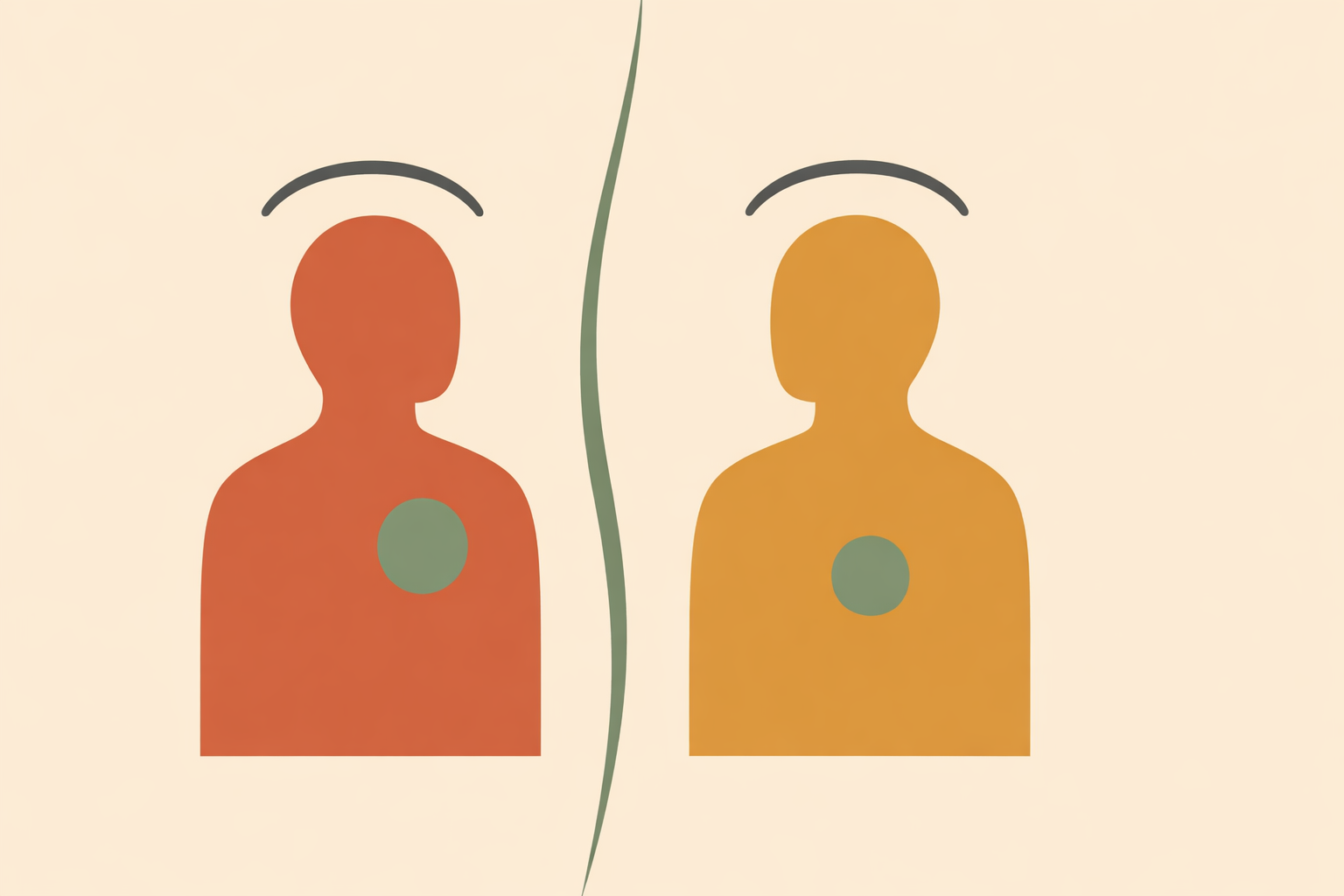
Most teen coaches meet this moment sooner than expected: a young person recounts group-chat pressure, a joke that landed hard, or a late-night ping that won’t stop, then asks, “Is it okay to have boundaries with my friends?” A grounded answer matters. Teens need language that protects the relationship and their well-being, fits their culture, and still works when emotions are high.
Key Takeaway: Healthy friendship boundaries work best when teens see them as a form of self-respect and care, then back them with short, repeatable language. Help them notice where a limit belongs, turn that insight into a clear script, and pair words with follow-through in both in-person and digital spaces.
Helping Teens Notice Where a Boundary Belongs
Before polishing phrasing, help the teen find the exact point of friction. “Something feels off” becomes workable when it’s tied to a specific moment, feeling, and value.
Ask concrete questions: When does this happen? In person or online? During lunch, after school, in private messages, in jokes, in borrowing, in emotional unloading? The clearer the moment, the clearer the boundary.
Include the body too. Many teens notice tension before they can explain it. Visceral awareness can signal discomfort before a young person has words for a limit.
Map the experience together and practice a brief pause. This kind of reflection is linked with prefrontal regulation in adolescent emotion regulation.
- Spot it: “The moment I feel off is when ____.”
- Name it: “The feeling is ____.”
- Value it: “What matters to me here is ____.”
- Place it: “So my boundary may be about ____.”
Example: “After we study, Maya jokes about my grades. I laugh, but my stomach drops. What matters here is respect. My boundary is probably about school jokes.” Once the pattern is clear, the script is easier to build and rehearse.
What Healthy Friendship Boundaries Are and Aren’t
Healthy boundaries focus on the teen’s choices, not on forcing another person into compliance. That keeps the language clean, realistic, and empowering.
“If you share my secrets again, I’ll stop telling you personal things” is a boundary. “You have to stop talking about me” is a wish, but it’s not the part the teen can control.
These ground rules help most teens use boundaries well:
- Use self-focused language: “I will” or “I won’t.”
- Be specific: name the behavior clearly.
- Stay direct: avoid hints, sarcasm, or long speeches.
- Follow through: if needed, change access, time, or participation.
- Adjust for culture: the boundary can be firm and still sound like the teen.
A useful formula is: “When [behavior], I feel [impact]. I’m asking for [request]. If it keeps happening, I will [follow-through].”
Example: “When you take my charger without asking, I feel annoyed. Please ask first. If it keeps happening, I’ll keep it in my bag.”
Clarity matters. Vague boundaries often turn into requests others ignore. A clear line gives the teen something they can actually practice under pressure.
Everyday Boundary Scripts for Time, Energy, and Sharing
Most friendship boundaries aren’t dramatic. They show up in small mismatches that repeat: too much texting, borrowing without asking, jokes that sting, social time that drains, or pressure to share more than feels safe.
In those moments, observable language tends to land better than labels. Teens often respond more constructively to behavior-specific language than to global judgments like “You’re disrespectful.”
Offer short scripts they can say in one breath:
- Constant texting: “I like talking to you, but I can’t reply all the time. I’ll answer when I can.”
- Borrowing without asking: “Please ask before taking my stuff.”
- Group hang fatigue: “I’m staying home Sunday. I need some recharge time.”
- Jokes that sting: “I know you’re kidding, but jokes about that aren’t okay for me.”
- Oversharing pressure: “I’m not ready to talk about that.”
- Night messages: “I’m off my phone after 10. I’ll reply tomorrow.”
Encourage teens to choose wording that matches their voice. Some prefer warm phrasing; others go blunt and brief. Both can be effective when the message is clear.
A versatile rehearsal line is: “I’m not comfortable with that.” It’s plain, non-accusatory, and easy to remember.
When Friends Push Back: Short, Firm Scripts That Hold
Setting a boundary is one skill. Holding it during pushback is another. Teens do better when they expect some resistance and plan for it.
The broken-record technique helps: choose one calm sentence and repeat it without getting pulled into a debate. It can prevent debates when someone keeps pushing.
Example:
- Friend: “Come on, just this once.”
- Teen: “I’m not lending money.”
- Friend: “Why are you being so difficult?”
- Teen: “I’m not lending money.”
If needed, add one follow-through: “If you keep asking, I’m leaving,” or “If you keep texting tonight, I’m muting the chat.”
Timing helps. Setting limits early is easier than waiting until frustration spills over. Recognizing warning signs and responding early supports better emotional regulation in youth skill-building.
Some teens also benefit from transitional support while they build confidence. Refusal-skills guidance includes parent-based excuses as a practical option under peer pressure. “My ride is strict,” or “I have to check with home first,” can be a stepping stone while they strengthen their own voice.
If a friend repeatedly ignores a respectful boundary, that’s meaningful information about mutual respect in the relationship, much like in teen romantic relationships.
Digital Boundaries: Scripts Teens Can Use Online
Friendship pressure doesn’t stop when school ends. For many teens, the hardest boundary moments happen on a screen, where access can feel constant.
Coach digital boundaries as both words and actions. A teen can state a limit and also mute, leave, restrict, block, or report when needed. Those choices are follow-through.
Useful digital scripts include:
- Location sharing: “I’m not sharing my location.”
- Group-chat overload: “I’m muting this tonight. I’ll catch up tomorrow.”
- Password pressure: “I don’t share passwords.”
- Posting consent: “Please ask before posting photos of me.”
- Photo pressure: “I don’t send pictures like that. Stop asking.”
- Late-night messaging: “I’m offline after 9.”
Pair the script with a concrete action:
- Mute chats that become intrusive.
- Leave group threads that repeatedly cross a line.
- Restrict or block accounts that ignore clear requests.
- Use privacy settings and keep screenshots if the situation escalates.
- Report harassment through the platform and tell a trusted adult.
The key is helping teens trust that they don’t need to stay endlessly available just because a message arrives.
When Friendship Conversations Turn Heavy
Sometimes the issue isn’t ordinary peer friction but emotional overload. A teen may feel trapped in late-night crisis texts, secrecy demands, or conversations that feel too heavy to carry alone.
Here, a boundary protects both people. A supportive line might be: “I care about you, and I can’t be the only person supporting this. Let’s bring in a trusted adult.”
If a friend hints at self-harm or insists on secrecy, the wording becomes more direct: “I care about you, and I can’t keep this secret. I’m telling an adult.”
Coaches can help teens prepare by writing down:
- One message they could send
- Two trusted adults they could contact
- What digital actions they would take if pressure continues
- How they will stay steady if the friend reacts badly at first
It also helps to set expectations. A friend’s first response to a new boundary can be defensive, emotional, or confused. Relationship shifts often bring initial pushback, and that alone doesn’t mean the boundary was unfair.
Bringing Boundary Work Into Teen Coaching
Boundary-building works best as a practice, not a one-time talk. Teens benefit from repetition, reflection, and chances to try the language out loud.
A simple coaching flow might look like this within child and adolescent development work:
- Begin with one recent moment that felt off.
- Map the moment, feeling, and value underneath it.
- Write one short boundary sentence.
- Practice saying it calmly.
- Rehearse a likely pushback response.
- Decide on one realistic follow-through.
Role-play is especially useful. Scenario practice gives teens a safer place to build voice and perspective-taking. In educational settings, role-playing is a practical way to strengthen communication and empathy.
Writing boundaries down also helps, then revisiting them as friendships change. Many family-guidance frameworks recommend periodic review so expectations can evolve over time.
Keep scripts short enough to remember when emotions rise. Adolescents often benefit from brief refusal scripts they can use without overthinking. Weekly practice goals can stay small and concrete, and in teen life coach certification work that can sound like: “This week I’ll use one clear limit,” or “I’ll mute notifications after 9 on three school nights.”
Across all of this, cultural sensitivity matters. Some teens will be most themselves when they’re direct. Others will lean on timing, family expectations, or respectful softening. Good coaching doesn’t force one style. It helps the teen express a real limit in a way that’s clear, grounded, and true to their context.
Over time, boundary work supports something bigger than a single awkward conversation. It helps a young person trust their own signals, communicate with kindness, and stay present in friendship without losing themselves, which fits naturally within child and adolescent development coaching. As always, when safety is at stake or messages turn into crisis-level conversations, bring in trusted adults and appropriate local support promptly.
Train as a Teen Life Coach
Deepen your boundary-coaching skills with the Teen Life Coach Certification for real-world teen communication scenarios.
Explore Teen Life Coach →