Many herbal makers start tincturing with a simple jar routine: fill, cover, steep, strain. It’s friendly to learn, but it also leaves a lot to chance when you want the same quality batch after batch. A jar packed with calendula simply doesn’t contain the same amount of plant material as a jar packed with echinacea root, and different plant parts extract differently.
When you can’t say exactly how much herb and menstruum went into a batch, it’s hard to repeat a great result, troubleshoot a weak one, or teach your approach with clarity.
Key Takeaway: Consistent tinctures begin with weighing the herb, measuring the menstruum, and recording both clearly. Weight-to-volume ratios such as 1:5 give you a practical language for repeatable herbal preparation, while notes on alcohol percentage, fresh or dried plant status, and final yield help you understand what actually ends up in the bottle.
What a 1:5 tincture ratio means
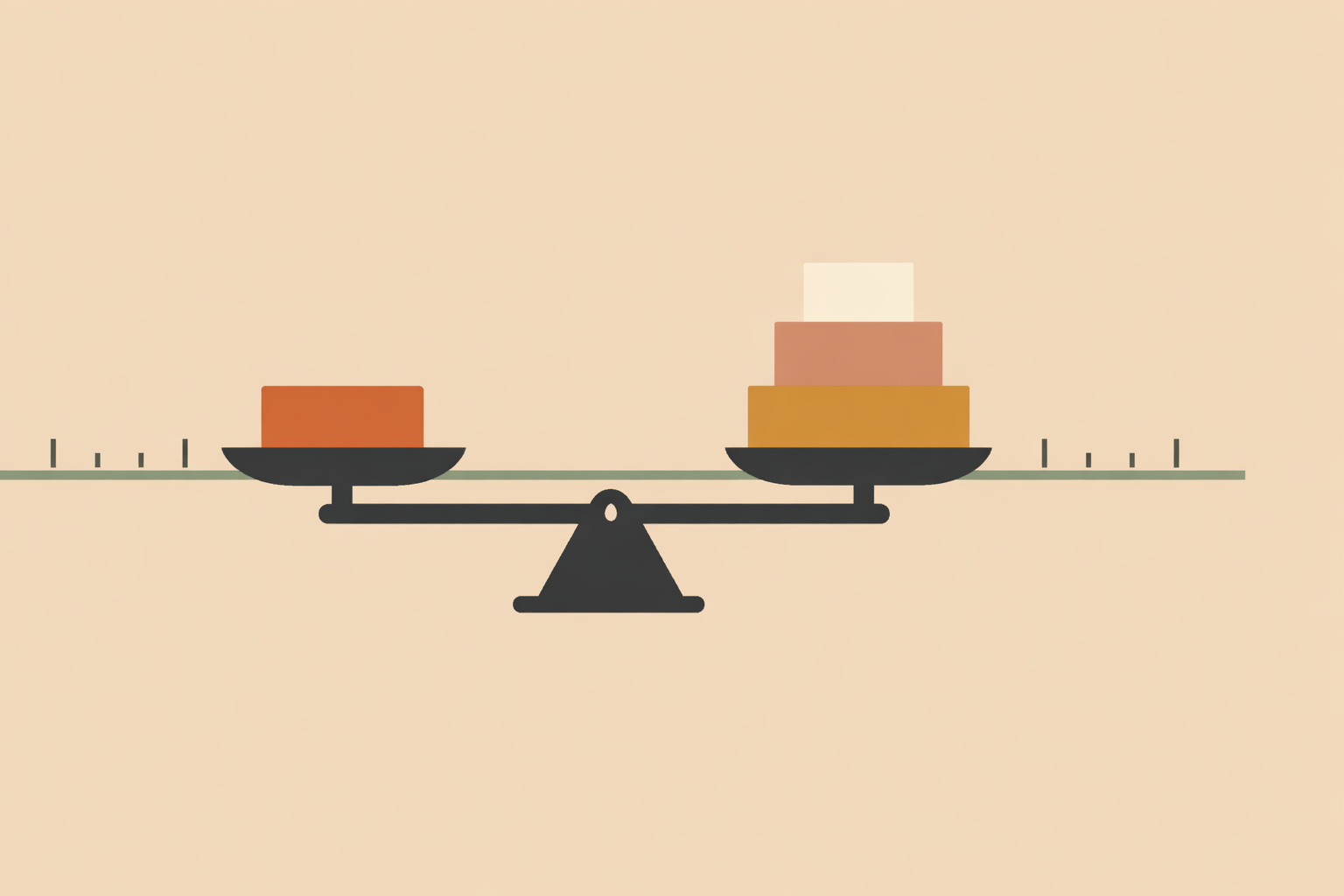
A 1:5 tincture means 1 part herb by weight to 5 parts menstruum by volume. If you have 100 grams of dried herb, you use 500 milliliters of menstruum.
The key is this: the herb is weighed, and the liquid is measured. It is not “one cup of herb to five cups of liquid.” Cups vary too much with fluffy leaf, chopped flower, dense root, or irregular pieces.
A 1:2 starting ratio is more concentrated than a 1:5 starting ratio. Still, the ratio describes what went into the jar, not the full lived experience of the finished tincture in your hand.
A useful label might read: “Calendula flower, dried, 1:5 w:v, 50% alcohol, batch C-12.” That one line carries more practical meaning than “pint jar, vodka.”
Simple tincture math at the bench
The math stays easy enough for everyday making.
- Menstruum volume = herb weight × ratio number
- Herb weight = desired menstruum volume ÷ ratio number
If you have 80 g of dried herb and want a 1:5 tincture, multiply 80 × 5. You need 400 mL of menstruum.
If you want to begin with about 250 mL of menstruum at 1:5, divide 250 ÷ 5. You need 50 g of herb.
- 25 g at 1:5 = 125 mL
- 50 g at 1:5 = 250 mL
- 100 g at 1:5 = 500 mL
- 100 g at 1:4 = 400 mL
- 100 g at 1:2 = 200 mL
Rounding is fine as long as you write it down. If your calculation gives 247.5 mL, choose 248 mL and record it. Reliable notes matter more than chasing extra decimals.
Why cups and jar-packing create inconsistency
Volume-only recipes usually miss the variables that most affect consistency: plant part, fresh versus dried, cut size, and menstruum choice. That’s why two batches made in the “same size jar” can feel like completely different extracts.
Plant part and preparation form shape what you’re extracting from the start. A fluffy aerial herb compresses dramatically, while a dense root or seed settles differently. Practitioners learn this quickly at the bench: measuring botanicals by cups invites variation that a scale avoids.
This shows up clearly when teaching beginners. One person loosely fills a cup with lemon balm tops; another packs in finely cut dried leaf. Both say “one cup,” but the herb mass is nowhere close.
Fresh vs. dried herbs: where ratios get more nuanced
Fresh plants add their own water to the extraction. Dried herbs are usually easier to standardize, while fresh herbs require more judgment.
Fresh plant moisture can noticeably shift the final alcohol level. That change influences the extraction environment and how well the finished tincture keeps over time.
Fresh-herb water affects final composition, which is why many practitioners start with stronger alcohol for juicy plants. A common traditional approach is using tighter ratios such as 1:2 with high-proof alcohol for fresh herbs, while many dried aerial herbs are often prepared at broader ratios like 1:5.
So fresh lemon balm, tulsi, or milky oat tops may call for a different setup than a dried leaf or root. The ratio still matters, and the plant’s moisture belongs in the same conversation.
If you want a clearer sense of a fresh plant’s water content, weigh a small fresh sample, dry it thoroughly, and compare the weights. The goal is practical understanding, not lab-grade exactness.
Menstruum choice and extraction conditions
A ratio gives structure, but extraction quality depends on more than ratio alone. Menstruum strength, plant part, freshness, particle size, temperature, steeping time, agitation, and pressing all shape the final tincture.
Alcohol-water blends are valued because different strengths extract differently. Herbalists choose percentages with intention, depending on the plant and the kind of extraction they’re aiming for.
Even at the same ratio, two batches can come out differently. A coarse-cut root steeped cool with minimal handling won’t behave like a finely cut leaf shaken daily. Ratio provides the framework; technique determines the character.
That’s also why a tighter starting ratio doesn’t automatically create a tincture that is proportionally “stronger” in every useful sense. Drug-extract ratio and finished extract are connected, but they’re not identical.
Starting ratio is not the same as finished yield
Your starting ratio describes what you put into the jar. Your finished yield describes what you recover after maceration, pressing, and filtration.
If you begin with 100 g herb and 500 mL menstruum, you started at 1:5. But if, after pressing and filtering, you recover only 350 mL, the finished extract functions more like about 1:3.5. The herb held onto some of the liquid, and that changes what ends up in the bottle.
This is why pressing and filtration matter so much. The recovered output shapes what you actually use.
A transparent batch note might look like this: “Echinacea root, dried, 100 g; 500 mL menstruum at 60% alcohol; started 10 May; pressed 3 June; 430 mL recovered.” That kind of record makes honest comparisons possible.
What to record on every tincture batch
If you want tincturing to be repeatable and easy to teach, use the same basic fields every time.
- Botanical name and plant part
- Fresh or dried status
- Herb weight in grams
- Menstruum volume in milliliters
- Ratio notation, such as 1:5 w:v
- Alcohol percentage
- Start date and press date
- Agitation or handling notes
- Final recovered volume
- Storage notes
- Batch number
These notes support personal learning, consistent outcomes, and product integrity. In the United States, makers of botanical products must follow good manufacturing practices intended to support identity, purity, strength, and composition, and product labels must be truthful and not misleading. Even in small-batch community settings, those principles strengthen trust.
Common tincture ratio mistakes
Most ratio issues come from a few predictable habits.
- Using cups instead of a scale. Dried herbs compress unpredictably, so cup measures are unreliable.
- Mixing up 1:5 and 5:1. Say it out loud: one part herb to five parts liquid.
- Assuming all 1:5 tinctures are equivalent. Plant identity, menstruum, time, and yield all matter.
- Ignoring fresh-plant moisture. Fresh herbs change final alcohol strength.
- Forgetting yield losses. Absorption, pressing, and filtration affect what you actually recover.
- Confusing ratio with standardization. Ratio tells you about input relationships, not constituent control.
- Promising a universal shelf life. Shelf stability depends on the full preparation, not a single number.
Some herbs also benefit from practical adjustment. Fluffy botanicals such as calendula often work well at 1:4 or 1:5, while dense seeds may need tighter ratios to macerate smoothly. Let observation lead, then let your notes confirm what you saw.
Clear language helps, too. Standardization is distinct from extract ratio, and it’s worth keeping those terms separate in your records and teaching.
Closing perspective
Weight-based tincturing doesn’t replace intuition, relationship with plants, or traditional craft knowledge. It gives them a structure you can return to. When you weigh the herb, measure the menstruum, and track final yield, each batch becomes easier to understand and steadily improve within herbalism and plant medicine.
That clarity also supports wiser sharing. Extra caution is appropriate for children, pregnant or breastfeeding people, older adults, and anyone taking medications. And quality seals can signal manufacturing practices, though they don’t guarantee a product is right for every individual.
In the end, ratios make your work legible. That kind of clarity helps a traditional practice deepen over time, whether you’re learning herbal product making itself or building a broader practice in plant medicine.
Master Herbal Product Making
Build repeatable, well-documented extracts in the Herbal Product Making Course.
Explore Herbal Product Making →