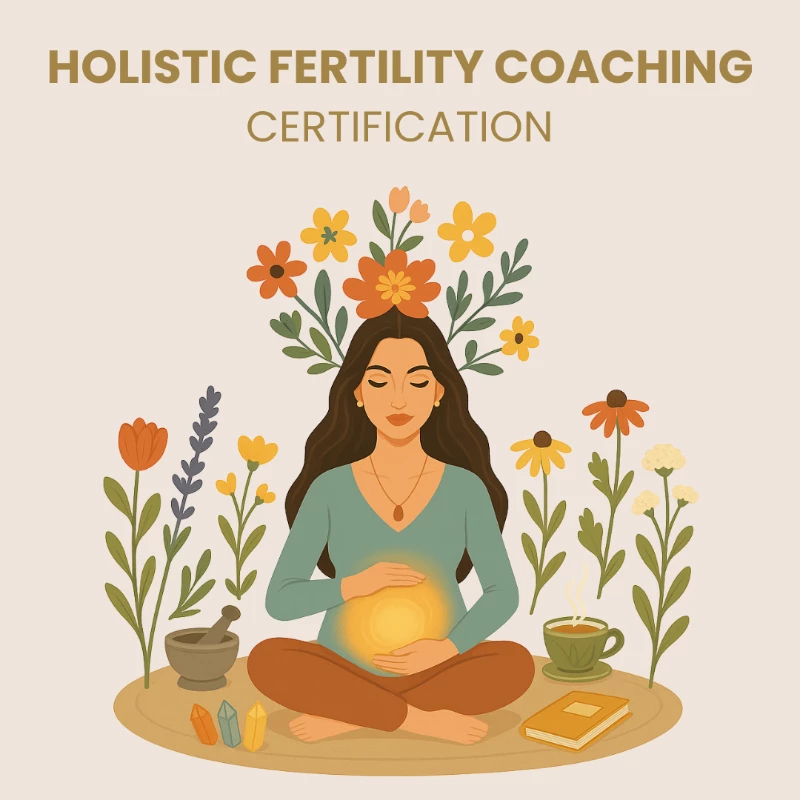
Most holistic fertility coaches meet the edge of their role in the same moment: a client asks for a timeline, a supplement stack, or help interpreting lab results. The intention is generous, but stepping beyond scope risks trust. Online work adds its own pressure—privacy has to become a daily habit, community spaces need careful moderation, and friendly rapport can quietly drift into dual roles. Meanwhile, clients are usually asking for something very practical: steadier days, clearer choices, and routines they can actually keep.
Ethical practice is operational. The seven rules below turn values into repeatable actions, so your support stays inside scope and focused on outcomes you can reliably influence: stress regulation, decision clarity, and consistent habits.
Key Takeaway: Ethical holistic fertility coaching is less about “doing more” and more about doing what’s reliable: staying in scope, protecting confidentiality, and keeping boundaries clear. When you pair informed consent, strong referrals, evidence literacy, and honest marketing, clients get a steady, safe container that supports calmer days and sustainable follow-through.
Rule 1: Honor Your Scope as a Holistic Fertility Coach
From fixing fertility to supporting nervous system and habits
Your power lives in steadiness, not guarantees. In real work, that means centering emotional regulation, clear decisions, and sustainable daily rhythms—without promising conception or interpreting labs.
Strong coaching anchors often look like co-creating routines for sleep, gentle movement, and meaningful nourishment; teaching cycle awareness in plain language; practicing breathwork or grounding to settle the nervous system; preparing questions for appointments; and celebrating small wins over time. These are the practices that stay ethically aligned with a coach’s role, as outlined in Naturalistico’s guidance on scope.
Evidence supports this focus. In one program, the coached group showed lower perceived stress around key procedures than controls. As the authors put it, the coaching program “demonstrated the ability to decrease stress related to infertility.” That’s the heart of ethical scope: a commitment to what you can reliably influence—how a client feels, chooses, and follows through.
Clear boundaries (no test interpretation, no guarantees, no timelines) don’t reduce care—they protect it. They also free you to do your best work: supporting calmer days, steadier decisions, and routines clients can sustain within a well-defined scope.
Rule 2: Protect Confidentiality and Create a Felt Sense of Safety
Turning privacy into a real experience of safety
Safety is more than a paragraph in a contract; it’s the way you hold a client’s story so they can exhale. It starts with clear agreements on what you collect, how you store it, and who (if anyone) sees it—with explicit consent.
Professional standards are clear: coaches are expected to maintain confidentiality except when disclosure is consented to or legally required. The ICF also calls for transparent agreements about how information is collected and used, so privacy shows up in daily practice, not vague reassurance.
To make confidentiality felt (not just stated), walk through what data you keep, where it lives, and how long you keep it. Ask permission before noting sensitive details. In community spaces, share stories only with explicit approval—and de-identify thoroughly.
Culture matters here. Privacy norms vary widely, so invite clients to define what “confidential” means to them and name any family or community sensitivities. Then adapt your workflow to match.
Rule 3: Avoid Dual Relationships and Keep Boundaries Clear
Why “we’re like family” can quietly erode safety
Warmth is essential; enmeshment is not. When closeness slides into dual roles—romantic, financial, social, or power-mixed—safety erodes and judgment blurs.
Ethical codes draw firm lines. The NBHWC prohibits sexual relationships with clients and expects coaches to avoid behavior that could be perceived as sexual. The ICF requires naming and managing conflicts of interest and, when they can’t be managed, ending the engagement through transparent conflict management. Ethical coaches are also expected to avoid dual relationships that create conflicts of interest.
Practically, this often means not coaching close friends or current colleagues, declining barter or business deals with clients, keeping the focus on the client’s evolution (not your personal life), and documenting boundaries clearly. If personal involvement arises, you pause, consult a supervisor or mentor, and offer a respectful referral.
Naming boundaries early can be both kind and stabilizing. A simple script helps: “I want our work to stay clean and safe. If anything ever feels blurry, I’ll flag it and we’ll address it together.” Boundaries aren’t distance—they’re the structure that lets trust deepen.
Rule 4: Prioritize Referrals and Build a Trusted Support Circle
From “I should know this” to “Let’s bring in the right person”
Referrals are a sign of wisdom, not weakness. When something sits outside your role, the most ethical move is to connect a client with the right ally while you continue supporting stress relief, decision-making, and follow-through.
Keep a curated list of trusted practitioners and community resources aligned with your values. When something falls beyond scope, a steady handoff can sound like: “This is bigger than my lane. I can share options and, if you want, make an introduction.” Naturalistico’s guidance encourages this kind of clear support around the client’s core goals.
Researchers have suggested it can be helpful to use complementary methods such as coaching alongside medical care. Coaching has also been associated with lower perceived stress during intense phases—exactly where referrals plus grounded coaching support can work beautifully together.
To prevent referrals from feeling like a “handoff into the unknown,” help clients prepare: a question list, a plan for note-taking, and a short debrief afterward. Think of it like building a bridge—so outside support fits into one coherent path.
Rule 5: Ensure Informed Consent for Every Tool and Tradition
Inviting clients to co‑author the process
Informed consent works best as an ongoing conversation, not a one-time signature. Each practice you introduce—from breath patterns to food rituals rooted in ancestry—deserves a clear “yes,” “no,” or “not yet.”
Keep it simple and consistent: name the practice, why you’re suggesting it, what people often notice, what might feel uncomfortable, and how you’ll check in. This kind of framing supports self-regulation and helps clients pace themselves with confidence.
When consent is handled this way, clients become true co-authors of their process. Naturalistico emphasizes client-led work that protects agency and centers well-being, clarity, and consistency through its guidance on client-led sessions.
When weaving in ancestral practices—spices, seeds, seasonal foods, kitchen rituals—honor lineage and context. Ask, “What does your family already do that feels supportive?” Then explore with respect, pairing traditional wisdom with plain-language notes on what’s commonly observed and what remains uncertain, supported by Naturalistico’s approach to evidence literacy.
If something wasn’t clear, take responsibility. Pause, repair, and adjust. Consent is living and relational, and that responsiveness is part of what makes coaching feel safe.
Rule 6: Practice Evidence Literacy and Honor Ancestral Wisdom
Reading research, listening to lineages, staying in scope
Good coaching holds two ways of knowing at once: lived, lineage-based wisdom and modern research. Together, they help you choose grounded, scope-aligned supports without flattening cultural depth or overstating certainty.
Evidence literacy isn’t about becoming a lab scientist. It’s the practical skill of scanning research, noticing who was studied, and prioritizing everyday outcomes like sleep, stress, cycle awareness, and follow-through. Naturalistico teaches this blend while staying within a coach’s scope.
The research landscape is still evolving. Some researchers have observed psychological support may reduce negative effects of fertility challenges and have reported increasing pregnancy in certain settings. Others note group approaches emphasizing educational skills may be particularly effective. Across coaching-focused trials, a consistent, scope-aligned win shows up: lower perceived stress around intense phases of the journey.
Traditional knowledge adds a different kind of strength: patterns refined through generations. Kitchen-based rituals, warming foods, seed cycles, and seasonally attuned routines can be offered as meaningful, culturally rooted options when presented with clear, scope-aligned explanations.
Put simply: read the studies, listen to the grandmothers, and keep your feet on the ground. That balance is often where the most respectful, useful support lives.
Rule 7: Model Integrity in Marketing, Pricing, and Growth
Let your public promises match your private practice
Ethics don’t stop at the session—they live in your website copy, discovery calls, and pricing. When public promises match private practice, people feel steadiness. Ethics is widely described as a foundation for building trust in coaching.
Market what sits inside your lane: steadier stress responses, clearer choices, and better follow-through. Skip timelines or conception guarantees. This is central to Naturalistico’s approach to ethical marketing.
Price transparently: what’s included, how rescheduling works, and how to pause or end support. Offer accessible options where you can (groups, limited sliding-scale spots, seasonal packages) while keeping your work sustainable.
For long-term growth, make your development visible. Ethical frameworks emphasize continuous growth—ongoing learning, self-awareness, and self-improvement. Naturalistico’s accredited trainings (IPHM, CMA, CPD) are designed to support practitioners with updated, integrative learning that aligns growth with clear standards.
As a simple rule: if you wouldn’t say it in session, don’t say it on a sales page. Consistency is what makes integrity feel real.
Conclusion: Living Holistic Fertility Coach Ethics Every Day
Ethics are less a checklist and more a posture. When you honor scope, protect confidentiality, keep boundaries clean, refer with humility, invite real consent, blend research with lineage, and market with honesty, you become a steady ally in a tender season.
The impact can be tangible. Coaching in fertility journeys has been associated with lower perceived stress and stronger follow-through on supportive routines—daily-life outcomes that truly matter. Professional standards also call for ongoing reflection through clear accountability. As one overview of coaching ethics notes, ethical maturity includes continuous self-reflection and growth over time.
You don’t have to build this alone. Naturalistico’s community, UX-friendly tools, and regularly updated content are designed so you can revisit and refine your ethical compass as your practice grows. Many graduates describe how a clear framework helped them support real clients with skill and heart, echoed in these reviews.
Choose one rule to embody more fully this week—maybe a tighter scope statement, a cleaner referral pathway, or a refreshed consent script. Small improvements, repeated, are how ethics become lived. Over time, that steadiness can feel quietly transformative.
Train in Fertility Coach Ethics
Build scope, consent, and referral skills in Naturalistico’s Fertility Coach Certification.
Explore Fertility Coach Certification →