Discovery calls can feel warm, testimonials can be generous, and still the answer is, “I’ll think about it.” That usually happens when an offer sounds broad enough to fit anyone, but not clear enough for one person to recognize themselves in it.
Whole-person work is genuinely valuable, and people still want to know what change they’re stepping into, what the process looks like, and how progress will show up in real life.
Key Takeaway: Holistic coaching becomes far easier to say yes to when you pair one repeatable whole-person process with a clear, audience-specific outcome. The work stays values-led and contextual, but the invitation becomes concrete: a decision made, a rhythm rebuilt, a boundary practiced, or a next step tested in real life.
What holistic coaching actually means in practice
Holistic coaching is a client-led, values-based partnership that considers the person in context rather than in isolation. That context can include identity, relationships, work, environment, meaning, responsibilities, and the season of life they’re in.
This understanding sits comfortably with client partnership in contemporary coaching standards. It also supports a strong ethical center: respect for autonomy, clear scope, cultural humility, privacy, and clean agreements.
Many ancestral traditions view a person as an integrated web of body, mind, spirit, family, community, and land. Whole-person coaching can honour that wisdom without making unlimited promises. In practice, “holistic” means widening the field of inquiry so the change fits the person’s real life.
The role of the coach is to help the client notice patterns, name what matters, and choose grounded experiments that meet reality. In that sense, “holistic” means asking better questions and working with what’s actually there.
Relational support matters too. Research suggests peer support can help motivation and follow-through. Traditional practice has always held a similar truth: people change more steadily when they feel supported, witnessed, and accountable.
A useful intake move is to ask two questions early:
- What change would feel meaningful in the next 60 days?
- What people, places, traditions, or practices help you feel resourced?
Those two prompts bring depth into the room immediately, without drifting into abstraction.
A repeatable whole-person coaching process
A clear process makes holistic work easier to trust. It keeps you consistent and gives the client a rhythm to lean on, so every session doesn’t feel like starting from scratch.
One practical model is a six-step systems loop:
- Clarify outcome: Name a concrete, observable win for this season.
- Explore values and identity: Surface what matters and who the client is becoming.
- Map context: Look at time, energy, roles, relationships, constraints, and support.
- Redesign environment: Adjust cues, tools, schedules, and agreements.
- Run a small experiment: Test one practical shift for a short period.
- Review for learning: Keep, adapt, or discard based on real-life feedback.
This structure aligns with clear agreements, client-defined goals, actionable steps, and accountability. Your niche can change while the loop stays steady.
A familiar session flow helps clients settle: check in, agree the session outcome, explore what’s present, identify options, choose one action, anticipate friction, and review learning next time.
Progress is easier to track when you use both felt experience and visible markers. Coaching guidance supports measures of success defined collaboratively. That could be “clarity moved from 4 to 7 out of 10,” alongside “three boundary conversations completed” or “one-page decision memo drafted.”
Small steps matter. Weekly goals and modest experiments support follow-through far better than dramatic overhauls. A client who wants calmer mornings might not need a total reset; they might need a few environmental tweaks and a five-day test of one routine.
Career clarity and professional direction
Career clients usually don’t want abstract inspiration. They want relief from looping thoughts, stronger decisions, and movement they can trust. A whole-person lens deepens the work by connecting career choices to identity, relationships, energy, and long-term meaning.
Useful outcomes in this niche include:
- a values-led decision framework
- a career action plan
- two practical boundary scripts
- a visible step toward a chosen direction
An offer might include mapping values against role options, drafting a short decision memo, practising one negotiation or boundary script, and tracking a small number of high-quality outreach conversations.
Helpful tools include:
- Values-to-options worksheet: connect core values to real job features
- Decision matrix: compare roles across autonomy, stability, learning, and pace
- Role experiments: shadowing, stretch projects, or informational conversations
- Weekly accountability: a small number of applications or networking actions
Momentum grows when reflection is paired with action and broken into simple, repeatable goals.
Entrepreneurs and small-business owners
Founders often respond to overwhelm by pushing harder. What helps more is aligning ambition with capacity, relationships, and a business model that fits the life they want to live.
A whole-person approach works well here because the challenge is rarely only operational. Identity, pace, attention, boundaries, and decision-making under pressure all shape the outcome.
Strong outcomes in this niche may include:
- a protected quarterly priority
- a founder decision filter
- a workable focus rhythm
- a delegation plan
Practical tools might include an ideal-week map, a constraint audit, a stop-start-continue review, and a delegation ladder. These turn scattered effort into a repeatable operating rhythm.
It’s often wise to mobilize what the client already has before adding more information. Existing strengths, supports, and patterns usually contain part of the answer, which is why this work can feel calming for founders who are overloaded with advice.
A concrete example: someone shifts from one-off sessions to recurring packages, writes one clear decision principle for offers, and protects a regular block for visibility or content. The business won’t become simple overnight, but the pattern becomes coherent.
Life transitions and identity shifts
Transitions can bring possibility and disorientation at the same time. A move, separation, role change, or other major life turn can leave someone between identities. The value of coaching here is steadiness and shape.
A simple frame works well: ending, continuing, beginning. From there, the client can name what is leaving, what still anchors them, and what new direction is asking for attention.
Useful outcomes include:
- a one-page transition map
- a shortlist of priorities
- an initial action sequence
- two supportive routines for the new season
Someone moving to a new city, for example, may create a continuity kit: a morning tea ritual, an evening walk, and a weekly call with someone who knows them well. Small anchors help the body recognize familiarity while life reorganizes.
Group support can normalize uncertainty, while one-to-one work offers privacy for more personal themes. Where a client’s needs move beyond coaching scope, clear boundaries and appropriate next-step support remain essential.
Parents and family supporters
In family life, perfectionism is usually the first thing to let go of. What serves better is a minimum-viable rhythm: realistic routines, shared responsibility, and enough flexibility to adapt when the week changes.
This niche benefits from especially inclusive language. Families are structured in many ways, and what’s workable will always be shaped by culture, resources, care demands, and season of life.
Strong outcomes here might include:
- a realistic weekday rhythm
- clearer boundary conversations
- a shared-responsibility board
- protected time for personally meaningful activity
Helpful tools include:
- Calendar audit: identify drains, supports, and overpacked zones
- Minimum-viable routines: simple meals, brief movement, calmer transitions
- Support-network map: name existing help and make specific requests
- Boundary scripts: agree on clear windows and expectations
Whole-person practice lands well here because family systems are lived, not theoretical. Environment, roles, communication, and inner capacity all affect what becomes sustainable.
A simple weekly reset can shift the tone of a household. Twenty minutes to review schedules, renegotiate responsibilities, and choose one small point of ease often does more than a perfect plan that nobody can maintain.
Creatives and purpose-led professionals
Creative people rarely need more pressure. They often need a container that protects attention, honours energy, and helps ideas reach completion.
A holistic approach is especially useful here because creative work is shaped by identity, visibility, self-trust, community, and rhythm as much as by output.
Useful outcomes include:
- a project pathway
- a sustainable creative schedule
- a feedback plan
- a visibility experiment
- a reusable completion checklist
Good tools for this niche include a creative-season map, project decomposition, attention design, and a confidence review built from past completions.
Community can be a strong catalyst. Research points to personalized support in one-to-one work and motivation benefits in shared spaces. In practice, group coaching can normalize resistance, while individual sessions leave room for more sensitive themes around money, identity, or self-worth.
A simple example is a weekly sharing rhythm: one unfinished piece shown to a trusted circle at the same time each week. That repeated act often softens perfectionism more effectively than waiting for confidence to arrive first.
Midlife and later-life purpose
Not every later-life reflection is a crisis. Often it’s a quieter question: how do I want to use the next chapter of my life well?
This is where holistic coaching can be deeply respectful. It treats lived experience as a resource and brings meaning, contribution, learning, relationships, and pace back into conversation together.
Useful outcomes may include:
- a personal priorities map
- a new-chapter experiment
- a contribution plan
- a redesigned weekly rhythm
Practical tools include life-chapter reflections, transferable strengths mapping, curiosity lists, and a social-connection map. These help clients identify what they want to carry forward, not only what has ended.
The process works best when reflection and experimentation are both present. Someone may recognize a long-standing gift for mentoring, then test that insight through a short community role or volunteer commitment.
Lifestyle habits and everyday well-being
Daily habits are often the gentlest doorway into meaningful change. This niche works best when behaviour is shaped through context, repetition, and reflection rather than intensity.
Useful outcomes include:
- a routine redesign
- a series of habit experiments
- a personal weekly rhythm
- an environment audit
- a simple review practice
Helpful methods include implementation intentions, habit stacking, friction reduction, and identity-based reflection. These are practical ways to support follow-through without turning the process into self-punishment.
Across cultures, daily rituals and seasonal rhythms have long supported balance. Contemporary habit guidance complements that wisdom by emphasizing intrinsic motivation, small steps, and planning for lapses.
A modest weekly review can be enough: “What gave me energy? What deserves repeating?” Over time, that kind of ritual helps people build a life that reflects what genuinely nourishes them.
One method, many clear invitations
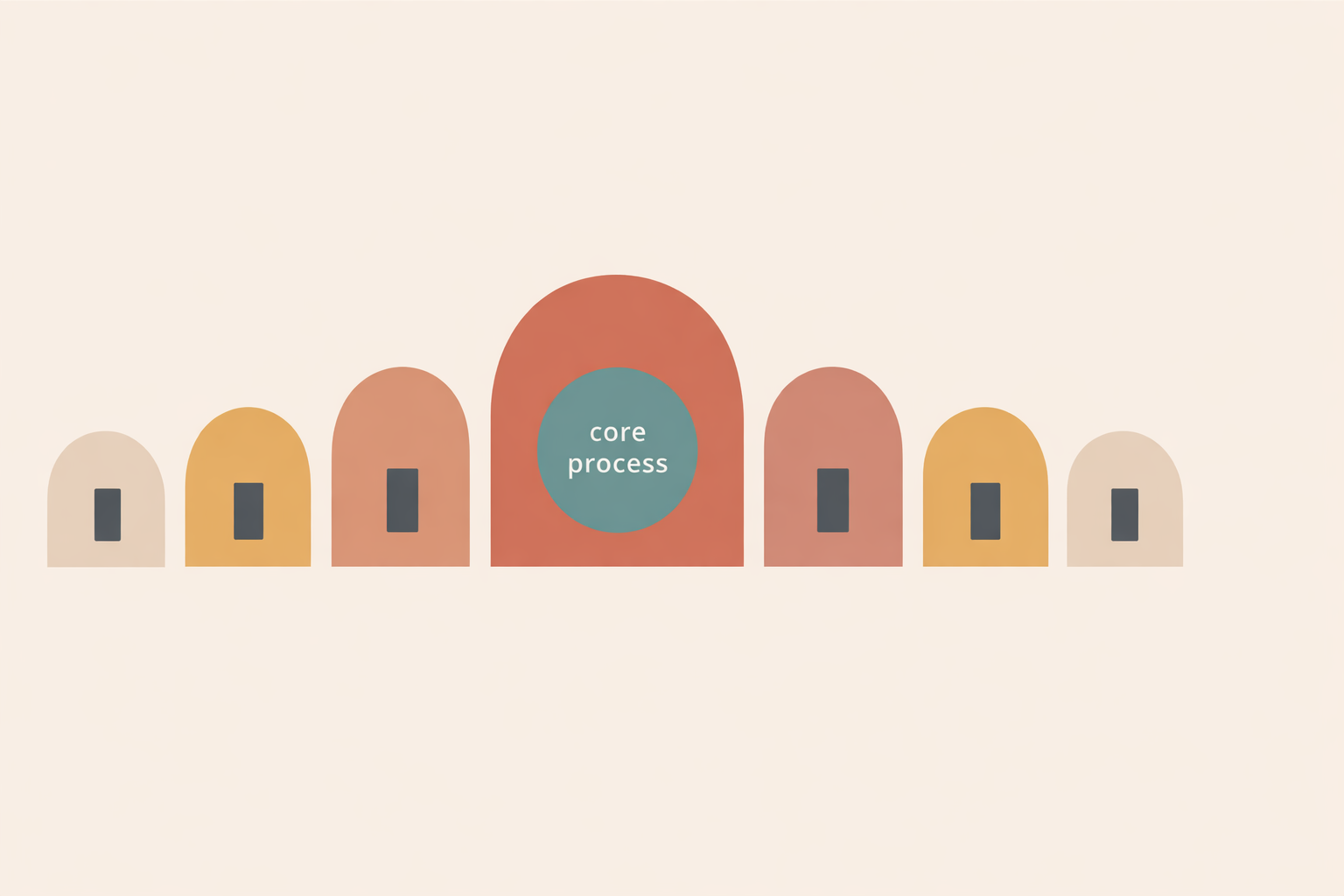
A strong holistic coaching practice doesn’t need a different philosophy for every niche. It needs one grounded way of working and several clear invitations that translate that work for different people.
Behind the scenes, that can mean one intake process, one ethical framework, one progress-review rhythm, and one core coaching loop grounded in systems thinking. Out front, it means speaking plainly about the situations you support best and the kinds of outcomes clients can realistically work toward with you.
This combination is both marketable and respectful: one philosophy, one repeatable process, and niche-specific language that helps the right people feel seen. It protects integrity while making the offer easy to understand.
The safest promise is not “I will change every part of your life.” It’s this: you’ll clarify what matters, map the real conditions around you, test a practical shift, and learn from what your life shows.
Master Systems-Based Coaching
Bring your holistic process to life with the Systems Based Life Coaching Certification.
Explore Systems Based →