More Yin teachers are noticing something simple: the quietest class on the schedule often holds the widest range of pain stories. Students arrive with lingering back discomfort, joints that dislike fast flows, and systems already working hard. One hasn’t slept well. Another worries about a flare. A third is tired of being told to push through.
In that room, what brings people back is rarely your pose library alone. It’s whether the practice feels safe, adaptable, and dignifying. The work becomes less about directing shapes and more about supporting agency, steadiness, and calm.
Key Takeaway: Yin can be a meaningful support for persistent pain when you emphasize regulation, consent, and choice over intensity or fixing. Conservative dosing, adaptable shapes, careful pacing, and invitational language help students stay steady, respond to day-to-day variability, and rebuild trust in their own signals.
Why Yin Often Appeals to Students Living With Persistent Pain
Many students living with persistent pain are drawn to Yin because it feels accessible, kind, and spacious. A slower, floor-based practice can feel more doable than faster styles—especially when energy is low or movement already feels like “a lot.”
Persistent pain also rarely travels alone. It often comes with sleep disturbances, fatigue, and low mood, which can make highly choreographed or intense movement feel overwhelming. Yin offers another pace: less performance, more listening.
From a traditional perspective, contemplative practice has long been used to soften long-held discomfort and restore balance. That wisdom helps explain why students who feel worn down by effort often feel relief in a class that values patience over achievement. As one teacher puts it, Yin allows students to “be with what is.”
Of course, not everyone loves stillness. But Yin gives you helpful ingredients—time, simplicity, props, breath, and permission to adapt—so students can explore sensation with less fear and more choice.
Understanding Persistent Pain Through a Wider Lens
One of the most useful frames a Yin teacher can hold is this: persistent pain often reflects an over-alert system. That shifts the focus away from “fixing” and toward helping the whole person feel safer.
In ongoing pain, the nervous system can become more reactive through central sensitization. Put simply, sensations can feel amplified even after tissues have healed. Context matters too—stress, sleep, breath, and meaning all shape how pain is experienced.
That’s why poor sleep and stress can increase pain intensity. It’s also why a small sensation can feel enormous without anyone “imagining it.” Their system may simply be responding quickly and loudly.
The encouraging part: breathing, gentle movement, and relaxation are linked to reduced pain and improved function. Regular yoga has also been associated with less pain and better overall function in common concerns such as low back pain and arthritis.
Traditional yoga language offers a parallel map. When breath, attention, and posture are steady, inner patterns can soften. Modern language might call this regulation or interoception (the ability to sense what’s happening inside). Traditional language may speak of balance, presence, or smoother flow. Either way, the teaching principle is the same: help students meet sensation with steadiness rather than alarm.
What Makes Yin Helpful for Sensitive Bodies
Yin’s long holds, stillness, and reduced muscular effort can be deeply supportive for sensitive bodies. They can also be too much if applied without care. The skill isn’t in making Yin intense—it’s in making it workable.
Yin uses long-held, floor-based shapes with relatively relaxed muscles, traditionally understood as a way of placing gentle stress through fascia and other connective tissues. For many people in pain, this feels more inviting than dynamic effort.
It can also support mobility around common areas of restriction such as the hips, spine, and shoulders. Just as importantly, Yin gives students time to notice small shifts: where they brace, where they hold their breath, and where they need more support.
Still, long holds and the rebound afterward can heighten awareness of sensation. In a sensitized system, even neutral sensations may feel intense, and without clear framing students may read intensity as harm.
This is where “the edge” needs a different definition. In pain-aware Yin, the edge isn’t the biggest sensation a student can tolerate. It’s the place where experience stays steady and breathable—non-threatening. And for students living with persistent pain, that edge is often closer than expected and can change from day to day.
How to Teach Yin for Persistent Pain Safely and Ethically
Lead with scope, consent, and comfort. Your role is to support well-being through movement, breath, and awareness—not to interpret symptoms or offer individualized health guidance.
Set the frame before class: students are welcome to adjust, pause, or rest at any time. Encourage them to practice with their real capacity today, not an imagined “best day.”
A light check-in can help:
- Where does discomfort usually show up?
- What tends to feel supportive or unhelpful?
- Are there any positions you already know you want to skip today?
For persistent pain, psychological safety matters as much as physical setup. Plenty of props, shorter initial holds, and frequent reminders that opting out is welcome can transform the tone of the whole class.
Traditional ethics support this approach. Ahimsa (non-harming) calls for restraint as much as care. Satya (truthfulness) asks for honesty about what a practice can and cannot do. Together, they create a grounded teaching stance: warm, respectful, and free from overpromising.
Useful class language includes:
- Scope cue: “Please follow any guidance from your wider support team, and feel free to rest or adjust whenever you need.”
- Autonomy cue: “Your no is welcome here.”
- Permission cue: “You do not need to stay in any shape that stops feeling supportive.”
Safety is relational. Many students with persistent pain carry a history of not being believed or feeling pressured to override their signals. A steady, consent-based class can start rebuilding trust—one calm choice at a time.
Designing Pain-Aware Yin Classes: Dosage, Poses, and Progression
When in doubt, start smaller than you think you need. The goal isn’t a dramatic session—it’s a repeatable one.
A conservative starting dose often works well: a handful of poses, shorter holds, and a shorter overall practice. Then build gradually. Graded activity principles are linked to reduced disability and fewer flare-related avoidance patterns, and they fit beautifully with pain-aware Yin teaching.
Here’s why that matters: if you increase only one variable at a time—slightly longer holds or one additional pose—students can learn what their system tolerates without feeling ambushed by the practice.
Supportive starting shapes often include:
- Constructive rest
- Supported child’s pose
- Reclined butterfly with props
- Gentle supine twist
- Lightly propped sphinx
Shapes that are often less helpful early on include deep end-range hip openers, strong loaded forward folds, intense knee-flexion postures such as full saddle or hero, and long unsupported backbends. These aren’t universally “bad” poses, but they can ask too much too soon from a highly reactive system.
A simple traffic-light framework can help students self-regulate:
- Green light: dull, broad, steady sensation that stays breathable
- Yellow light: sensation getting stronger, sharper, or harder to relax with
- Red light: sharp, burning, electric, unstable, or alarming sensation
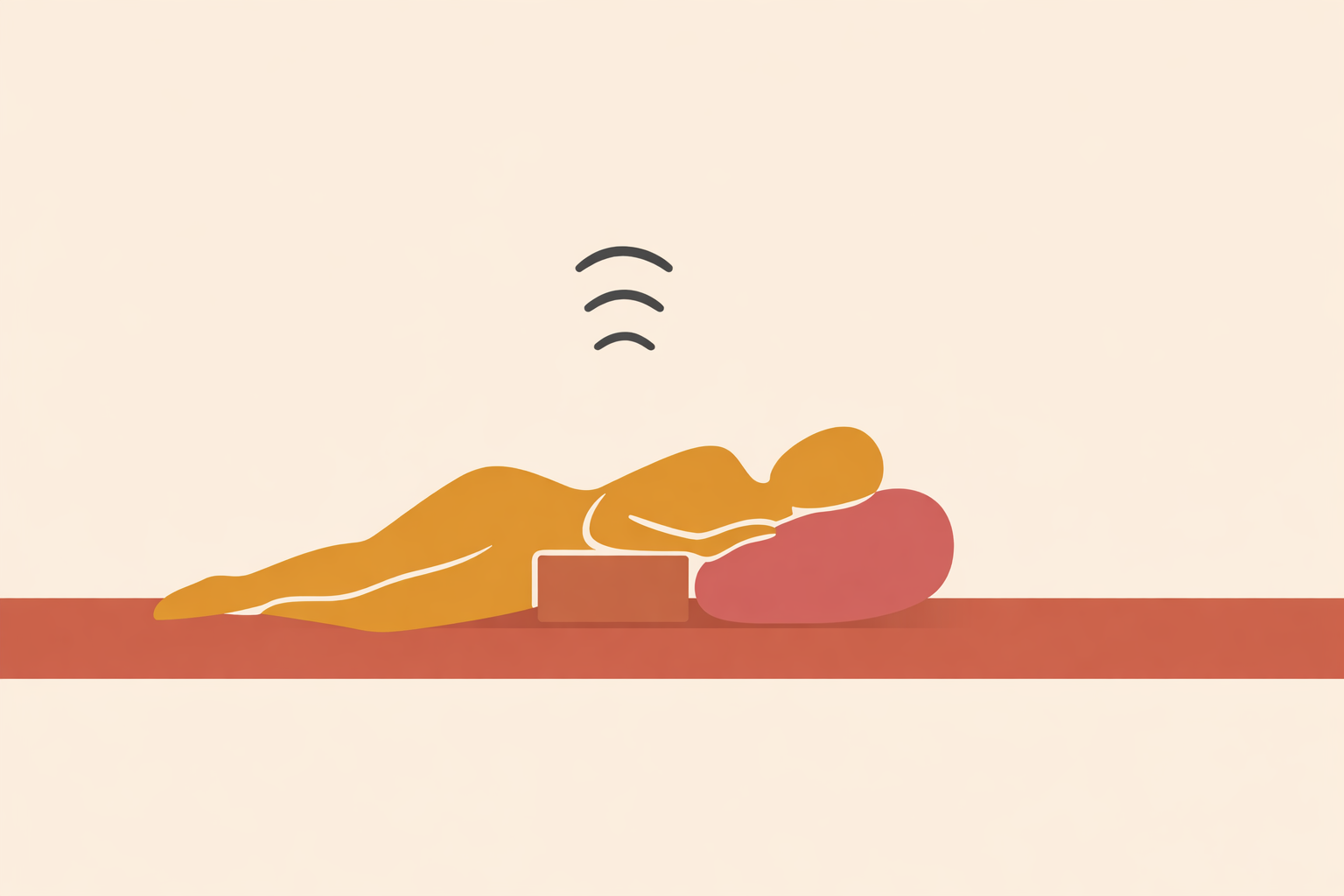
Slow transitions matter too. Coming out gradually, pausing on the side, and taking a few breaths before sitting up helps students stay oriented and can reduce sensitivity spikes.
Most importantly, teach students to value what happens later, not only what happens in the moment. Next-day response is often a better guide than intensity during class.
Language That Supports Regulation Instead of Overwhelm
The same sequence can feel regulating or overwhelming depending on how it’s taught. Words matter.
Mindfulness-based yoga can help people relate more steadily to difficult emotions that often accompany persistent pain—like fear, frustration, and grief—and may reduce distress around the pain experience. In practice, that means your cues should widen choice rather than narrow it.
Instead of “go deeper,” try:
- “If it feels supportive, you might explore a little more.”
- “Stay where your breath remains easy.”
- “Notice whether softening the jaw changes the whole shape.”
- “You are welcome to come out before I cue the exit.”
For some students, long inward focus is soothing. For others, it’s activating. Offer options: eyes open, a softer version, micro-movement, or resting in a neutral shape. Choice protects agency.
Grounding anchors can also help. Bringing attention to contact points with the mat, or noticing one neutral sensation, can reduce catastrophizing and support present-moment coping.
One of Yin’s quiet strengths is that it creates enough space for students to hear themselves. Your language should make that easier, not louder.
Working With Flare-Ups and Day-to-Day Variability
Flare-ups are common in persistent pain. They don’t automatically mean a student did something wrong, and they don’t mean the practice has failed.
On higher-pain days, reduce the dose: fewer poses, shorter holds, more props, and more rest. Pacing and activity adjustment are recommended approaches because pain often fluctuates with episodic flare-ups.
A simple flare-day structure might include:
- Several minutes of easy breathing
- Constructive rest
- Supported child’s pose or another neutral resting shape
- A very gentle twist if it feels welcome
- Longer rest at the end
If pain rises during a pose, stay calm and practical. Offer grounding: self-touch, a soft gaze, longer exhales, or returning to neutral. Yogic breathing and relaxation practices are associated with reduced arousal and less pain-related distress.
It can help to close class with a brief reflection:
- What felt clearly supportive?
- What felt like too much?
- How did you feel later that day or the next morning?
This builds confidence in pacing. If someone regularly leaves class feeling more stirred up than settled, the dose is likely too high—simplify and steady.
When to Encourage Outside Support
Your role includes noticing when something falls outside the container of class support.
If a student describes new or rapidly intensifying symptoms, especially neurological changes, encourage them to connect promptly with appropriate healthcare support. You don’t need to interpret what’s happening—you’re simply holding clear boundaries with care.
A useful script is: “That sounds important to follow up on with a qualified support professional before continuing this kind of practice.”
Handled well, referral isn’t distancing. It’s part of ethical, compassionate teaching.
Closing Thoughts
Yin can be a genuine refuge for people living with persistent pain—not because it forces change, but because it offers a different relationship with sensation, breath, and effort. Slow attention, enough support, and the freedom to choose can make practice feel possible again.
When you teach Yin through the lenses of regulation, pacing, and respect, stillness becomes more than quiet. It becomes skillful. Students learn that less can be enough, that their signals matter, and that steadiness is worth more than intensity.
Start small. Progress gradually. Protect agency. And when you’re unsure, choose the version that leaves more ease in the system, not less.
Ready to deepen your teaching foundation?
Explore the Yoga Teacher Certification to build practical, student-centered skills you can bring straight into class.
Explore Yoga Teacher Certification
Build pain-aware, student-centered teaching skills in the Yoga Teacher Certification.
Explore Yoga Teacher Certification →