Most coaches are trained to listen for content and make meaning from what’s said. That works—until a client’s words and body start telling different stories.
“I’m fine” can arrive with a tight jaw and shallow breath. A thoughtful question can land flat for reasons that have nothing to do with the words themselves. Especially online, micro-pauses, posture shifts, and breath holds are easy to miss.
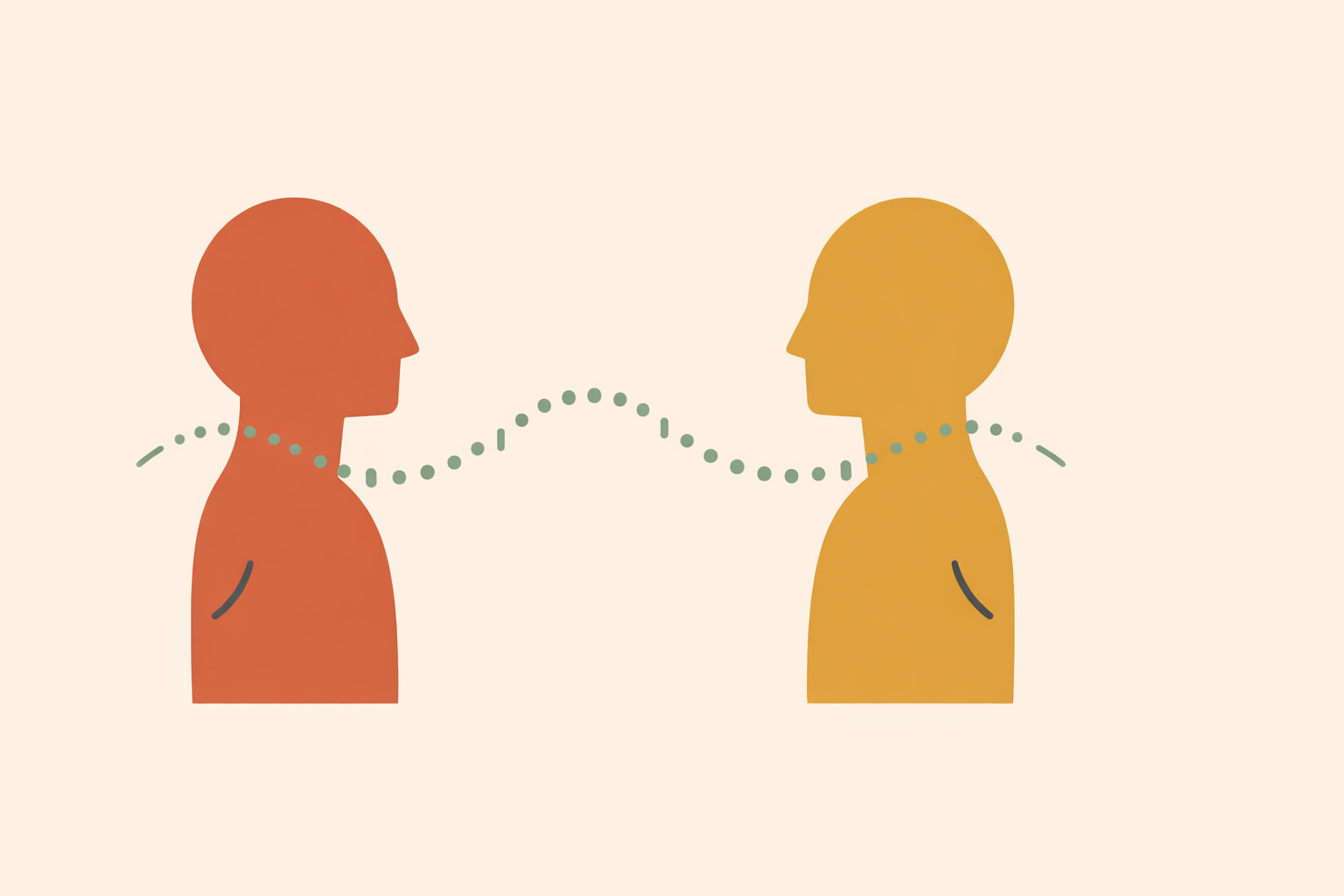
The practical shift is simple: listen with more than your ears. Emotional intelligence in coaching becomes stronger when posture, tone, breath, and small movements are treated as shared information to explore with the client, not hidden meanings to decode. Done well, this brings more accuracy, better pacing, and a greater sense of steadiness for everyone in the session.
Key Takeaway: Emotional intelligence in coaching works best as whole-body listening that treats nonverbal signals as shared data, not hidden meanings to decode. Strong practice starts with client-specific baselines, respect for culture and neurodivergence, and clear consent. From there, coaches can track activation and shutdown through breath, posture, tone, and orientation, then respond with small, respectful somatic experiments such as grounding, orienting, longer exhales, or gentle movement. Safety, pacing, and scope stay central throughout.
Read Body Cues Without Mind-Reading
Body cues are valuable when they’re held with humility. The goal is not to “read” someone through generic rules; it’s to understand this person, in this moment, in their real context.
The same gesture can mean very different things across cultures and neurotypes. Averted eyes might be respect, sensory overload, fatigue, or discomfort. Stillness might be focus, caution, or shutdown. Meaning depends on context, relationship, and baseline.
A strong starting point is building an individualized baseline early on. Learn what the client looks and sounds like when they feel steady, tired, stressed, under pressure, in pain, or low on energy. Make room for culture, neurodivergence, disability, chronic pain, and normal day-to-day variability.
You can keep it simple with questions like:
- When you feel grounded, what happens in your body?
- When stress rises, what changes first?
- What happens to your breath, voice, posture, or energy when you are overloaded?
- Are there cues people often misread about you?
This creates a personal map rather than a borrowed rulebook.
Consent belongs here too. If you notice a shift, invite rather than impose: “I’m noticing your breath pause as you talk about that. Would you like to stay with it for a few seconds?” Respecting both yes and no is part of real attunement.
What Breath and Posture Can Reveal in Real Time
Once you know a client’s baseline, breath and posture become especially useful guides. They often change faster than words do, which makes them practical markers for pacing.
Rising activation commonly shows up as quicker, shallower breathing, scanning eyes, heat, or fidgeting. Shutdown or collapse often appears as slumped posture, flatter tone, slowed speech, heavy limbs, or long silences. Many practitioners recognize these patterns because they repeat in real sessions, even though the meaning still needs to be confirmed with the client.
Breath deserves special attention because it tracks state so directly. Held, shallow, or fast breathing often travels with stress; slower, more even breathing usually comes with greater steadiness.
Posture adds another layer. A shift from collapsed to more upright can signal increased readiness, contact, or self-support. When someone starts naturally orienting to the room again, they often have more inner space than they did a moment earlier.
Useful “ready for more” signs can include:
- steadier breath
- more flexible posture
- warmer or fuller tone of voice
- spontaneous orientation to the room
- ability to describe sensations without becoming overwhelmed
These aren’t rules. Treat them as working clues, then check them through dialogue.
Coach Self-Regulation Comes First
Before tracking another person’s body, it helps to settle your own. A coach’s state shapes pacing, tone, and the client’s sense of safety more than most people expect.
If your jaw is tight, your breath is thin, or your body is braced, that tension leaks into the session. Clients register facial expression, rhythm, gestures, and tone long before they evaluate the words. Your body is already part of the conversation.
That’s why self-regulation is foundational to responsive coaching.
A short pre-session ritual is often enough:
- unlock your knees
- let the exhale lengthen
- soften your jaw and eyes
- feel your feet or seat
- take three even breaths
During the session, keep checking inward. If you feel urgency, numbness, irritation, or drift, notice it early. Often the most skillful move is a brief reset instead of pushing through. A transparent pause such as “Let me take one slower breath and stay with you” can restore steadiness without making the moment about you.
When your inner state and outer signals match, your presence becomes easier to trust, and rapport builds more naturally.
Turn Observation Into Dialogue
Noticing a body cue is only step one. The next step is bringing it into the conversation in a neutral, respectful, collaborative way.
A reliable pattern is:
- observe
- name what you see without interpretation
- invite the client’s meaning
For example:
- “As you talk about the deadline, I notice your breath pauses at the top.”
- “I’m not sure what it means, but I wanted to check it with you.”
- “What do you notice in your body right now?”
When clients connect language with felt sense, agency often grows. They’re no longer describing experience from the outside only; they’re learning to track it from the inside, in real time.
You can support that with gentle prompts:
- Where do you feel that most clearly?
- Does it have a shape, temperature, pressure, or movement?
- Is it staying the same, easing, or getting stronger?
- What happens if we give it two breaths of attention?
Simple scales can help too: “How steady do you feel right now, from 0 to 10?” They make change visible without demanding a big story.
One important guardrail: stay descriptive. Avoid assigning fixed meaning to a cue. “Your arms are crossed, so you’re closed off” closes the conversation. “I notice your arms crossed just now; what happens inside as we talk about this?” keeps it open.
Use Small Somatic Interventions, Not Big Ones
Once a cue is named and confirmed, the next move is usually small. Brief somatic micro-interventions, often lasting 30 to 90 seconds, can help a client settle or mobilize during a coaching session without overwhelm.
The aim is titration: just enough contact to support more steadiness, choice, or presence.
Useful options include:
- orienting to the room
- feeling the feet on the floor or the seat underneath
- slowing the exhale
- softening the jaw, hands, or shoulders
- adding a small movement such as pressing the feet down or rolling the shoulders
Orienting and grounding can work especially well because they build capacity without demanding insight. Letting the eyes land on stable objects in the room, or feeling the support of the chair, often brings the system back into the present.
Breathwork is another practical lever because breath reflects state and can be trained over time. Small doses tend to land best. Two or three slower exhales, then a return to normal conversation, is often enough.
A simple sequence might sound like this:
- “Let your eyes rest on something steady.”
- “Feel your feet pressing lightly into the floor.”
- “Take two easy exhales that are a little longer than the inhale.”
- “Now notice what changed, if anything.”
Movement can be equally modest. A slow head turn, a wider visual field, or a subtle lift through the spine may shift the whole session. Many somatic coaching frameworks also draw inspiration from Tai Chi and Qigong as traditions that link breath, attention, and slow movement to grounded presence.
If the client reports “not much,” that’s still valuable information. It speaks to capacity today, and it helps you pace the work with respect.
Safety, Overwhelm, and Scope
Trauma and emotional healing work can deepen coaching through somatic awareness, but safety comes before insight. Many visible “blocks” are protective responses, not resistance. When a client freezes, goes flat, or becomes agitated, the body may be signaling overwhelm rather than unwillingness.
Common slow-or-stop indicators include:
- blank stares
- sudden detachment
- numbness
- dizziness
- escalating panic
- difficulty tracking the present moment
When these signs appear, stabilize first. Return to simple anchors: the floor, the chair, the room, the breath, and a clear choice between two options. Present-time support is usually more helpful than going deeper into content.
In practical terms, that might sound like:
- “Let’s pause.”
- “Can you feel your feet on the floor?”
- “Tell me two colors you can see.”
- “Would you like to continue, slow down, or stop here for today?”
Scope matters too. If a client presents self-harm risk, danger to others, ongoing violence, or severe dissociation, stop somatic experiments and support them in connecting with appropriate licensed care.
Embodied coaching works best when it stays humble. Body signals are capacity data. If cognitive insight isn’t changing breath and posture, it’s often more skillful to shift into small, sensation-led experiments than to push for more verbal understanding.
Lasting Change Tends to Land in the Body
Emotional intelligence in coaching becomes sharper when it includes the body. You still listen for words, and you also track breath, tone, posture, rhythm, and subtle shifts that show whether a client has more capacity or less.
From there, the work stays practical: establish a baseline, respect culture and difference, get clear consent, notice what changes, and respond in ways the body can use right now.
Over time, somatic practice helps people hold a little more life with a little more ease. That’s often where meaningful change takes root: not only in what the client understands, but in what they can embody, sustain, and choose from.
Train in Somatic Coaching
Somatic Coach Certification helps you apply whole-body listening with clear consent, pacing, and nervous-system-aware micro-interventions.
Explore Somatic Coach Certification →