


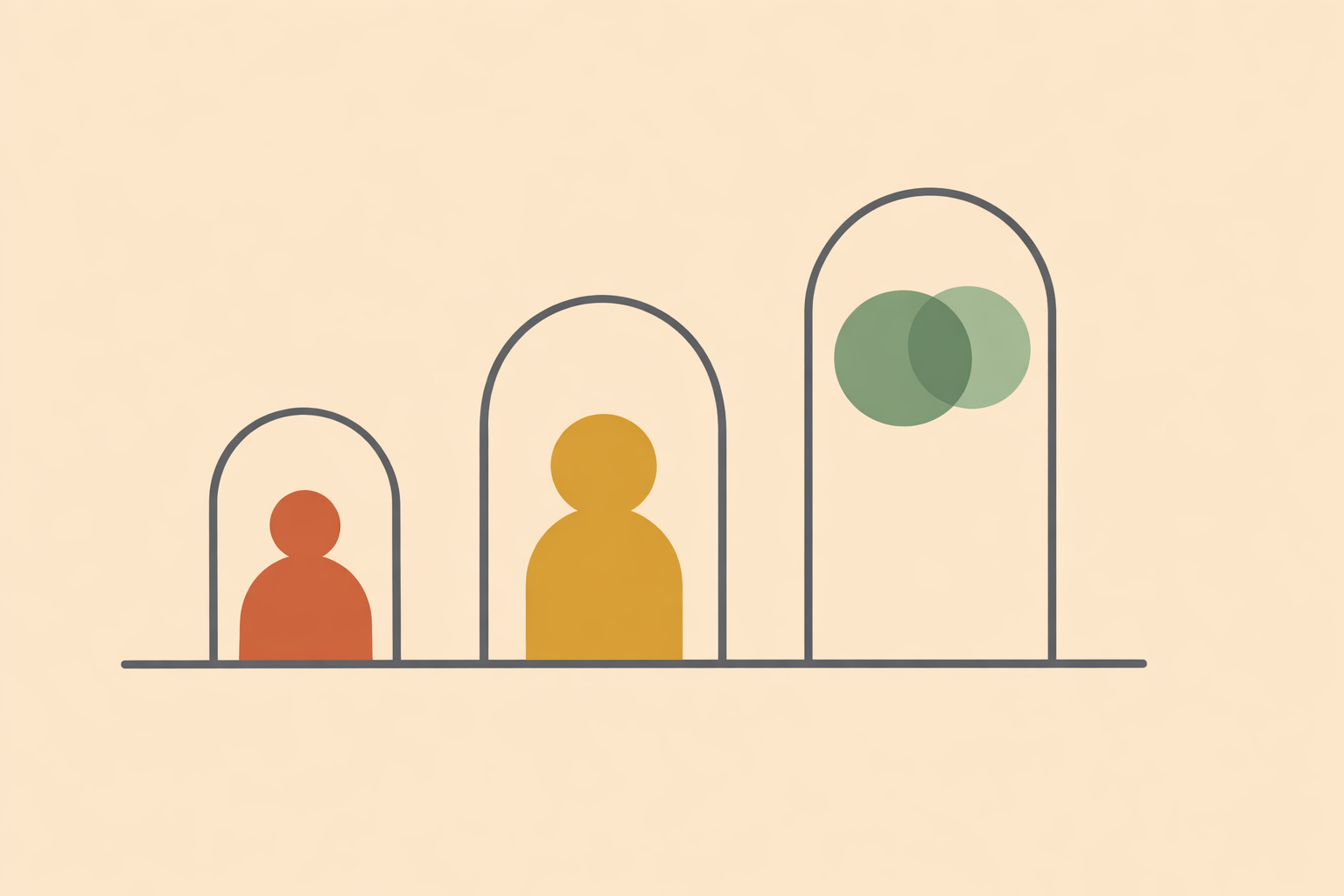
Many child-coaching plans still treat empathy like a topic to “teach,” tick off, and move on. Then real life shows the gaps: a six-year-old who can name “sad” still pushes on the playground; a nine-year-old who feels everything melts down after a class story; a middle schooler who argues passionately about fairness online can’t repair with a teammate. Empathy is a moving target in childhood because it shifts as regulation, language, and perspective-taking mature. If a plan looks the same from September to June, it can over-teach insight when regulation is thin or miss the moment when values work is ready.
Key Takeaway: Empathy coaching works best when you treat empathy as a developing system and adjust your plan to the child’s stage, context, and capacity in the moment. In practice, that means matching goals to developmental windows, using regulation-language-perspective as a quick compass, pacing intensity for sensitive children, and building empathy through brief daily habits rather than relying only on big lessons.
Why empathy development should reshape your child coaching plans
Empathy isn’t a fixed trait. It grows, reorganizes, and deepens across childhood, so coaching plans work best when they evolve too.
As children build steadier self-regulation, richer vocabulary, and stronger perspective-taking, empathy becomes more nuanced and reliable. Developmental research highlights self-regulation, language, and perspective-taking as key supports for more complex empathy.
Practically, many children need an earlier season of body-based settling and basic feeling words before they can handle repair, responsibility, fairness, and values. Empathy also grows through relationship and repetition, shaped by what’s happening at home, at school, and in the child’s wider community.
Picture a common arc. In September, a seven-year-old shrugs at a classmate’s tears. By December, after months of co-regulation, feeling words, and story reflection, she pauses and quietly offers, “Do you want to sit with me?” That change comes from steady scaffolding.
It helps to treat empathy like a living curriculum:
- Update goals regularly. What starts as co-regulation can later become repair, responsibility, or values reflection.
- Cycle methods. Begin with naming and mirroring, then add role-play, perspective work, and collaborative problem-solving.
- Keep intensity appropriate. When regulation is low, pacing matters more than adding more empathy exercises.
When plans move with the child, empathy stops being a unit and becomes part of growing up.
From toddlers to teens: how empathy unfolds over time
Empathy usually arrives in waves, and coaching goals can shift with those waves. Research shows age-related increases in empathy from childhood into adolescence.
The toddler years are often a fertile starting point. Developmental work describes 18–36 months as a period of rapid growth in empathic responding, and many toddlers begin showing comfort behaviors like offering a toy, a pat, or closeness when someone is upset.
By preschool, children start connecting inner experiences to interpretations. Developmental findings describe feelings linked to beliefs, and around age four many children recognize different interpretations of the same event can lead to different feelings.
Empathy also has different components that don’t always mature together. Research points to separate trajectories for affective (feeling), cognitive (understanding), and behavioral (doing) empathy. One child feels deeply but freezes; another acts kindly before they can explain what someone else might feel.
As abstract thinking strengthens in later childhood and adolescence, empathy often stretches beyond the immediate circle. Developmental work links adolescence with greater concern for distant others and broader social issues.
These developmental windows can guide your intentions:
- Toddlers (18–36 months): Co-soothing, mirroring, and simple naming.
- Preschool (3–5): Emotion vocabulary, stories, and basic cause-and-effect around feelings.
- Middle childhood (6–10): Perspective-taking, repair scripts, and cooperative problem-solving.
- Early teens (11+): Values, identity, fairness, digital behavior, and contribution to community.
When goals fit the child’s window, empathy work becomes more natural and more effective.
Reading the moment: is this a regulation, language, or perspective problem?
In real-time coaching, one question speeds everything up: what’s missing right now—calm, words, or viewpoint? That answer usually points to the next best move.
Start with regulation. When a child is dysregulated, empathy is harder to access, so co-soothing is often the doorway.
Then move into language. Help the child name what’s happening inside them and what they notice in the other person. Emotion vocabulary sticks best when it’s built in real moments, not as a drill.
Next, check perspective-taking. If the child can reflect, explore what the other person may have felt or misunderstood. If they can’t, stay with concrete cues instead of pushing for a sophisticated answer.
A simple in-the-moment triage:
- Regulation check: “Your body looks tight. Let’s press the wall together.”
- Language check: “Are you mad, sad, worried, or something else?”
- Perspective check: “What do you think Kai thought was happening?”
A short playground script might sound like: “Your body is tight; let’s stomp five times. Good. You wanted the swing, so say, ‘I want a turn.’ Now look at Sam’s face. What do you see? Yes, tears. What could help now?” In under a minute, you moved from body to words to viewpoint.
This compass keeps empathy coaching practical. It stops you asking for insight when the child first needs settling, and it also prevents getting stuck at feeling words when the child is ready for repair.
When caring hurts: helping highly empathetic children stay grounded
Some children feel others’ pain so strongly that they flood. They freeze during sad stories, lose sleep after hearing about a friend’s hardship, or absorb the emotional weather of the room. This is often described as empathic distress.
Research suggests empathic distress becomes draining when caring isn’t balanced with regulation.
For these children, the first task is containment. Slow the wave, help them return to themselves, then offer a clear channel for caring.
Many practitioners teach reflective empathy: understanding another person’s feelings without merging with them. This supports sustainable caring for children who over-identify with others’ struggles.
Useful boundary practices include:
- Body anchors: hand to heart, feet on the floor, one hand on the chair.
- Time windows: a few minutes with a heavy topic, followed by a reset.
- Choice of care: listen, draw a card, offer kind words, or ask another trusted adult for support.
- Exit lines: “I care about you, and I need a break now.”
For sensitive or stressed young people, shorter doses of exposure to others’ suffering plus a gentle debrief can keep empathy steady. Research also links high empathy without enough regulation to greater distress, so the focus becomes strengthening grounding rather than dimming kindness.
Designing the dose: daily micro-practices, structured sessions, and shared rituals
Big empathy lessons can be memorable, but empathy usually grows through short, frequent moments woven into ordinary life, supported by occasional deeper work.
This shift changes everything in practice: use the moments already happening around the child, instead of waiting for the perfect lesson.
Structured social-emotional learning in schools, including role-play, cooperative activities, and feelings discussions, is linked to better social skills and fewer conflicts.
Shared reading matters too. Family reading and storytelling about characters’ feelings can nurture empathy over time. This aligns with long-held traditional wisdom: stories let children explore human complexity safely.
A balanced rhythm often looks like:
- Daily micro-practices: brief feeling check-ins, naming moments, repair prompts, or “face checks” before transitions.
- Weekly structured block: a short role-play, story reflection, or review of a recent peer conflict.
- Monthly shared ritual: gratitude circles, community care projects, or storytelling that reflects the family or community’s values.
This kind of dosage is sustainable and helps empathy become part of daily culture rather than a separate subject.
Working with difference: culture, neurodiversity, and adversity-shaped empathy
Empathy doesn’t look the same in every family or community. In some homes, care is shown through practical help, duty, and quiet reliability. In others, it’s expressed through rich feeling language and open discussion. Both can be genuine care.
That’s why “What does caring look like here?” is a foundational question. Respecting cultural roots is part of good practice, not an optional extra.
Some autistic children benefit from explicit structure for social nuance, and in broader child and adolescent development work this kind of calibration often matters across settings. Research suggests structured cues can support social understanding and interaction.
Adversity can shape empathy in different directions. Some children become highly alert to other people’s moods; others go numb or pull back. Research links trauma exposure with both heightened vigilance and blunted responding.
In these situations, safety and regulation come first. Moving too fast often creates shame or overwhelm rather than growth.
Coaching moves that honor difference include:
- Define empathy locally: build from what already counts as care in that family or community.
- Offer alternative signals: color cards, hand signals, brief written notes, or practical action instead of forced eye contact or long verbal processing.
- Use concrete scaffolds: visual repair steps, comic-strip conversations, or posted “how we help” options.
- Protect dignity: replace “you don’t care” with “let’s build this skill.”
When empathy is treated as learnable rather than a moral label, children stay more open and engaged.
Bringing it together: turning empathy development into an evolving coaching plan
The most useful empathy plans stay flexible. They spiral back through the same core moves—regulate, name, consider, act, repair—adding nuance as the child matures.
A simple monthly rhythm can help:
- Observe: Is the main challenge regulation, language, or perspective?
- Set a short intention: one concrete empathy goal for the next few weeks.
- Review real moments: use fresh examples from home, school, or peer life.
- Choose one or two supports: a micro-practice, a script, a story theme, or a repair routine.
- Revisit and adjust: keep what works, change what does not.
Adult modeling matters too. Children learn empathy through the empathy shown to them and around them, and research links parental support with children’s empathy.
That influence can echo across generations. Longitudinal research suggests intergenerational empathy, with adult empathy shaping adolescent empathy and later supportive parenting.
More broadly, centering empathy supports better relationships and well-being. This work goes beyond “good behavior” in the moment; it shapes the kind of relational life a child learns to build.
Keep the rhythm workable and kind. Match the ask to the child’s capacity, build from regulation into language, then into perspective and repair. Use stories, shared chores, community values, and everyday repair as steady practice. In the conclusion of any plan, include clear safety guardrails: slow down when a child is overwhelmed, protect dignity, and bring in additional support when stress, adversity, or persistent shutdown makes connection hard to access.
Advance Child Psychology Coaching
Apply these empathy-development strategies with confidence in the Child Psychology Coach Certification.
Explore the Certification →










