How hypnosis for pain fits real‑world, team‑based care
Hypnosis for pain fits naturally inside modern, team-based support—alongside movement work, hands-on approaches, and emotional support. It’s both research-supported and deeply aligned with long-standing communal practices of focused attention, breath, and imagery.
In real services, this is already happening. Integrative centers such as Vanderbilt’s Osher Center offer hypnosis for chronic pain in structured group formats alongside other disciplines. In pain psychology, hypnosis is described as a way to reduce pain while also easing common companions like sleep disruption and distress—exactly the kind of “whole experience” shift that helps other approaches work better.
A large synthesis of 85 studies found pain intensity improved in most trials, with many people reaching clinically meaningful relief. The same analysis also points to what tends to work best: direct analgesic suggestion, with sizable portions of people reaching clinically meaningful change—useful guidance when setting expectations with colleagues.
Just as importantly, hypnosis is skills-based. The Arthritis Foundation notes many people benefit within 4–10 sessions by learning to redirect attention using breathing and pleasant imagery. From a traditional lens, that mechanism is familiar: focused attention, breath, imagery, and trance have long been used across cultures to redistribute suffering and restore steadiness—now expressed in a modern, teachable format.
Approached with this evidence-informed, tradition-aware mindset, hypnosis becomes a reliable strand in a wider web of pain support.
Key Takeaway: Hypnosis supports chronic pain care best when it’s positioned as a skills-based strand within coordinated, team-based support. By training attention, perception, and self-regulation, it can reduce pain intensity and distress, ease sleep disruption and flare fear, and make movement, hands-on work, and emotional support easier to engage.
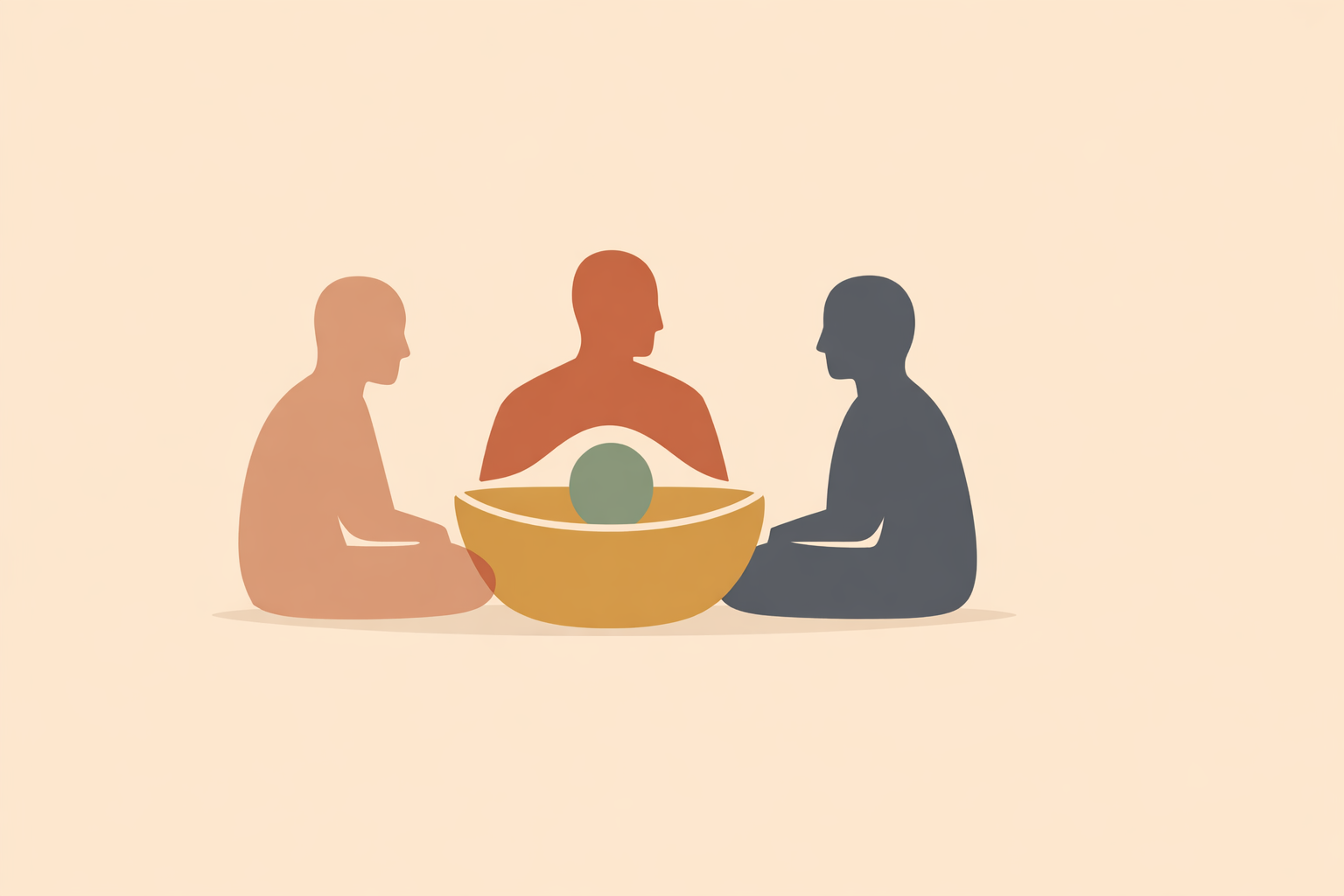
Shift 1: From lone fixer to one voice in a circle of support
Long-term pain support works best as shared work. With hypnosis, the practitioner’s role is to add a clear, coordinated voice—helping people build self-regulation and agency—rather than carrying the burden of being the “fix.”
Why long-term pain is naturally shared work
In many traditional settings, persistent pain was never held by one person. Elders, bodyworkers, herbalists, movement guides, spiritual leaders, and family all played a part. That community logic holds up well in modern framing, too: hypnosis can be effective for reducing chronic pain while also supporting mood, sleep, and coping. As Mark P. Jensen notes, hypnosis interventions “consistently produce significant decreases in pain.”
Team-based delivery makes this practical. At Vanderbilt’s Osher Center, hypnosis for chronic pain is offered as an 8‑week group, embedded within broader support. And when hypnotic practice is added to group support, education, or expressive work, groups can show lower pain and suffering than supportive circles without hypnosis.
Traditional knowledge reinforces the same principle: trance, breath, rhythm, and story have often been community tools for easing distress. The modern way to honor that lineage—without appropriation—is to teach self-hypnosis with cultural humility and respect for roots. Naturalistico encourages this “one-thread” positioning and a no overpromising stance.
Letting hypnosis take its rightful place
When hypnosis is offered as one part of a coordinated plan, collaboration gets simpler. Hypnosis supports attention, meaning-making, and nervous-system regulation; movement specialists focus on graded re-engagement; hands-on practitioners support comfort; and emotional support providers work with identity, relationships, and grief. Hypnosis helps those pieces “land” by lowering alarm reactivity and strengthening practical self-soothing people can use between sessions.
Naturalistico describes hypnosis as one strand in a web—powerful precisely because it doesn’t have to stand alone.
Shift 2: What hypnosis actually changes in the pain experience
Hypnosis often changes three things at once: where attention goes, how sensations are interpreted, and what meaning the mind assigns to them. Essentially, it can turn down threat and build a steadier inner environment for healthy choices.
Focused attention and quieter alarms
At its core, hypnosis is guided attention. Think of it like turning down background static so the system stops reacting to every signal as urgent. Stanford research suggests hypnosis can reduce activity in networks linked with pain salience, and pain psychology literature describes how hypnosis can decrease in brain regions involved in pain processing—often matching what practitioners observe as breath slows and the body settles.
Here’s why that matters: when the inner alarm softens, people are more willing to try gentle movement, receive hands-on support, and re-enter daily life. Hypnosis doesn’t compete with other approaches—it helps create the conditions where they can work.
From flare fear to self-regulation skills
Because hypnosis can be taught as self-hypnosis, benefits can continue beyond the session room. Reviews describe meaningful reductions in pain intensity and unpleasantness, with improvements often lasting for months when home practice continues.
In practice, this usually looks like progressive relaxation and guided imagery—breathing into spaciousness, imagining cool breeze or warm sunlight, and shifting the felt quality of sensation. Metaphors like a “pain dial” help people make small, repeatable adjustments using a structured pain dial script.
These methods are modern expressions of familiar traditional mechanisms—breath, rhythm, trance, and story—now offered in a grounded, skills-first way with respect for cultural roots.
Shift 3: Where hypnosis fits alongside movement, manual and emotional work
Hypnosis can strengthen movement work, hands-on approaches, and emotional support by lowering alarm, improving self-regulation, and reshaping meaning. It doesn’t replace other roles; it supports them.
Common collaboration scenarios
- With movement specialists: Hypnosis can ease flare fear and anticipatory tension so graded exposure and pacing feel safer. Programs combining education with hypnotic practice have shown significant drops in pain intensity and distress compared with education alone.
- With manual practitioners: Suggestion, breath, and imagery can help the body receive touch with less guarding. Some comparisons report better outcomes for muscle pain, fatigue, sleep disturbance, and distress versus standard physical modalities—highlighting how nervous-system tone shapes the experience of hands-on work.
- With emotional support providers: Hypnosis offers “in-the-moment” tools for spikes of pain and fear, helping sessions stay resourced. Group hypnosis added to supportive circles has been reported to improve coping and maintain lower pain ratings over time.
In condition-specific comparisons, adding hypnotic skills to education led to larger decreases in pain ratings than education alone. One trial reported a 57% reduction in current pain and 51% in worst pain in the hypnosis group—an illustration of how attention training and suggestion can amplify broader support plans.
Staying in your lane while adding real value
Collaboration stays smooth when each professional is clear about scope. In a holistic practice, hypnosis supports attention, perception, stress patterns, sleep, and meaning—while tissue concerns, medication questions, and red-flag issues are directed to appropriately qualified professionals. When sleep improves and alarm drops, other work often becomes easier; when movement capacity returns, hypnotic gains become more “livable” day to day.
Naturalistico’s teaching on nerve pain highlights the value of careful coordination: hypnotic work can focus on flare fear, dysregulation, and pacing while colleagues handle load, biomechanics, and relationship support.
A brief team update after a block of sessions—sleep shifts, flare patterns, confidence, and function—helps everyone see how the pieces fit. The person at the center of the circle feels supported, not shuffled between silos.
Shift 4: Talking about hypnosis for pain with the rest of the team
Colleagues collaborate best when your language is clear and non-defensive. Keep it practical: what you do, what it supports, and the kind of time frame they can expect.
Simple ways to explain your role
- “I teach attention and breath skills that turn down the body’s alarm response and reshape how sensations are interpreted. That often makes graded movement and hands-on work more comfortable.”
- “My focus is self-hypnosis—practices people can use at home to reduce flare fear, improve sleep, and rebuild confidence.”
- “We track outcomes that matter in daily life: sleep quality, stress reactivity, flare patterns, and function.”
It also helps to offer a structure colleagues can picture. An 8‑week arc with longer sessions, home recordings, and check-ins mirrors programs that run for 8 weeks with 90‑minute online meetings and short daily practices. For a simpler benchmark, the Arthritis Foundation notes benefits often show within 4–10 sessions using breathing focus and pleasant imagery.
Referral language and session structure
- When to refer: “Consider hypnosis if fear of flares, sleep disruption, or stress reactivity blocks progress with movement or hands-on work.”
- What to expect: “People often start with weekly sessions for a short series, plus brief home practice a few times per week. We build a personalized self-hypnosis routine.”
- How we measure: “We can track intensity, flare frequency, sleep, and confidence with brief scales or journaling.”
If you want a simple evidence note without getting technical: some programs report about 31% improvement across a series, with gains often maintained at 3‑ to 6‑month follow-up when people keep practicing. That matches what many practitioners see: steady, skill-based change rather than overnight transformation.
When questions come up, it can help to point to mainstream, collaborative framing. The APA’s Speaking of Psychology series describes hypnosis as a practical option for pain and emphasizes clear, collaborative communication so it integrates well. Naturalistico’s guides echo that tone, emphasizing realistic framing—spot by spot, day by day—rather than sweeping promises.
Conclusion: Bringing hypnosis into team-based pain support with integrity
Hypnosis has a rightful seat in team-based pain support because it helps people shift inner experience and day-to-day behavior in ways that strengthen every other approach. Research shows changes can be maintained for months, and some findings extend as far as 12 months—while traditional practice reminds us these skills have long been communal tools for navigating suffering.
For practitioners, integrity comes down to three commitments. First, be clear about scope: hypnosis supports attention, regulation, sleep, and meaning, and works best alongside movement, hands-on support, and emotional work. Second, track what actually improves life—sleep, flare fear, confidence, and function—not just pain scores. Third, keep refining skill: evidence suggests outcomes can be stronger when practitioners use direct suggestions targeting pain, which makes good training and ethical delivery especially important.
That’s how hypnosis becomes more than a technique: part of a living, integrative fabric—kind, practical, and steadily improving—where each voice in the circle supports the whole person moving forward.
Master Pain Hypnosis Skills
Build team-friendly protocols in Treating Physical Pain with Hypnosis that support pain relief, sleep, and self-regulation.
Explore Treating Physical Pain with Hypnosis →