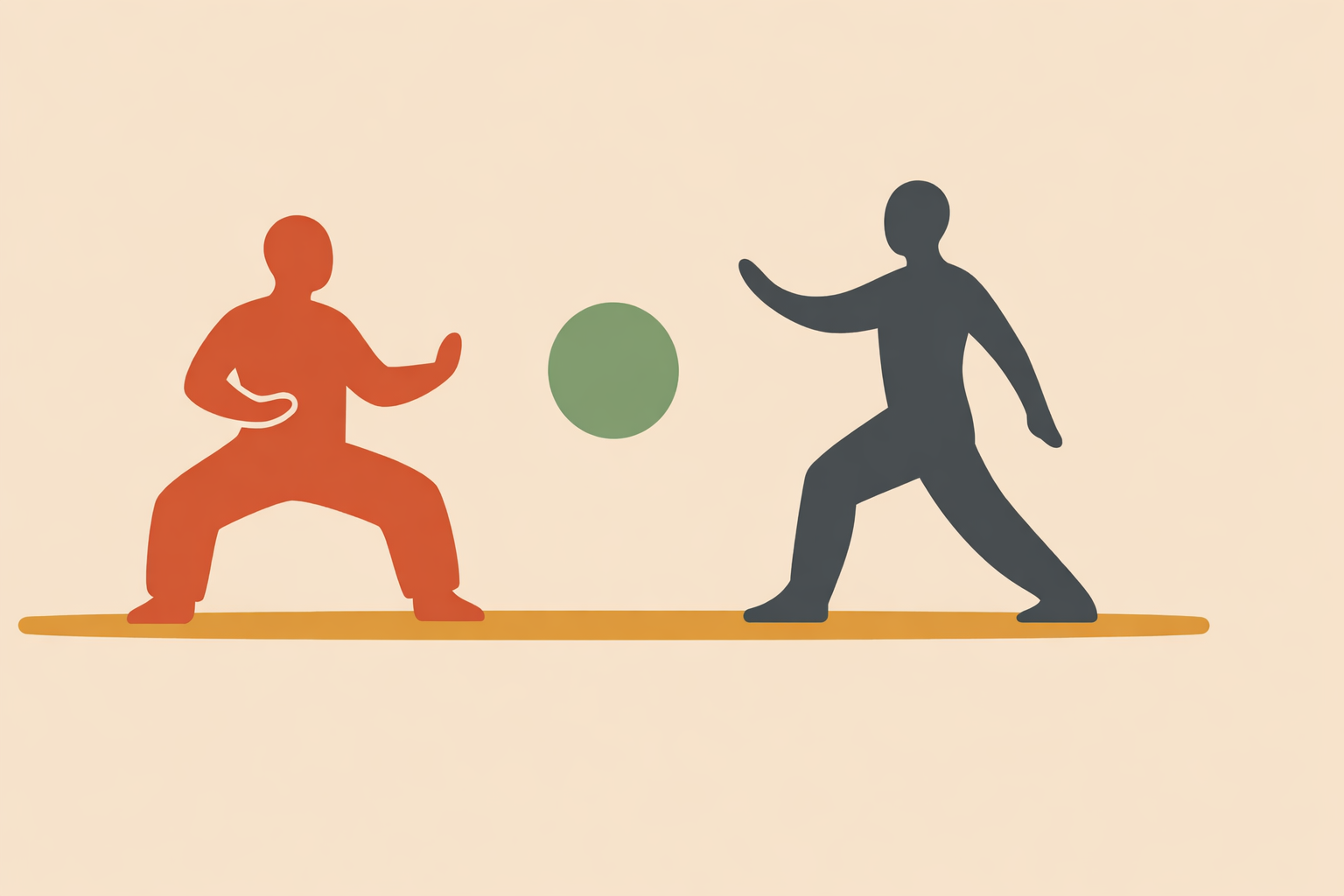
In real coaching practice, the Qi Gong vs Tai Chi question is rarely theoretical. It comes up when someone has sensitive knees, low confidence with balance, or a nervous system that won’t “switch off” at night. The useful question is not which art is better, but what this person can meet consistently right now.
Qi Gong and Tai Chi are closely related internal arts, and they often support each other beautifully. Both can nurture steadiness, self-awareness, and well-being. Most of the time, the real difference is fit: pacing, complexity, physical demand, and how easily the practice can be adapted for the person in front of you.
Fit matters because the wrong ask can quietly derail progress. If a practice feels too complex, too long, or too leg-heavy, people often stop before the deeper benefits have time to take root. Strong planning stays person-first, flexible, and sustainable.
Key Takeaway: Choose Qi Gong or Tai Chi based on what someone can practice consistently right now, not which system is “better.” Qi Gong often fits regulation, fatigue, and adaptable daily rhythm, while Tai Chi tends to build integrated balance, coordination, and confident movement through space.
The shared foundation: internal cultivation through body, breath, and attention
Qi Gong and Tai Chi come from the same broad tradition of internal cultivation. Both organize movement around posture, breath, and focused attention, aiming to build steadiness from the inside out.
Traditional teaching often describes the “three regulations”: regulating the body, regulating the breath, and regulating the mind. Think of it like tuning an instrument—when those three are in harmony, the whole system plays more smoothly.
They’re also learned in a similar spirit: less forcing, more listening. Instead of pushing through effort, you refine, slow down, and let sensitivity lead. That’s a big part of why these arts translate so well into modern well-being coaching.
Their roots differ in emphasis—Tai Chi grew through martial lineages, while Qi Gong spans a wider family of energy-cultivation practices—but in contemporary use both can function as mindful movement that helps promote relaxation.
“This habit is really about taking emotional health as seriously as your physical health… Emotions actually affect your physical health.”
Here’s why that matters: when someone feels more settled internally, everything else becomes easier to build—movement, consistency, and confidence.
Qi Gong vs Tai Chi: the practical differences that shape planning
The shared foundation matters, but day-to-day program design depends on the differences. Three are especially useful: scope, complexity, and movement demand.
Qi Gong has broader scope. It can include standing postures, repeated single movements, breath-led drills, walking practices, seated work, and even lying practices. That variety gives you many entry points, even on low-capacity days.
Tai Chi is usually more sequence-based. It gathers the same internal principles into a longer flowing form with stepping, turning, and weight shifts.
Qi Gong is often simpler to start. Many sets are modular and repetitive, which can be a relief for people dealing with fatigue, overwhelm, or inconsistent concentration. Tai Chi often asks more upfront: remembering order, coordinating transitions, and moving through space with continuity.
Tai Chi usually asks more from the legs and balance system. Its stepping patterns and prolonged weight shifts offer rich training for integrated movement, but they can be too much too soon for some people.
- Qi Gong: broad toolkit, modular, easy to scale, well suited to gentle starts and targeted regulation.
- Tai Chi: flowing sequences, continuous stepping, stronger emphasis on integrated coordination and functional balance.
“Qigong is often a movement you do for a certain situation, whereas Tai Chi is a flowing series that works on the entire body.”
When Qi Gong is the better starting point
Qi Gong is often the best opening choice when the main need is regulation, simplicity, or easy adaptability.
For people dealing with fatigue, mental overload, or a highly changeable baseline, Qi Gong can be easier to enter and repeat. It can be done standing, seated, or in very small ranges—so the practice can meet the day, instead of fighting it.
It’s also a strong fit when goals include settling the system, improving sleep rhythm, or building body awareness without performance pressure. In fibromyalgia research, consistent Qigong practice has been associated with reduced pain alongside improved sleep and functioning. Traditional experience strongly echoes this: Qi Gong is often a reliable way to rebuild rhythm when energy is low.
For older adults, regular Tai Chi and Qigong practice may also support cognitive impairment. In many teaching settings, simpler Qi Gong patterns are still a wise way to establish confidence before adding more choreography.
When Tai Chi is the better starting point
Tai Chi often becomes the stronger lead when balance, coordination, and whole-body integration are the primary goals.
Its continuous stepping and mindful weight shifts create a natural training ground for moving more confidently through space. This is one reason Tai Chi is consistently linked with falls prevention and balance support.
Some people also simply respond better to a flowing sequence than to repeated drills. For them, Tai Chi becomes a meditative anchor: structured enough to hold attention, fluid enough to soften strain.
Tai Chi can be deeply regulating, too. Reviews suggest these practices may help decrease sympathetic output, which helps explain why many people feel calmer and more settled afterward.
Match the art to capacity, not just the goal
Goals matter, but current capacity matters just as much. The best choice is usually the gentlest effective option.
If standing tolerance is low, energy fluctuates sharply, or someone becomes overloaded by too many moving parts, Qi Gong often offers the smoother path. The VA notes that both arts are broadly adaptable, including seated and standing formats.
If the person has enough capacity for stepping practice and wants a more integrated balance challenge, Tai Chi may be worth introducing earlier—even if it starts as short, simple stepping work rather than a full form.
For joint sensitivity, posture depth matters. Deep Tai Chi stances can aggravate discomfort, so higher postures and smaller ranges tend to be the kinder beginning. Harvard Health notes that joint concerns may call for caution early on.
This is where practitioner judgment shines: a well-chosen simple practice will outperform an ideal plan that overwhelms the person.
Time, dose, and consistency: what actually helps practice stick
Both arts reward regularity more than intensity. Put simply, small steady practice usually does more than occasional heroic effort.
For Tai Chi, many research-informed beginner programs run around 12 weeks with weekly instruction plus home practice. By that point, many people may notice positive changes in steadiness, mood, confidence, and day-to-day energy.
In real-world teaching, shorter daily practice is often the better “ask.” Ten minutes on most days can build more than one long weekly session, especially for beginners. What this means is that repetition becomes a friend, not a burden.
For many people, 20–30 minutes on most days creates steady progress, but a realistic minimum matters more than an impressive target.
- Low energy days: 5–10 minutes of seated or standing Qi Gong.
- Balance-focused days: brief Qi Gong warm-up, then 10–15 minutes of Tai Chi stepping or form work.
- High-stress days: simple regulation-focused Qi Gong, then quiet standing or sitting.
“Real health is built through rhythm, not just random effort… You get healthy because of your day-by-day actions… In Chinese medicine this is called yang sheng,” the art of nourishing life.
Why blending Qi Gong and Tai Chi often works best
In long-term planning, the strongest answer is often both.
Qi Gong can prepare the ground by improving body awareness, softening excess tension, and helping someone “arrive” in their body. Tai Chi can then build on that base through continuous movement, stepping, and coordinated transitions.
This pairing is already common in teaching. Many Tai Chi classes include qi gong movements as warm-ups before the longer form.
Blending also lets you scale with precision:
- Use Qi Gong first when someone is depleted, scattered, or returning after a break.
- Add Tai Chi when regulation is steadier and they’re ready for more coordination and balance challenge.
- Keep both available so the practice can match the day rather than fight it.
In practice, this is often where planning becomes sustainable: the person isn’t locked into a rigid system—they’re building a living toolkit.
“The coexistence of traditional Chinese medicine and modern medicine in China represents a pragmatic and innovative approach… offering… more comprehensive and flexible care.”
That same pragmatic spirit serves movement planning well: use what fits, keep what helps, and adapt without losing the roots of integrative Chinese medicine.
Conclusion: a person-first way to choose between Qi Gong and Tai Chi
Qi Gong vs Tai Chi isn’t really a contest—it’s a matching process.
If the priority is simplicity, regulation, and an easy entry point, start with Qi Gong. If the priority is integrated balance, coordination, and moving confidently through space, bring in Tai Chi sooner. When possible, let them support one another.
Both arts are cumulative. They ask for steadiness, not perfection, and group practice often helps with momentum and accountability.
As a final note, encourage learners to work within comfortable ranges, adjust stances when joints are sensitive, and choose instruction that respects lineage, safety, and cultural roots. The kindest plans are usually the most effective: simple enough to repeat, flexible enough for real life, and steady enough to evolve over time.
Study Chinese Medicine Practitioner
Apply Qi Gong and Tai Chi principles with deeper context in the Chinese Medicine Practitioner course.
Explore Chinese Medicine →