The default move in human aromatics—pick a favourite oil, do quick dilution math, and start diffusing—does not translate neatly to dogs.
A dog who calmly tolerates one session may avoid the room the next; another may lick a topical spot you cannot easily undo.
What matters most is whether aromatic support belongs in this session at all, by which route, and at what level of exposure.
That is why safe canine dilution is best understood as a workflow rather than a number.
Start with the individual dog, choose the least intrusive route, favour simple materials, and keep every step easy to stop, adjust, or abandon.
The guiding principle is straightforward: low exposure, short duration, good airflow, and a real choice for the dog to move away.
Key Takeaway: Safe canine dilution is a session workflow, not a number. First, screen the individual dog to decide whether essential oil belongs at all. Next, choose the exposure route before any math, usually prioritising voluntary scent exposure over topical contact. Then select gentle materials, exclude high-caution oils, mix only very small labelled amounts, and run the session with ventilation, observation, and canine-led choice. Finally, document what happened and adjust future sessions based on the dog’s response.
Step 2: Choose the route before you calculate dilution
Most problems begin before dilution math even starts.
Route shapes exposure, and exposure shapes risk.
With voluntary scent exposure, the dog controls proximity and duration.
That makes it the easiest route to stop quickly and the easiest route for the dog to decline.
Topical use is different: once something is on coat, collar, or skin, the dog has to live with your choice, and grooming or licking can add another layer of exposure.
In general, dogs vary by route, and concentrated oils on skin or coat can create more problems than brief, well-ventilated scent in the air.
That is why a compulsive licker, irritated skin, or a cracked paw is not the place to test a new blend.
Many practitioners begin with options like these:
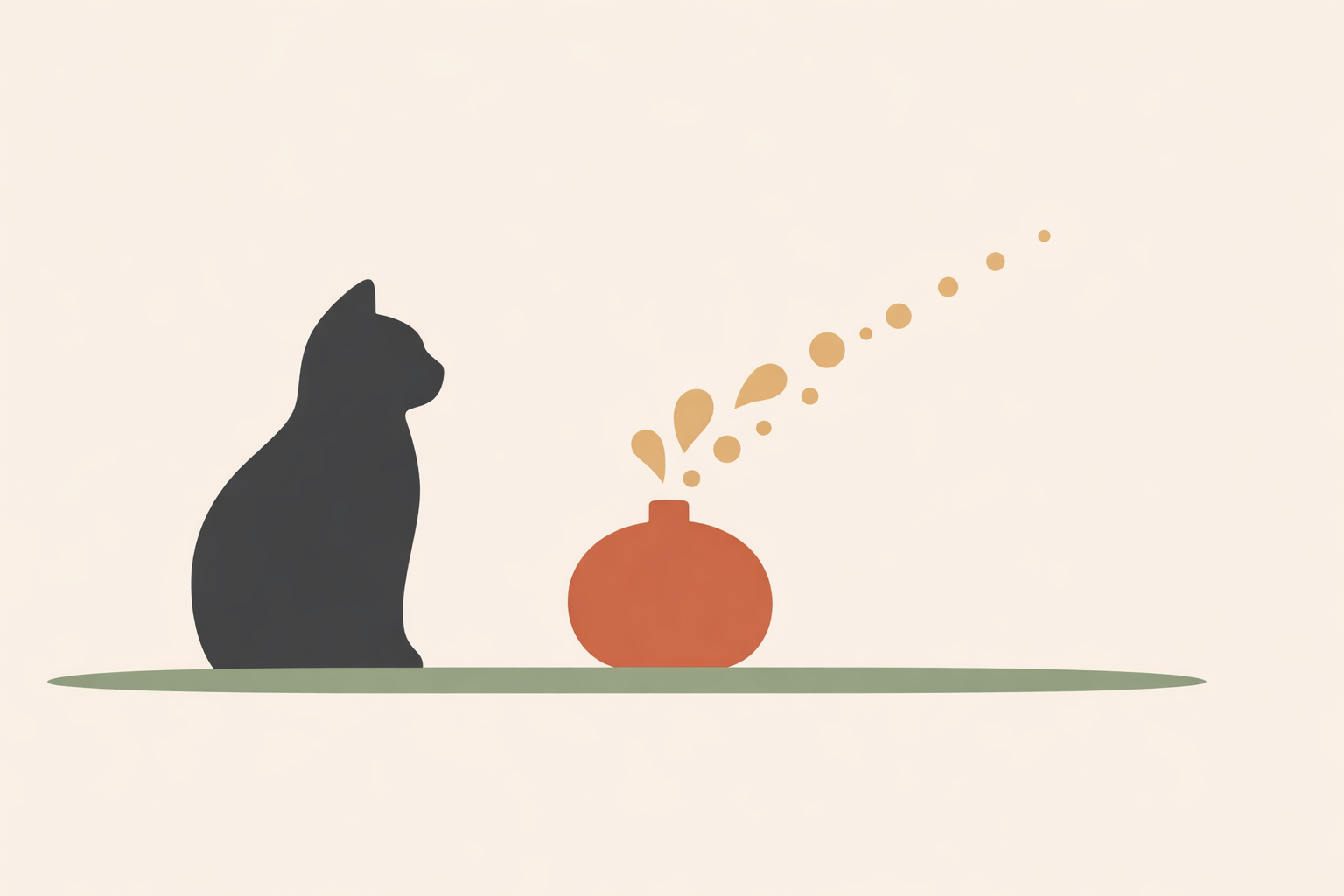
- one drop on a cotton pad placed several feet away
- a lightly scented cloth in the room, never trapping the dog near it
- a hydrosol on fabric at a distance
- a fabric or collar tab approach only after careful screening
If you use a diffuser at all, follow practical poison-control guidance: keep airflow moving, avoid enclosed scented spaces, and keep exposure brief.
Diffusion should never remove the dog’s ability to leave.
Example: a noise-sensitive herding mix paces during storms.
Instead of diffusing into the whole room, you offer a sealed inhaler at a distance from her bed. She approaches, sniffs twice, then chooses a spot by the door.
You remove the inhaler and increase ventilation. That is clear, usable feedback.
Step 3: Choose simple materials and avoid high-caution oils
Traditional aromatic plant use offers a rich palette, and dogs benefit most when that palette is used with restraint.
Aim for the narrowest, simplest option the dog can comfortably navigate.
Some oils are best excluded from routine canine sessions.
Poison-control guidance lists wintergreen, birch, cinnamon, eucalyptus, tea tree, and pennyroyal among oils associated with poisoning concerns in dogs.
In practice, many aromatics practitioners also treat camphor, clove, hot oregano and thyme chemotypes, and rue as high-caution choices for dogs.
On the gentler end, practitioners commonly reach for true lavender, Roman chamomile, and frankincense when any essential oil is used at all.
These are still not risk-free, but they are often considered more manageable for brief optional scenting or very low-exposure work.
Hydrosols are also widely used as a softer first step.
They fit well when you want a light aromatic presence without jumping straight to essential-oil intensity, especially in animal wellness work that prioritises low-impact support.
A workable beginner palette might look like this:
- hydrosols such as lavender or Roman chamomile on a cloth placed a few feet away
- one-drop optional scenting with lavender, Roman chamomile, or frankincense on a cotton pad at a clear distance
- plain jojoba, sunflower, or fractionated coconut oil when you want a non-aromatic carrier-only trial
A healthy adult beagle in a comfort session may do beautifully with nothing more than two spritzes of lavender hydrosol on a cloth across the room.
Often, that kind of softness is enough.
Step 4: Use conservative dilutions for dogs
Dilution is simple in theory: percentage equals essential-oil volume divided by total blend volume.
In canine work, the point is not perfect arithmetic; the point is modest, purposeful exposure.
Many practitioners start around 0.25% to 0.5% for cautious topical experiments, and reserve anything near 1% for more deliberate, short-term use with robust adult dogs and a clearly justified reason.
Treat these as working conventions, then let the dog’s response refine them.
In a 10 mL blend, that looks roughly like this:
- 0.25%: about 0.025 mL essential oil
- 0.5%: about 0.05 mL essential oil
- 1%: about 0.1 mL essential oil
Because drop size is inconsistent, “drops” are a rough household shorthand, not a precise dosing system.
For very small batches, a syringe or pipette gives you more control.
The deeper point matters most: there is no one safe amount for every dog, every oil, and every route.
Conservative practice is lower exposure, shorter duration, and an easy exit for the dog.
Example: for a 10 mL trial blend, you measure 0.025 mL of lavender into 9.975 mL of jojoba for a 0.25% blend.
You use a tiny amount on a fabric tab rather than on the dog’s body and observe before considering any repeat.
Step 5: Mix only a small amount and label it clearly
Once you have chosen the route and dilution, make as little as possible.
Small batches are easier to monitor, easier to discard, and less likely to become an automatic habit.
Choose a fresh, neutral carrier that suits your plan.
Jojoba, sunflower, and fractionated coconut oil are common options.
A carrier lowers concentration, but it does not remove risk, and it certainly does not prevent licking.
Clean preparation matters.
Use a small glass bottle, keep the container secure between uses, and label it in plain language:
- dog’s name and date
- plant names used
- concentration and carrier
- intended route, such as “fabric tab only” or “room cloth, remove if dog leaves”
Do not decant aromatic blends into food or drink containers, and do not leave them where a dog can knock, lick, or chew them.
Also, do not share a canine blend across species.
Essential-oil sensitivity varies across species, and what you prepared with a dog in mind should not be casually reused for cats, birds, rabbits, rodents, reptiles, or horses.
A practical label might read: “Milo – 10/09 – Lavender 0.25% in jojoba – fabric tab only – ventilated room – 10 minutes.”
That level of clarity protects everyone involved.
Step 6: Let the dog’s response lead the session
Invite rather than impose.
Dogs can be far more sensitive to scent than humans expect, so set the room up around choice, distance, and easy stopping points.
Begin with open airflow and no competing strong odours.
Offer the scent at a distance on a cloth, pad, or other easily removable format.
If the dog approaches, let that happen without following them with the scent.
If the dog turns away, moves off, or loses interest, remove it.
Look for ordinary signs of ease: soft eyes, normal breathing, loose posture, and voluntary re-approach.
Just as important, notice signals that mean pause or stop, such as head-turning, moving away, lip-licking, hiding, sudden panting, pawing at the face, or shaking off.
If topical use is part of the plan, keep it minimal and strategic.
Test the carrier alone first. If you proceed, use only a tiny amount and place it on something like the outside of a harness strap or fabric tab rather than near the face or on easy-to-lick areas.
During inhalation exposure, watch for watery eyes, drooling, vomiting, coughing, wheezing, or rapid breathing.
With dermal exposure, watch for redness, itching, weakness, or behaviour change.
If any of these appear, stop the exposure and air out the space.
Example: you place one drop of frankincense on a cotton pad five feet from a shepherd mix’s resting mat.
She sniffs once, then lies down facing away. You remove the pad and open a window.
The session has already told you enough.
Step 7: Debrief, adjust, and know when to stop
The session is not finished when the scent is removed.
Good practice continues in the notes you keep and the adjustments you make afterward.
Record the essentials:
- date and duration
- materials used
- dilution and route
- distance from the dog
- ventilation
- body language during and after the session
- any delayed changes over the next 24 hours
These notes sharpen pattern recognition over time.
If a dog settled when the cloth was six feet away but left when it moved closer, you have learned something useful. If a hydrosol was well tolerated but an essential oil felt too strong, that matters too.
Keep a clear warning list in mind.
Possible exposure signs include skin irritation, drooling, tremors, respiratory distress, or seizures.
Severe signs call for prompt qualified support.
If a dog gets oil on the coat or skin, remove access to the source, increase fresh air, and keep the product details close at hand.
Botanical name, concentration, route, and timing all help the next support decision. Avoid harsh improvisation; a calm, informed response is better than scrubbing in panic.
A useful debrief note might read: “10/09, 15:00–15:20, room ventilated, 1 drop lavender on pad at 6 ft. Dog approached once, sniffed twice, then rested beside guardian. Pad removed at disengagement. No coughing, scratching, or digestive upset through next day.”
Over time, these notes become your real map.
Conclusion: Safe dilution is really safe session design
Thoughtful dilution is not about finding ways to use more oils.
It is about keeping exposure low, preserving the dog’s choice, and staying attentive enough to stop early.
The process stays consistent: screen the dog, choose the least intrusive route, avoid high-caution oils, consider hydrosols or unscented support, mix only a tiny clearly labelled amount, and watch the dog more closely than the bottle.
Then document what happened and let that guide the next session.
Traditional plant knowledge gives us valuable aromatic allies.
Careful toxicology guidance reminds us that species sensitivity matters, and that skill with dogs is often expressed through restraint, especially in animal aromatherapy practice.
When those two understandings meet, canine aromatics becomes what it should be: kind, measured, and deeply responsive to the animal in front of us.
Train in Animal Aromatherapy
Build safer, dog-led sessions with species-specific guidance in the Animal Aromatherapy Certification.
Explore Animal Aromatherapy →