Purpose work is where many otherwise capable coaching engagements stall. The default becomes open-ended reflection: more journaling, more frameworks, another wheel-of-life. Months pass, the client’s story gets richer, and action stays thin.
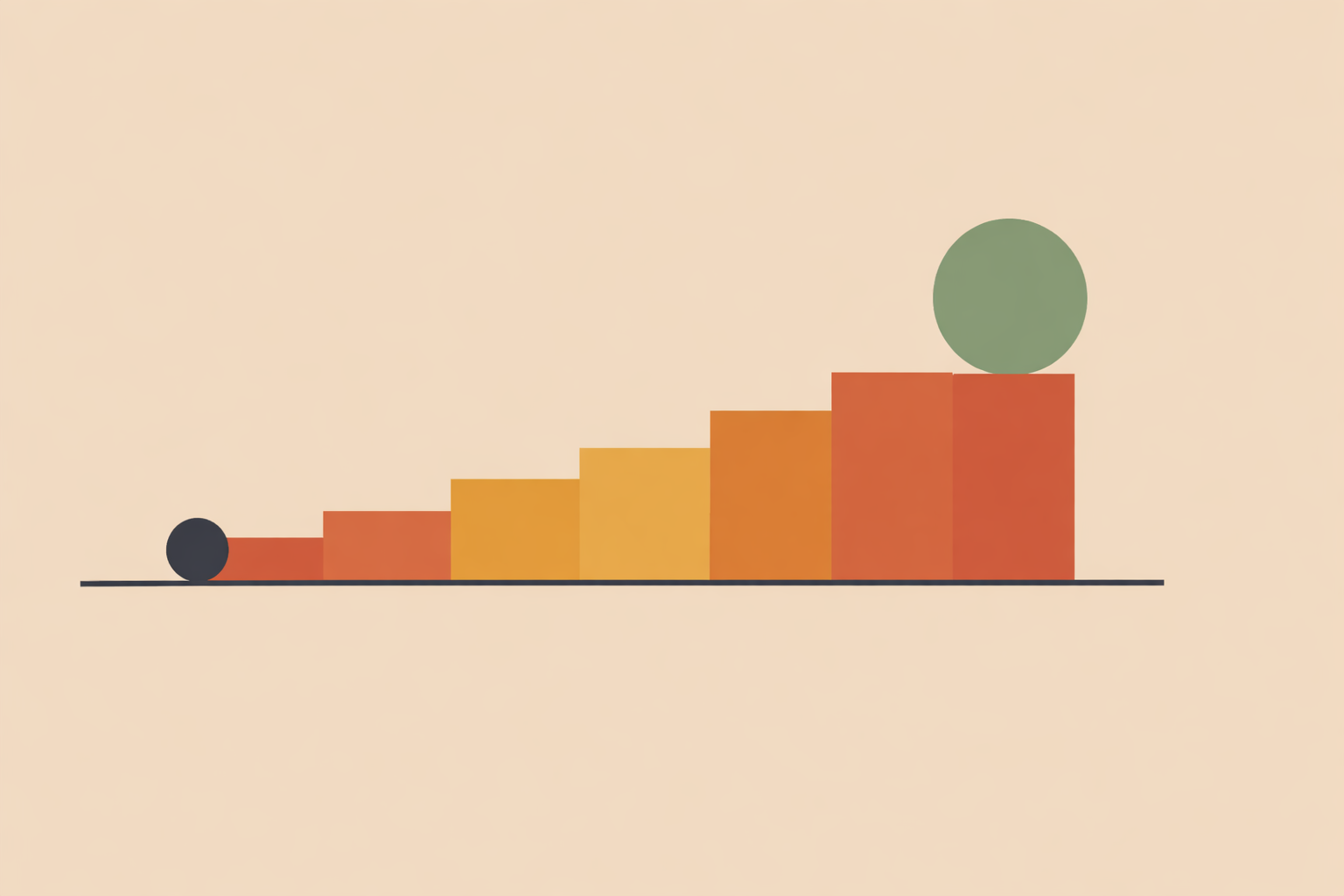
A focused six-week Ikigai cycle changes the pace. It gives the work edges, a rhythm, and a clear review point. Instead of waiting for clarity to arrive all at once, you build it through observation, small experiments, and thoughtful adjustment.
Key Takeaway: A focused six-week Ikigai plan turns purpose-seeking into a practical cycle of noticing, testing, and refining. Week 1 gathers daily evidence through an energy log and early-life clues. Week 2 builds a strengths-and-flow map and tests one promising capacity. Week 3 turns outward toward community needs and contribution. Week 4 brings the patterns together into a working Ikigai map and small prototypes. Weeks 5 and 6 then become a space for real-world feedback, refinement, and continued evolution.
Why a 6-Week Ikigai Plan Works
A short, structured container often helps more than endless reflection. Six weeks is enough time to spot patterns and run small experiments, while still keeping momentum. A structured program also supports the idea that repeating cycles of reflection and action can strengthen a sense of direction.
The real value here is sequence. Each week builds on the last: you gather signals, organize them, test them, then review what actually holds up in daily life.
- Week 1: reconnect with everyday meaning
- Week 2: map strengths and flow
- Week 3: listen for the needs around you
- Week 4: create a working Ikigai map
- Week 5: test one small purpose project
- Week 6: reflect, refine, and continue
To make the process tangible from day one, choose one keystone ritual in Week 1. A simple daily energy log works well because self-monitoring creates useful personal data you can build on in every later step.
By the end of six weeks, the goal is not to be “done” with purpose. The goal is to be better resourced: clear language for what matters, evidence from lived experience, and a rhythm you can return to. Well-designed purpose work supports ongoing cycles of reflection, action, and adjustment.
Week 1: Reconnect With Everyday Ikigai
Start with what already makes life feel worthwhile. In traditional Japanese understandings, ikigai is grounded in ordinary life: small pleasures, responsibilities, relationships, and meaningful routines. Ethnographic writing also highlights family responsibilities and community contribution as part of this lived sense of purpose.
Keep Week 1 simple: track your days in three columns.
- Energizing
- Neutral
- Draining
At the end of each day, write a few activities and mark them with +, 0, or -. This kind of record makes patterns visible, and activity and mood records can help bring structure to what you’re noticing.
A simple log might look like this:
- Energizing: “Helped a friend shape her shop idea.”
- Neutral: “Routine team meeting.”
- Draining: “Scrolled my phone and felt flat after.”
Then look backward for early-life clues:
- What absorbed me at age 12?
- What did I naturally organize, build, explore, or care about?
- Which interests kept returning, even when life became busy?
These threads often point to enduring preferences. Childhood interests can predict occupational choices, which is why these memories are so useful in purpose work.
Week 1 is signal-gathering. Let everyday life speak, without forcing a conclusion.
Week 2: Map Strengths and Notice Flow
With a few sparks from Week 1, Week 2 gives them structure. The focus is what you do well, what comes naturally, and where your energy deepens into flow.
Create a strengths inventory with three columns:
- Natural strengths
- Learned strengths
- Emerging strengths
Use practical prompts to fill them out:
- What do people thank me for?
- What feels easy for me but difficult for others?
- What kind of problems do people instinctively bring me?
Leaning into strengths builds momentum quickly. In strengths-based coaching, existing competencies are often linked with faster engagement than an early, heavy focus on gaps.
Then track flow. Notice when you lose track of time in a good way, and which tasks make you feel focused and quietly alive. Flow is positively associated with well-being and resilience, so it deserves a clear place on your map.
A client grid might look like this:
- Natural: “Explaining complex ideas simply”
- Learned: “Planning budgets and systems”
- Emerging: “Facilitating small groups”
- Flow cue: “Time disappears when I design workshops”
Next, test one strength in real life. Choose a 10-day skill sprint: 20 focused minutes a day, or one small live experiment. This keeps the work grounded and measurable.
- leading a short group session
- sharing a practical guide with friends
- helping someone solve a problem you care about
When people deliberately use strengths in daily work, they often feel more engaged and less depleted. Using signature strengths at work has been linked with higher engagement and lower burnout over time.
Finally, invite outside reflection. Many people underestimate their own abilities, while others’ feedback can reveal strengths that feel “normal” only because they’re yours.
Week 3: Listen for What the World Is Asking of You
Week 3 turns outward. Ikigai includes enjoyment and ability, and it also asks where your gifts meet real human need.
Start with emotion. List 10 to 15 things that frustrate, sadden, or stir you. Strong feeling often points to values that want expression, and moral outrage and similar emotions can signal what matters enough to act on.
Then narrow your focus to one community you care about:
- new parents
- students entering a profession
- freelancers in your area
- older neighbors in your building
This step brings the social roots of Ikigai into view. Traditional understandings keep purpose embedded in everyday roles, care, and contribution, not only private ambition.
Listen before you offer anything. Speak with two or three people from that community and ask:
- What is a typical day like for you?
- Where do you feel friction?
- What kind of support would actually help?
This is often where “I want to help” becomes specific enough to move. It becomes more precise and grounded.
Purpose also holds steadier when it includes connection. Supporting relatedness can help sustain motivation over time.
Small acts count, too. Helping others is linked with stronger meaning and well-being, which fits with long-standing practitioner experience: service stabilizes purpose because it gives it a real place to land.
Week 4: Turn the Patterns Into a Working Ikigai Map
After three weeks of observation and listening, you have enough material to synthesize. This is the right time to use the familiar four-part Ikigai map:
- What you love
- What you are good at
- What the world needs
- What you can be paid for
Use the map as a working canvas. Fill each section with phrases pulled directly from the previous weeks, staying specific rather than lofty.
A simple version might include:
- Love: “teaching, tea rituals, local creative spaces”
- Good at: “facilitation, story structure, pricing conversations”
- World needs: “new makers needing confidence around value”
- Paid for: “group guidance, workshop design, creative business support”
Then look for intersections that can become small, testable ideas:
- small tea-and-pricing circles for artisans
- weekend confidence workshops for market sellers
- a short online group on valuing creative work
Draft the map, then step away and revisit it the next day. Spacing helps the brain spot patterns, and pattern detection improves when there’s space between sessions.
It also helps to share the map with one trusted person. Fresh eyes often notice the thread you’ve been overlooking.
Perfectionism often shows up here, with the belief that you must identify one flawless path before moving. Maladaptive perfectionism is linked with procrastination and indecision, which is exactly what this process is designed to soften.
Keep the work moving with action. “I will test two small prototypes” is more useful than “I must choose perfectly,” and behavioral experiments are a practical way to reduce avoidance and make next steps feel doable.
Your Ikigai map now becomes a decision filter: does the idea draw on real strengths, feel meaningful, meet a genuine need, and support a workable livelihood? The more circles it touches, the more energy it usually holds.
What Weeks 5 and 6 Are Really For
By the end of Week 4, you don’t need certainty. You need enough clarity to test something real.
Weeks 5 and 6 are where the map meets life. Offer a small session, host a trial group, share a simple support offer, or create a one-hour prototype. The aim is feedback, not scale.
This stretch matters because purpose becomes steadier when it is practiced. You learn what feels natural, what needs refining, and what kind of contribution you genuinely want to keep making.
Over time, Ikigai stays alive through a cycle you can repeat: observe, test, reflect, adjust, and begin again.
Closing Reflection
Ikigai is not a productivity trick or a single diagram to complete once. It’s a humane rhythm of attention, contribution, and ongoing evolution, with room for small joys and shifting seasons of life.
As you guide this process, keep the roots visible. Let Japanese wisdom remain more than a graphic framework. Let community matter as much as self-expression. Let traditional understanding and modern evidence sit side by side, each adding perspective without flattening the other.
Purpose rarely arrives as a final answer. It clarifies through steady contact with life, and the six-week cycle gives you a reliable way to keep that contact strong.
Explore Ikigai Life Coach Certification
Bring this six-week Ikigai cycle into your coaching with the Ikigai Life Coach Certification.
Explore Ikigai Certification →