New animal intakes often begin with a hopeful question: is there an oil for car stress, unsettled evenings, or difficult transitions? An experienced practitioner knows the real answer starts earlier, before any bottle is opened. A small dog may share air with a bird. A cat may be more sensitive to certain aromatic compounds. A brachycephalic dog may already struggle with heavy scents in a closed room. When those details emerge late, you spend the session undoing assumptions.
A strong intake prevents that. It frames aromatics as gentle, optional support, keeps the animal’s comfort at the center, and gives the guardian a clear role in observation and pacing. In practice, that often means starting with distance, fresh air, hydrosols, and short sessions, then considering essential oils only when the animal stays clearly comfortable.
Key Takeaway: Effective animal aromatherapy begins with an intake that is species-aware, conservative, and animal-led. Set expectations clearly, document species and household context, gather health and product history, map the animal’s scent environment, align goals with choice-based practice, build written safety limits into your forms, and make follow-up part of the process.
Step 1: Frame animal aromatherapy as gentle, complementary support
Begin with language that sets the tone: aromatics belong as gentle, complementary support within the animal’s wider well-being plan. When that’s clear in your welcome email, consent form, and first conversation, guardians relax, and animals stay safer.
It also helps to explain why your process is measured. Essential oils are highly concentrated extracts, so pacing, light dilution, and steady observation are part of respectful practice. “Plant-based” doesn’t automatically mean mild for every species.
In day-to-day sessions, that often sounds like:
- “We introduce scents gradually and let your animal decide whether to engage.”
- “We usually begin with distance, ventilation, and very simple options.”
- “If your animal seems uncomfortable, we stop and adjust.”
This approach keeps consent practical: nothing forced, nothing rushed, and the guardian knows their job is to observe rather than push for a result.
Step 2: Record species, life stage, size, and shared-air realities
Before discussing oils, document exactly who the animal is and who shares their space. Species, breed, age, sex, weight, and life stage all shape what counts as “gentle.”
These details matter because species and body size influence risk and tolerance with aromatics. Add clear notes for seniors, very young animals, pregnancy, and nursing.
Then widen the lens to the whole household. A diffuser that feels mild to a guardian can be too much for another animal sharing the same air. This matters because birds are particularly vulnerable around diffused aromatics, and small mammals generally need a very cautious approach too.
Cats deserve special attention. Many safety discussions focus on limited glucuronidation, and in practice the takeaway is straightforward: go slower, use fewer variables, and prioritize distance and simplicity.
Useful intake prompts include:
- “List all animals in the home, including birds and small mammals.”
- “Which rooms are shared during the day and at night?”
- “Any life-stage notes or size considerations we should know?”
These questions quickly reveal whether you’re creating a single-animal plan or a shared-air plan that needs doors, ventilation, timing, and tighter boundaries.
Step 3: Turn health history and product use into a safety net
Guardians often write “nothing significant” unless your questions help them get specific. A good intake turns health history into practical decision-making.
Ask about liver, kidney, respiratory, neurological, and skin concerns, since these can affect exposure risk with concentrated aromatics. Airway sensitivity should immediately shape your choices about diffusion and overall scent load.
Animals with breathing difficulty, or those in small, poorly ventilated spaces, need extra care because respiratory vulnerability can increase with airborne exposure.
Next, list everything already used on or around the animal: supplements, shampoos, sprays, ear products, flea or tick spot-ons, and other topicals. Layering multiple scented inputs can muddy the picture fast, so your form should capture brand names, timing, and frequency.
Seizure history deserves a clear prompt. Several essential oils are commonly avoided around seizure-prone animals, including rosemary, fennel, sage, camphor, eucalyptus, basil, and wintergreen, with some listed among convulsant agents. For dogs, tea tree, cassia, cinnamon, oregano, and thyme also call for heightened caution, and some are widely flagged as higher-risk oils.
One boundary belongs in writing: oral ingestion is not recommended for animals within mainstream guidance, and a conservative practice keeps to that line.
A single sentence in your intake can prevent confusion later: “Please tell us about any current skin products, scent products, or prior oil use so we can keep the plan simple and well-paced.”
Step 4: Map the animal’s scent world before adding anything new
Animals live in a denser scent landscape than most humans notice. Before you add support, map what’s already there.
Ask how the animal responds to perfumes, incense, cleaning products, smoke, grooming sprays, car fresheners, and candles. This isn’t a laboratory measure, but it reliably shows whether scented environments feel easy, irritating, or overwhelming for that animal.
Then list scent sources room by room: diffusers, plug-ins, wax melts, linen sprays, cleaning concentrates. Many cases aren’t about one oil; they’re about total aromatic load across the day.
Include previous experiences too. Which products were offered, how were they offered, and what changed afterward? Calm curiosity, restlessness, licking, hiding, drooling, digestive upset, and unusual sleep patterns can all be meaningful signals.
Keep one red-flag question in plain language: “Has your animal ever shown drooling, vomiting, tremors, lethargy, or breathing difficulty around scented products or oils?” These are common warning signs that tell you to slow down considerably.
Two simple tools work well here:
- Scent map: note what is used in each room and how often.
- Comfort rule: if the animal moves away, repeatedly sneezes, shuts down, or avoids the space, treat that as a clear no.
Animals should always be able to leave the area, and small-space diffusion without choice is unsafe.
Step 5: Align guardian goals with animal-led choices
Once the background is clear, turn to the guardian’s goals. This is where the work becomes realistic and grounded in day-to-day life.
Ask what they’d most like to notice: calmer car journeys, easier evenings, softer transitions at bedtime, or steadier recovery after stimulation. Words like ease, rest, grounding, and resilience keep expectations healthy.
Then place the animal’s choice at the center. Many practitioners draw on self-selection and zoopharmacognosy: offer an option, observe, and respect the response. Traditional animal-handling wisdom has always valued what the animal communicates through behavior, and aromatics fit beautifully into that animal-led mindset.
Keep the method clean: one scent at a time, offered at a distance, with space to approach or walk away. Soft engagement, relaxed posture, quiet sniffing, or settled stillness are encouraging signs. Turning away, pawing, lip activity, agitation, or leaving the area are equally clear messages.
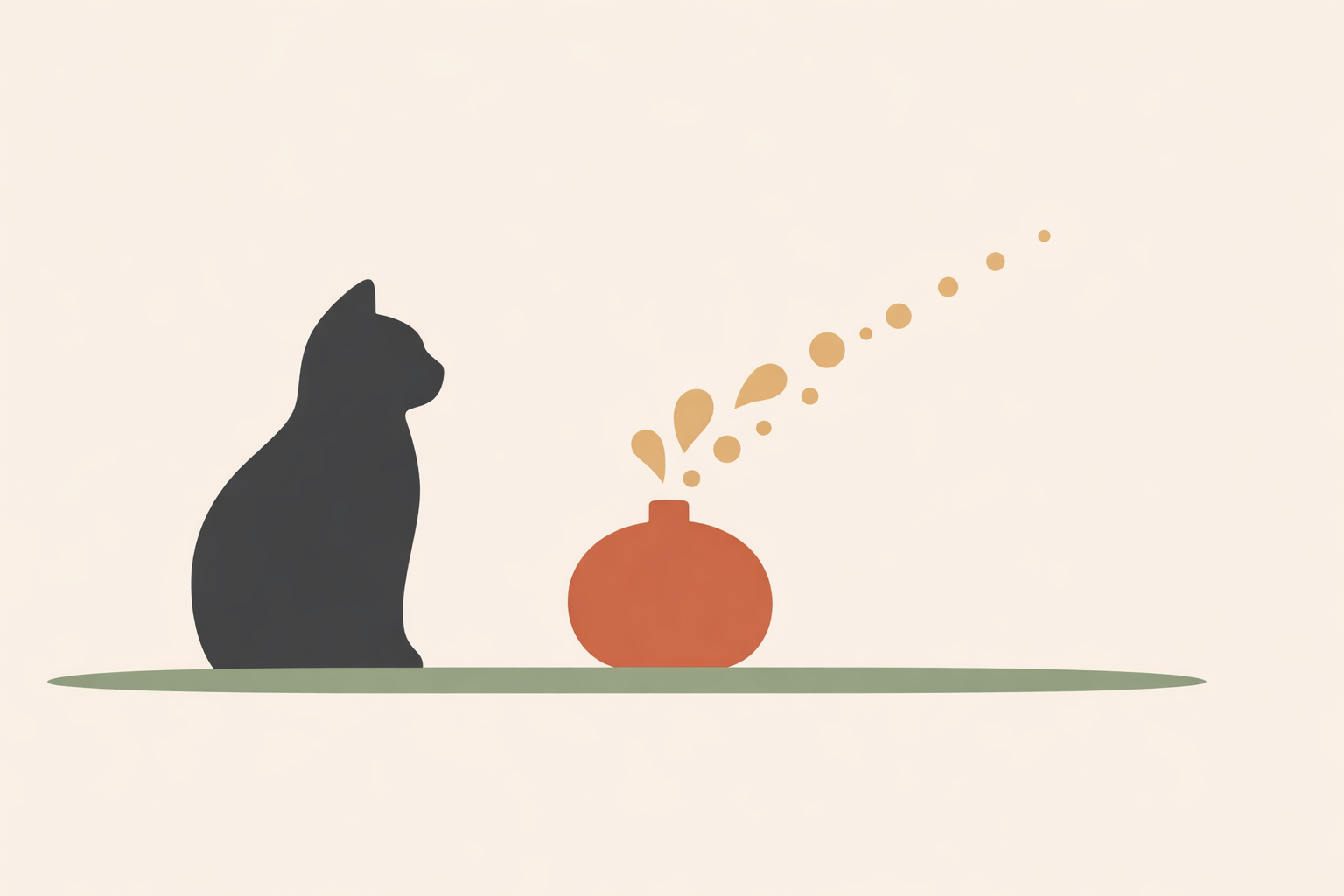
A first session can be as gentle as placing one hydrosol cloth several feet away and waiting. If the animal stays relaxed and curious, you have a strong starting point. If they move away, you have your answer and your next step.
Set baseline observations so the guardian knows what to track over the next week or two:
- sleep quality and restfulness
- playfulness and enthusiasm
- startle and recovery time
- ease with family members or other animals
This keeps progress tied to lived experience, not guesswork.
Step 6: Put safety limits, dilutions, and methods into your forms
Verbal guidance fades quickly, especially when families are excited to try something new. Put your core boundaries in writing, in plain language.
A short primer helps guardians understand what they’re working with: essential oils are usually made by steam distillation or cold pressing, while hydrosols are aromatic waters produced during distillation. Carriers (like vegetable oils or oily macerates) help lower intensity and spread a blend more gently.
For practical support work, conservative dilution ranges give a useful starting map:
- cats: 0.1% to 0.5%
- small dogs: around 0.5%
- larger dogs: up to about 2% to 3%
- horses: around 0.25% to 1%
These ranges reflect strong practitioner consensus and broadly align with conservative dilution guidance used in animal wellness and animal aromatherapy education.
Spell out the non-negotiables clearly:
- Never apply oils to eyes, ears, nose, genitals, or broken skin.
- No neat application on fur or skin.
- Use ventilation and short sessions.
- Let the animal leave at any time.
Concentrated, undiluted oils can cause systemic reactions, which is why neat use doesn’t belong in conservative practice.
For diffusion, brief sessions are the standard. A widely shared cautious guideline is to begin around 5 to 10 minutes, since short spurts are preferred over ongoing diffusion around animals.
If it suits your handout, add a tiny dilution chart:
- 0.25% = 1 drop in 20 mL carrier
- 0.5% = 1 drop in 10 mL carrier
- 1% = 2 drops in 10 mL carrier
Step 7: Make monitoring and follow-up standard
Monitoring is what turns a careful intake into a real support process. Guardians need to know what to watch for, when to pause, and how to report back.
Set the expectation that they’ll share updates during the first week, positive or negative. Observation is part of the work.
Give a short list of signs that mean stop and reassess: drooling, squinting, face rubbing, shaking, vomiting, diarrhea, agitation, unusual stillness, or marked sedation. Many of these are recognized adverse signs after problematic exposure.
Your intake packet should also include simple accident guidance. Remove access and increase fresh air. If oil gets onto skin or fur, many practitioners prefer wiping with a plant oil before using water, based on field consensus. Then seek appropriate professional support promptly.
Ask directly whether diffusers are run overnight or while animals are home alone. In most homes, continuous diffusion isn’t a suitable default.
Two follow-up tools are especially useful:
- 48-hour check-in: ask about sleep, play, avoidance, and general ease after the first exposure.
- Weekly pulse check: track restfulness, adaptability, and interest in the scent over time.
If a guardian mentions a previous bad experience with oils, treat that information with respect. Reports of aromatic incidents in animals are not rare, and documented case reports reinforce a steady, careful approach.
Conclusion
A thoughtful intake is what makes animal aromatherapy coherent and respectful. It keeps the work grounded in observation, and it protects the animal’s right to move at their own pace.
When you gather species and household context, ask better health questions, map the scent environment, support self-selection, and put limits in writing, your practice becomes easier to run. You aren’t inventing boundaries in the moment; they’re built into the structure from the start.
The most skillful approach is often the gentlest: start with distance, keep exposure light, favor simple preparations, and let the animal’s behavior guide the next step. Save the strongest cautions for moments that truly call for them, and keep everyday practice steady, animal-led, and clear.
Study Animal Aromatherapy Certification
Build safer, animal-led protocols with the Animal Aromatherapy Certification.
Explore Animal Aromatherapy →