Many practitioners are trained to “read” energy and quickly name a pattern—“blocked throat chakra,” then a technique, then a direction for the session. It can look confident, yet it often shrinks the client’s lived experience too fast. Shared language turns into interpretation, consent can get fuzzy, and notes become harder to defend.
A steadier path is to map what is actually present, then let the client lead the meaning.
Key Takeaway: Energy-flow mapping works best as client-led shared language, not as a verdict. The most useful sessions begin with present-moment experience—sensation, breath, posture, imagery, attention, and meaning—then use models such as chakras, meridians, or the biofield lightly, as guides rather than fixed truths. With clear consent, grounded pacing, and simple notes, you can keep the work ethical, steady, and genuinely supportive.
What Energy-Flow Mapping Is Really Tracking
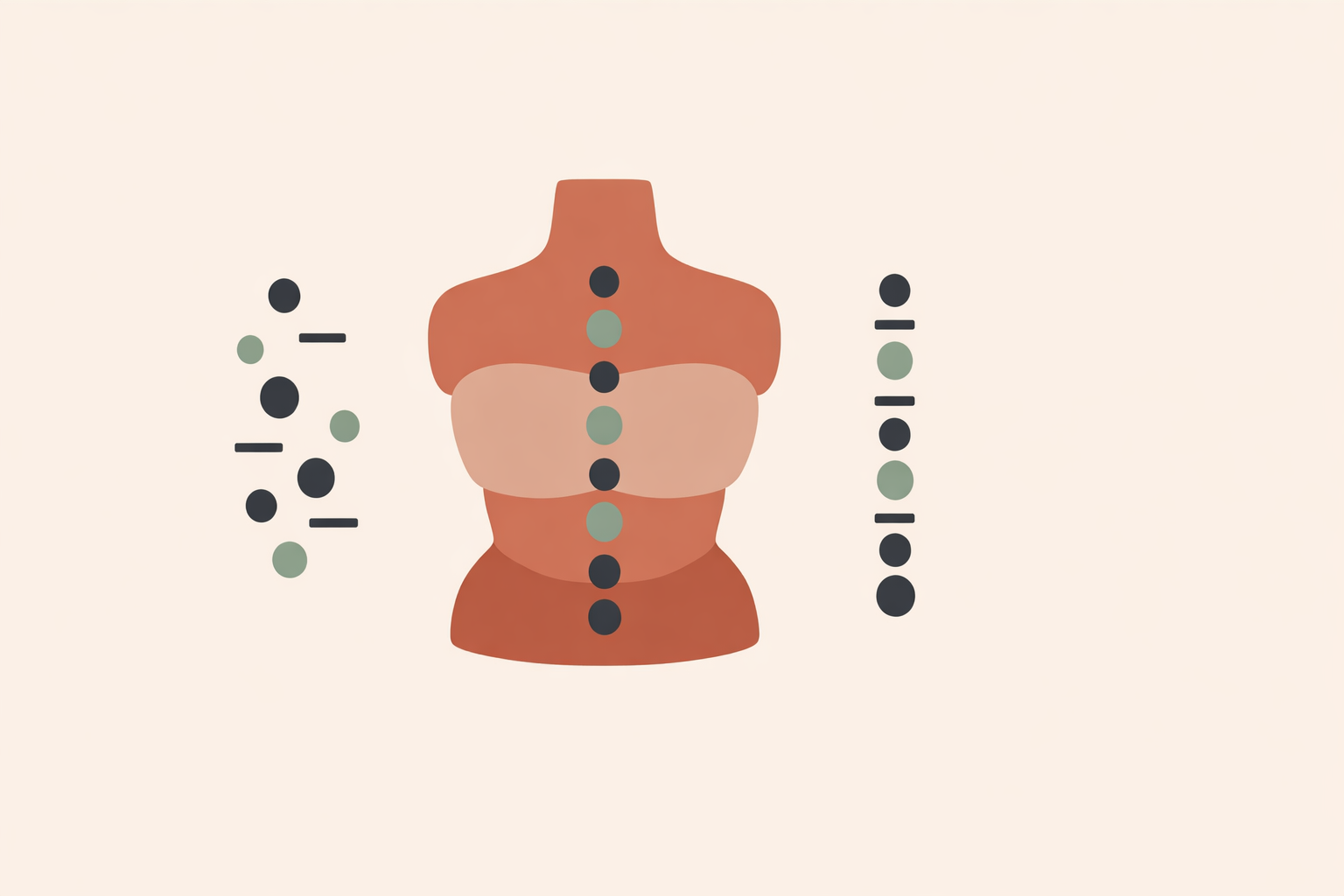
Energy-flow mapping is the practice of noticing what’s already happening—sensation, breath, posture, emotion, imagery, and attention—and giving it language the client recognizes. It’s a map of lived, present-moment experience.
Within that frame, chakras, meridians, and the biofield are best held as models. They help organize awareness, focus intention, and offer structure for reflection. They don’t need to be treated as fixed anatomical structures to be valuable in practice.
This shows up immediately in session. If a client says, “My chest feels like a shield,” a grounded map might sound like: “Pressure at sternum, breath shallow, attention avoids chest, image of metal plate.” The description stays close to what the client can confirm, without forcing a label.
That’s often what makes the work feel respectful. The practitioner tracks experience, offers language carefully, and leaves room for the client’s interpretation.
Start With Consent and a Steady Container
Before any map helps, the session needs a trustworthy container. In energy work, consent is an ongoing dialogue: the client understands what’s being offered and stays free to pause, refuse, or change direction at any point.
If you want to change methods mid-session—introduce touch, shift into visualization, or move into remote work—ask first. Clear permission keeps the process collaborative and protects everyone’s clarity.
Your steadiness is part of the container. Before you guide anyone, notice your breath, posture, and any urgency to fix, interpret, or impress. If you feel rushed, simplify. If you feel scattered, ground first.
Simple consent checkpoints can sound like this:
- “Would you prefer eyes open or eyes closed today?”
- “Is it okay if I offer a brief visualization?”
- “If anything feels too much, would you like to say ‘pause’ so we can stop and reorient?”
A brief practitioner reset can help before you speak:
- Relax the jaw and shoulders.
- Lengthen the exhale.
- Feel your feet and seat.
- Widen your visual field.
- Set a simple intention such as curiosity over certainty.
These small steps often decide whether the session feels spacious or pressured.
Read the First Layer: Baseline, Sensation, and Breath
Start with what’s already here. Before symbols or systems, establish a baseline: breath, contact with the chair or floor, temperature, posture, and overall mood.
You might say, “Let’s take a minute to notice where you are now. What is your breath doing? Where do you feel contact with the chair or floor? Is any area warm or cool? What’s your overall mood?” A baseline gives the client a clear reference point and keeps the work anchored.
In qualitative reports of biofield sessions, people commonly describe warmth and tingling. Clients also frequently report relaxation, calm, emotional softening, and a sense of energy moving or settling as attention refines. These observations are useful to record without rushing to interpret.
If activation rises, return to basics: orient to the room, feel feet and seat, and lengthen the exhale. In many sessions, that’s enough to restore a workable rhythm.
A plain baseline note might read: “Breath slightly shallow; shoulders raised; feet cool; attention steady; mood nervous but curious.” It’s clear, grounded, and easy to stand behind.
Add Depth With Attention, Imagery, and Meaning
Once sensation and breath are clear, the map can widen. Attention, imagery, words, and felt meaning often emerge naturally, especially when you don’t rush ahead of the client.
Neutral prompts keep the process open:
- “What do you notice now?”
- “Where do you feel that most clearly?”
- “Is it changing or staying the same?”
- “Does it bring any image, word, or meaning?”
If a client says, “There’s a river behind my ribs,” you can stay with the image instead of translating it into a fixed meaning: “Let’s stay with that for a few breaths. Does the river feel soothing, forceful, blocked, or something else?”
Two qualities help with pacing and choice. Resonance is the sense that a word, image, rhythm, or gesture fits. Coherence is the feeling that breath, posture, emotion, and intention begin to align.
“Not much,” uncertainty, and stillness also count. A quiet session can be deeply productive when it leaves the client more resourced and clear.
Choose the Map That Fits the Client
When the first layers are clear, choose a symbolic route that fits the client’s worldview, your training, and the lineage you’re drawing from. The best map is the one the client can actually use.
A chakra-based sequence can offer a simple arc from grounding to expression to spacious awareness. Chakra teachings vary across traditions, so there’s no single diagram you need to impose. You can guide attention through the body and ask where a longer breath is wanted.
A meridian-based route can draw on traditional East Asian channel models in a respectful, practical way. Invite direct noticing along a pathway and let the client describe what they find.
A biofield-oriented route can focus on personal space and boundary awareness. You might ask, “Does your sense of space feel close in today, around arm’s length, or farther out?” In the research literature, biofield therapies are described conceptually as noninvasive approaches based on purported energy fields.
Movement- and breath-based mapping can be even simpler. Ask whether the experience feels like it’s settling, expanding, rising, moving outward, or becoming quiet. Verbs often support the client’s self-awareness better than labels do.
A practical choice point sounds like this: “We could use a chakra scan, a boundary check-in, or a simple breath-and-direction map. Which feels most supportive today?”
Keep the Pace Safe and Flexible
Pace is part of the method. If a client’s breath gets rapid, their focus turns cloudy, or they seem far away, slow down. Strong moments don’t need to be pushed to be meaningful.
Two pacing tools that translate well into real sessions are pendulation and titration. Pendulation alternates attention between a steadier area and a more charged one. Titration works in small doses, then pauses to reorient before choosing the next step.
In practice, that can look like:
- Ten seconds with a tight sensation, then back to the hands or feet.
- A brief image, then a pause to look around the room.
- A return to ordinary conversation before going deeper.
Signs to reduce pace or stop can include rapid breathing, confusion, dizziness, escalating distress, detachment, difficulty answering simple questions, or any felt pressure to continue when the client wants less. The skillful response is to simplify, widen choice, and support regulation.
Your state matters too. Research has not established a unique, reliable practitioner physiological signature in energy work, so stay with what you can reliably regulate: breath, posture, pace, tone, and attention.
Useful scripts include:
- “Let’s stay with that for a few seconds, then come back to your feet.”
- “Would you like to continue, switch to grounding, or stop here?”
Simple language is often the most stabilizing language.
Document Clearly Without Over-Claiming
Good notes protect clarity and integrity. They make the work easier to review, easier to explain, and easier to keep within scope. In energy healing and other subtle practices, documentation lands best when it stays close to what happened rather than what you believe it meant.
Useful notes often include:
- Date, duration, and format
- Client intention or focus for the session
- Consent and any changes in permission during the session
- Methods used
- Client-reported sensations, imagery, emotions, or meanings
- Practitioner observations stated carefully
- Adaptations made for pacing or grounding
- Next steps, follow-up, or referrals if requested
This structure keeps records consistent without turning them into interpretation-heavy narratives. Instead of writing “blocked throat chakra,” you might write: “Client described tightness when speaking about an upcoming conversation; chose grounding and breath focus; later reported more space.”
It also helps to be clear about the frame of the work. Energy work, as used here, supports relaxation, self-observation, and client-defined meaning. It is not a replacement for other forms of care or support. Reviews note mixed findings and a lack of consistently high-level evidence for efficacy across contexts, even where positive outcomes are reported.
Build confidentiality into your notes culture as well. Be clear about what you record, how it’s stored, who can access it, and how long it’s kept. Keep identifying information minimal and protection strong.
A simple note excerpt might look like this:
“Remote session, 60 minutes. Intention: steadiness before a difficult conversation. Consent reconfirmed for visualization. Methods: baseline check-in, breath mapping, brief chakra scan by client request. Client reported warmth in chest and image of a river behind the ribs, described as relief. Pace slowed when breath quickened; oriented to room twice. Session ended with more ease and clearer next steps.”
Bring Energy-Flow Mapping Into Everyday Practice
At its best, energy-flow mapping stays simple, respectful, and client-led. Begin with what’s present, let attention and imagery emerge naturally, and choose a model that supports the person in front of you.
That’s what keeps the work both subtle and solid. Chakras, meridians, the biofield, breath, and movement can all be meaningful routes when they’re held lightly. The client’s lived experience stays primary, and your role is to support awareness, pacing, and choice.
With time, the craft becomes less about naming the “right” pattern and more about listening well. Clear boundaries, steady presence, respect for lineage, and trust in the client’s language will carry the work further than dramatic interpretation.
Master Energy Alignment Skills
Deepen your client-led mapping approach in the Spiritual Healing and Energy Alignment Certification.
Explore Spiritual Healing →