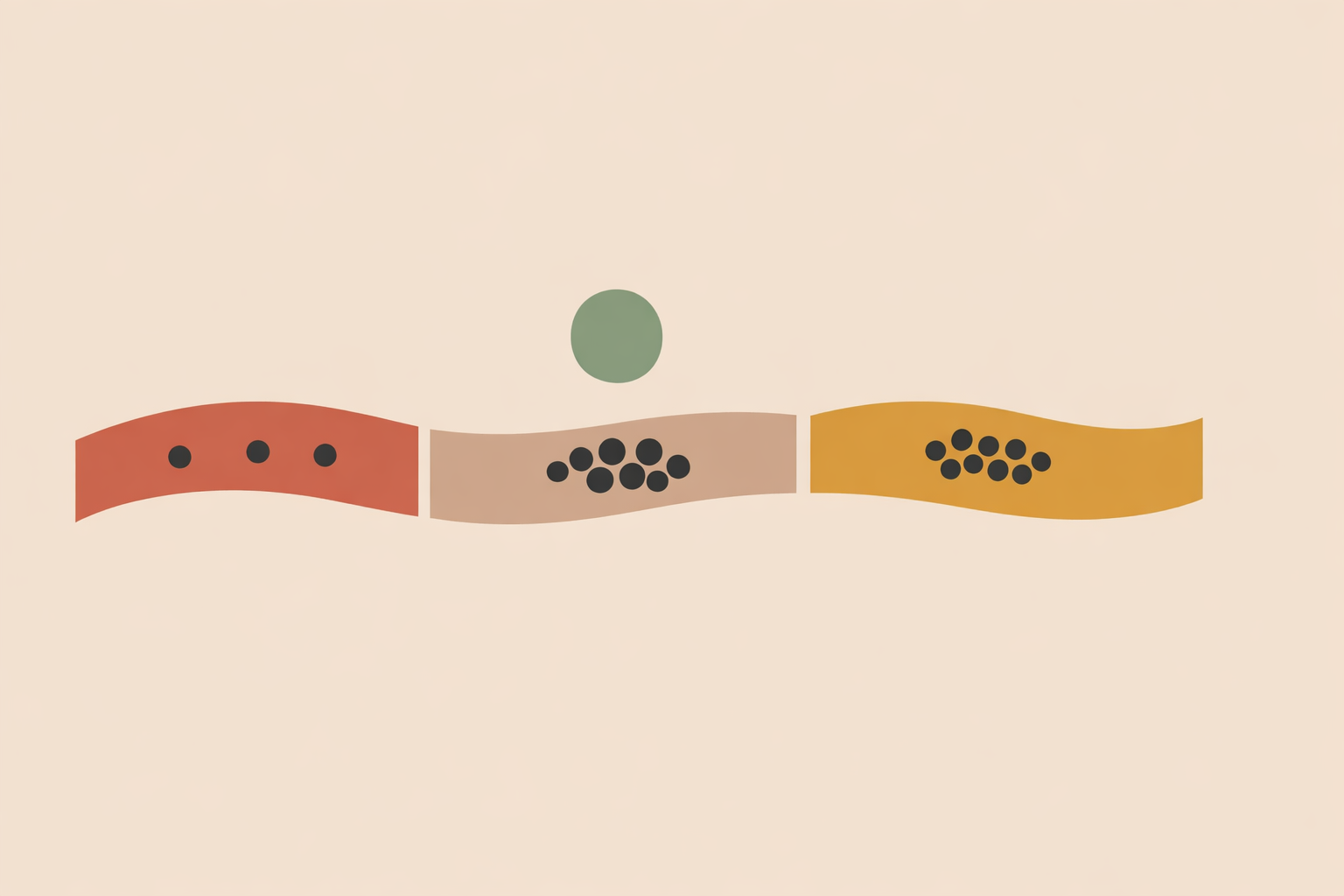
Most gut-health intakes start in the same place: bloating, fatigue, “everything I eat triggers me,” and a long list of foods and supplements. A clearer way through that noise is to organize the story around movement.
Gut motility is that organizing lens. When you track how food and waste move through the bowel (slow, fast, or inconsistent), scattered symptoms start forming workable patterns. Stool form, frequency, urge, time on the toilet, and timing around meals give practical clues about rhythm and transit, so you can choose grounded first steps without overcomplicating the process.
Key Takeaway: Centering gut motility creates a clear through-line between symptoms, daily habits, and first-phase support. By tracking stool form, frequency, urge, and timing, you can distinguish slow transit, outlet challenges, and rapid-transit patterns; connect them to diet, stress, sleep, and rhythm; and adjust your support plan with more clarity and consistency.
Why gut motility deserves a central place in gut-health coaching
Motility sits at the meeting point of nerves, microbes, meals, and daily routine. Traditional systems have always valued regularity here, and modern physiology helps explain why that emphasis works so well in real life.
The gut has its own local nervous system, and movement relies on neurotransmitter signals that coordinate contraction, relaxation, and fluid balance. Microbes join that conversation too, and their metabolites can influence how comfortably and efficiently the bowel moves.
In day-to-day practice, stool form is one of the clearest windows into motility. “Sensitive digestion” stays vague; “Bristol 1–2 with little urge” or “Bristol 6 after meals” gives you something you can track, test, and refine.
That shift changes the whole tone of the work. A vague story keeps sessions reactive. A motility story creates a repeatable baseline you can build from.
How to hear motility clues in the first session
Most people won’t walk in saying, “My transit is slow.” They arrive with frustration. Your role is to translate that into rhythm, speed, and pattern.
Instead of chasing triggers first, anchor the conversation in bowel habits:
- How many bowel movements do you usually have in a week?
- Which Bristol type shows up most often?
- Do you feel a natural urge, or do you have to sit and wait?
- Do meals, travel, stress, or weekends change your pattern?
- How long do you typically spend on the toilet?
- Do you feel finished afterward?
These questions quickly turn general complaints into useful categories. “Every 3–4 days, hard pebbles, no urge” points somewhere very different than “I go daily, but it takes 20 minutes and I still don’t feel done.”
Also ask about rhythm beyond food. Sleep disruption, shift work, and emotional strain often show up in bowel patterns within a day or two. That observation can be more valuable than an exhaustive symptom inventory.
Build a motility-aware intake with simple tracking
You don’t need a complicated intake to understand motility. A few simple tools usually reveal more than pages of free-text notes.
Three tools do most of the work:
- A Bristol stool chart for consistent language around stool form
- A short bowel diary tracking frequency, stool type, straining, urgency, completion, time on the toilet, and relation to meals
- A lifestyle map covering meal timing, hydration, movement, sleep, stress, and travel
This creates trendable data rather than one-off impressions. Even brief entries can be revealing when they’re consistent over a week or two.
It also helps to collect gentle context that affects long-term resilience: long stretches of highly processed eating, heavy restriction, low-fiber intake, or repeated antibiotic exposure. Those details can guide later decisions around food variety, fermented foods, and nutrition and diet pacing.
Keep it grounded. For many everyday IBS-type presentations, stool form, frequency, urge, and routine offer enough clarity to begin wisely.
How to sort the main motility patterns
After a week or two of tracking, most stories cluster into a few familiar patterns. The goal isn’t to label anyone; it’s to match support to what the bowel appears to be doing.
Slow-transit patterns often include infrequent bowel movements, reduced urge, and hard or lumpy stools. A shortfall in short-chain fatty acids, especially butyrate, can be part of the picture because lower SCFA production is associated with slower transit and less gut-lining resilience. These clients also often respond poorly to generic fiber advice, which is why fiber type, dose, and pacing matter.
Outlet-pattern constipation looks different. Someone may go “regularly” and still strain, feel incomplete, or spend a long time trying to evacuate. The issue tends to be coordination and mechanics more than speed.
Rapid-transit patterns usually show up as frequent loose stools, urgency, or strong meal-linked bowel activity. Early work often focuses on calming and structure before any major restriction.
A simple call-time check helps:
- Low urge, several days between bowel movements, Bristol 1–2: think slow transit.
- Daily bowel movements, Bristol 3–4, but prolonged effort and incomplete feeling: think outlet pattern.
- Several bowel movements a day, Bristol 6–7, urgency after meals: think rapid transit.
What shapes motility: diet, microbes, stress, and daily rhythm
Once you see the pattern, look upstream. Motility reflects an ongoing conversation between food, microbes, the nervous system, and routine.
Microbial metabolites and gut-produced signaling compounds influence intestinal movement. In practical terms, food can affect motility indirectly through the microbiome, and low fiber diversity over time often shows up as less reliable rhythm.
This matters in slow-transit cases. Because SCFAs support movement and barrier function, a thoughtful return to tolerable fiber-rich foods can help rebuild regularity.
Stress also has a direct footprint. Gut–brain pathways can drive motility changes and shifts in secretion, which is why breathwork, slower meals, and short relaxation practices can genuinely change timing and comfort.
Sleep and routine deserve the same respect. Irregular schedules and erratic eating commonly show up in bowel logs, while steadier meal timing and more consistent sleep often support more predictable patterns.
Between meals, the gut benefits from pauses. Many people do better with predictable spacing than constant grazing.
First-phase support for slow transit
With slow transit, early support works best when it’s steady and gentle. Build rhythm and consistency before adding complexity.
- Start with soluble fiber. Psyllium support is often helpful for stool consistency and motility-related comfort, and it tends to be better tolerated than rougher fiber approaches. Start low and increase gradually.
- Anchor hydration. Encourage a realistic daily fluid rhythm rather than occasional overcorrection.
- Use movement consistently. A short walk after meals and regular low-intensity movement often help nudge the system without adding strain.
- Stabilize mealtimes. Regular meals often support a more predictable bowel rhythm.
- Draw on traditional supports thoughtfully. Bitters before meals, warm water in the morning, and tolerated fermented foods can be useful additions.
- Support nervous-system downshifting. A few quiet minutes before the main meal can help settle a system that feels braced or rushed.
Consistency is the lever here. A simple two-week experiment done well often teaches more than a complicated plan followed inconsistently.
First-phase support for rapid transit and urgency
When the pattern is fast and loose, focus on calming and containment first. That foundation makes later food exploration much more successful.
- Use soluble fiber as a buffer. Small amounts of psyllium or another gentle soluble fiber can help create more formed, predictable stools.
- Keep dietary trials time-limited. A second-line strategy such as a brief low FODMAP phase may be useful for some IBS-type presentations, but it should be guided, finite, and followed by reintroduction.
- Calm the gut–brain loop. Breathwork, gentler pacing around meals, and a steadier evening routine can help reduce urgency intensity.
- Frame probiotics as a trial, not a promise. Some people benefit, but effects are strain-specific, so it is better to track response carefully than assume broad benefit.
- Reduce obvious accelerants temporarily. Very large meals, highly rich foods, or large amounts of polyols may be worth pausing during the first experiment window.
This phase stays strongest when it stays simple. One or two meaningful changes, tracked clearly, usually outperform broad food fear or supplement stacking.
How to iterate ethically and know when to collaborate
Good digestive coaching is built on pattern recognition, measured experimentation, and honest reassessment. Review logs every one to two weeks and look for direction, not perfection.
If stool form moves toward the middle of the Bristol range, urgency softens, or bowel movements feel easier and more complete, you’ve likely found a useful signal. If nothing changes, revisit fit, pacing, and consistency before adding new variables.
Keep your role clear: lifestyle support, observation, and education. If the picture suggests outlet dysfunction, severe ongoing constipation, or a more complex bowel pattern, collaboration with an appropriate licensed clinician may be the best next step.
Useful referral cues include:
- Visible blood in the stool or black, tarry stools
- Persistent fever, night sweats, or notable unintended weight change
- A significant new change in bowel habits
- Severe constipation or frequent incontinence that does not shift with steady foundational support
These moments don’t need drama. Calm, respectful language serves clients well: this pattern deserves fuller evaluation, and added support can clarify what’s driving it.
Bringing motility mapping into everyday practice
Motility mapping brings coherence to digestive work. It helps clients move from “my gut is unpredictable” to a clearer understanding of how stool form, urge, meals, movement, stress, and sleep interact.
It also supports kinder coaching. When clients can see patterns on paper, many stop blaming themselves and start noticing cause and effect with more confidence.
Traditional wisdom fits naturally here. Bitters, fermented foods, mindful meals, movement, warmth, and digestive regularity sit comfortably beside today’s understanding of microbes, signaling molecules, and gut–brain pathways. Used with care, each perspective strengthens the other.
Honor timing. The bowel typically responds over days, not hours, and that expectation helps people stay consistent long enough to see real change.
With motility as your backbone, the workflow becomes simpler and more useful, one clear step at a time. For practitioners building deeper gut health practitioner certification skills, this kind of pattern-first thinking is foundational.
Train in gut motility coaching
Build motility-focused assessment and support skills in the Gut Health Practitioner Certification.
Explore Gut Health Practitioner →