Coaching sessions fill up fast: a client wants better sleep, steadier eating, more movement, a clearer sense of purpose, and less money stress. The usual response is a checklist—several action points for every goal. A week later, they report a few wins, new friction, and the same low-grade fatigue. You can feel the connections among shift work, late-night screens, cravings, and missed walks, but your notes still look scattered.
An eight-domain map offers a steadier way forward. Instead of breaking life into separate targets, it gives you and your client one shared view of what’s happening now. Built in the client’s own language, it helps you spot patterns, find leverage points, and choose one believable next step without losing the whole person.
Key Takeaway: An eight-domain well-being map helps holistic coaches turn scattered goals into one shared picture. Rather than chasing every issue at once, you can explore patterns across sleep, food, movement, emotions, relationships, purpose, and daily conditions, then choose one small experiment that fits real life. Used well, the wheel becomes a living tool for reflection, focus, and sustainable change.
Step 1: Create safety, story, and shared language
Before you map anything, create a space where the client feels respected, unhurried, and able to think clearly. People share more when the conversation feels steady and genuinely attentive. Guidance on empathic practice notes that provider empathy is linked with better outcomes, which matches what experienced coaches see every day.
Start with the client’s own words. Ask what matters to them, what feels strained, what already supports them, and what kind of life they’re trying to build. The map lands better when it grows from lived experience, not from a borrowed template.
Reflect their language back with care. If a client says, “My mornings feel scattered,” keep that phrase. If they say, “Prayer keeps me anchored,” write it down exactly. The wheel becomes more usable when it sounds like the person who owns it.
Honor culture, tradition, and spiritual meaning
Whole-person coaching becomes deeper when it makes room for heritage, ritual, and worldview without forcing interpretation. Ask simple, respectful questions: What from your background already supports you? Are there family or spiritual practices you want this work to respect? What feels important for me to understand about how you make meaning?
These questions often reveal strengths that never show up on a typical goal sheet. A client may draw stability from prayer, song, tea after meals, time outdoors, tending a garden, or a family meal rhythm carried across generations. These are often the anchors that make change possible.
Respect also means restraint. Let the client define what a practice means to them. Your role is to notice where it supports well-being and how it can be protected in daily life.
Clarify scope and working agreements
Once trust is forming, explain how you’ll use the wheel in plain, collaborative language: you’re mapping daily life across several areas to notice patterns, identify strengths, and choose small, meaningful actions.
It’s also wise to agree that if something emerges that would be better supported elsewhere, you’ll pause and help the client consider additional options. This protects dignity on both sides, and it keeps the work clean and ethical.
You don’t need repeated disclaimers. A calm working agreement up front, followed by steady practice that stays true to it, is usually enough.
Step 2: Build the eight-domain wheel together
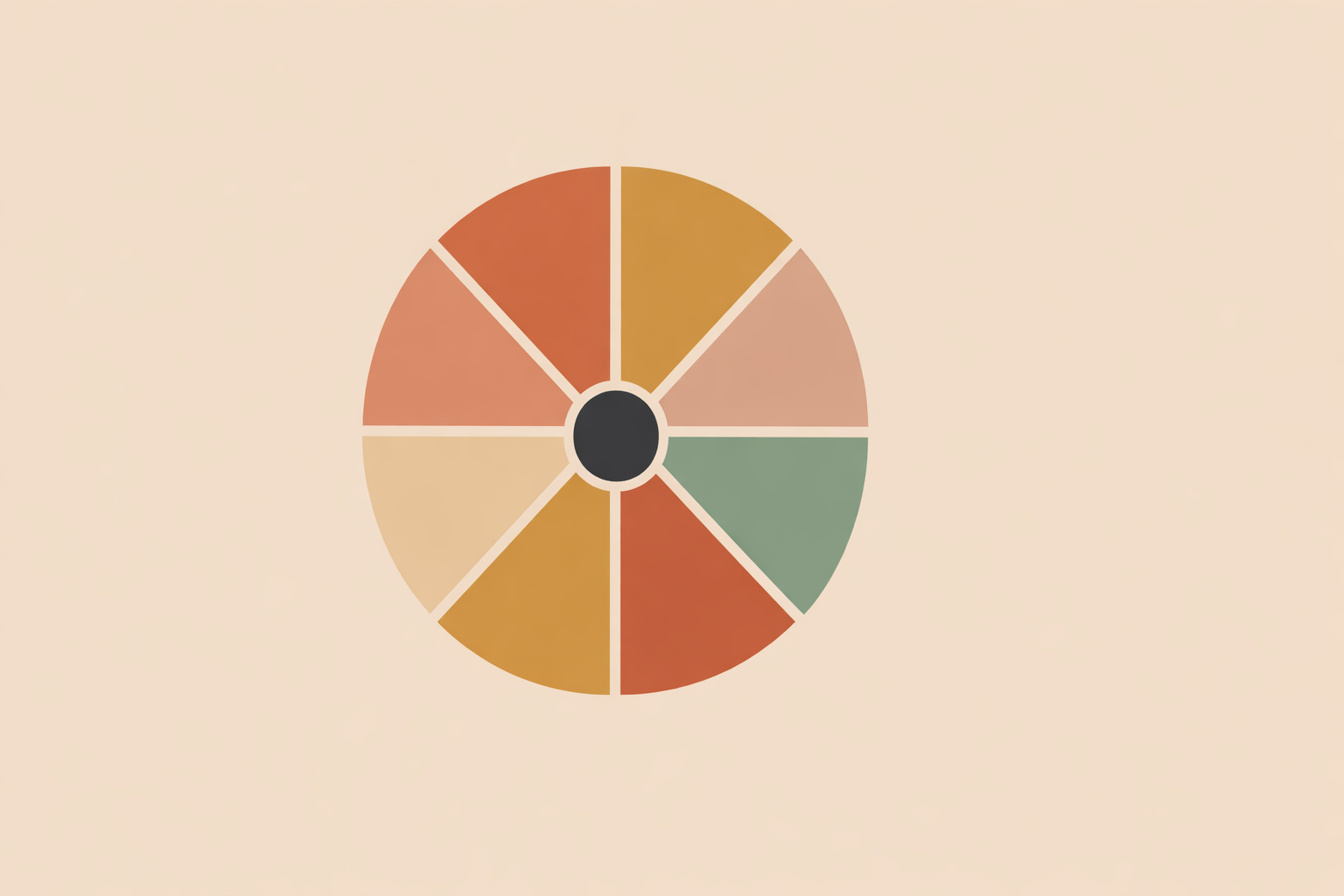
Now sketch the wheel. Keep it flexible. The goal is a structure broad enough to hold what actually shapes the client’s week.
A practical wheel often includes some version of the following:
- Body
- Sleep and rest
- Food and nourishment
- Movement
- Emotions or inner life
- Relationships and community
- Work, roles, or livelihood
- Purpose, spirituality, home, or material conditions
Rename domains to match the client’s language. “Work” may become “caregiving.” “Purpose” may become “service.” “Environment” may become “home and neighborhood.” If finances are central, they may deserve their own slice. The map should serve the conversation.
Whole-person coaching literature supports collaborative, self-directed change built around client-defined priorities and small steps. In that sense, self-directed goals and small steps fit naturally with mapping.
Use ratings, but keep the story attached
Simple 0–10 ratings make the wheel visible, but the number matters less than the meaning. Ask what makes that number true today, what supports it, what drains it, and what one point higher would look like this week.
For example:
- Sleep = 4/10: waking often, phone in hand late at night
- Food = 5/10: meals okay at home, more scattered on shift days
- People = 7/10: choir and one close friend feel steady
Those short notes keep the wheel alive and useful. A map should stay private, revisable, and open to fresh understanding as the client’s season changes.
Step 3: Walk the domains with gentle, everyday questions
Once the wheel is sketched, move through the domains slowly. Let the client describe how each slice feels from the inside. This is where the map starts to reveal its real patterns.
Body, rest, movement, and eating
Start with ordinary rhythms. Ask when the person feels most grounded in their body, what supports their energy, what throws them off, and what routines still work even in demanding weeks.
Sleep, food, and movement tend to travel together. For many clients, the sticking point isn’t motivation; it’s timing, fatigue, or strain built into the structure of life. Someone on late or rotating shifts may know what supports them and still struggle to carry it out.
Sleep loss is associated with cravings, irritability, and poorer emotional regulation. In real coaching conversations, that often reframes the story: a “food problem” can be partly a sleep problem, and a “motivation issue” can reflect exhaustion.
This is also where traditional wisdom shines. A substantial soup, a settled mealtime, herbal tea after eating, or an evening routine learned at home can offer more traction than an idealized plan imported from somewhere else. Build from what already belongs to the client.
Emotions, relationships, purpose, and growth
Then move into the less visible domains. Ask what steadies the client emotionally, what drains them, who they can lean on, where they feel belonging, and what gives their days meaning.
These areas often support one another. Choir can strengthen community and spirit. Time in nature can settle emotions while renewing direction. Reading with a child can nourish relationship and curiosity. A map helps clients see how one nourishing practice can feed several slices at once.
You’ll also hear where the client is already strong. Someone may rate purpose low while describing moments of deep meaning. Another may feel isolated but still have one dependable weekly connection. Those exceptions often become the seeds of the next experiment.
Step 4: Read the map for patterns and leverage points
Once the wheel has substance, step back and look for relationships among the slices. The goal is to help the client name what they can already sense.
Patterns often appear quickly. Low sleep commonly travels with cravings and irritability. During intense work periods, people often move less, and social contact gets pushed to the edges; reduced willingness to engage in physical and social activities is also reflected in sleepiness research. Transportation, neighborhood layout, household demands, and money pressure also shape what’s realistic in a day.
Many newer coaches assume the lowest score is where to begin. A better starting point is often the best leverage point: a small, believable shift that eases pressure across several domains.
For one client, that’s a 15-minute earlier wind-down. For another, it’s preparing one familiar lunch ahead of time, protecting a weekly spiritual practice, or texting a friend before isolation deepens. Aim for modest effort and meaningful ripple.
Name strengths, barriers, and lived conditions
As you read the map, name three things clearly: what supports the client, what gets in the way, and what wider conditions shape the picture.
- Strengths: family recipes, a prayer group, one reliable friend, access to a garden, strong self-awareness
- Barriers: split shifts, time scarcity, caregiving demands, dark evenings, financial pressure
- Lived conditions: commute, neighborhood setup, home environment, changing work demands
This keeps coaching humane and realistic. A well-made map doesn’t blame the person for every difficulty, and it still supports personal responsibility by grounding action in real life.
Step 5: Choose one domain and design a small experiment
Once the leverage point is clear, narrow the focus. Strong coaching doesn’t turn every insight into homework. It helps the client choose one experiment that feels meaningful and doable.
Ask which domain, if it moved slightly, would make the week feel different. Then ask how important the shift feels and how confident the client feels about trying it. If confidence is low, shrink the step or add support. Using self-efficacy this way protects momentum.
For example, a client may compare:
- Cook dinner five nights this week
- Make one pot of lentil soup on Sunday and freeze extra portions
Both are worthwhile. Only one may fit current capacity.
Write the experiment so real life can hold it
The experiment should be concrete enough to happen in an ordinary week. Include the action, timing, and cue.
- Plug phone in the kitchen by 9:30 on weeknights after brushing teeth
- Walk for 15 minutes after work on Monday, Wednesday, and Friday
- Eat lentil soup for lunch on two workdays
- Text Sam on Tuesday to confirm Friday coffee
Small shifts often ripple outward. In practice, a modest change in evening routine can influence sleep, energy, mood, and food choices the next day.
If the experiment doesn’t happen, stay neutral and use the result as information. Adjust the size, the timing, or the support, then try again.
Step 6: Revisit the map over time
The wheel becomes powerful because you return to it. Over time, clients start noticing not only isolated wins, but how their life fits together differently.
You don’t need a rigid formula, but a longer rhythm often helps. It gives daily life time to test an idea, expose friction, and reveal what genuinely supports change. An 11-week arc can work well for whole-person exploration and positive psychology and wellbeing work because it gives the process room to breathe.
A simple rhythm might look like this:
- Weeks 1–2: build trust, map the domains, clarify values and anchors
- Weeks 3–4: focus on core rhythms such as rest, movement, and nourishment
- Weeks 5–6: explore emotional steadiness and home or work supports
- Weeks 7–8: strengthen relationships, belonging, and purpose
- Weeks 9–10: revisit environment, money habits, technology patterns, and practical friction
- Week 11: integrate learning, notice what changed, and choose what continues
Some clients move quickly; others stay with one slice for several sessions. The map follows the person.
Measure change in a lived way
When you revisit the wheel, don’t focus only on scores. Ask what shifted in energy, routines, language, confidence, and alignment. Sometimes the biggest change is that the client understands their patterns with more compassion and less confusion.
You can use a few simple questions each session:
- What shifted since we last met?
- What did you learn about your rhythms?
- What helped more than expected?
- What is the smallest next step that makes sense now?
A client might report that a phone curfew happened three nights and mornings felt easier afterward. From there, refine the experiment: add a reminder, make the routine more pleasant, or move the charger out of the bedroom. If sleep improves, mood often softens too, consistent with what we know about sleep and mood.
Let the map evolve with the client
A strong well-being map is rarely symmetrical, and it’s never finished. Its value is honest clarity. It helps a client understand their life more fully, protect what matters, and choose actions that respect their values, culture, and real capacity.
Used with integrity, whole-person coaching supports personal evolution rather than chasing compliance. The emphasis stays on awareness, choice, small experiments, and sustainable patterns. That stance aligns with patient-centered coaching while still leaving room for traditional insight, lived wisdom, and the uniqueness of each person’s story.
Keep the wheel simple and flexible. Keep listening for the link between what the client says they want and what daily life is showing you. Over time, small shifts—protecting prayer, moving the phone, simmering soup, texting a friend, stepping outside for ten quiet minutes—can reshape the whole picture.
As the client evolves, your craft evolves too. Practice deepens when you stay curious, honor cultural roots, and use both evidence and lived wisdom with care. For coaches developing this broader health and wellness coaching approach, integrative health coaching niches can also clarify how whole-person work fits a specific client group.
Train as a wellness coach
Apply eight-domain mapping in practice with the Health and Wellness Coach Certification.
Explore Health and Wellness Coach Certification →