Most wellness marketing trains practitioners to turn up the heat: amplify pain, stack deadlines, and promise a fast transformation. If you coach with a trauma-informed, somatic lens, that approach can clash with the way you actually work. You want to reach people navigating anxiety, dissociation, or chronic stress without pressing on old wounds just to earn a click.
There’s a workable middle path. Trauma-informed marketing treats people as partners, names scope clearly, and builds choice into every step. When your language and offers reflect steady, consent-based practice, you can communicate real value, attract the right fit, and grow without leaning on fear, shame, or inflated promises.
Key Takeaway: Market trauma-informed coaching by aligning your message and offers with consent, clear scope, and steady skill-building rather than urgency or shame. The strongest pages describe your role plainly, use grounded stories instead of crisis hooks, speak about the nervous system without overclaiming, honor lineage and cultural roots, and make enrollment feel clear, calm, and choice-rich.
Define trauma-informed coaching with clear scope
In public-facing materials, “trauma-informed” works best when it describes how you work, not what you guarantee. Clear scope protects trust and helps people decide if your support matches what they’re seeking.
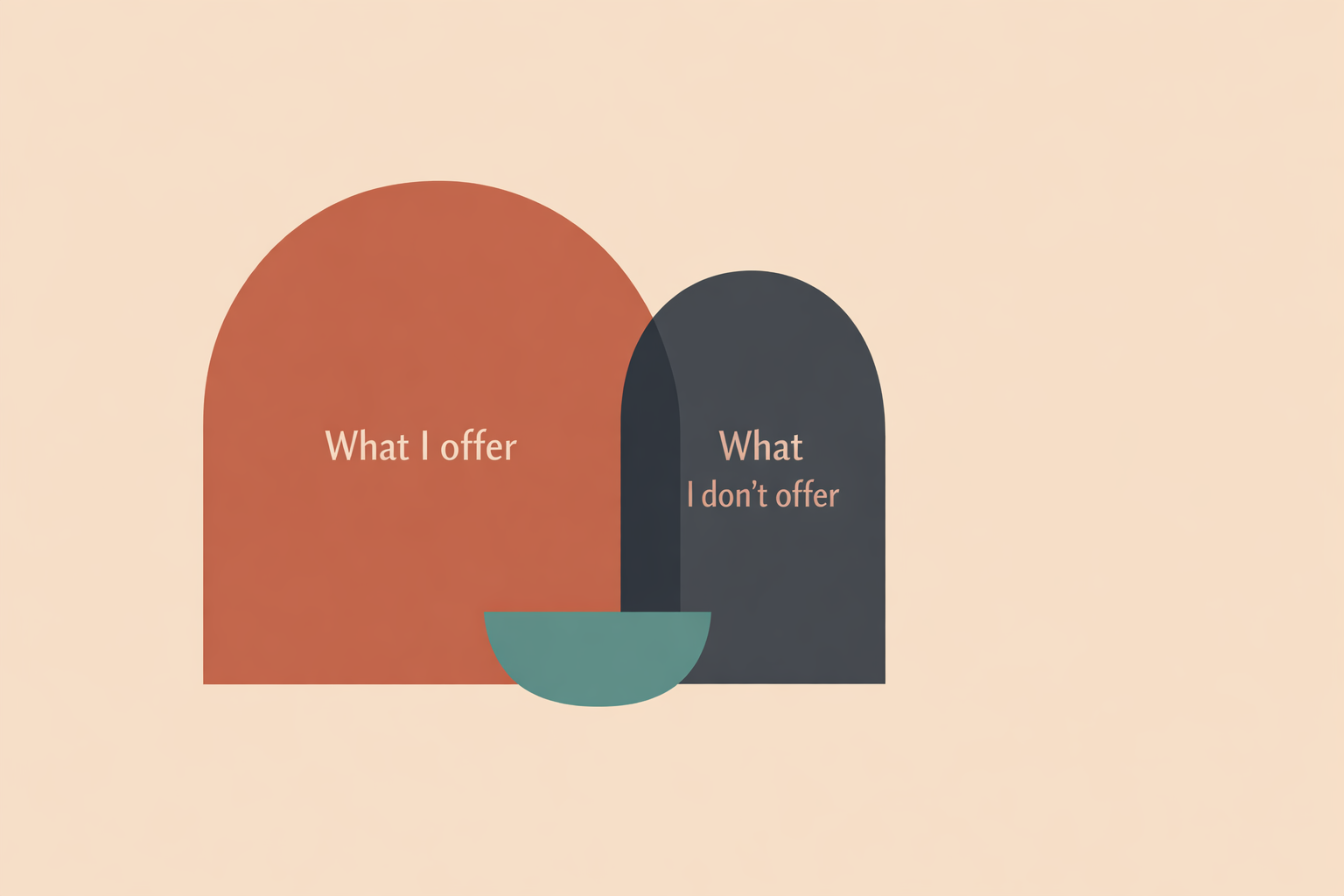
One of the simplest ways to do this is a visible scope box on your site or offer page.
- What I offer: body-centered awareness, breathwork, movement exercises, and gentle skills that support regulation, self-awareness, and resilience.
- What I don’t offer: crisis support, outcome guarantees, or claims to resolve traumatic histories. If you need a different kind of support, I will help you find an appropriate next step.
This kind of language is calm, direct, and respectful. It tells people what to expect without overselling your role.
Clarity about training matters too. “Trauma-informed” isn’t a credential by itself, so list your modalities, supervised practice, continuing development, and mentorship in a straightforward way.
Then let that same clarity run through the whole journey:
- plain-language descriptions of your process
- transparent pricing and pacing
- clear consent practices
- role boundaries and referral readiness
A concise closing line often works well on an offer page: “This work supports self-awareness and regulation and is not a substitute for crisis or specialist support.”
Replace fear-based hooks with steadier stories
You don’t need dramatic crisis language to describe meaningful change. For trauma-informed work, grounded storytelling is often more persuasive because it mirrors the pace and texture of the work itself.
A useful structure is to frame your messaging around capacity, agency, and fit, rather than collapse and rescue.
- Story-based: share a simple arc with pacing and choice at the center. Example: “My mornings used to begin in a rush of panic. Over time, a short grounding practice helped me meet the day with more steadiness.”
- Identity-based: describe who your work is for in values-led language. Example: “This space is for people who want gentle, body-led change and do not want high-pressure intensives.”
- Transformation-based: present change as skill-building, not instant breakthrough. Example: “Build a 10-minute daily practice for meeting stress with breath, movement, and choice.”
This keeps your message honest while helping the right people recognize themselves without feeling pushed.
Two copy shifts that often change the whole tone:
- Before: “My method unlocks your trauma blueprint.”
- After: “We’ll notice your body’s signals together and practice responses that feel possible right now.”
- Before: “Transform fast.”
- After: “Build steady change through repeatable practices and consistent support.”
When your stories emphasize agency over spectacle, your marketing starts to feel like an extension of the work itself.
Talk about the nervous system without overclaiming
Nervous system language helps when it explains experience in a practical, non-shaming way. It becomes a problem when it turns absolute, performative, or overly certain.
Describe your work as supporting regulation, awareness, and capacity over time. Skip promises of instant rewiring, guaranteed breakthroughs, or one-size-fits-all outcomes.
Many practitioners find that extended-exhale breathing, rhythmic movement, humming, and warm vocal sound help people settle and orient. These are long-standing, body-based tools used across somatic practice, and they land best when offered as options to explore rather than universal answers.
The same care applies to polyvagal language. There are notable critiques of polyvagal theory, especially around its evolutionary claims. That’s a cue to speak precisely and avoid presenting any single framework as unquestionable fact.
In practice, this sounds like:
- Overclaim: “Rewire your brain in 21 days.”
- Grounded: “Practice daily to build steadier responses to stress.”
- Overclaim: “Flip your vagal switch on demand.”
- Grounded: “Explore breath, sound, and gentle movement to support settling.”
Good nervous system language leaves people feeling informed and respected, not dazzled or dependent.
Honor somatic and ancestral roots in your messaging
If you draw from movement, breath, sound, ritual, or other traditional practices, your marketing should show where that work comes from and how you’ve learned it. This is part of integrity, and readers can feel the difference.
Name lineages where relevant. Credit teachers. Acknowledge adaptations. If a seated sequence comes from your study within a particular tradition, say so plainly so people understand what they’re stepping into.
Keep benefits realistic while still honoring the strength of traditional knowledge. Across Asian movement traditions, slow repetitive movement and breath have long been used to settle attention and cultivate resilience. Modern research suggests Tai Chi may reduce stress, which aligns with longstanding practitioner observation.
That kind of phrasing is stronger than dramatic language about “releasing trauma from the body.” A steadier, more respectful description is also more useful: these practices can help people notice sensation, stay present with emotion, and reconnect with rhythm, orientation, and choice.
If you work with ritual, mantra, or Indigenous-informed practices, avoid turning culture into an aesthetic. Treat it as relationship, context, and responsibility.
- name sources and teachers where appropriate
- avoid exoticized language
- be transparent about what is traditional and what is adapted
- welcome respectful questions about your training
That clarity deepens trust without needing grand claims.
Design offers that feel calm, clear, and consent-based
Trauma-informed marketing doesn’t live only in your copy. It also shows up in the shape of the offer. People should understand pace, boundaries, and choices before they ever book with you.
Start by describing the flow of a typical session in plain language.
- arrival and check-in
- body-centered awareness, breath, or gentle movement, always by choice
- integration, reflection, and a small practice for daily life
Then make consent visible. Tell people they’re welcome to slow down, pause, switch methods, keep their eyes open, or decline any exercise. Autonomy isn’t a footnote; it’s part of the container.
A “Who this is for / Who it’s not for” section also supports self-selection without hard selling.
- For: people seeking steady skills for stress, self-awareness, and resilience through present-focused, body-led work in trauma and emotional healing.
- Not for: people seeking guarantees, highly pressurized intensives, or support outside the scope of coaching.
Be transparent about logistics too. Many coaches find that weekly or biweekly sessions over 8 to 12 meetings create momentum, and pacing can still be adapted to the person and the season they’re in.
Your consultation process can carry the same tone:
- “We’ll spend 20 minutes exploring what you’re looking for. I’ll share how I work, what a first session looks like, and whether the fit feels right on both sides.”
This is consent-forward marketing in practice: clear, spacious, and easy to trust.
Keep your message steady from first click to final paragraph
The strongest trauma-informed marketing feels coherent all the way through. Your headline, scope statement, session structure, pricing language, and welcome emails should all reflect the same values. If your work is slow, respectful, and choice-rich, your marketing should be too.
A simple 30-day refresh can help:
- Week 1: add a scope box, consent language, and a short note about training or lineage to your main offer page
- Week 2: rewrite three headlines so they move from urgency to agency
- Week 3: replace one dramatic transformation story with a grounded example of steady change
- Week 4: review your consult flow, policies, and onboarding so they match the tone of your copy
In the end, the principle is simple: market the way you coach. Slow. honest. choice-rich. The people who are looking for that kind of support will recognize it, and many will trust you more because you didn’t try to overpower them on the way in.
Train in Somatic Coaching
Somatic Coach Certification helps you apply consent-based nervous system education in sessions and client communication.
Explore Somatic Coach →