


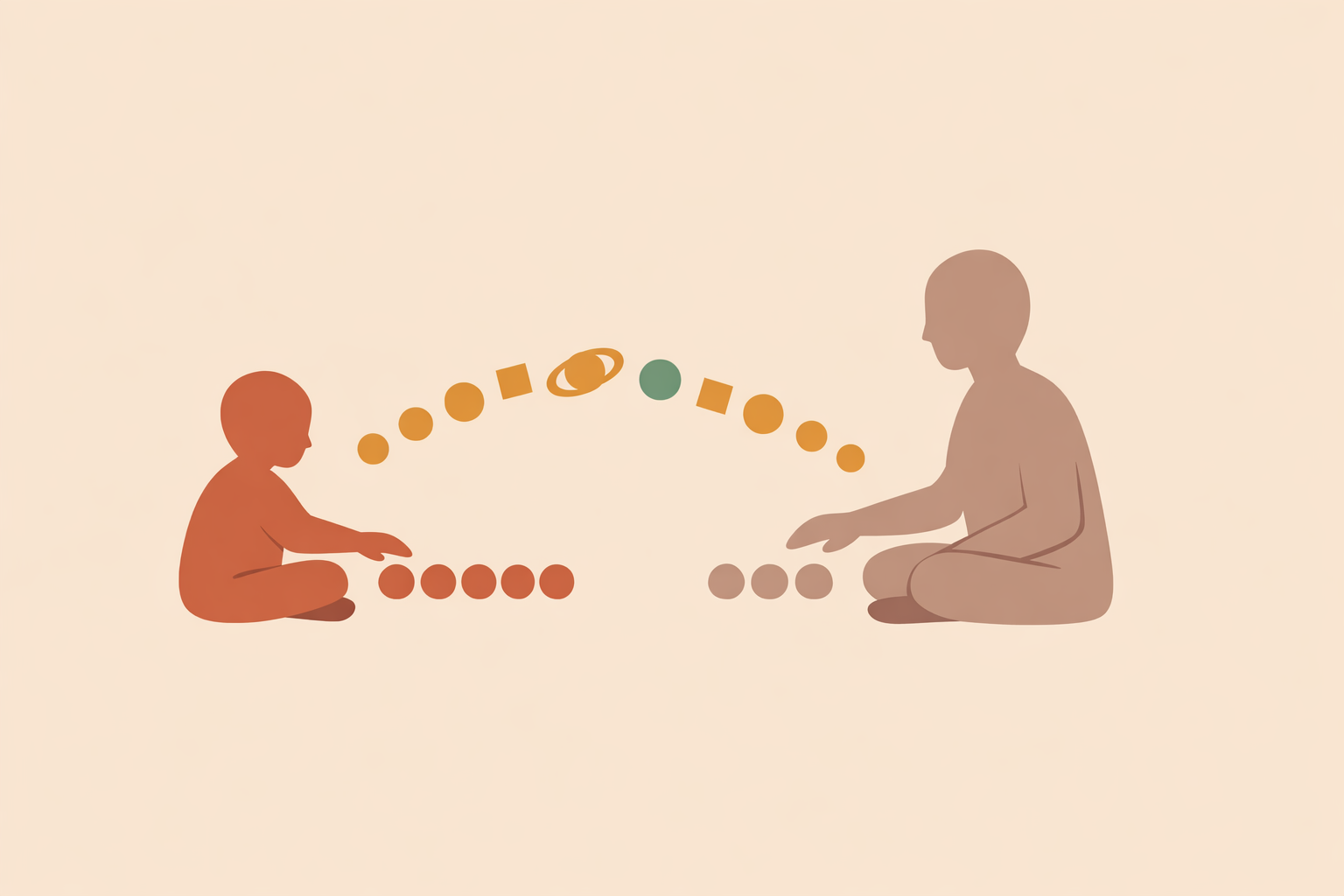
Practitioners who support autistic children through play often feel pulled in two directions. Families may hope for quick social changes, while the child’s play naturally follows its own rhythm—lining up cars, spinning objects, replaying the same scene until it feels just right. Add noisy rooms, bright lighting, unclear boundaries, or inconsistent communication tools, and it’s easy for regulation to slip, trust to thin, and sessions to feel harder than they need to.
A steadier path is neurodiversity-affirming, role-clear, and relationship-led. Autistic play—including repetition, object exploration, rhythm, and story—can be meaningful communication, not something to “fix” into a more typical shape. From that starting point, progress comes less from clever activities and more from stance, pacing, environment, and respect. The aim is to join the child’s world, protect dignity, and widen possibilities gently over time.
Key Takeaway: Neuroaffirming play support works by treating autistic play as meaningful communication and building safety through predictable environments, clear boundaries, and respectful pacing. When you join the child’s interests first and make communication and assent visible, trust and engagement grow—creating room to expand play gently over time.
See Autistic Play as Meaningful Communication
In many traditional understandings of childhood, play is a language: children reveal what matters through rhythm, repetition, objects, movement, and story. That lens is especially useful here. Symbolic play and repetitive play can carry meaning, not just “practice” for later.
For many autistic children, sensory, repetitive, or object-focused play isn’t a detour from real play—it is real play. Spinning a lid, arranging figures in exact lines, or replaying a moment again and again can support regulation, explore patterns, build mastery, or communicate something important without words.
Play also loses its power when it’s over-directed. Voluntary engagement and inner motivation are part of what make it such a rich space for growth and connection.
“Play is our brain’s favorite way of learning.”
Think of each session as a listening practice. When a child lines up cars for ten minutes, the invitation is to notice before interpreting—and to join before redirecting.
Why a Neurodiversity-Affirming Stance Matters
Language shapes how safe and respectful the work feels. Neurodiversity-affirming language supports dignity and reduces stigma in work with autistic children.
Practically, this means centering strengths, autonomy, regulation, and connection. It also means loosening goals that focus mainly on appearance—like “looking more social”—and supporting participation in ways that feel sustainable for the child.
Individualized play tends to land best when it’s relationship- and regulation-first rather than technique-first. When pressure drops, engagement often rises—because the child doesn’t have to perform to stay connected.
- Replace “work on eye contact” with “follow their gaze and join their focus.”
- Mirror sensory play respectfully, then offer one small expansion.
- Invite rather than insist, and adjust demands based on regulation cues.
Be Clear About Your Role and Scope
Clarity protects everyone. If you are not formally trained in play therapy as a distinct discipline, say so plainly. Describe your work in terms that match your training—such as play-based coaching, child-led play support, or sensory-informed sessions.
Play-Based Support vs. Formal Play Therapy
Formal play therapy is a specialized pathway with distinct training standards and supervised development. The Association for Play Therapy notes, “An APT credential is the best way to demonstrate extensive play therapy knowledge and training.”
Accurate naming builds trust. Families can relax when they understand what you offer, what you don’t, and how you’ll collaborate if a different kind of support is needed.
- Website wording: “I offer child-led, play-based coaching that supports regulation, communication, and connection. This is not formal play therapy.”
- Intake wording: “We’ll co-create goals around your child’s strengths and interests. If more specialized support is needed, I’ll help you identify the right next step.”
Set Clear Promises and Clear Limits
Ethical practice depends on simple, precise communication. Put your boundaries, approach, privacy practices, and review rhythm into clear written language so families know what to expect.
It also helps to name what your work is built on: safety-first, child-led, collaborative support—and not quick fixes or forced compliance.
- What I promise: safety-first sessions, respectful language, collaboration with caregivers, and practical tools for daily life.
- What I won’t promise: rapid transformation, compliance as a goal, or claims beyond my scope.
- How we’ll review: short caregiver debriefs and simple notes focused on engagement, regulation, and communication.
Create a Sensory-Safe, Predictable Play Space
A calm, understandable environment supports regulation—often before a single activity begins. When the room feels steady, the child can spend more energy exploring and connecting, not coping.
Support Regulation Through the Environment
Sensory-friendly spaces can reduce strain and increase readiness for interaction. Start with basics: physical safety, manageable stimulation, and clear expectations.
Noise and bright lights, clutter, or unpredictability can overwhelm sensory-sensitive nervous systems. What looks like “disengagement” is often a child working hard to stay regulated.
Visual supports and predictable routines can make transitions smoother and reduce anxiety. Put simply: predictability helps the body exhale.
- Use soft or adjustable lighting when possible.
- Reduce visual clutter and limit how many materials are out at once.
- Use first/then cards, timers, or a simple picture schedule.
- Keep the opening and closing rhythm of sessions consistent.
Practical Room and Materials Tweaks
- Zones: a movement area, a quiet nook, a creative table, and a sensory shelf.
- Lighting: lamps instead of harsh overheads where possible.
- Sound: rugs, felt pads, and optional noise-dampening headphones.
- Organization: a few open bins, simple labels, rotated choices, and easy visibility.
- Visuals: a short rules board, first/then cards, and an “all done” option.
As Lenore Skenazy reminds us, play is “so stunningly essential to childhood.”
The space doesn’t have to be perfect. It just needs to feel calm enough, predictable enough, and easy to trust.
Follow the Child Before You Guide
Trust grows fastest when you enter the child’s play world first. Following isn’t doing nothing—it’s choosing the most respectful, information-rich starting point.
Watch, Wait, and Learn From the Play
At the beginning of a session, slow the pace. Notice what the child returns to, what they avoid, what frustrates them, and what helps them recover. You’re learning their map.
Joining first—before adding demands—supports trust and engagement. Essentially, you’re showing the child, “I’m with you,” before asking, “Will you come with me?”
Parallel play and object-focused play can be excellent entry points. Sitting nearby, matching rhythm, or using similar materials can create more connection than direct prompting.
Repetitive actions often support regulation, enjoyment, and mastery. They’re not automatically a problem to eliminate.
Join Without Taking Over
Once you join, keep it light. Mirror the pattern, add one small variation, narrate simply, then pause so the child stays in charge of where the play goes next.
- Do: imitate, match pace, describe neutrally, and offer one-step expansions that build child-centered play therapy skills.
- Don’t: interrupt regulating repetitive play, flood the space with questions, or demand eye contact.
- Try: “I see blue cars in a line. Here’s a green car next door,” then wait.
As Brian Sutton‑Smith said, “The opposite of play is not work. It’s depression.”
Relationship-focused support tends to build engagement and co-regulation more effectively than pushing for rapid compliance. Protecting joy isn’t extra—it’s often the pathway in.
Make Safety, Boundaries, and Communication Visible
Children settle when boundaries are calm and consistent, and when communication can happen in more than one way. Safety and autonomy strengthen each other.
Use Kind, Predictable Limits
Predictable limits support emotional regulation and a sense of security. In play-based work, the goal is a few brief, steady boundaries that protect safety without shaming or controlling.
You don’t need a long rule list. You need a small set of limits you can deliver the same way every time.
Gary Landreth captures the spirit: “Children need to know deep down inside that the people who love them will keep them safe even when they play.”
- Safety script: “I won’t let you hit my body. You can hit this pillow.”
- Repair script: “That got too big. Let’s both take three dragon breaths and start small again.”
- Visual rules: Safe hands. Safe bodies. Safe room.
Support Assent, AAC, and Self-Advocacy
Ongoing assent matters. Participation improves when children understand what’s happening and can say yes, no, or “change it” in a way that works for them—and when those signals are respected throughout the session.
Visual supports like choice boards, schedules, and social stories reduce ambiguity and increase agency, especially during transitions.
AAC and other communication—gestures, signs, picture systems, and devices—can be valid primary communication. Treating them as “less than” tends to shut participation down; treating them as real communication opens the door.
- “Red card = stop. Green card = more.”
- “Thumbs sideways = change it. Thumbs down = all done.”
- “Point to what you want. I’ll follow.”
Partner With Families and Other Key Adults
Play support strengthens when the adults around the child share routines, language, and expectations. The child shouldn’t have to decode a brand-new system in every setting.
Include Caregivers in the Process
Dyadic work can be especially powerful because caregivers learn the pacing and can bring it into daily life. When caregivers practice following the child, using visuals, and skillfully lowering demands, the benefits of sessions travel farther.
- In session: you model, the caregiver observes, then practices while you quietly coach.
- At home: build short play rituals around familiar daily moments.
- Shared language: use simple phrases like “watch, wait” and “one step up.”
Coordinate Across Home, School, and Remote Support
Shared routines and visuals across settings help skills and comfort transfer beyond sessions. The more consistent the cues, the less effort the child spends re-learning expectations.
A one-page play profile can help other adults understand preferred themes, sensory soothers, overwhelm signals, and reliable regulation supports. Shared first/then cards, transition cues, and calm-down routines can make the day feel more coherent.
Telehealth coaching can expand access and improve coordination when screen-based work is a good fit for regulation and engagement. It’s not ideal for every child or goal, but it can be highly useful for caregiver coaching and team alignment.
Conclusion
Play becomes powerful when you meet autistic children where they already are: in repetition, sensory exploration, object worlds, story, and small signals that say more than words. From there, a predictable environment, relationship-led pacing, visible communication tools, and kind boundaries create the conditions for trust and growth.
Traditional wisdom has long recognized that children develop through delight, safety, imitation, and connection. Modern evidence can sharpen that understanding, but it doesn’t replace it. The strongest practice is grounded and humane: follow the child, support autonomy and regulation, and align the adults around them.
Explore Play Therapy Certification
Build child-led, neuroaffirming play support skills with Naturalistico’s Play Therapy Certification.
Explore Play Therapy →










