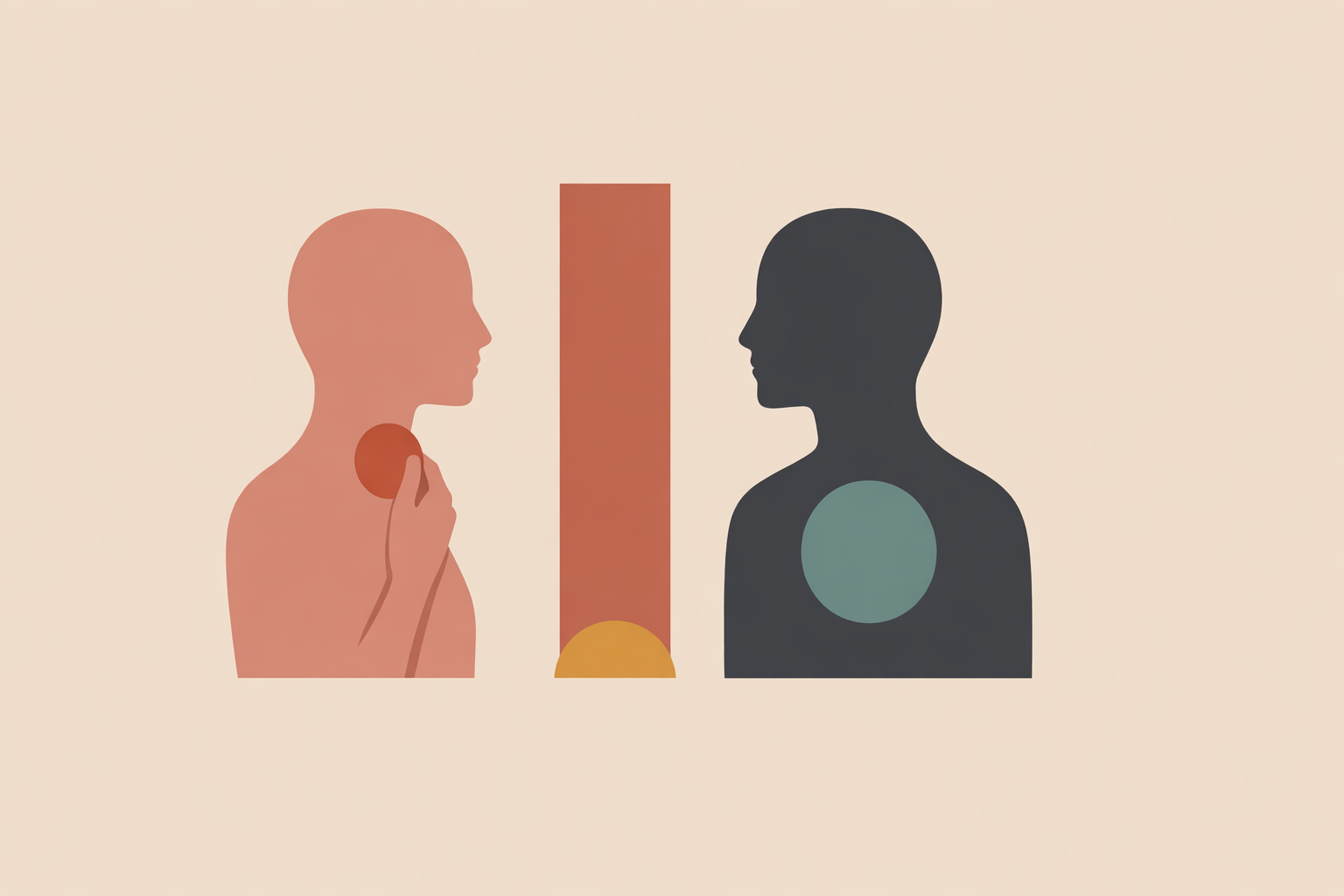
Mid-session, a client mentions a looming deadline; their shoulders inch upward, the breath shortens, and speech accelerates. It can be tempting to name it—“stored trauma in the shoulders,” “fight-or-flight,” “this is grief”—hoping a label brings relief. Yet when a practitioner claims the meaning too quickly, the client’s autonomy can shrink, and a story gets “installed” that may not be theirs. A steadier path is to treat what you notice as real information without turning it into a conclusion.
Key Takeaway: Read body memory and trauma signals as information that can guide choice, not as verdicts about history. Notice what is happening, place it in context, and let the client author the meaning. Brief, reversible invitations, a parts-based lens, and clear boundaries around consent and scope help you support body-oriented work without overreaching.
How to Read Body Memory and Trauma Signals Without Overstepping
The core stance is straightforward: body signals matter, but they don’t explain themselves. Sensations like a tightened jaw, heat in the chest, or a sudden dip in energy can shape choices by guiding attention toward what feels important right now. They can also support self-care by highlighting where pacing, rest, or extra support would help.
Traditional healing lineages have always listened closely to breath, posture, eyes, and movement. In many cultures, the body is understood as a living archive of habit, memory, and meaning. That view is powerful when it’s held with humility, because the same gesture can reflect strain, vigilance, embarrassment, effort, cultural learning, everyday emotion, or something more layered.
Context is what keeps this work clean. Somatic signals can reflect stress, fatigue, environmental factors, medication effects, or the client’s learned ways of relating. Interoception research also suggests bodily perception is shaped by beliefs and context, so eye contact, stillness, expressiveness, and proximity are best read relationally, not as stand-alone “tells.”
So if a client’s shoulders rise when discussing a deadline, instead of “There is stored trauma in the shoulders,” try: “I notice your shoulders lifted as we spoke about the deadline. What do you make of that?” The client stays the author, and you stay anchored in what’s observable.
Pacing is one of the simplest forms of respect. If a client reports a racing heart while recalling a conflict, ask, “Would you like to check whether any part of your body wants a gentler breath, or would you prefer to keep talking?” A small choice like that keeps them involved in what happens next.
If you like structured notes, keep them collaborative: topic, signal, client meaning, next step. For example: “Topic: deadlines. Signal: shoulders up, breath shallow. Client meaning: ‘I don’t want to let anyone down.’ Next step: pause and name choices.” It prevents your record from turning sensations into causal claims.
Notice Without Claiming: Working With Somatic Signals
“Notice without claiming” is a strong practitioner standard. You reflect what’s happening, you offer supportive options, and you let meaning emerge in the client’s own words.
A brief in-session sequence can look like this:
- Invite: “Would two easy breaths be okay while we also keep some awareness of the room?”
- Name location: “Where is that most noticeable—jaw, chest, belly, somewhere else?”
- Check dose: “On a 0–10 scale, how workable is this right now?”
- Limit the contact: “Let’s stay with this for 10–15 seconds, then look around the room together.”
For some people, internal body focus is too much at first. Stress can affect tolerance and body-signal accuracy, and for some clients internal focus can feel overwhelming. In those moments, external orientation is often the wiser start: noticing colors in the room, the support of the chair, distant sounds, the temperature of a mug, or where the doors and windows are.
Keep invitations specific and reversible. “As you notice that tightness in your throat, would it help to place a hand there, or would you rather keep your hands on your legs? We can stop at any time.” Clear options protect autonomy and make “no” easy.
When images, memories, or associations arise, treat them as possibilities rather than facts. Even without a clear story, the experience can still point toward what’s needed now: protection, rest, a boundary that wants words, or a younger feeling that wants acknowledgment. The work stays grounded in present-moment choice.
Modest language supports trust. “Something happens in your chest when we speak about that” usually lands better than “Your chest is holding grief.”
Listening Through a Parts-Based Lens
A parts-based approach can organize what the body is expressing without forcing it into a single explanation. Sensations, impulses, and emotions can be approached as communications from protective and vulnerable inner parts. The aim is to build curiosity and choice, not to label fast.
You might ask, “Does this feel like a part of you reacting?” If the client agrees, follow with: “What is this response trying to do for you?” or “How do you feel toward that part right now?” Attention shifts from interpretation to relationship.
Example: during a conversation about performance feedback, a client notices a knot in the stomach and an inner voice saying, “Get it perfect or else.” You might reflect, “It sounds like a part of you is working hard to keep you safe by staying in control.” If that fits, ask, “What is it afraid would happen if it relaxed even a little?” Now the body signal has a place inside the client’s own map.
Watch for blending, when one part’s urgency floods awareness. It can show up as either-or thinking, a rush to fix, or trouble imagining alternatives. A gentle check-in like, “I’m noticing some urgency here—does that feel true to you?” keeps it collaborative.
It’s also worth noticing protector mimicry: patterns that resemble what they’re trying to prevent. Harsh self-criticism can be an attempt to head off criticism from others, and emotional distance can be an attempt to avoid rejection. These patterns often soften when their function is respected.
Keep inner mapping concrete. Notes might include: name of the part, body location, tone, job, trigger, fear, and what support helps. Over time, this becomes shared language without forcing certainty.
Catching Yourself Before You Overstep
A common pitfall in body-oriented work is slipping into the role of authority on what the client’s body “means.” A steadier role is ally, witness, and guide: close to what’s observable, led by the client’s meaning-making.
Common oversteps and stronger alternatives include:
- Overstep: “Is this where the trauma lives?”
Alternative: “What meaning, if any, does that sensation have for you?” - Overstep: “Whose voice is that?”
Alternative: “Does that sound familiar in any way, or does it feel more like a response that is here now?” - Overstep: Treating tears, shaking, or intensity as proof of progress.
Alternative: “How is this for you right now—helpful, too much, or neutral?”
Consent-based language keeps the work clean. “Would you like to explore that?” “Does my reflection fit?” “I have a possible read, and I may be wrong—would you like to hear it?” These small permissions protect agency.
Before offering any interpretation, four checks help:
- Is it observable?
- Has the client confirmed it?
- Is it within my scope?
- Is it useful right now?
Track your own internal responses without treating them as evidence. If you feel impatient, protective, urgent, or overly certain, that may say more about you than the client. Supervision, mentoring, and reflective practice help sharpen the difference between grounded intuition and projection.
A simple repair script is often enough: “I notice I’m wanting to make sense of this fast. Let’s slow down and come back to what you are actually noticing right now.”
Pacing, Tracking, and Containment at the Edge of Activation
When activation rises in session, pacing becomes the practice. Speech may speed up, hands may tremble, eyes may lose focus, or the body may collapse inward. In those moments, the job is helping the client stay connected enough to choice.
Short, titrated experiments are often more supportive than long dives into intense activation, especially early in the work. A little contact, then a return to steadiness, tends to build trust and capacity.
Pendulation can help. You might say, “Let’s notice the tightness in your chest for two breaths, then come back to your feet on the floor and the support of the chair.” Moving gently between activation and a supportive anchor helps many clients stay present.
Know the signs someone is getting overwhelmed or losing connection: rapid shallow breathing, frantic scanning, intrusive imagery, glazed eyes, slowed responses, postural collapse, or reports of “not really being here.” When you see these, shift from meaning-making to containment.
Containment is often very simple:
- Pause direct body exploration
- Orient to the room
- Feel feet on the floor or back against the chair
- Name the date, time, or location
- Add gentle movement if welcome
- Return to simple choices and practical next steps
Remember that regulation doesn’t always look quiet. Some people settle through movement, firm boundary-setting, a posture change, or focused problem-solving. The question to track is, “Is this becoming more workable?”
A predictable session arc supports this, especially in trauma and emotional healing work: arrival and consent, present goal, resource check, brief exploration, pendulation or pause, integration, and a grounded close. Structure itself can be settling.
Consent, Culture, and Scope
Body-oriented work benefits from clear agreements. Make consent and scope explicit so strong sensations can be welcomed without role confusion.
A clear opener might sound like this: “We can include some body awareness today if that feels useful. If anything feels too much, you can pause, decline, or change direction at any point. We will stay within coaching scope, and if something comes up that needs another kind of support, we can talk through next steps together.”
When memories or associations arise, use open prompts rather than leading ones. “What do you notice?” “What comes to mind?” “What associations are here?” Open questions reduce the risk of installing narratives and keep authorship with the client.
Cultural humility matters here as much as pacing does. Breath, movement, visualization, sound, silence, and ritual all have roots. If you draw from a lineage, name it clearly and invite consent. If the client prefers a secular version, a practice from their own tradition, or no practice at all, respect that fully.
Be equally clear about when additional support is needed. Referral indicators can include suicidal thoughts, self-harm, severe disorientation, ongoing abuse, crisis-level eating or substance use, or major functional impairment. When these appear, name your limits with care and help the client connect with more suitable support.
Clear boundaries around consent, scope, and referral protect the integrity of this work and keep it aligned with what you’ve agreed to offer.
Reading the Body With Humility
Reading body signals is a relational skill rooted in attention, pacing, and respect. When you notice without claiming, work in brief and reversible ways, and let the client’s meaning lead, the body becomes a guide for greater clarity rather than a place where stories are imposed.
Often, the most useful reflection is the most modest one: “Your shoulders tightened as we named that deadline—what do you notice now?” Small, accurate reflections build trust, while big interpretations can outrun what the moment is actually showing.
Traditional practice has long taught that the body speaks in patterns, impulses, gestures, and silences. Contemporary coaching can honor that wisdom while staying careful with certainty. The work is to listen closely, move at a human pace, and keep authorship where it belongs. In the conclusion of any approach like this, it’s worth restating the basics: stay within scope, prioritize consent, and refer out when safety or stability is in question.
Train in Inner Parts Integration
Deepen your parts-based, consent-led approach with the Inner Parts Integration Coach Certification.
Explore Inner Parts Integration →