Most behavior plans look great on Friday and unravel by Wednesday. Clients commit to journaling, earlier bedtimes, or new focus rituals—then travel, caregiving, or a sudden workload change punches holes in the plan. You’re left managing drop-off, rising shame, and the admin of tracking too much. Momentum stalls, personalization turns into guesswork, and both of you wonder what to change next.
A steadier container is three small, co-created experiments per week. Each one is a time-bound test of a single variable, designed to create learning rather than “prove” willpower. That shift matters: “run the test” feels lighter than “perform the plan.” It lowers pressure, speeds up feedback, and gives you cleaner information to personalize with. Over time, it strengthens attention, self-observation, and self-trust.
Key Takeaway: Three small, client-led experiments each week create faster feedback and less pressure than rigid plans. By focusing on learning instead of “passing,” clients can adapt to real-life disruptions, reflect briefly, and build the skills of noticing, adjusting, and trusting their own process over time.
What a coaching experiment is and what it is not
An experiment is a tiny, specific test of one variable that you and your client learn from together. It’s not homework, compliance, or a character test.
Start concrete. “After I close my laptop, I’ll write one sentence in my reflection log” is workable. “I will journal more” isn’t. The clearer the cue and action, the easier it is to run in an ordinary week.
Experiments work best when clients help design them. Autonomy matters, and client-generated experiments tend to strengthen commitment because the choice feels genuinely theirs.
You can also test beliefs—not just behaviors. A client might explore, “If I ask for a 10-minute check-in, what actually happens?” or “If I step away from my phone after dinner, do I really lose momentum?” Over time, this kind of inquiry can support identity shift, because the person gathers real evidence about themselves instead of recycling old stories.
“If this experiment ‘fails,’ that is useful information. It tells us something about your context, energy, or support—not about your potential.” — Naturalistico coaching script
The underlying question stays simple: What happens if we try this? That keeps the tone calm, open, and genuinely curious.
Why three experiments per week is often a sweet spot
Three experiments per week is often enough to build momentum while still respecting bandwidth. It gives structure without turning the week into a monitoring project.
There’s a practical reason it works: more experiments create more learning cycles. Each run gives another chance to notice what helped, what got in the way, and what to adjust next.
Over time, that plan–act–reflect loop supports pattern recognition and self-awareness—a foundation for lasting change because clients learn to work with their real context, not against it.
It also builds resilience. Three small attempts spread risk across the week. If one experiment gets disrupted by a tough day, the process doesn’t collapse; there are still other chances to succeed and learn.
Traditional rhythms point the same way. Predictable weekly structure and simple repetition can help people feel more grounded, and repeated cues can support more automatic learning over time.
“Given your week ahead, what feels like a 9/10 doable experiment we can learn from?” — Naturalistico coaching prompt
Three isn’t a rule. It’s a default rhythm: flexible enough for real life, steady enough to keep learning moving forward.
How to design experiments clients will actually do
Translate big goals into micro-steps that work on an average day, not a perfect one. The aim is low friction—not high drama.
Design for moderate stress, busy schedules, and ordinary forgetfulness. If an experiment only works under ideal conditions, it’s too fragile. Shrink it until it feels finishable.
“If X, then Y” phrasing helps because it creates a clearer cue-response link and reduces cognitive load. For example:
- If I finish lunch, then I step outside for one minute.
- If I put my phone on charge, then I write one line in my notes app.
- If I enter the kitchen in the evening, then I fill my water bottle.
It also helps to add a tiny acknowledgement at the end—a check mark, a quiet “done,” a hand to the chest, a brief pause. Think of it like tying a knot at the end of the action: it signals completion. Over time, that functions as positive reinforcement and makes repetition more likely.
“Where does your brain naturally resist this plan? What’s one way we could make it gentler or lighter for you?” — Naturalistico coaching prompt
Useful design principles:
- Anchor the experiment to a clear cue: time, place, or preceding action
- Keep it finishable in one to two minutes when possible
- Test one variable at a time
- Make success easy to recognize
- Choose something that still feels doable in a messy week
Examples:
- Sleep consistency: “At 9:30 pm, I dim the lights and make tea.”
- Movement: “After brushing my teeth, I do 2 minutes of stretches.”
- Midday reset: “At 1 pm, I step outside for three breaths.”
A simple weekly structure: plan, act, reflect
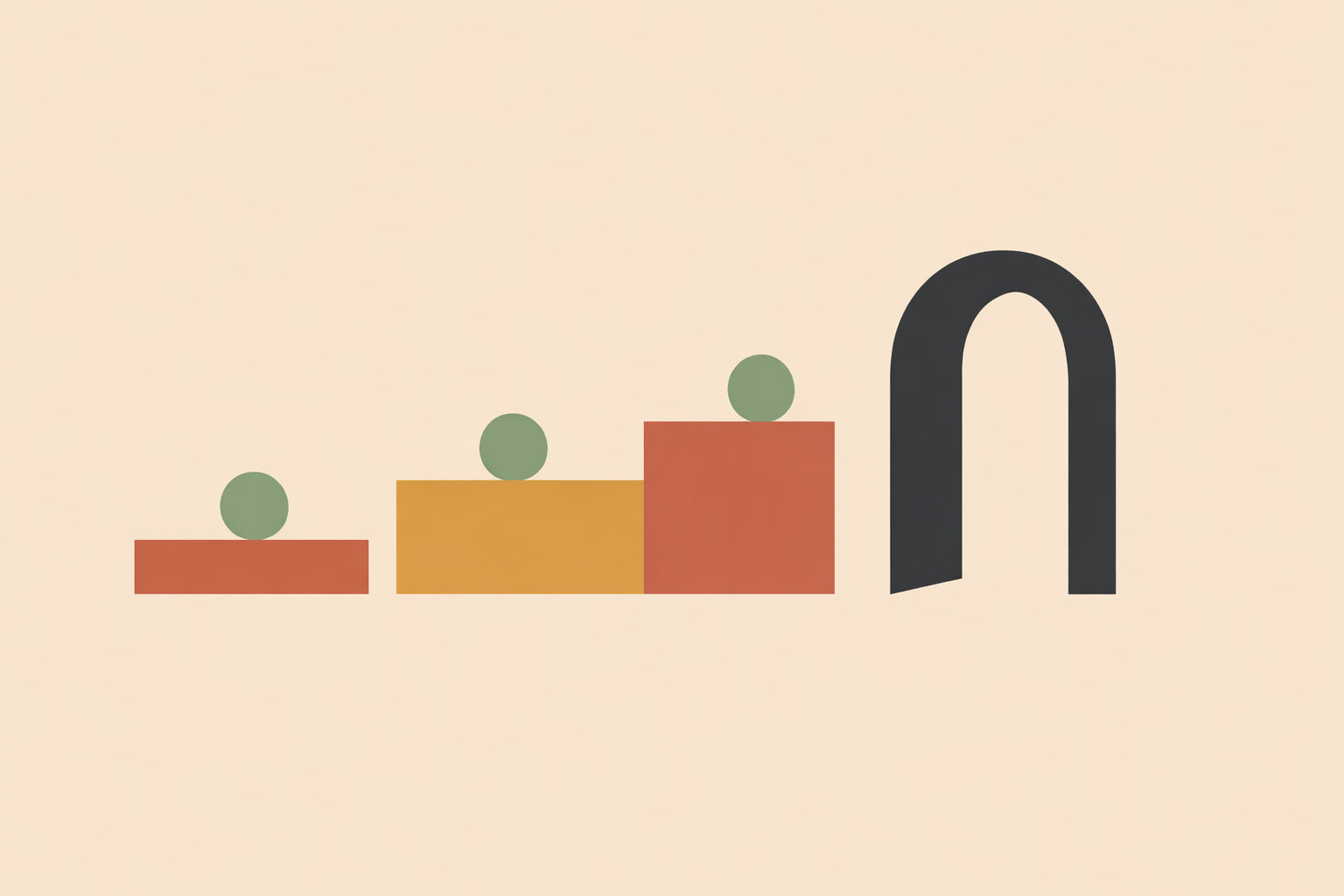
A clean weekly container is three slots: Behavior, Mindset, and Environment or Social. One experiment in each category creates variety without overload.
- Behavior: a visible action, such as “10 slow breaths before meetings”
- Mindset: an inner phrase or perspective, such as “Name the win before the fix”
- Environment/Social: a change in surroundings or relationship support, such as “Phone goes to the kitchen at 9 pm”
Each experiment needs only a few parts:
- a cue
- a finishable action
- a simple sign of completion
- a brief reflection question
Keep reflection light. One sentence after the event and a few minutes at the end of the week is often plenty—enough to catch patterns without creating paperwork.
- Right after: What happened?
- End of week: What worked?
- End of week: What got in the way?
- End of week: What do we change next?
Writing things down can deepen learning when clients are trying to notice patterns, not just remember events. As Giada Di Stefano reminds us, “the better it is to actually write something down”.
The goal isn’t a perfect journal. It’s enough structure to make experience visible.
Using ancestral and traditional practices as experiment inspiration
Clients often already carry forms of wisdom that work: family sayings, meal rituals, seasonal resets, prayerful pauses, community rhythms, movement habits, household routines. When invited respectfully, these can become rich experiment material—because they’re already meaningful and familiar.
Many cultural practices are, in essence, time-tested ways of shaping behavior: predictable structure, rhythmic repetition, and social connection. These elements can help anchor memory and support steadier emotional life. Traditional wisdom also tends to favor small daily actions over grand gestures, which fits beautifully with experiment-based coaching.
Your role is to invite rather than impose. Ask permission. Listen for meaning. Let the client decide what feels appropriate to adapt and what should remain untouched.
“What is one small daily or weekly ritual from your family or culture that we could adapt into a gentle experiment this week?” — Naturalistico question
That might become:
- lighting a candle before cooking
- repeating a family proverb during stressful transitions
- doing three morning stretches passed down through the family
- taking a brief pause of gratitude before the evening meal
To keep this ethical:
- Ask, do not assume
- Adapt, do not copy sacred specifics
- Keep ownership with the client and their community
How to avoid experiment fatigue
Three experiments per week should feel supportive, not heavy. If the process starts to create dread, admin, or perfectionism, the design needs adjusting.
Fatigue usually shows up when there are too many tasks, too much tracking, or too much interpretation layered onto each test. Learning slows when every experiment needs its own measurement system or long debrief. Quick, non-judgmental notes are often enough.
Context matters. What’s feasible in one household, schedule, or financial reality may be unrealistic in another. Good support always accounts for context, not just intention.
“If this experiment feels heavy, let’s shrink it until it feels playful or meaningful instead of like homework.” — Naturalistico coaching script
Signs of overload:
- avoidance
- excessive tracking without action
- all-or-nothing thinking
- elaborate rationalizing about why nothing could begin yet
Helpful responses:
- reduce to one micro-experiment for a week
- keep reflections to one line
- return to a familiar cue
- ask what would make the process lighter
Measuring progress without turning life into a spreadsheet
Progress measures should stay humane. You don’t need elaborate dashboards to see movement—just a few simple signals you can return to consistently.
Simple indicators are often enough:
- number of completions
- days with at least one completion
- start-of-week and end-of-week self-ratings for energy, focus, or follow-through
- one short note on what helped most
What matters is trend, not perfection. Repeated design–act–reflect cycles gradually build meta-skills like hypothesis-making, pattern-spotting, and more confident self-observation.
Over time, many clients stop seeing themselves as people who are “trying to do better” and start seeing themselves as people who can notice, test, and adapt. That kind of self-confidence can become a durable turning point: “I can’t change” shifts into “I know how to learn from life.”
This stance strengthens your craft too. Practitioners can run small experiments in coaching session design—changing reflection timing, trying different prompts, simplifying weekly structure—and noticing what genuinely supports follow-through.
As one graduate shared, the learning was “both intellectually stimulating and deeply practical”.
Building an experimenter identity
The deepest value here isn’t just better follow-through on a few weekly actions. It’s the gradual emergence of an experimenter identity—someone who can work with reality, not wait for perfect conditions.
Instead of “I failed the plan,” the client learns:
- I can shrink the step
- I can study what got in the way
- I can design support around real life
- I can learn from misses without collapsing into shame
That shift is often the most durable outcome. The person stops depending on perfect motivation and starts relying on rhythm, attention, and skillful adjustment—guided by kindness and honest self-study.
Traditional wisdom and modern evidence don’t need to compete here. When used together with cultural respect and clear consent, they create neuroscience-informed coaching that feels grounded, flexible, and genuinely supportive. The main caution is simple: keep the process humane. If the experiments start to feel like policing, shrink them until they feel alive again.
“What would make this experiment feel playful, interesting, or meaningful instead of like homework?” — Naturalistico coaching prompt
Experiment Better, Coach Better
Use the Neuroscience Coach Certification to refine experiment-based coaching that adapts to real-life variability.
Explore Neuroscience Coach Certification →