Working with teens, sessions can swing from silence to a flood of stories in minutes. One week you leave with clear actions; the next you spend 40 minutes circling and realize the wrap-up is gone. When the opening is rushed or the ending collapses, you lose co-ownership, accountability, and the very safety that gets honest work done. Often, tools aren’t the issue—consistency is. Teens quietly “test for steadiness”; if the container shifts week to week, buy‑in erodes and progress becomes hard to track.
A clear intake-to-wrap-up arc creates enough steadiness and safety that teens can relax into real work. It’s not bureaucracy; it’s the container that lets depth and play coexist.
Traditional community circles understood this. Elders often began with a greeting and a moment to arrive, moved into shared intention and story, and ended with a closing that honored what shifted. Youth sessions benefit from the same rhythm—greeting, intention, story, and closing—because it protects spontaneity without letting the clock dictate the depth. With a repeatable backbone, you can co‑regulate, focus on what matters today, turn insight into practice, and close with next steps your teen genuinely owns.
Key Takeaway: A repeatable session arc—steady opening, focused middle, and on-time closing—builds the safety teens need to engage honestly and take ownership. When you consistently co-regulate, practice skills in-session, and end with one small next step, insights become trackable habits.
Plan the Journey: Designing Each Youth Session From Intake to Wrap-Up
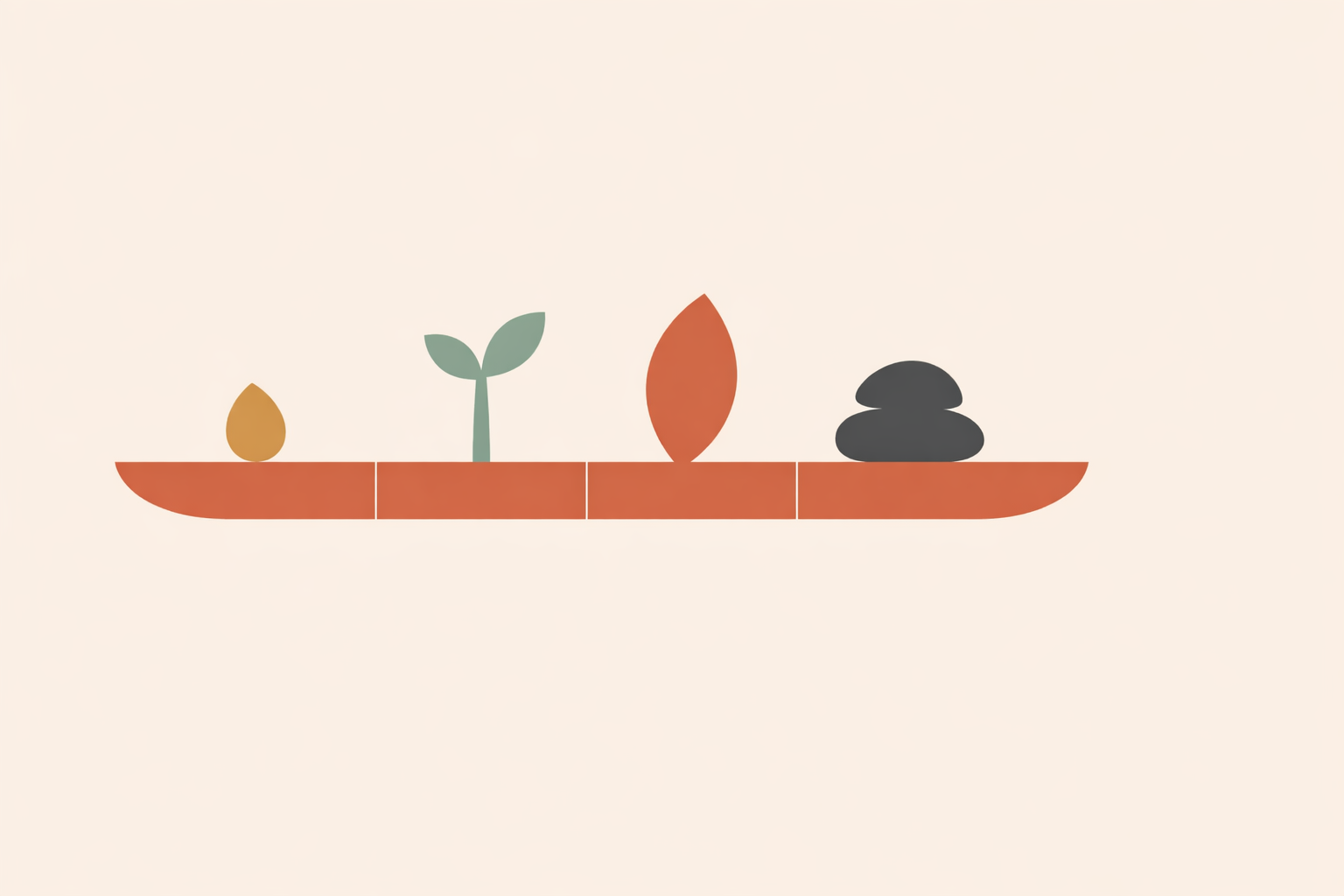
Use a simple backbone you repeat each time: opening, exploration, application, and integration. Think of it like a familiar trailhead and a familiar return—so you can explore new terrain without getting lost.
This isn’t new thinking. Sports coaches often use a progressive model: warm-up, focused drills, game-like conditions, then a short cool-down. Youth coaching benefits from the same pacing. Naturalistico’s teen-focused guidance suggests 30–45 minute sessions with distinct segments so attention stays high without overwhelm.
Here’s a practical 3–4 phase arc you can adapt:
- Opening: Arrival ritual, feelings check, intention-setting.
- Exploration: Clarify what matters most today; map options and obstacles.
- Application: Try a tool, a micro-experiment, or a role-play.
- Integration: Reflect, celebrate, decide next steps, and close.
Structure gets even stronger when it’s visible and trackable. In youth sport and education, documented goals help young people understand what they’re working toward. And simple coaching forms help you capture intentions, actions, and reflections so the work becomes a coherent journey instead of a series of one-offs.
Some teens thrive when you roughly balance talking and doing; experiment with what keeps them engaged. “Coaching is unlocking people’s potential to maximise their own performance,” wrote John Whitmore. The backbone exists to unlock, not constrain.
The Intake: Welcoming and Focusing Your Teen in the First 5–10 Minutes
Open like you’re stepping into a circle: arrive, connect, and name intention. Those first minutes quietly teach a teen, “You’re safe here, and this time matters.”
Teen-focused frameworks often recommend using the first 5–10 minutes to build rapport and ask what they want from today. Many learning spaces use arrival rituals and check-ins to create readiness; your intake can do the same.
To help teens translate “inner weather” into words, keep it simple: a feelings thermometer or cards—quick emotion tools—can reduce pressure and increase clarity. Then co-regulate with your tone, pace, and attention. Guidance that highlights active listening and validation reflects what many practitioners see: teens share more when they feel understood.
Clarity around agreements and boundaries is part of the welcome. When your container is steady, sessions tend to land with more dignity and momentum. That spirit echoes Carl Rogers’s quiet wisdom:
“When I accept myself just as I am, then I can change.”
Try this micro-ritual:
- “What’s your energy level, 1–10?” (Pause to mirror and validate.)
- “What do you want different by the end—one sentence?”
- “Anything we should avoid today?”
The Middle: From Exploration to Self-Led Solutions
Guide without taking over. The middle works best when you hold the structure and the teen holds the steering wheel.
After arrival, move into a focused Examine phase: “What feels most important now?” “Where does this show up in your week?” Then shift into a collaborative Evaluate phase: “What have you tried?” “What else could work?” Essentially, you hold the searchlight; they choose where to shine it.
Small goals early on can create a thread of accountability. Support goal-setting, while protecting autonomy with choices: “Which option feels most doable?” rather than “Here’s what you should do.”
Before you move into practice, invite a quick self-assessment: “What would 10% better look like this week?” Put simply, sustainable change usually comes from small steps that the teen actually believes in. As Rogers put it, the truly educated person has learned how to learn and change. You’re inviting discovery, not delivering answers.
Helpful prompts for the middle:
- “If this obstacle could talk, what would it say?”
- “Which of your strengths could meet this, even a little?”
- “What’s one experiment you’d be willing to run this week?”
Make It Experiential: Games and Skill-Building That Stick
Insight settles when it’s lived. When a teen practices a skill in-session—voice, timing, body posture, wording—it becomes something they can carry into real life.
Borrow pacing from sport: build from fundamentals to small-sided drills, then bring in “game conditions.” For social courage, that might look like: breathe and center (fundamental), rehearse a boundary sentence (1v1), role-play with a curveball (2v2), then design a real conversation plan (game). To keep momentum high, use rotating stations so multiple skills get a turn.
Play is not a distraction; it’s a learning channel. Approaches that use game-like activities often hold attention better than lectures. Blend modalities—brief quizzes, audio checklists, hands-on tasks—similar to teen blended learning designs.
Three quick experiential patterns you can plug in:
- Boundary dojo: Write one boundary line. Say it aloud. Add eye contact. Add a curveball response. Debrief sensations.
- Focus sprints: Two short focus intervals on a school task with a quick movement reset between; track what changes.
- Values scavenger: Identify top three values; choose one tiny action this week that enacts each value.
“Every time we teach a child something, we prevent him from inventing it himself,” said Jean Piaget.
Offer pathways, not prescriptions; let teens invent their way into competence.
Adapt for Real Humans: Neurodiversity, Identity, and Group Work
Keep the arc; flex the method. A strong container should make it easier for teens to be themselves, not harder.
For neurodivergent youth, build in options: a quiet nook or calm corner, sensory tools, and normalized “step out and return.” During transitions, brief breathing practices can help reset attention and reduce friction.
Identity safety is foundational. Many educators emphasize embracing diversity through language, examples, and materials. Ask pronouns without spotlighting; keep stories culturally broad and respectful. In traditional circle spaces, belonging came first—modern practice can honor that same principle.
For groups, use a steady sequence so everyone knows how the river flows: Orientation (agreements and intentions), Foundation (demonstrate a core skill), Application (peer practice), Integration (real-world experiments and celebration). That’s the heart of group coaching: same arc, shared ownership.
Three adaptable moves:
- Choice boards: Offer a few activity options that meet the same objective; let teens choose their path.
- Sensory pacing: Alternate high-focus tasks with movement or grounding in short cycles.
- Belonging check: “What would help this space feel 10% more ‘you’ next time?” then implement one small change.
As Virginia Satir reminds us, “We must not allow other people’s limited perceptions to define us” (Virginia Satir).
Your structure should widen possibility, not narrow it.
Closing the Loop: Wrap-Ups, Reflection, and Next Steps
Close like a good circle: name what shifted, choose what happens next, and end on time so the teen leaves feeling clear—not cut off.
Don’t wait until the last minute to realize time is up. A simple time check—“We’ve got 10 minutes left—how do you want to use it?”—keeps teens co-owning the finale. For closure, use image cards, postcards, or a quick freewrite—light creative closure tools that help them name what changed.
Consistency is what turns insight into habit. Settings that build habit follow-through tend to balance reflection with practical action. And simple session notes preserve continuity so you can start next time with clarity instead of rehashing.
Affirmations land best when they’re specific. Guidance on specific affirmations suggests they build more genuine confidence than generic praise. Then agree on one small next step using goal-setting: a short practice, a check-in message, or a reflection question.
Try this wrap script:
- Reflect: “What felt most useful today—and why?”
- Decide: “One action this week, tiny but real?”
- Support: “What reminder or ally will help?”
- Close: “How do you want to mark your effort right now?”
As Emma-Louise Elsey puts it, coaching helps us take responsibility and create the life we want. A clear closing invites that responsibility—kindly, concretely, and on time.
Conclusion: Integrating Intake-to-Wrap-Up Into a Sustainable Youth Practice
When each session follows a living arc—intake, exploration, application, integration—you offer teens something rare: a reliable path where spontaneity can thrive. The structure is your drumbeat; the youth brings the song.
Over time, repeating the arc makes progress easier to see and easier to sustain. Many practitioners lean on reflective prompts like: “Which opening questions earn the most honest answers?” and “What consistently squeezes the wrap-up, and how can I adjust?” Capture what works, keep what’s meaningful, and let the rest evolve.
Most of all, trust the rhythm. The first hello welcomes a whole person; the last minute honors their effort and points to the next stone on the path. As Carl Rogers reminds us, the good life is a direction, not a destination.
Train in Teen Life Coach
Teen Life Coach helps you turn session structure into repeatable, teen-owned progress from intake to wrap-up.
Explore Teen Life Coach →