Values work in coaching often moves slower than real life. Clients can spend weeks refining the “right” words while their routines stay the same. Ikigai coaching supports a more grounded pace: notice what’s already alive, test it in daily life, and shape the next week around what proves true.
This three-session ikigai map follows that rhythm. It uses story, pattern-spotting, and small experiments to move from abstract values to lived priorities. Rather than chasing a perfect life mission, it helps clients see where energy, contribution, strengths, and sustainable work already overlap.
Key Takeaway: A focused three-session ikigai process can help clients identify core values quickly by working from real stories, testing them through small daily experiments, and turning the results into roles, rituals, and practical weekly choices.
Session 1: Map values through stories and the four ikigai circles
Session 1 is about gathering real material. In 60 to 90 minutes, many clients can move from scattered impressions to a clear shortlist of values anchored in actual moments.
Start with presence. A calm, attentive atmosphere helps people tell the truth faster. In the spirit of ichi-go ichi-e, treat the session as a unique encounter rather than a script to get through.
Invite two or three concrete stories:
- A recent moment that felt satisfying or absorbing
- A challenge that felt worthwhile
- A task they would still choose even without praise or recognition
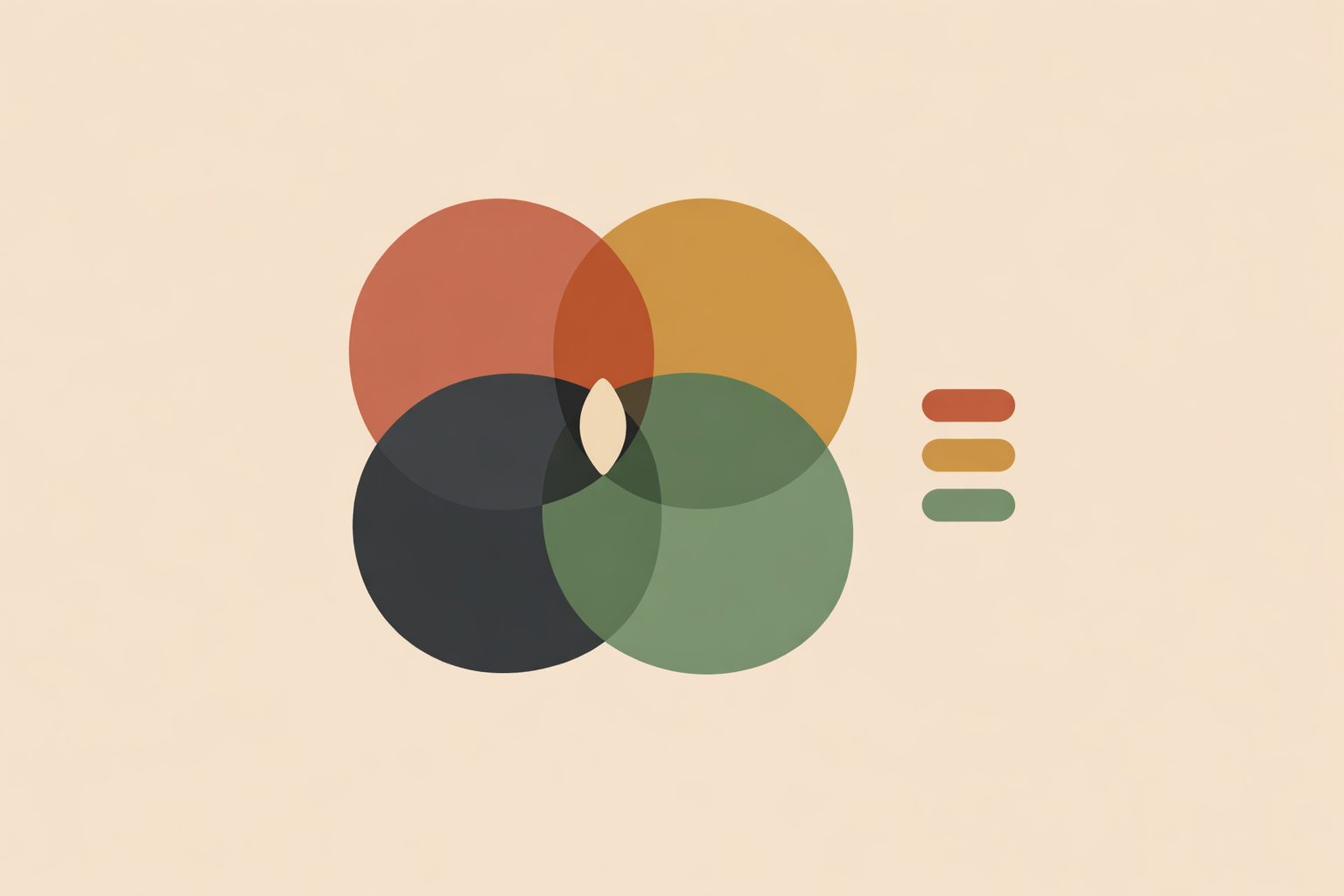
As they speak, sketch the four ikigai circles:
- What you love
- What you are good at
- What the world needs
- What you can be paid for
Keep it practical. If someone describes repairing a bike for a neighbor, you might capture “tinkering until it works” under love, “explaining simply” under strengths, “affordable help” under contribution, and “repair work” under paid work.
You’re not forcing a perfect diagram. You’re listening for repetition. Themes often surface quickly: craft, usefulness, belonging, steadiness, beauty, fairness, learning, resourcefulness.
Close Session 1 with an 8 to 10 item shortlist in the client’s own words. It doesn’t need polishing yet; it needs to be testable.
Between sessions: Test values with small experiments
Between sessions, values need contact with real life. This is where clarity becomes trustworthy.
Choose two or three values from the shortlist and turn each into a small experiment for the week. Keep it light, specific, and easy to complete.
- Belonging: send a short voice note of appreciation
- Craft: spend 20 minutes improving one small process
- Stewardship: take one concrete action that leaves a shared space better than you found it
Ask the client to keep a simple daily energy log with three lines:
- Most alive
- Least alive
- One note about why
This kind of tracking shows what conversation can miss. People start noticing what genuinely energizes them, what drains them, and which values feel lived rather than merely admirable.
Modern research aligns with this direction: meaning in life has been associated with lower anxiety and distress during difficult periods. Small, meaningful actions clarify values and help people feel their way into them.
These experiments are the bridge from insight to lived change.
Session 2: Narrow to 3 to 5 core values
By Session 2, you’re no longer working with preferences or theories. You have a week of evidence.
Begin with a short debrief:
- Which action gave you more energy than expected?
- Which one felt flat, even if it sounded good on paper?
- What kept showing up across different parts of your week?
Group patterns and narrow to 3 to 5 values. That’s usually enough to guide decisions without becoming a new burden.
This is also where “shoulds” get clearer. If someone says they value status, but their notes consistently light up around mentoring, making, fixing, or serving, stay with what the week revealed. You’re not debating their words; you’re strengthening alignment.
Look for consistency across contexts. When a value appears at work, at home, and in personal interests, it tends to be deeper and more durable. If the evidence is mixed, keep it provisional and test again.
Contrast questions help sharpen the list:
- Which kind of problem naturally draws your attention?
- What do you protect even when no one asks you to?
- What feels meaningful without an audience?
End Session 2 with values that feel honest and usable, such as resourcefulness, belonging, stewardship, learning, and craft. The best list is the one the client can live this month.
How to coach value conflicts inside the ikigai map
Once values are clear, tensions often become visible. That’s a healthy sign, because real life has real trade-offs.
Common pulls include freedom and security, contribution and income, visibility and privacy, or beauty and efficiency. Treat the conflict as a design question, then map it inside the circles.
- Love: creating new ideas
- Good at: delivering reliable work
- World needs: steady support
- Paid for: predictable consulting
From there, set parameters instead of ultimatums. Someone can keep stable paid work and protect two mornings a week for prototyping. They can also choose a slower transition that preserves momentum, a common theme in career transition work.
Contribution is often a steady compass when the map feels noisy. Ask: Who benefits from each path? The question brings the decision back to usefulness, relationship, and meaning.
When fear is part of the conflict, pacing matters. A stable sense of ikigai has also been associated with reduced hopelessness over time, supporting choices that protect meaning alongside practical needs.
Let the tension inform the next step, then design a structure the client can actually carry.
Session 3: Turn values into a life and work plan
Session 3 turns clarity into rhythm. Values become roles, boundaries, rituals, and weekly choices.
Start by naming roles that express the client’s core values in the current season:
- Resourcefulness: neighborhood fixer
- Belonging: team mentor
- Stewardship: reliable closer
- Craft: thoughtful maker
For each role, define:
- One boundary to protect it
- One ritual to repeat
- One small experiment to deepen it
Keep rituals simple. In Japanese-informed wellbeing practice, daily rituals are often understood as a living expression of ikigai. A tea pause before focused work, a weekly mentoring hour, or a short check-in with a shared project can carry more lasting power than dramatic reinvention.
Then build a one-page plan:
- Craft: 25-minute improvement block after lunch three times a week
- Belonging: send one appreciation note every Friday
- Stewardship: decline unclear requests until scope is defined
A weekly review keeps it alive. Over time, small values-aligned goals create a strong feedback loop when the client keeps noticing energy, meaning, and consistency.
Purpose is also linked with social participation, which is another reason to embed values into real roles and relationships, not just private ideals.
Close with one portable sentence they can carry into the week: “This month, I will practice craft, belonging, and stewardship through focused work, mentoring, and finishing what matters.”
Make the three-session process repeatable in your practice
After you’ve guided a few clients through this map, it becomes a dependable structure you can repeat without losing warmth or flexibility.
The sequence stays simple:
- Session 1: stories, patterns, and a values shortlist
- Between sessions: small experiments and energy tracking
- Session 2: narrow to core values and clear out “shoulds”
- Session 3: translate values into roles, rituals, and a one-page plan
Keep a small toolkit ready:
- Story prompts
- Four-circle ikigai map
- Micro-experiment ideas
- Two-minute energy log template
- Weekly review questions
This structure works because the framework stays steady, while the content comes from the client’s real life. It also supports beginners respectfully: they don’t need a flawless philosophy of purpose to begin. They need a way to notice what’s already true, test it gently, and build from there in purpose and life design work.
Conclusion: Use ikigai to spot core values quickly and respectfully
This three-session map works because it stays close to ordinary life. It starts with stories, follows energy, tests values in small ways, and turns insight into rhythms a person can sustain.
Used well, ikigai is an evolving orientation toward meaning, contribution, and felt aliveness. Revisit the map as seasons change, responsibilities shift, and new patterns emerge, and if you want a broader structure for this kind of work, a 6-session ikigai journey can offer a steadier container.
Approach the work with respect for ikigai’s cultural roots and let lived experience lead. A steady sense of ikigai is associated with greater wellbeing and resilience. Like any coaching process, it benefits from care and good pacing, especially when someone is navigating stress or major change.
Train in Ikigai Coaching
Build a repeatable values-to-action framework with the Ikigai Life Coach Certification.
Explore Ikigai Certification →