Menopause can show up at work in quietly disruptive ways: a capable person suddenly being labelled “difficult,” a manager looking for a performance fix, and a coachee who is sleeping poorly, stretched thin, and reacting more sharply to everyday pressure. In practice, the most helpful starting point is rarely to “fix” the person. It is to name the transition clearly, reduce shame, and translate a sensitive experience into practical support that fits real working life.
Key Takeaway: Support for menopause-related mood changes at work starts with a simple shift in frame: this is often a time-limited period of increased sensitivity, not a character flaw. From there, practitioners can help clients look at layered drivers such as hormonal change, sleep, workload, and life pressure; open private, practical conversations at work; map patterns and triggers; use brief in-the-moment regulation tools; and build a simple support plan with clear, reviewable adjustments.
Look beneath mood: hormones, sleep, and life load
Hormones matter, and they are rarely the whole story.
Menopause-related hormonal shifts interact with serotonin and dopamine in ways that can influence mood. For some people, day-to-day fluctuations seem to land harder than overall levels, which helps explain why emotional changes can feel uneven or unpredictable.
At the same time, day-to-day mood is strongly shaped by sleep disruption, psychosocial stress, work conflict, role strain, and the general weight of midlife responsibilities. The APA review highlights how sleep disruption and wider stressors can shape the experience.
Emotional shifts also commonly overlap with body-based experiences. Workplace consensus recommendations note this link with hot flashes and night sweats. In practice, that combination matters: a person may be more emotionally exposed while also tired, overheated, and expected to perform in spaces that offer little chance to reset.
This broader view is often where coaching becomes most effective. A client may arrive thinking she’s “overreacting,” but pattern exploration often reveals a layered mix: broken sleep, back-to-back meetings, an overheated office, emotional labour at home, and no privacy when overwhelm rises.
Start practical workplace conversations without overexposure
When workplace support is needed, the aim is not forced disclosure. The aim is a private, respectful conversation that stays focused on what would make work more workable.
Consensus recommendations support open communication, empathy, flexibility, and realistic adjustments. In day-to-day settings, that usually means talking about work impact and support needs rather than personal detail.
Many people don’t want to explain intimate aspects of their experience to a manager, especially where trust is limited. These openings stay non-intrusive and practical:
- “Is there anything making work harder just now that we could adjust?”
- “What would help you feel more supported during the day?”
- “Would it help to try a small change and review it in a few weeks?”
Coaches can help clients prepare in advance. A short role-play often reduces awkwardness, clarifies the ask, and helps the client stay grounded in the real conversation.
The tone matters as much as the wording. Adult-to-adult language tends to work best: clear, respectful, and free from probing.
Map patterns so mood shifts stop feeling random
One of the most useful steps is short-term tracking to spot what clusters together. It doesn’t need an app or a spreadsheet. A few brief daily notes can be enough to reveal strong patterns.
Useful things to track include:
- sleep quality and wake-ups
- temperature and hot moments
- meeting timing and workload intensity
- caffeine and alcohol
- meals and hydration
- movement
- stress spikes or conflict points
- changes in confidence, focus, or emotional reactivity
Pattern mapping often restores agency. “I never know when I’ll lose my footing” becomes “Poor sleep plus a crowded morning plus heat makes me much more reactive by midday.” That shift reduces self-blame and creates options.
It also aligns with the broader evidence base: support needs vary, and adjustments work best when they respond to the person in front of you rather than assumptions made in advance.
Use brief regulation tools that fit the workday
When a difficult moment is already happening, clients need tools that fit inside real working life. Long routines often don’t survive meetings, messages, deadlines, or shared spaces.
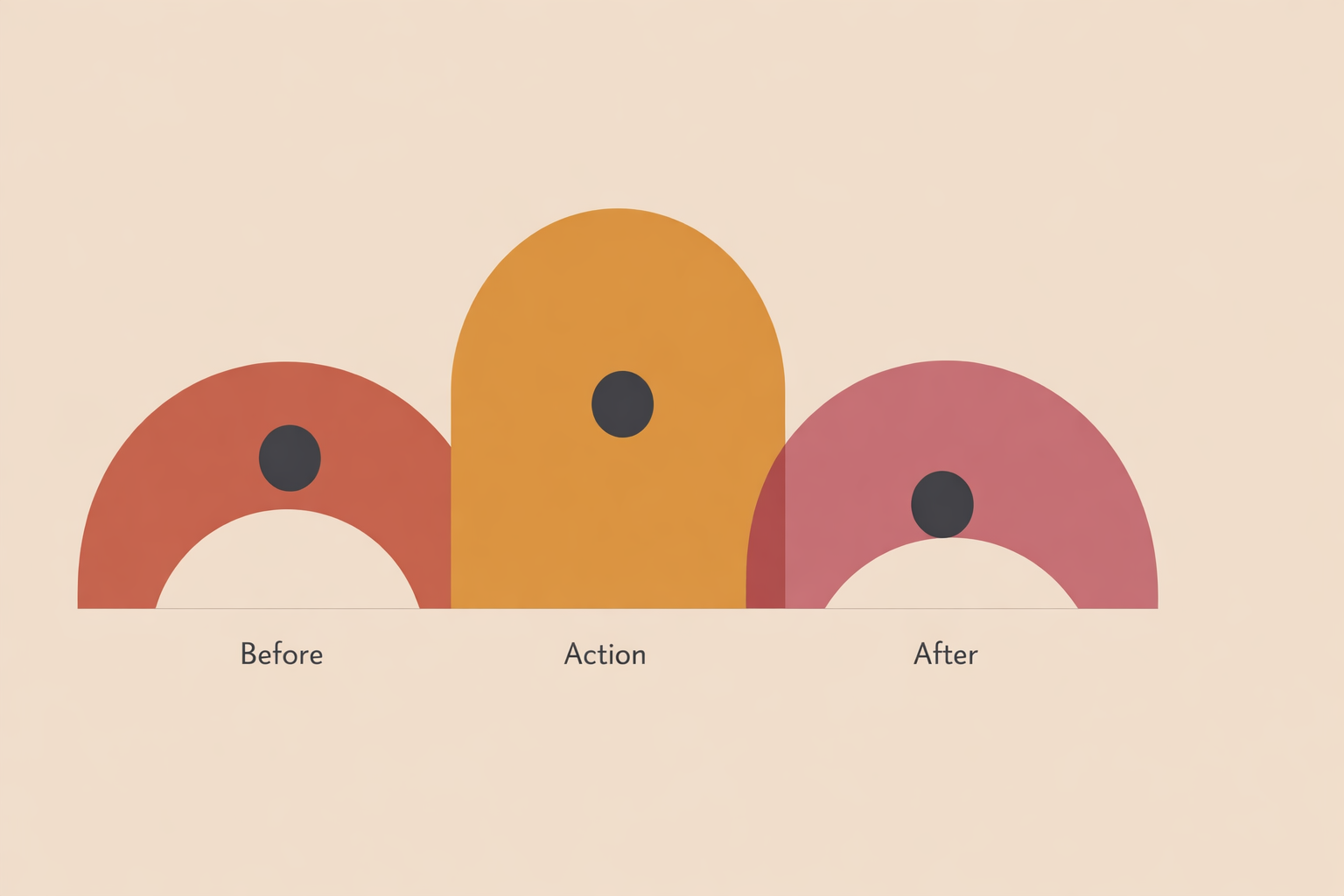
A simple structure is: pause, regulate, choose.
- Pause: stop for a moment before replying, speaking, or sending.
- Regulate: soften the jaw, feel the feet on the floor, lengthen the exhale, orient to the room, or cool the body.
- Choose: decide the next workable step instead of reacting automatically.
This can be done quietly in under two minutes. Options include:
- take two slower breaths
- hold a cool glass or sip water
- look at a fixed point across the room
- feel the support of the chair under the body
- say, “I’d like to come back to this after lunch”
These practices sit comfortably within many traditional approaches to self-regulation, where breath, posture, sensory awareness, and connection to the environment have long been used to shift internal state. They’re also easy to personalize.
Personal fit matters. Some people find breath-focused practices settling; others find them agitating. In those cases, eyes-open orientation, gentle movement, a brief walk, cool water, or a familiar music cue can work better.
Create a simple workplace support plan
Once patterns are visible, support becomes easier to shape. A one-page plan reduces guesswork and keeps both client and manager focused on what actually helps.
A practical plan might include:
- early signs that the day is becoming harder
- preferred in-the-moment support tools
- adjustments to request at work
- how and when to review what is helping
- a brief recovery routine after difficult interactions
Workplace guidance commonly includes temperature control, access to fans or ventilation, flexible scheduling, breaks, and options for quieter working conditions. Consensus recommendations support temperature control and flexibility as practical ways to reduce unnecessary strain.
Fit is the priority. One-size policies miss people, especially when symptoms and job demands vary widely. Government evidence suggests support works best when it is individualized, collaborative, and reviewed over time.
A plan can stay very simple: “If sleep has been poor for two nights, avoid stacking demanding meetings first thing. Use a fan, water, and a short reset before the afternoon review. Trial no meetings after 4 p.m. for four weeks, then review.”
This is about making the environment more workable, so a capable person can keep showing up with steadiness.
Rehearse requests, boundaries, and repair
Even the best plan doesn’t help until a client can ask for what they need. That’s why rehearsal belongs in the process, not as an optional extra.
Strong requests are clear, practical, and time-bound. They name the work impact, propose an adjustment, and build in a review point.
- “Late-afternoon meetings are affecting my focus. Could we trial earlier scheduling for the next month and review?”
- “I’m dealing with fluctuating well-being and would benefit from short breaks between back-to-back meetings.”
- “A cooler space and a desk fan would help me stay more steady during the day.”
Clients don’t need to share everything to ask for support. Partial disclosure is often enough to open a practical conversation.
Repair language matters too, especially if someone feels they came across sharper than intended. A simple repair might be: “I was abrupt earlier. I’d like to reset and come back to the issue clearly.”
Saying these lines out loud often changes everything. It turns a good idea into words the body can actually deliver under pressure.
Close with scope, safety, and humane support
Progress often looks modest but meaningful: fewer escalations, quicker recovery after emotional spikes, clearer boundaries around scheduling, more confidence in asking for breaks, and a sharper sense of what helps on difficult days.
Measure change against the client’s own baseline and keep goals concrete. Instead of “stay calm,” use “take a five-minute reset before the 10 a.m. standup three times this week” or “ask to move the recurring late-afternoon meeting and review the effect.”
As practitioners, the role is to support reflection, communication, pattern awareness, planning, and well-being. If mood changes are persistent, severe, rapidly worsening, or seriously affecting day-to-day functioning, it’s appropriate to bring in additional support beyond workplace coaching alone, including within women's health coaching or through a menopause coaching certification.
If someone expresses thoughts of self-harm or an inability to stay safe, that calls for immediate help and should never be held solely within a workplace coaching process.
The overall direction is encouraging. More workplace guidance now emphasizes empathy, flexibility, education, and shared responsibility. That creates room for a better conversation: one that respects privacy, honors the reality of the transition, and builds practical support without shame. Done well, this work helps clients feel less isolated and more able to move through menopause with steadiness, dignity, and support that fits their lives.
Explore Menopause Coaching Certification
Apply these workplace strategies with deeper menopause-specific skills in the Menopause Coaching Certification.
Explore Menopause Coaching →