Most new makers begin the same way: a handful of popular oils, a basket of herbs, a beautiful recipe, and the hope that it will all come together. Sometimes it does. Often, though, the result is a balm that feels heavier than expected, a mist that loses freshness too quickly, or a scent that overwhelms the whole formula. What’s usually missing is not creativity, but a repeatable process.
A reliable herbal body care product starts with a clear use-case and follows a practical sequence: choose ingredients for purpose, match each plant to the right extraction, keep the first formula restrained, and plan packaging and freshness from day one. That’s what makes a batch easier to reproduce, refine, and share with confidence.
Key Takeaway: Reliable herbal body care comes from a repeatable workflow that links a clear use-case to purposeful formulation. Start with one product idea and decide early whether it is anhydrous or water-based, since that shapes preservation and shelf-life decisions. Then choose oils, butters, botanicals, humectants, and aromatic elements for function and skin comfort; match each herb to the right extraction method; build a restrained first formula; and test packaging, freshness, and user experience together. With steady observation and good records, one simple batch can become a dependable foundation for a thoughtful product line.
Step 1: Start with One Clear Herbal Body Care Idea
Start with one product, one format, and one everyday use-case. That single decision quietly guides everything that follows, from feel and aroma to storage and packaging.
Decide what the product is meant to do in real life: a rich heel balm, a light after-shower lotion, or a weekly scalp oil. When the purpose is clear, you’re less likely to crowd the formula with extras that don’t serve the experience.
A one-line “job description” helps. “An evening hand balm for dry, hardworking hands that feels protective without staying greasy” already points you toward an oil-based balm with moderate structure and a gentle scent profile.
- Who is it for?
- When will it be used?
- Should it feel light, rich, quick-absorbing, or protective?
- Is it rinse-off or leave-on?
- Does it contain water or not?
That final question matters immediately. Water-based products need more careful planning around freshness and preservation, while oil-only products are often a steadier first place to learn the craft in herbalism and plant medicine.
Step 2: Choose Botanicals and Bases for Function
With the use-case set, choose each ingredient because it has a job. Traditional knowledge shines here: many herbs and base materials earned their place through consistent, everyday use across generations.
Keep the formula focused. One or two main herbs are often enough to create a clear identity, and it’s much easier to refine a product when you can tell what each plant contributes.
- Base oils shape slip, richness, and finish: Sunflower and apricot kernel feel lighter; olive feels fuller and more cushioning.
- Butters and waxes create body and staying power: Shea and mango soften; beeswax and candelilla add structure.
- Humectants such as glycerin belong in water-based products when you want a more moisture-holding feel.
- Botanicals such as calendula, chamomile, rose, and plantain are widely appreciated for gentle topical support.
Remember that herbs are living materials. Scent, color, and overall character can shift with harvest timing, drying, storage, and season, which is why close observation is part of good botanical formulation and even botany for herbalists.
Be especially measured with aromatic materials. Skin irritation risk can rise when fragrance components are overused, even in otherwise well-made products. Many experienced makers also find that softer aromatics make a product easier to wear day after day.
If you want a practical starting point, resist the urge to build a complex multi-oil blend. Two base oils and one botanical idea (for example, jojoba plus apricot kernel with a calendula infusion) gives you plenty to learn from and makes troubleshooting far simpler.
Step 3: Match the Herb to the Right Extraction
Extraction is where plant craft becomes formulation skill. Instead of adding herbs “because they’re good,” decide how each plant will best enter the product.
Ask one guiding question: what is the best route for this herb into this format?
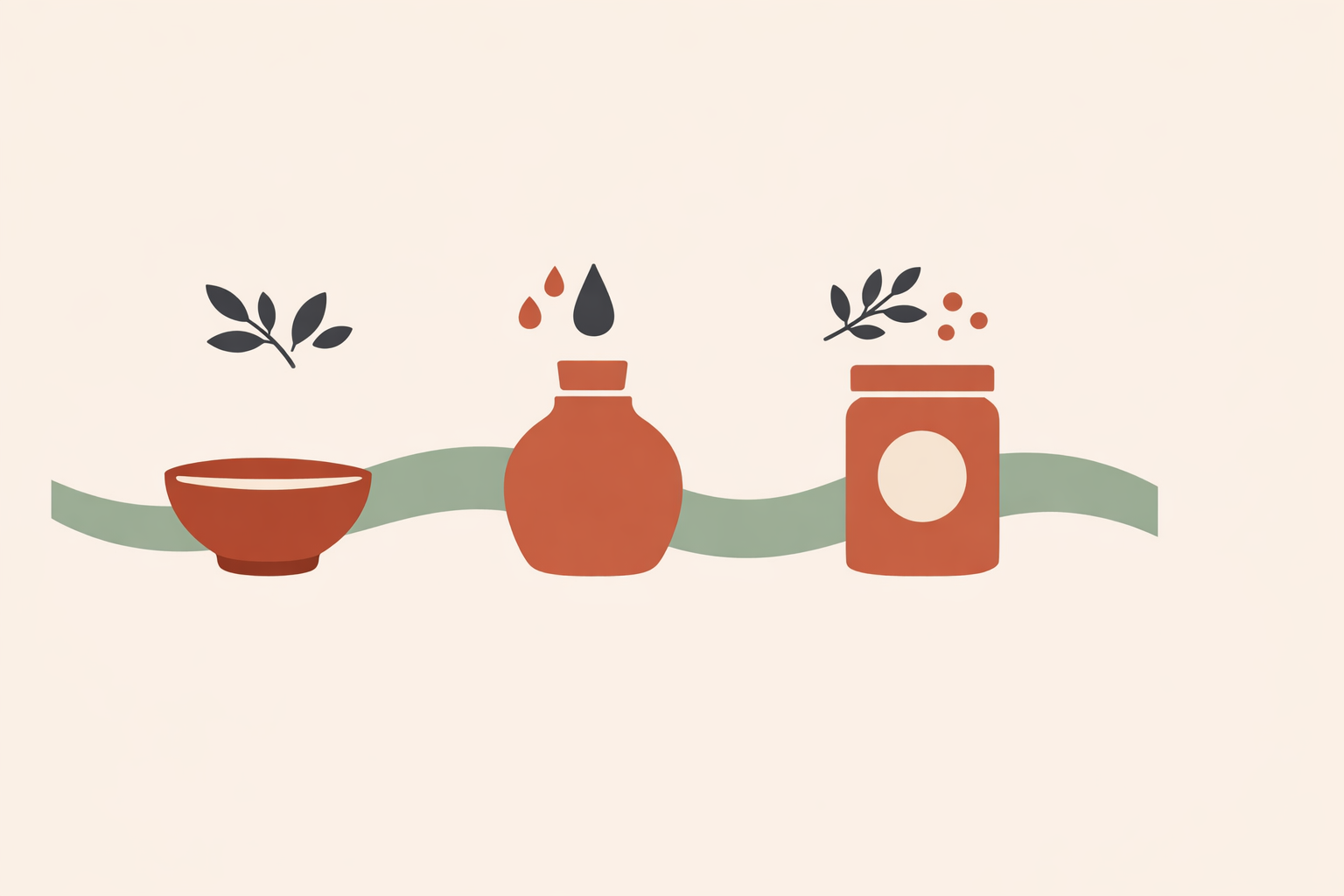
- Water infusions work well for mists, toners, and gel phases.
- Oil infusions suit balms, body oils, butters, and salves.
- Glycerites can be useful when you want an alcohol-free extract for certain water-based formats.
Delicate flowers and leaves often suit shorter infusions, while denser roots or bark usually need more time and a different approach. In traditional practice, this matching is part of the craft itself: the plant, the solvent, and the finished product should make sense together.
So, chamomile often fits naturally as a water infusion for a calming facial mist, while calendula commonly shines as an infused oil for a hand balm. Keeping that logic clear helps the final formula feel intentional rather than crowded.
Whenever fresh plant material or water enters the process, tighten your standards around cleanliness, storage, and freshness. Those details become central once you move beyond fully oil-based products.
Step 4: Build a Simple, Stable First Formula
Your first formula doesn’t need to be impressive. It needs to be teachable, so you can clearly see what’s working and what to adjust.
For most beginners, two starting points make sense: an oil-only balm/body oil, or a very basic lotion. Oil-only products are typically easier to manage at first; water-based products can be wonderful, but they require a complete preservation plan.
For anhydrous products, many balms and body butters sit comfortably around 5–15% wax and 10–30% butters, with the rest as liquid oils. Use that as a practical starting range, then refine for your preferred texture.
- Basic balm template: 10% wax, 20% butter, 70% infused oil.
- Basic lotion template: keep the ingredient list short and build preservation in from the start.
Process affects texture as much as ingredients do. Temperature cycling is a common cause of grainy butters, so melting fully and cooling in a controlled way can noticeably improve the final feel.
Keep aromatics restrained so the product stays comfortable for regular use. For fragrance-sensitive users, an herb infusion with no essential oils can be a beautifully complete choice. A calendula-infused balm with no added essential oils often feels gentler and more understated, and minimal irritation has been reported for calendula extract in cosmetic safety assessment.
Step 5: Plan Preservation, Packaging, and Shelf Life Together
Preservation belongs in the design from the beginning, especially for anything that contains water.
Water-based products are generally more vulnerable to spoilage than oil-only ones, and higher water content usually means a shorter, more carefully managed use window.
Packaging supports preservation in everyday life. Jars invite more hand contact, while more protective dispensing can reduce exposure during use. Airless pumps and misters can lower contamination risk in water-based products compared with more open formats.
- Oil-only products benefit from protection against heat, light, and oxidation.
- Water-based products need a preservation system suited to the formula.
- Dispensing style matters as much as the container itself.
- Clear storage guidance helps the user protect the product in real life.
Refrigeration can extend freshness for some water-based preparations, but it doesn’t replace a proper preservation system.
Expect a few rounds of adjustment. Preservation and packaging often need more than one trial before the whole product feels settled.
Step 6: Test, Observe, and Refine Like a Practitioner
A first batch is a draft that teaches you how the formula behaves over time.
Check it on day one, then again after a week and after a month. Notice scent, texture, appearance, and how the packaging performs in daily use. Consistent notes will take you further than a shelf full of untested recipes.
- Has the color shifted?
- Is the texture becoming thicker, thinner, grainier, or less even?
- Has the scent faded or turned sharp?
- Is residue collecting around the closure or pump?
- How does the product feel in actual use?
For water-based products, stay alert to visible changes. Unexpected odor, spotting, gas, pronounced color shift, or separation that won’t recombine are all signs to retire the batch and review your process.
Patch testing belongs here too. Botanical products aren’t automatically suitable for everyone, so a slow introduction is good practice. Try a small amount on the inner forearm for a couple of evenings before regular use.
Keep a one-page batch record for every version: date, ingredient percentages, herb source, temperatures, mixing method, packaging choice, and check-in observations. This is what turns experience into repeatable craft.
If you later change the package, re-test. A new closure, jar, or pump can change how a formula holds up, so treat packaging changes as meaningful formulation changes.
From One Batch to a Small Herbal Body Care Line
Once a formula proves itself, the next step is to add structure before you add more products.
That structure looks like clear labels, consistent records, realistic freshness guidance, and language that stays honest about what the product offers. Keep the focus on comfort, sensory experience, and daily ritual rather than exaggerated promises.
- Keep labels clear and practical.
- Use consistent batch codes and ingredient records.
- State a realistic use window based on your own testing and observation.
- Match product claims to the actual purpose of the formula.
If you plan to sell, review regulatory requirements carefully for the places where you operate. Solid recordkeeping and disciplined product language are part of building long-term trust.
What begins as a single balm or mist can grow into a thoughtful body care line when each product is grounded in the same steady strengths: clarity, restraint, observation, and respect for the plants—and, for some makers, into a first product line.
Conclusion
Reliable herbal body care comes from making good decisions in the right order. Start with one clear use-case, choose each botanical and base for a reason, match the plant to the right extraction, keep the first formula simple, and plan freshness and packaging as part of the whole design.
This workflow honors traditional plant craft while meeting modern expectations for consistency and usability. As you refine, keep a few practical cautions in view: be conservative with aromatics, take water-based freshness seriously, patch test before regular use, and retire any batch that shows unexpected changes. With those boundaries in place, your practice can stay creative, grounded, and dependable—and can deepen through herbal product making.
Master Herbal Product Making
Continue this workflow in the Herbal Product Making Course with guided formulation practice and batch testing.
Explore Herbal Product Making →