The most common move in animal aromatherapy is also the fastest: reach for a favorite blend, turn on the diffuser, and hope the space feels calmer. In real-world sessions, that shortcut can create the opposite effect. Cats may vanish, dogs may pace or rub their faces, and guardians may notice agitation starting after a well-meant attempt.
Animals live in a different sensory world. Closed rooms, high concentrations, and human-centered routines can quickly push exposure too far, especially in homes already heavy with scent from cleaners, laundry products, grooming products, and fragrances.
A steadier approach starts with form and choice. Begin with the gentlest option that fits the moment, match form and dilution to the individual, and keep every session brief, ventilated, and easy to stop. In everyday practice, that usually means inhalation and hydrosols before any diluted essential oil in animal wellness work.
Key Takeaway: Safer animal aromatherapy relies on a form-first, species-specific workflow. Begin with the gentlest option, use a short intake to match form and dilution to the animal and the environment, and run sessions so exposure stays brief, ventilated, and optional. In many cases, hydrosols and low-intensity inhalation are enough.
Step 2: Use a Structured Intake to Match Form and Dilution
Before choosing any aromatic support, ask better questions. A short, structured intake tells you which form fits, what intensity makes sense, and when it’s better to skip aromatics for the day.
Begin with essentials: species, age, body size, temperament, and lifestyle. Then assess the household scent environment. Cleaning products, plug-in fragrances, incense, smoke, grooming products, and laundry scents all add to the animal’s total aromatic load. That context guides ventilation choices and often points you toward hydrosols as the wisest starting place.
Next, explore aromatic history. Has the guardian used essential oils or scented products around the animal before? Did the animal approach, avoid, hide, drool, squint, or become restless? These details help you avoid repeating an experience that already felt like too much.
Useful intake questions
- Which rooms feel safest for your animal, and can doors stay open?
- Are there any known sensitivities to scents, shampoos, or cleaning products?
- Has your animal ever moved toward or away from an aromatic product?
- What is the smallest, gentlest step we can try today?
This kind of intake often changes the plan. A guardian may request a calming diffuser for a small indoor dog, but the conversation reveals a studio apartment, plug-in air fresheners, and poor ventilation. A light hydrosol mist on a removable bandana may be the better first step, alongside fresher air and less ambient fragrance overall.
Turn species differences into practical choices
Human routines do not transfer neatly to animals. Species perceive and process plant aromatics differently, so your form and intensity need to be species-specific. Cats, in particular, process less efficiently certain compounds than some other species, which is a strong reason to stay conservative.
For topical work, keep dilution straightforward and light:
- 0.25%: 1 drop essential oil in 20 ml carrier
- 0.5%: 1 drop in 10 ml carrier
- 1%: 2 drops in 10 ml carrier for localized use on robust animals
Then build in pauses:
- Dogs, general calming massage: Start at 0.25%. Apply to one shoulder only and observe.
- Horses, localized support: Start at 1% on a small area, then reassess the next day.
The pause matters as much as the dilution. You are matching the exposure to the individual in front of you. If the animal disengages, sneezes repeatedly, rubs the area, or leaves, you have your answer.
Hydrosols remain especially useful here. They often support the same goal with a wider comfort margin, and on many days they are enough on their own.
Step 3: Keep the Session Gentle, Brief, and Optional
A good session feels like a conversation. The animal gets real choice at every stage, including the choice to opt out without being followed by aroma.
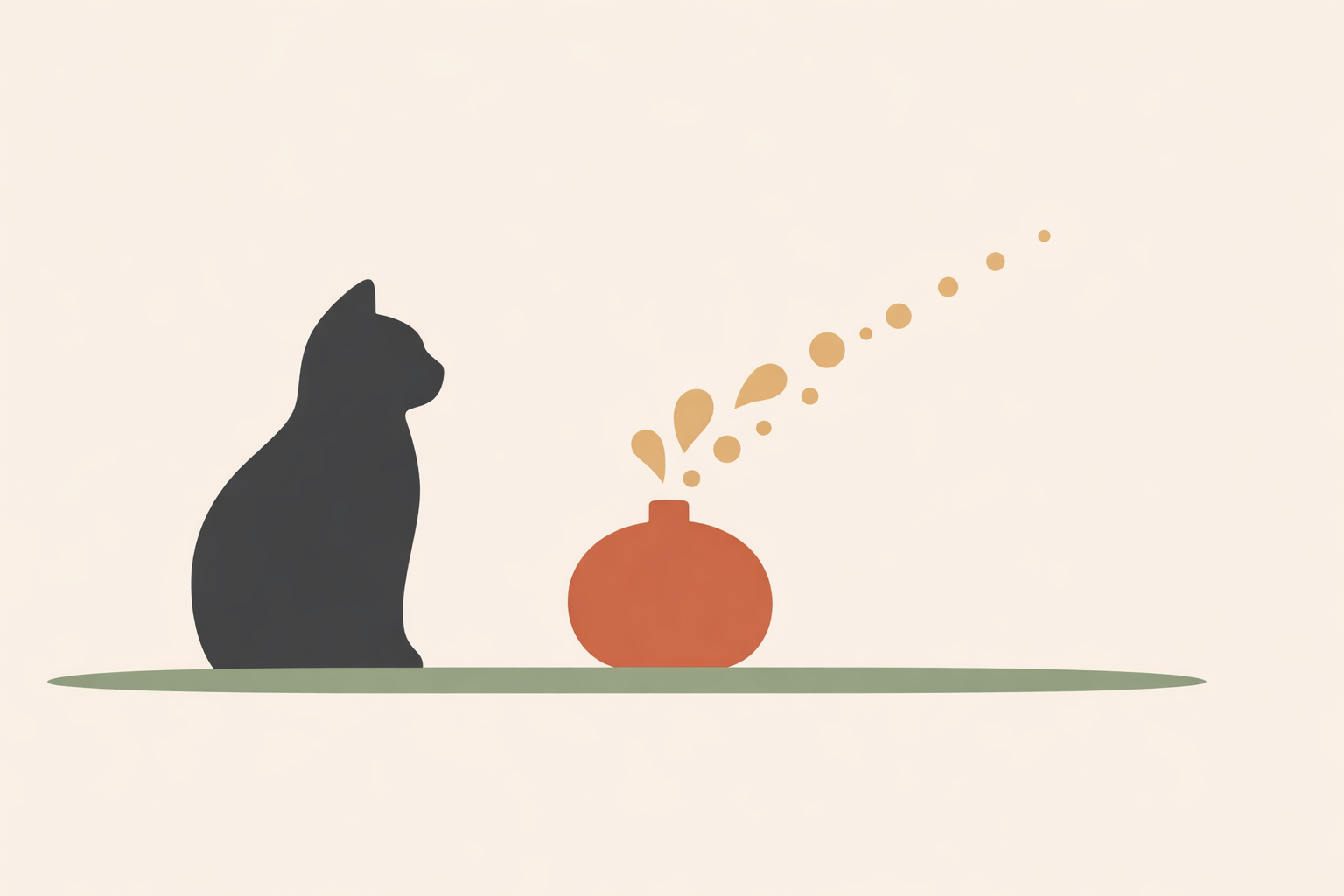
Start with the space. Choose a quiet, ventilated room and keep the door open. If you diffuse, think minimal and intermittent rather than rich and continuous. Strong, ongoing diffusion in closed spaces can contribute to respiratory distress in sensitive animals, so airy, low-intensity setups are the wiser default.
Many practitioners keep diffusion very light, often just a few total drops for a short window, with ventilation. The exact numbers matter less than the pattern: small amounts, short time, and an easy exit route.
Set up the space for choice
- Offer one gentle option at a time.
- Place aromatic materials at a distance rather than bringing them directly to the face.
- Allow approach without coaxing.
- Use short self-selection moments with a few mild options, spaced apart.
A simple session might look like this: a noise-sensitive dog arrives during a stormy week. Place a diffuser across the room with a very small amount of aroma, keep the door open, and observe. After a short period, the dog settles near the doorway. Switch the diffuser off and leave a lightly misted cloth nearby. The dog chooses whether to rest near it or ignore it, and that choice guides your next step.
Watch behavior in real time
Behavior tells you whether to continue, reduce, switch forms, or stop. Signs such as drooling, squinting, face-rubbing, vocalization, shaking, hiding, pacing, or visible respiratory changes should be treated as distress signals. Discontinue exposure immediately.
When topical work is appropriate and clearly welcomed, keep it small. Apply to one limited area, then let the animal move freely. If the animal licks, rubs, avoids contact, or becomes restless, switch to a gentler form or end the session.
It helps to write a one-line abort plan in every note: remove the aromatic source, increase ventilation, offer water, and finish the session if discomfort appears. Clear plans support calm, decisive action.
Done well, the session stays spacious and collaborative. Very often, the gentlest form is the one that serves best.
Conclusion: Bring These 3 Steps Into Everyday Animal Aromatherapy Practice
Choose the gentlest form, run a focused intake, and keep exposure brief and optional. This framework honors traditional plant knowledge while staying closely responsive to the animal’s signals in the moment.
It also supports a more ethical style of practice. Essential oils are not automatically benign simply because they come from plants, which is why experienced practitioners lean on hydrosols, conservative diffusion, and precise dilutions rather than intensity.
Hydrosols deserve a regular place in your toolkit. They carry the plant’s character in a lighter form and fit naturally into routines built around observation, consent, and gradual support, including animal aromatherapy practice.
Practical next steps:
- Create a one-page intake covering species, age, size, sensitivities, aromatic history, household exposures, and opt-out options.
- Keep a small hydrosol selection for gentle daily support and practice single-plant sessions.
- When topical essential oils are truly appropriate, work conservatively between 0.25% and 1% and start with one small area.
- Document an abort plan in every session note.
Use less aroma, keep more space, and observe closely. Animals tend to show you quite clearly what feels like “enough.”
Explore Animal Aromatherapy Certification
Deepen your safety-first, species-specific approach with the Animal Aromatherapy Certification.
Explore Animal Aromatherapy →