Many practitioners begin with “How are you?” and hear the familiar answers: busy, fine, tired, a lot going on. Helpful, yes. But a client can sound composed while their jaw is tight, their breath is shallow, or their attention keeps skipping away. In short sessions, that gap matters.
A quick body scan check-in brings the conversation back to lived experience before planning begins. In one to three minutes, it moves you from assumptions to direct noticing, so the session starts from what is actually present.
Key Takeaway: A brief, trauma-sensitive body scan can make session openings more grounded, collaborative, and responsive. Used with consent and real choice, it helps clients notice what is present, name it simply, and let that inform pacing, boundaries, and next steps. The practice is not about forcing calm. It is about creating enough space for awareness to guide the conversation.
What a body scan check-in is—and isn’t
A body scan check-in is a short awareness practice. You invite attention into a few body regions and ask the client to notice sensation, contact, temperature, tension, movement, numbness, or even the absence of anything clear.
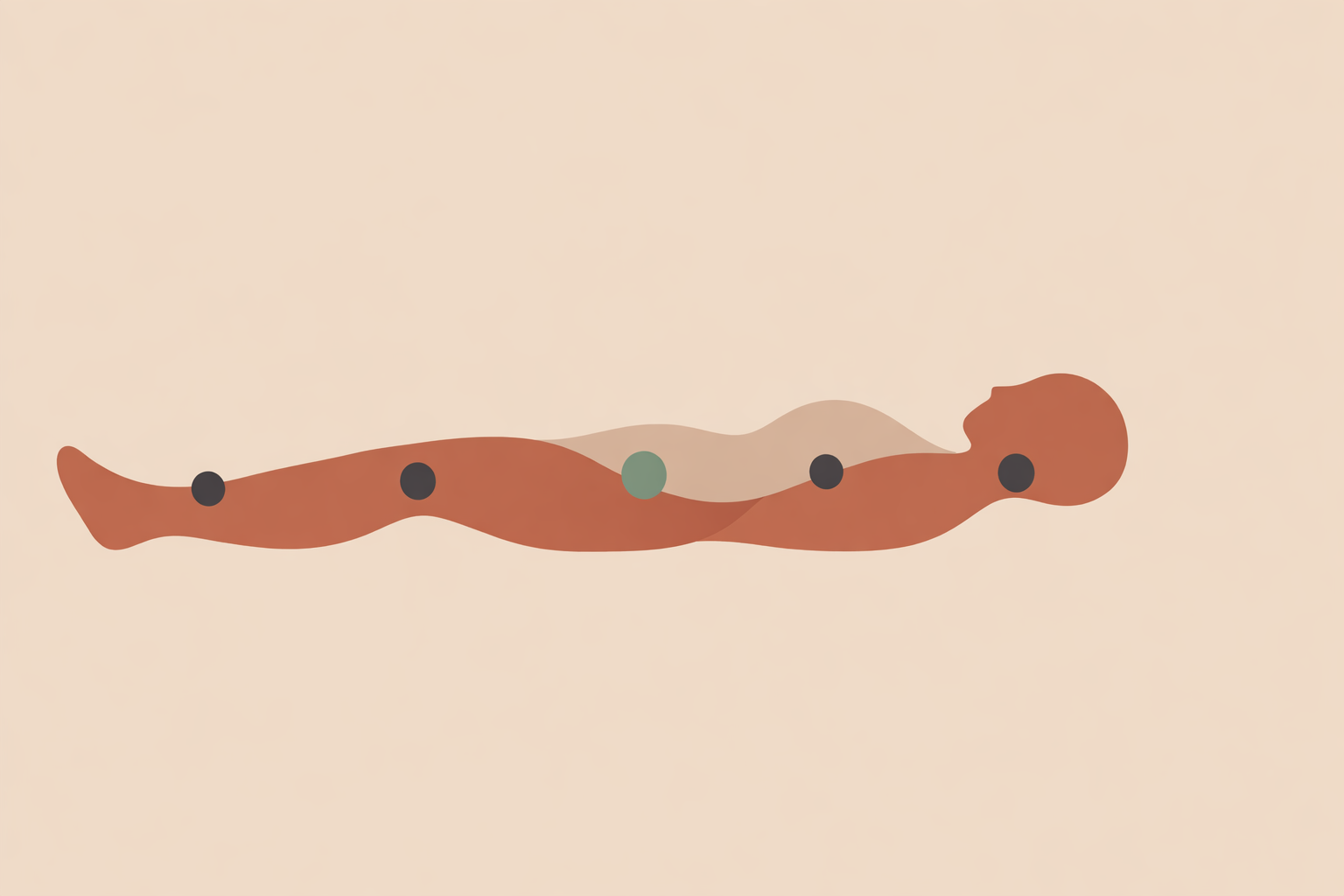
Common check-in points include the feet, hands, jaw, shoulders, and belly. Many guided instructions use a simple sequence that moves through regions in a steady, practical order.
What matters most is the tone: curious, nonjudgmental, and optional. There’s no “good” scan, and no requirement to feel calm. The aim is to notice what’s true right now.
It also isn’t a test of focus or a prompt to interpret every sensation. You’re not asking the client to explain why something is there. You’re helping them recognize what’s present so the session can respond with care and precision.
Some people feel grounded during scanning; others notice restlessness, worry, or discomfort. That range is normal, and it’s exactly why the practice works best when it stays brief, collaborative, and easy to adjust.
Consent, choice, and a steady foundation
Before guiding inward, ask. A simple invitation is enough: “Would you like to take a short body-awareness check-in before we begin?”
Choice needs to be real and usable in the moment. Offer options like:
- Sit, stand, or adjust posture
- Keep eyes open, soften the gaze, or close the eyes if they prefer
- Focus on feet, hands, or another neutral area
- Use an external anchor such as sound or visual orientation
- Skip any area, pause, or return to conversation
This matters most for people who find inward attention intense. A body scan should feel like an invitation, never an obligation.
Your notes can reflect that same collaborative spirit in plain language: “Invited brief body check-in; client chose eyes open and feet as anchor; paused once and resumed.” Clear, simple documentation supports boundaries and professional clarity.
If you use written agreements in your work, keep them straightforward. A concise agreement that explains privacy limits, fees, participation terms, and the general nature of support helps set expectations on both sides.
A simple two-minute body scan script
Keep the language gentle and direct. You’re guiding attention, not aiming for a special state.
- “Let’s take a minute to arrive. You can keep your eyes open if you like.”
- “First, notice the room around you—the light, the shapes, or the sounds.”
- “Now feel the support beneath you: the chair, the floor, the contact points.”
- “Notice one natural breath without changing it.”
- “If it feels okay, bring attention to your feet or your hands. Notice pressure, temperature, tingling, contact, or not much at all.”
- “If you’d like, let your attention widen to include the whole body for a moment.”
- “What is one thing you notice that feels useful to bring into the rest of our conversation?”
This is usually plenty. In many sessions, shorter works better than longer, because it stays fresh and responsive.
If you want a more structured route, standard guidance often starts with broad orientation and then moves step by step through the body. In practice, a few well-chosen touchpoints are enough for a meaningful check-in.
How to adapt when the scan feels easy, blank, or intense
Real sessions aren’t tidy. Some clients settle quickly; others drift. Some feel nothing obvious; some feel too much.
If attention wanders, normalize it and continue. Wandering is useful information, and returning is part of the practice.
If the client seems restless, lower the demand. Let them stand, shorten the scan, or stay with one anchor such as the feet on the floor.
If they report numbness or “nothing,” include that in the check-in. Noticing blankness is still noticing.
For clients who find inward attention intense, alternate between inner and outer awareness. Try ten seconds noticing a body sensation, then ten seconds listening to sounds or looking at something in the room. This rhythm often makes embodiment more accessible.
If anxiety rises, widen focus and orient to the environment. The VA describes room scanning and grounding to reduce anxiety.
A simple reset might sound like: “Let’s open the eyes, look around, notice three things we can see, three sounds we can hear, and the feeling of the soles on the ground.” That kind of orientation can refocus attention without pushing further inward.
Turning sensations into useful next steps
The value of the check-in isn’t the scan itself. It’s what the noticing makes possible next.
Afterward, keep questions simple:
- “What did you notice?”
- “What stands out most right now?”
- “What would support the next ten minutes?”
- “Would it help to slow down, keep going, or clarify one thing first?”
This connects sensation with choice. Tight shoulders can point to slowing down. Fogginess can point to simplifying the goal. A sense of steadiness can be a green light for planning or reflection.
It also separates observation from story. If a client says, “There’s pressure in my chest, so I’m doing badly,” you can return to what’s direct and workable: “What we know is that there’s pressure. Let’s stay with that first and see what support would help.”
Over time, body awareness often shapes practical daily choices: standing up sooner, setting clearer boundaries, taking breaks before overload, or using kinder self-talk when pressure rises. These steady adjustments tend to hold up well in real life and fit naturally within positive psychology and wellbeing work.
Using body scan check-ins across your practice
Once the check-in is familiar, you can use it lightly in several places without making it feel heavy.
- At the start of a session, to help the client arrive
- Mid-session, after an emotionally charged topic
- Before decision-making, to sense readiness or hesitation
- At the close, to notice what has shifted
On busy days, a micro-check-in keeps momentum: feel the feet or seat, notice one breath, name one sensation, then identify one need or next choice.
In groups, keep the invitation clear and low-pressure. Offer options and let people stay externally oriented if they prefer. A quick environmental reset—looking around, noticing sounds, feeling the soles—often helps the group settle between activities.
As your practice evolves, keep documentation simple and within scope. Note what the client chose, what they reported, and any pacing changes you made, without adding grand interpretations.
It also helps to keep your own practice steady. When you know firsthand how posture, gaze, pace, and anchoring affect you, your guidance naturally becomes calmer and more respectful, whether you use a brief check-in or broader meditation for stress relief in sessions.
Conclusion: an invitation, not a prescription
A body scan check-in is small, but it can change the feel of a whole session. It helps clients notice what is here, speak from direct experience, and make choices from that place.
Used well, it doesn’t demand calm or perfect self-awareness. It creates a brief pause where the body gets a voice alongside the story.
That’s often enough to shift the work: less guessing, more presence; less rushing, more choice. The main caution is to keep it consensual and flexible, especially for clients who find inward focus intense. When you hold that standard, this becomes a dependable way to begin with respect for what’s real, right now.
Train as a Meditation Coach
Build on these check-in skills with the Meditation Coach Certification and deepen your trauma-sensitive guidance and pacing.
Explore the Certification →