Many facilitators begin a group crystal meditation by choosing beautiful stones, arranging a thoughtful altar, and setting a calm mood. Yet a visually harmonious room does not always create a coherent group experience. What usually makes the difference is the container: one shared intention, clear participation choices, simple language, and pacing that helps everyone arrive together.
Key Takeaway: Group crystal meditation works best when crystals support attention, ritual, and shared presence within a clear, consent-based structure. Start with one simple intention, prepare the room with a grounded layout, offer real choices, open slowly, guide attention through the stones, and close with embodied integration and optional reflection.
Step 1: Clarify the shared intention
Before choosing stones or arranging the room, decide what the circle is for. Groups settle faster when everyone is orienting toward one quality—steadiness, gratitude, softness, release—rather than trying to hold several aims at once.
Keep the intention plain and easy to feel. “Tonight we gather around steadiness” gives people something they can actually sense, and it leaves room for personal meaning.
From there, invite a gentle check-in: each person can offer one word, or hold it silently.
A simple opening line might be: “If you’d like, place one word into the stone you’re holding. If you’d rather keep it private, silence is equally welcome.”
Step 2: Match the stones and layout to the purpose
Once the intention is clear, let the stones express it. In traditional practice, many facilitators choose by color, texture, symbolism, and felt resonance rather than rigid formulas. Calming circles often suit softer tones and more space; grounding circles tend to feel steadier with darker stones around the edges; clarity circles often benefit from a bright central quartz as a focal point.
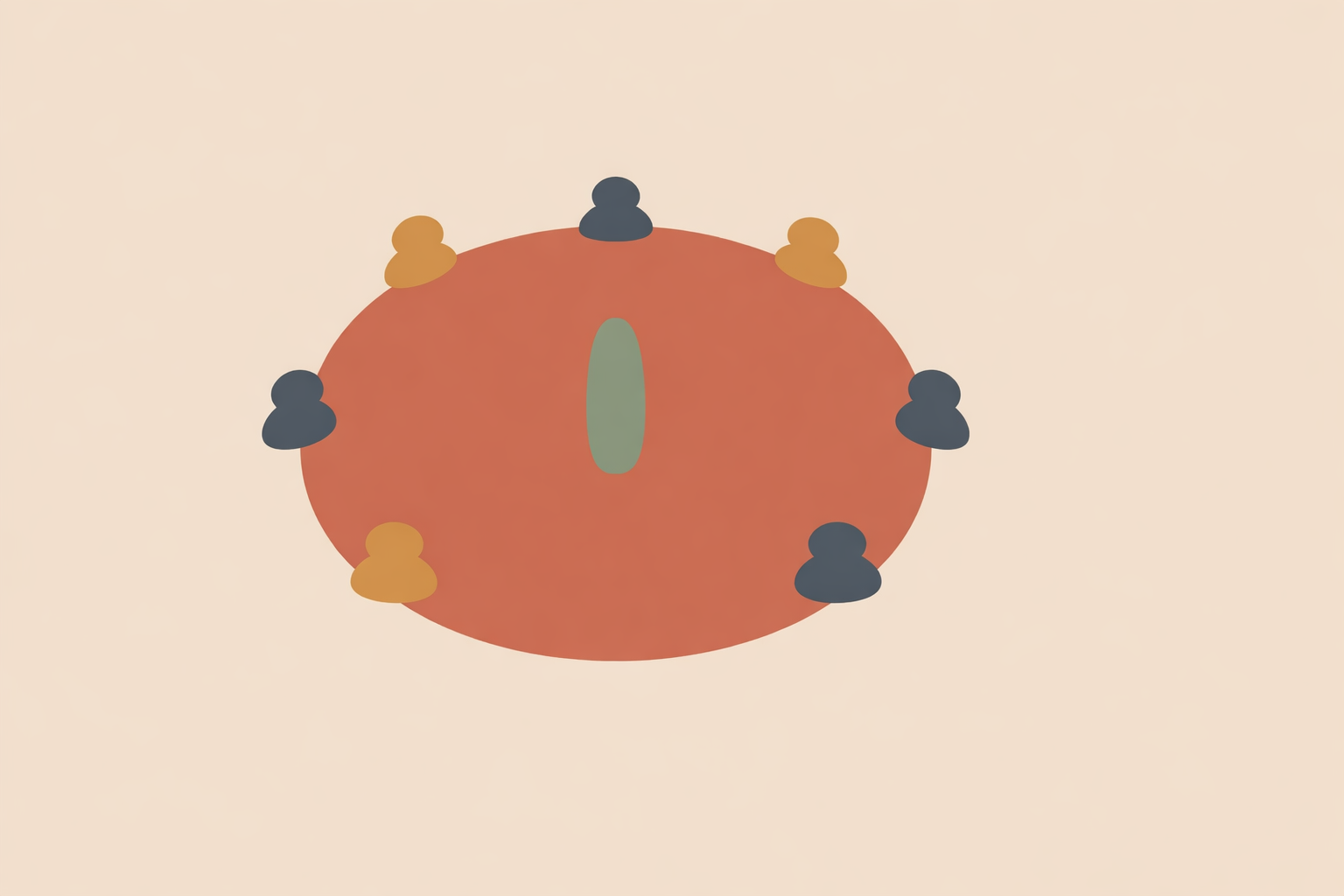
A simple layout is usually enough:
- One central anchor stone on a cloth
- A few supporting stones arranged symmetrically around it
- Grounding stones near the outer edge of the circle
- Optional hand stones in a bowl at the entrance
Many practitioners find that a circular arrangement makes the practice space easy to read and helps the group feel gathered within one shared field. Perimeter stones can reinforce that sense of being held and supported.
Keep it understandable. A simple, intentional arrangement is easier for participants to trust than an elaborate grid with no clear purpose.
Step 3: Prepare the room with care
After the layout is set, give the room a few minutes of attention. Tidy what needs tidying, soften harsh light, open a window briefly if it helps, and take a few quiet breaths before anyone enters.
Many crystal practitioners also cleanse and charge stones before group work. Moonlight, sound, stillness, or intentional handling are common approaches in long-standing traditions, and they help the facilitator enter the circle with respect and focus.
If you draw from practices with clear cultural roots, name those roots accurately and avoid blending traditions carelessly. If that’s not your path, simplicity still carries plenty of power: a clean room, a grounded layout, and a calm presence go a long way.
Step 4: Welcome the group with clear choices
The first minutes shape trust. People settle more easily when they know they have genuine choices: chair or cushion, stone or no stone, eyes closed or a soft gaze, sharing or silence.
You can say this directly:
- “You may sit on a chair or cushion.”
- “You may hold a stone, or simply rest with the center.”
- “Sharing is welcome and always optional.”
- “Silence is a valid way to participate.”
It helps to name silence as a respected option, not an awkward absence. Many shared contemplation spaces treat silence as a form of mutual respect, and that standard supports a more inclusive circle.
This is also the moment to set expectations. Describe crystals as anchors for attention, ritual, and reflection, within a clear crystal-healing container, and let people know they’re welcome to engage in a way that fits their own worldview.
Step 5: Open slowly and bring the group into rhythm
Once everyone is settled, open gradually. A slower start helps beginners arrive and lets the group find one rhythm together.
Start with something simple:
- One word of intention, spoken or silent
- A few rounds of shared breathing
- A gentle invitation to notice the central stone
You might guide: “Inhale softly, exhale a little longer, and let your eyes rest on the center if that feels comfortable.”
The goal is synchrony. When people breathe together and rest attention in the same place, the room often becomes quieter on its own.
Step 6: Guide the crystal meditation
When the circle is ready, use the stones as steady points of attention. Participants might hold a stone, gaze toward the center, or simply notice how the arrangement shapes the atmosphere.
A straightforward sequence works well:
- Notice the weight, temperature, or texture of the stone
- Return to the breath when the mind wanders
- Reconnect with the central stone as a shared anchor
- Allow a simple image or felt sense to arise
If you include visualization, keep it light. Invite attention to meet at the center, then widen gently back through the circle. This can support connection without demanding any particular experience.
Let the form follow the intention. For connection-themed circles, a heart stone such as rose quartz can be offered as optional support. For grounding-focused circles, you may keep attention on the base of the body, the floor, and the perimeter stones.
Facilitators building confidence in this kind of group work often deepen their broader energy healing foundations over time.
Step 7: Close with grounding and optional reflection
Close with as much care as you opened. Bring people back in stages: fuller breath, awareness of the room, small movements, and clear contact with the floor.
A practical close might include:
- Feeling the feet or seat supported
- Touching fingertips together
- Noticing a few physical sensations
- Placing stones back on the cloth with intention
Then offer a short reflection round. Keep it optional and brief: one word, one phrase, or a simple pass. A few honest shares often help participants name what shifted, without turning the moment into a discussion.
This final stage supports integration. The group doesn’t need to explain the whole experience for it to land.
Closing thoughts
Group crystal meditation feels most coherent when it’s held as one continuous arc: intention, layout, welcome, breath, focus, and return. The stones support that arc by giving attention a form people can see, touch, and gather around.
Used this way, crystals don’t need grand claims to be meaningful. They can act as symbols, companions, and ritual anchors that help people slow down, connect, and show up with more presence.
As you refine your circles, keep the essentials close: one clear purpose, a simple layout, real consent, unhurried pacing, and a grounded close. As with any group practice, it’s wise to invite participants to honor their own comfort levels, opt out of anything that doesn’t feel right, and seek appropriate professional support for concerns beyond the scope of a meditation circle.
Go Deeper with Lithotherapy
Deepen your group crystal meditation skills with clear foundations in the Lithotherapy Certification.
Explore Lithotherapy Certification →