Practitioners are often asked to write clear developmental notes while keeping sessions playful, relational, and safe. The tension is real: a child opens into pretend play, then tightens up the moment a checklist appears. Pull-outs can break momentum, separate observation from relationship, and underreport capacity. Meanwhile, families want clarity, programs want documentation, and you have limited time to decide whether to keep following the story or pivot into tasks.
There is a better frame: developmental assessment belongs inside play, as quiet, continuous observation that preserves dignity and reveals authentic capacity. When observation is woven into ordinary games, you see patterns across contexts instead of one-off performances—and you often create fewer ruptures along the way.
Key Takeaway: Play-based developmental assessment is most effective when it stays inside child-led play, using quiet observation and brief, low-pressure invitations. This preserves safety and dignity while revealing more accurate patterns of ability across contexts, including what emerges with trust, a supportive environment, and light scaffolding.
What to look for during play
A clear lens keeps observation both holistic and practical. Rather than trying to track everything, focus on a few domains that reliably show up in everyday games: cognition, language, social engagement, emotional patterns, motor coordination, and executive function.
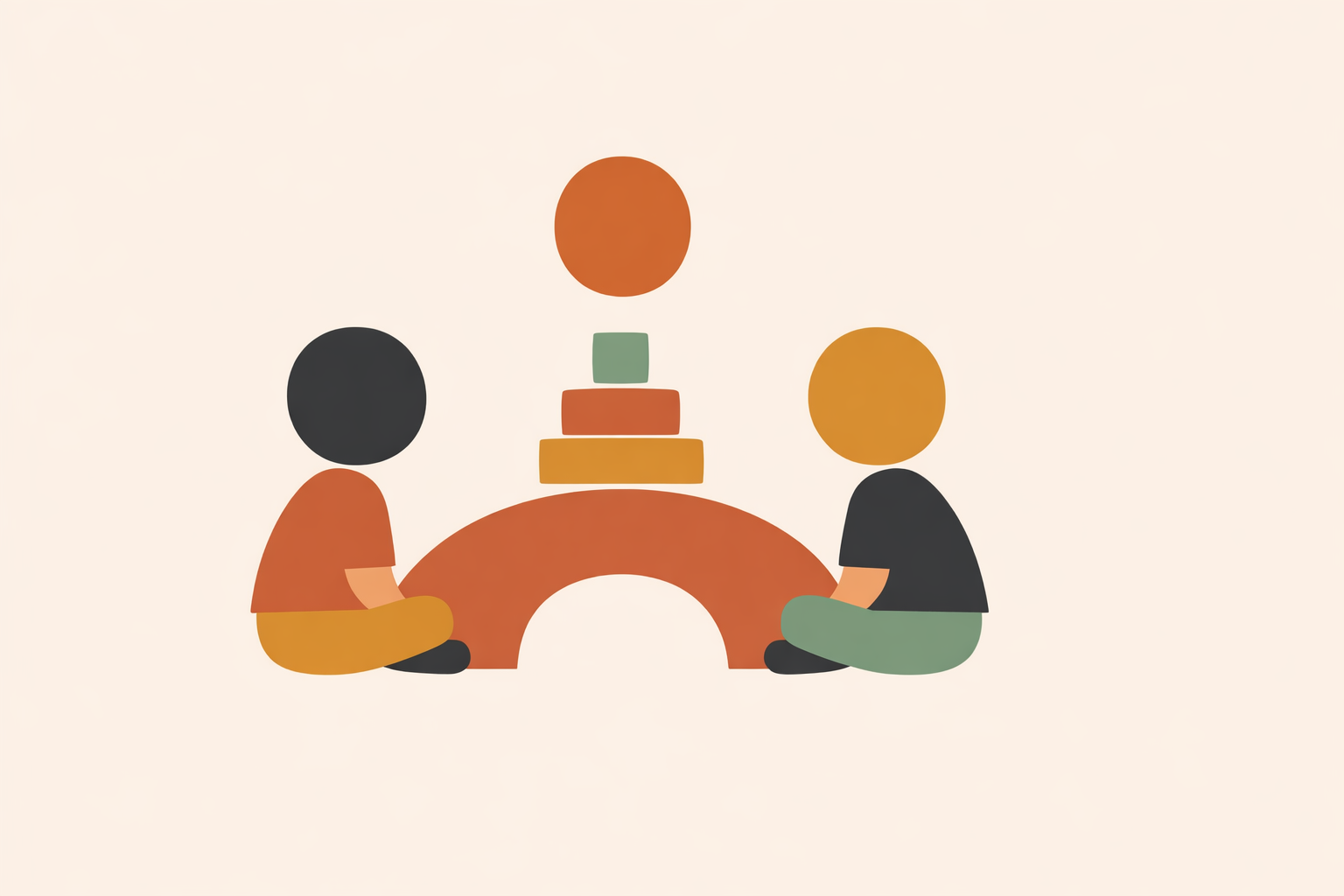
Everyday play can offer a picture across these areas. Block building might reveal planning and problem-solving. A board game can show turn-taking and flexible shifting. Pretend play often brings symbolic thinking, storytelling, and negotiation to the surface.
Sociodramatic or pretend play is especially revealing. Role-play, object substitution, and negotiated storylines can offer insight into symbolic thinking, self-regulation, and perspective-taking. Think of it like a child’s “inner world” becoming visible through characters, plots, and rules they invent.
Language often shows up most clearly in spontaneous moments: narration, character voices, directions embedded in the game, and communication through gesture, gaze, and timing. When rhythm and relationship are honored, communication tends to emerge more naturally—and more truthfully.
- Cognition: planning, sequencing, cause-and-effect, problem-solving
- Language: narration, understanding embedded directions, gesture, turn-taking in conversation
- Social: joint attention, cooperation, role negotiation, repair after friction
- Emotional: frustration tolerance, recovery, self-soothing, tolerance for not getting one’s way
- Motor: grasp, bilateral coordination, body awareness, movement planning
- Executive function: sustained attention, impulse control, flexible shifting, holding a rule in mind
Keep the lens strength-based. Start with what’s present, stable, or beginning to emerge—then note what seems to need more support, more time, or simply a different context.
Preparing the play space with care
The environment shapes what becomes visible. A well-prepared room helps children settle, engage, and show more of their genuine abilities.
A practical play-assessment space often includes puppets, dolls, miniatures, vehicles, art supplies, blocks, board games, and sensory materials. These are staples because each one invites a different kind of expression. What matters most isn’t having “more”—it’s choosing with purpose in a child-centered way.
It also helps to gather information across routines rather than relying on one setup. Put simply: a single toy, mood, or moment shouldn’t carry the weight of your whole understanding.
Keep the room predictable, warm, and uncluttered. Too much visual noise, too many choices, or a chaotic sensory atmosphere can mask capacity and shorten attention.
Cultural grounding matters, too. Children often show more authentic skills when the space includes familiar routines, relevant props, and ways of playing that feel close to home. Guidance on authentic assessment highlights the value of materials so children can participate meaningfully rather than translate themselves for the room.
That line from Kay Redfield Jamison fits perfectly here. If play is a necessity, then the space should protect attention, invite imagination, and respect the child’s pace.
- Core kit: blocks, miniatures, animals, puppets or dolls, vehicles, art materials, playdough, simple games, a few nature items
- Sensory smoothing: soft lighting, minimal clutter, a cozy corner, moderate volume, fewer visible choices at once
- Cultural grounding: familiar household items, fabrics, music, food-play props, greetings and stories that reflect the child’s world
Prepare the space quietly—then let the child show you what matters.
Creating a session flow that balances freedom and guidance
A strong session rhythm blends generous child-led exploration with brief guided invitations. The aim isn’t to control the play; it’s to offer just enough structure that important capacities have a chance to appear.
Many practitioners land on a simple rhythm: follow first, then gently shape if needed. It’s not a rigid formula—more like good conversation, where you listen deeply and speak only when it helps the story move forward.
For younger children, short structured moments inside free play can support language, social rhythm, and self-regulation without turning the session into “instruction.” A scavenger hunt, a story-sequencing game, a bridge-building challenge, or a shared pretend scenario can reveal plenty while staying light and enjoyable.
- Opening: arrive, settle, greet, and co-orient to the room
- Child-led play: follow the child’s choices, track the narrative, and observe without rushing
- Guided invitations: offer one or two low-pressure challenges to glimpse specific capacities
- Closing: reflect strengths, name moments of effort, and end with warmth
Stay flexible with timing. If the play is deep, stay with it. If attention is fading, offer a brief invitation—then return to the child’s lead.
Using developmental assessment moment by moment
Skillful play-based assessment starts with state before skill. A child who feels overwhelmed, rushed, or uncertain may not show much of anything. A child who feels safe and settled often shows far more.
Begin with context. Many children show skills only in familiar places, with familiar people, or after sessions. This is why ongoing observation is so valuable: it helps you see what’s stable, what depends on context, and what appears once trust is established.
Then tune the environment. If behavior looks disorganized, check sensory load first: lower noise, reduce visual demand, limit toy choices, or offer movement and floor play. Often, regulation and depth of play improve quickly once the room asks less of the child.
Next, adjust your stance. Observe more than you question. Join before you direct. Offer presence rather than pressure, especially in non-directive play.
“Toys are children’s words and play is their language.”
Gary Landreth’s line is a lasting reminder: play is already communication. The role is to listen with skill, not to force expression.
When you need to clarify a skill, use light scaffolding: model a step, offer a hint, co-play briefly, then fade back. Essentially, you’re checking what the child can do with a little support—not just what appears in fully independent performance.
- Scan regulation: breath, muscle tone, gaze, vocal tone, pace
- Lower demands: simplify the game, reduce choices, use familiar props, soften transitions
- Join first: mirror actions, narrate what you see, and follow the child’s lead before adding anything new
Once the child is more settled, targeted noticing becomes easier.
- Micro-pause: wait briefly when a challenge appears and see whether the child persists, asks for help, or abandons the task
- Open prompts: “What should we try next?” or “Show me how you do it” invite planning without quizzing
- Model and fade: demonstrate one small step, then hand the action back
- Story tracking: reflect the play narrative and listen for corrections, additions, or emotional themes
- Rule remix: gently change a game condition to glimpse flexibility and impulse control
- Peer moments: invite short shared tasks to observe cooperation, negotiation, and repair
When something seems absent, ask one grounding question: are you seeing a skill gap, or a context gap?
- Likely context gap: ability increases after settling, with a trusted adult nearby, or once the environment is simplified
- Possible skill gap: the difficulty remains across settings, days, and supportive adjustments
This question prevents many inaccurate conclusions and keeps assessment relational and responsive to the child’s real conditions for success.
Closing with dignity and useful documentation
When developmental assessment is woven into play, children are more likely to leave feeling understood rather than scrutinized. And you can still walk away with clear notes, meaningful patterns, and practical next steps.
Document briefly and specifically. Note what emerged across contexts, what support made a difference, and which capacities appeared spontaneously versus with invitation. Bring in family perspectives, especially what the child shows at home, with siblings, or in familiar routines—those details often complete the picture and support caregiver communication.
In the end, play-based assessment is an act of respect: the child’s play is wise, their story matters, and your role is to notice what’s unfolding and support the next small step with care.
Deepen Play Therapy Skills
Build stronger observation and scaffolding habits with the Play Therapy Certification.
Explore Play Therapy Certification →