Many group equine sessions drift into activity-stacking: more prompts, more interpretation, more talking. The horse is present, but not truly included in the facilitation. When that happens, people often stay in performance mode, the pace outruns regulation, and consent can slide into polite compliance.
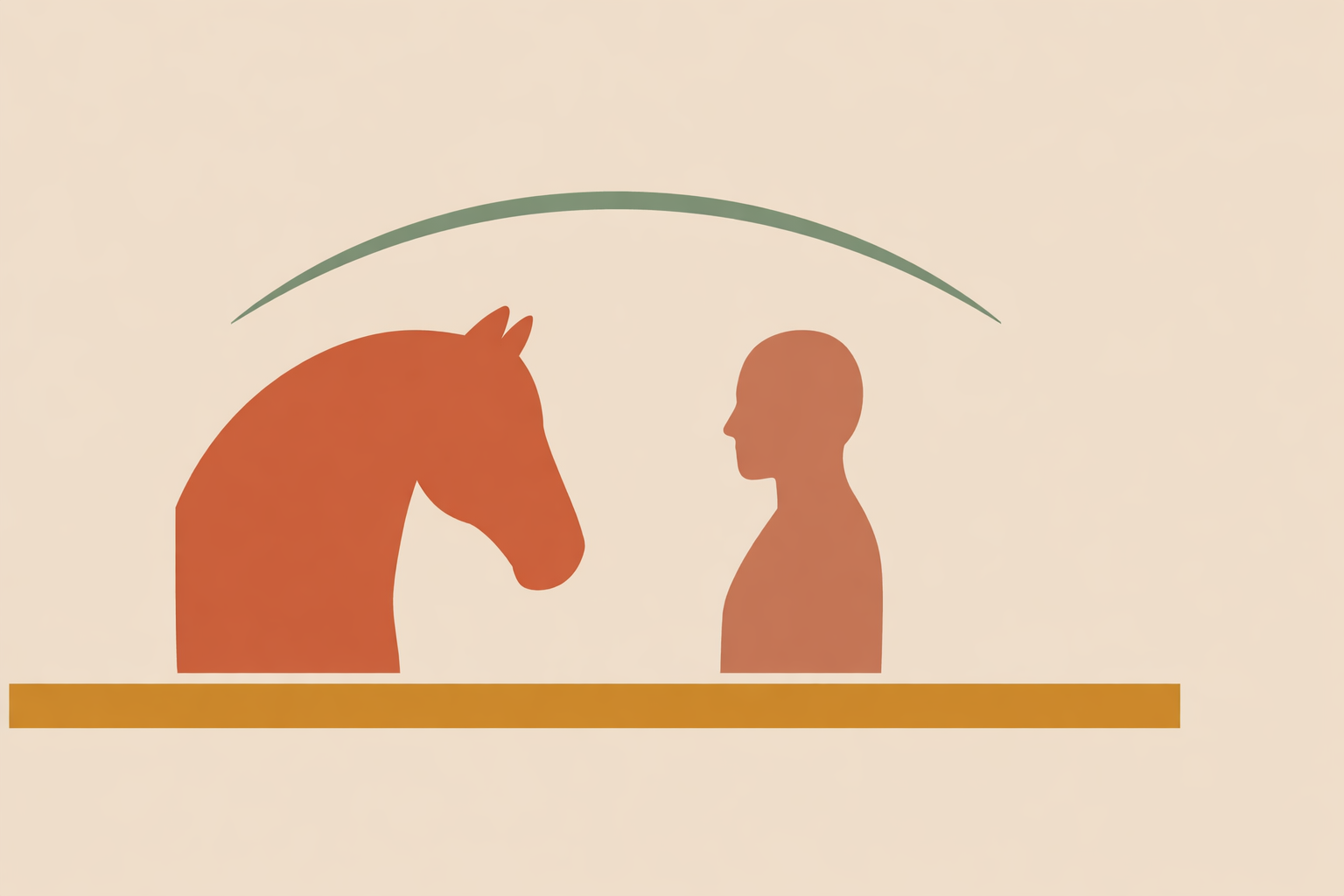
A steadier approach is simpler and more relational. Equine co-facilitation means working with the horse as a partner whose boundaries, preferences, and responses shape the session in real time. In that kind of space, groups usually speak less, notice more, and learn through direct experience rather than polished insight.
Key Takeaway: Strong equine-assisted groups are built by partnering with the horse’s agency and facilitating the shared nervous-system field. The work becomes steadier when you treat horses as co-facilitators, read group patterns closely, build clear agreements, match horses and humans thoughtfully, and repair stress signals early rather than pushing through them.
How Equine Co-Facilitation Changes Group Dynamics
When a calm horse is at liberty with a small group, attention often reorganizes on its own. Conversation softens, breathing deepens, and people stop trying to be impressive. They start noticing what is happening in their bodies.
Experienced facilitators recognize this shift even when it isn’t easy to measure. Equine co-facilitation naturally pulls groups away from idea-heavy discussion and toward embodiment, contact, and felt honesty. As the horse influences pace, orientation, and proximity, people often become more candid and more connected.
A simple parallel-walking exercise makes it visible. Invite one person to walk beside the horse at a respectful distance, match pace for a few breaths, and notice their feet and the horse’s breathing. Many people observe small settling cues like a blink, yawn, sigh, or soft exhale—often described as regulation signals in horse–human interaction.
The facilitator’s job is to protect the conditions that allow that shift. Slow your own pace, name only what is observable, and let silence do some of the work. Group leadership that supports openness and reduces defensiveness is linked with greater candor, learning, and resilience, and that principle translates cleanly to equine-led spaces.
Horses as Co-Facilitators, Not Tools
Treating horses as co-facilitators changes both planning and presence. The central question becomes: what is this horse available for today, and what kind of group experience fits that availability?
This stance is ethical, and it also makes sessions work better. A horse who can signal preference, decline, pause, and re-engage gives clearer information. That clarity teaches the whole group about timing, boundaries, and mutual respect.
In group settings, model it out loud:
- Offer the invitation, then wait.
- Watch for small signals such as weight shift, head turn, or softening.
- If the horse says no, adjust the request rather than increasing pressure.
Participants learn collaboration by watching it happen in real time. When consent is practiced with the horse, many groups find it easier to practice consent with each other, too.
Reading the Shared Field
Good equine facilitation depends on reading more than one body at a time. You are tracking the horse, the people, and the shared field between them.
Start with what you can see: blink rate, muzzle tension, tail tone, breath, footfall, and orienting. Then widen the lens. Who moves closer when things get uncertain? Who withdraws? Where does the horse choose to settle, and which pairings tighten or avoid contact?
Polyvagal-informed equine frameworks connect horse and human responses with safety cues, attachment patterns, and pacing needs. That makes field reading especially valuable in groups, where individual and collective patterns unfold at the same time.
When the field tightens, the most useful intervention is often the simplest. If an abrupt laugh freezes a horse and the group stops breathing, a skilled facilitator slows their voice, orients attention to sound or landscape, and waits for the room to settle before asking for the next step.
Some facilitators also draw on traditional energy language to help participants map experience. Used well, it stays optional, respectful, and clearly framed as one lens among many, offering words for what people are already sensing.
Designing a Safe Container for Equine-Led Group Work
A strong group container is calm, clear, and easy to follow. People settle when expectations are visible, boundaries are consistent, and pauses are welcomed.
In team research, leader behaviors like inviting contribution and responding constructively to mistakes support psychological safety. In equine work, that looks like steady pacing, simple agreements, and follow-through.
Useful group agreements might include:
- Consent first: the horse can say no, and so can you.
- Move with awareness: wide arcs, soft focus, no rushing.
- Name sensation before story.
- Anyone may call for a pause.
Keep orientation practical. Show people how to approach, how to give space, and what to do if a horse steps toward them. Crisp instruction usually builds confidence faster than long explanation.
Smaller groups are easier to hold with finesse. Many practitioners find six to eight humans with two horses a workable upper range for tracking subtle shifts without losing coherence. A visible reset area also helps participants step out, breathe, observe, and return with more choice.
Matching Horses and Humans Thoughtfully
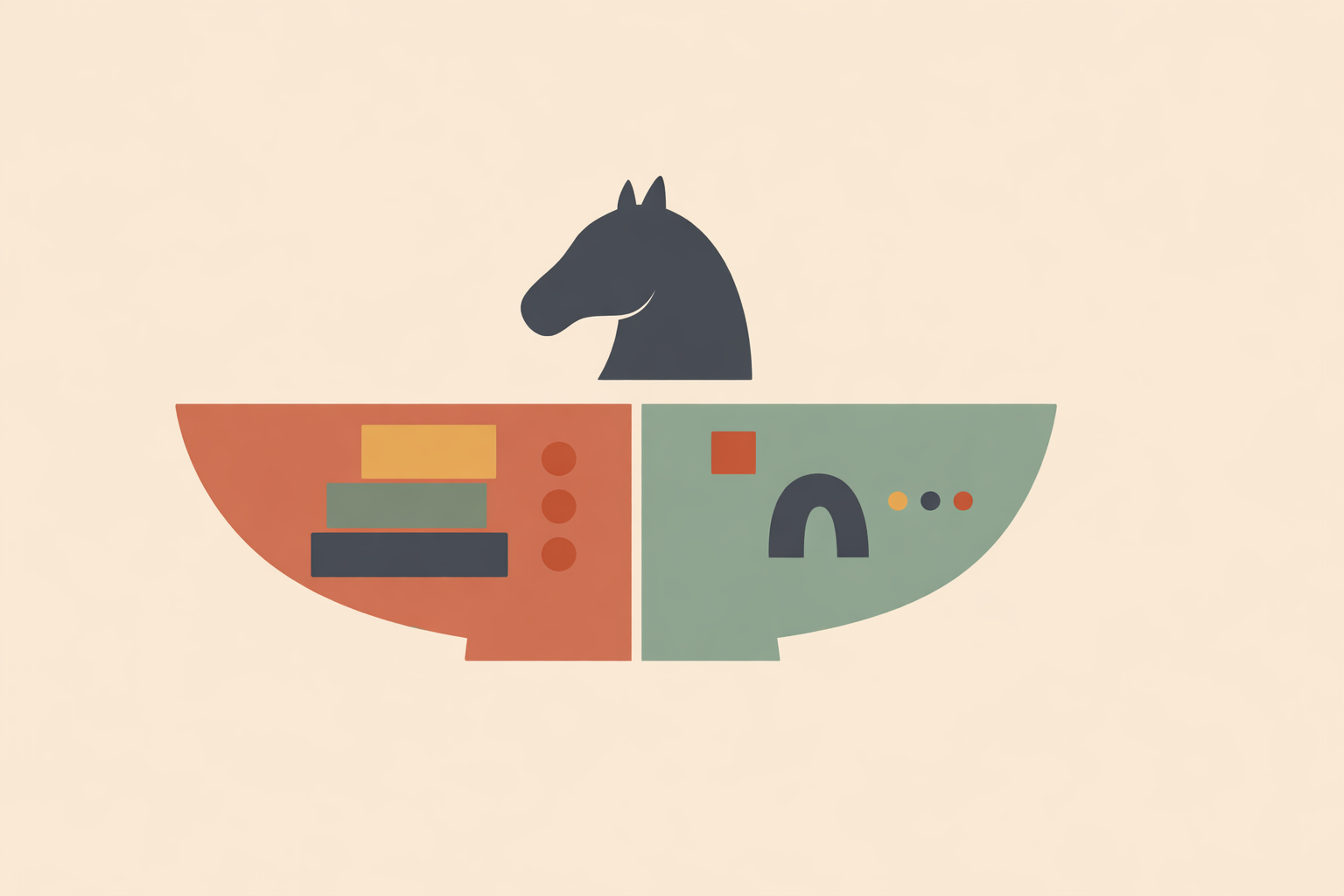
Matching is one of the quiet foundations of strong group work. Not every horse fits every group, and not every participant benefits from the same kind of equine presence.
Horses differ in traits such as boldness, sociability, and reactivity. Those differences matter in real sessions. A socially confident, steady horse can support a lively group, while a more sensitive horse often suits quieter attunement work with careful pacing.
Facilitators can also match for complementarity. An anxious newcomer often does better with a horse who offers steadiness and space. A participant who tends to crowd may learn more from a horse who can hold a boundary without escalating.
Many traditional horse lineages also hold the idea of compatibility. Whether you name that as temperament, pacing, resonance, or energy, the practical question stays grounded: which pairing supports learning and dignity for both beings?
A Practical Session Flow for Equine Co-Facilitated Groups
Equine-led group sessions work best with a clear arc. The flow does not need to be complicated, but it does need rhythm: arrival, contact, experience, reflection, and integration.
A simple structure might look like this:
- Arrival: orient to the land, the arena, and the group agreements.
- Meet the herd: brief introductions to each horse’s preferences and boundaries.
- First contact: a low-pressure observation or mirroring task from outside the rail.
- Core experience: one or two relational exercises such as parallel walking, boundary work, or choice-making.
- Witnessing: one subgroup works while another observes body language and group patterns.
- Debrief: name sensations, images, surprises, and one practical insight to carry forward.
This arc naturally follows the experiential learning cycle many facilitators already use: experience, reflection, sense-making, and experimentation. Horses support that sequence because feedback is immediate and embodied.
Keep tasks light enough that people can stay connected to themselves, the horse, and the group at once. Complexity tends to pull everyone back into performance.
Responding to Stress and Rupture Early
Even well-held groups have moments of strain. The important skill is recognizing strain early and responding before it turns into overwhelm or conflict.
In horse–human interaction, many safety problems grow from missed signals rather than sudden unpredictability. Equine conflict behavior also tends to escalate when human pressure is confusing or inconsistent.
Watch for subtle cues: pinned ears, tightening around the muzzle, repeated tail swishing, frozen posture, abrupt distance-seeking, or a participant holding their breath and moving too fast.
A simple repair sequence helps:
- Pause the action.
- Orient attention outward: sounds, colors, feet on the ground.
- Name what you observed without blame.
- Offer two clear options.
- Return only if the field feels settled.
In groups, trust is strengthened less by perfection than by good repair. Reviews of psychological safety and trust highlight repair behaviors such as acknowledging impact and making amends as key supports for cohesion.
After a charged moment, keep the debrief grounded. Ask what people noticed in their bodies, what the horse seemed to communicate, and what helped the group return to steadiness. Brief writing or drawing can help integrate the experience without forcing immediate explanation.
Bringing the Practice Together
Strong equine-assisted work is built from stance: respect for the horse, attention to the shared field, clear structure, thoughtful matching, and the willingness to slow down when the session asks for it.
Over time, it becomes a disciplined practice of observation. You learn each horse’s thresholds, preferred roles, and daily variations, and you refine how you set agreements, pace the group, and respond when something true arrives in an awkward form.
Many of the deepest facilitation skills still grow the traditional way: apprenticeship, repetition, reflection, and relationship with land, herd, and community. Daily tracking, careful debriefing, and honest supervision strengthen the craft in animal wellness practice.
When consent is foregrounded, safety feels tangible, and the horse is welcomed as a real partner, groups often become quieter, braver, and more truthful. That is part of the enduring gift of horse-guided work: it gathers people back into presence and teaches collaboration through lived experience.
Train in Equine Therapy
Build safer, horse-led group sessions with the Equine Therapy Certification.
Explore Equine Therapy Certification →