


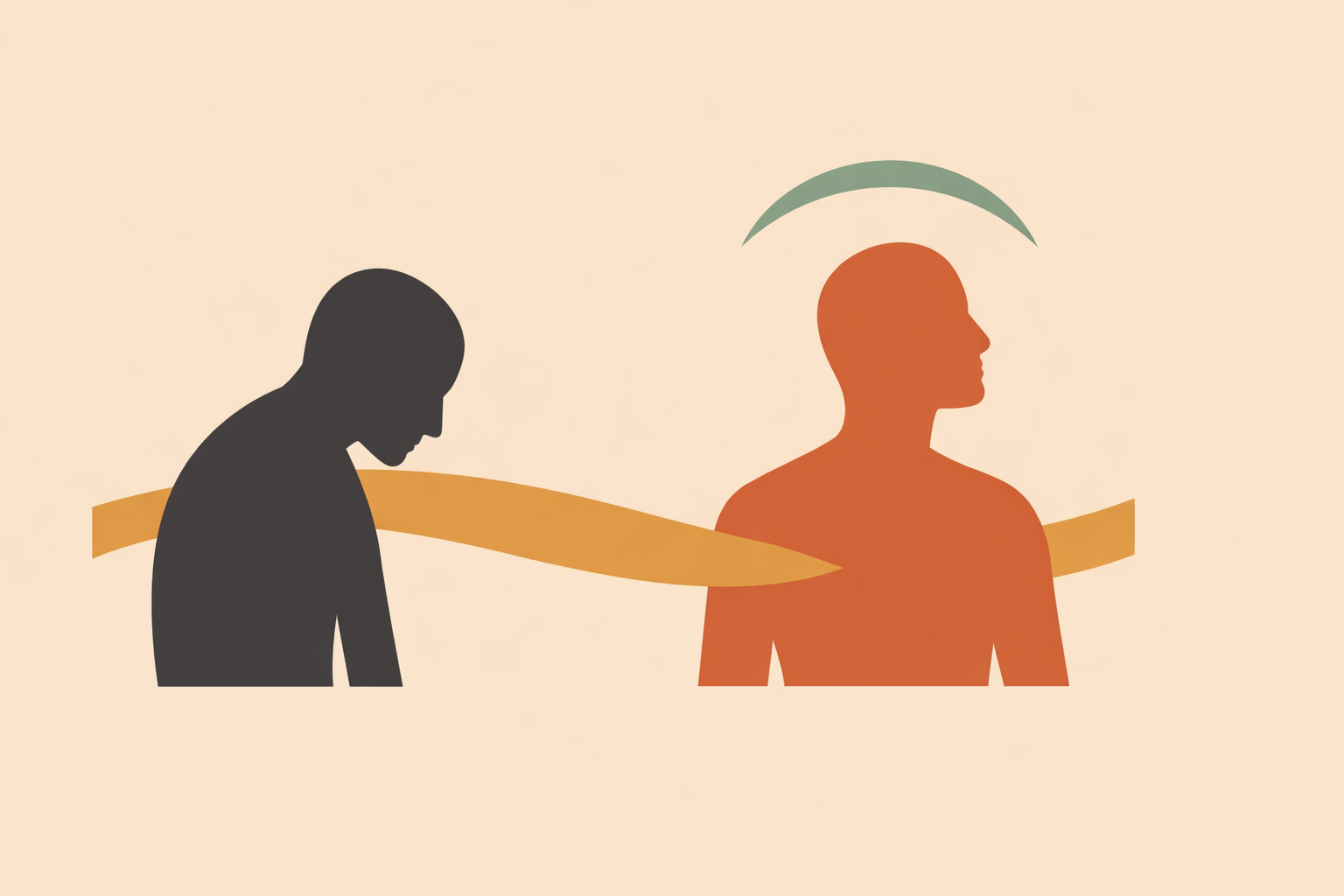
Many practitioners meet the same wall: a client can name the pattern, agree on a next step, and still leave braced. Shoulders stay high, breath stays shallow, sleep goes off, and avoidance keeps running the show. You slow the pace and ask better questions, yet the system in front of you still isn’t available for change. And you’re staying firmly in coaching scope—no digging for old material, no chasing catharsis.
Nervous system safety is often the lever that helps insight become doable action. When sessions are organized around present-moment cues of safety and threat, somatic coaching blends cleanly with talk-based work. The focus becomes capacity and choice in the here and now—helping the body register more safety and flexibility—so agreed actions feel less like a stretch and more like a next step.
Key Takeaway: When a client’s nervous system still reads threat, insight alone rarely turns into follow-through. Tracking real-time cues of safety, overwhelm, and shutdown—and using small, consent-based somatic tools—helps clients build enough steadiness and choice to carry coaching goals into daily life.
How nervous system safety helps turn insight into action
Nervous system safety can be the missing bridge between understanding and follow-through. A client may “get it” intellectually, but if their system is still braced around threat, action won’t land.
The core idea is simple: the body decides before conscious thought. Polyvagal-informed models describe this as neuroception—the nervous system’s automatic reading of safety or danger cues. That’s why Stephen Porges’ reminder, “Safety is sensed, not believed,” fits what practitioners see every day. You can say “you’re safe here,” but until the body agrees, clients often stay guarded.
This is why someone can explain a pattern with precision and still remain tense, sleep poorly, or avoid the very step they want to take. Both research and lived practice suggest that threat-focused responding can persist even after insight arrives. In those moments, shifting from analysis toward interoception—what’s happening in the jaw, chest, belly, throat—often creates real movement.
As Linda Fenesova puts it, trauma-informed coaching takes in the whole person: mind, body, and lived experience. Essentially, some clients don’t need more interpretation; they need more access to settling, choice, and connection right now.
The encouraging part is that nervous system skills are learnable. Somatic self-regulation approaches show that brief body-based skills can support day-to-day regulation when practiced consistently. And as Annie Wright notes, “The nervous system learns that safety is possible through the experience of safety. It doesn’t learn it through reading about safety.”
Traditional lineages have worked with this for centuries through breath, posture, sound, rhythm, and relationship with the natural world. Used respectfully, these practices can support a felt shift from bracing toward flexibility—without turning coaching into trauma processing.
When clients know what to do but still can’t do it
When clients “know” but can’t change, the barrier is often state, not willpower. Put simply: stuckness frequently reflects a system organized around protection rather than a lack of motivation.
A safety-first approach reframes the session around capacity-building. Small experiences of settling, choice, and connection help the system learn, in real time, that more options are available now. Over time, those moments can make action feel less costly and more accessible.
This is why nervous system safety supports talk-based goals so well: the part of the person that has to carry out the plan is less braced, which is exactly when neuroscience coaching becomes a useful frame.
Reading felt safety in real sessions
Somatic coaching stays practical when you track what the body is showing you now—then respond without dramatizing it. Felt safety becomes visible when you learn to read simple cues.
Start with broad state mapping. Polyvagal-informed models describe three common autonomic patterns people move through: social engagement, mobilization, and shutdown. You don’t need rigid labels—just enough clarity to sense whether the person in front of you is more connected, more activated, or more collapsed.
Then look for what you can observe. Fast speech, fidgeting, and shallow breathing often come with activation. Low energy, flatness, and mental fog more often point toward shutdown. Here’s why that matters: it helps you pace well.
Micro-shifts are just as important as the big patterns. A longer exhale, shoulders dropping, facial softening, eyes re-engaging, more warmth in the voice—these are often signs someone is moving toward settling. They’re easy to miss if you listen only for content.
Practitioner experience shows these small moments are often where the real work begins. Once there’s even a little more room, curiosity and choice tend to return.
“Gradually, your body learns that it’s permissible to be present… not entirely open or trusting, but a bit more grounded.”
That’s a useful standard for somatic coaching: not dramatic release—just a little more grounded.
How to notice yes, no, and maybe in the body
One of the simplest ways to read state is to notice the body’s yes, no, and maybe signals. Think of it like a live pacing dashboard: it keeps you anchored in what’s happening, not what you think should happen.
- Yes: fuller breath, warmer skin, more eye contact, curiosity, spontaneous movement, clearer voice
- No: tightened jaw, scanning eyes, clipped tone, restless legs, urge to pull back, argue, or leave
- Maybe: flattened tone, heavy limbs, foggy thinking, faraway gaze, slowed responses
Meet the body where it is. If you sense no, reduce intensity or return to simple contact with the present. If you sense maybe, stabilize. If you sense yes, you may be able to explore a little further—without pushing.
This tracking helps somatic coaching blend naturally with conversation. You’re still moving toward the client’s goal, but in a way their system can actually follow.
Working with dissociation and overwhelm
It helps to recognize when a client is no longer fully present. Dissociation can show up as a faraway gaze, time loss, numbness, unreality, or feeling disconnected from self or surroundings—common signs of dissociation.
If that happens, pause the content and do less, not more. Guidance supports grounding techniques such as noticing the feet on the floor, feeling the chair, or naming neutral details in the room to restore present-moment awareness.
Orientation can help here too. Looking around, naming colors, or noticing shapes and distances often reduces overwhelm by bringing attention back to what is here now. For many clients, that’s enough to re-establish steadiness while staying within coaching scope.
Using nervous system safety to stay within coaching scope
A safety-first lens keeps the work clear: present impact, present capacity, present choice. You’re not trying to fix the past—you’re supporting the client to become more resourced for what they want to do now.
Organizing sessions around safety and threat cues lets somatic work blend with talk-based coaching while staying scope-appropriate. The aim isn’t deep processing. The aim is steadiness, agency, and follow-through.
Within that frame, body-based skills still belong. Somatic self-care approaches support working with sensations in present awareness, and for some people this whole-person approach is simply more effective than mind-only strategies.
Clear agreements, choice, and pacing are part of ethical practice, especially in trauma-aware coaching. A trauma-informed framework highlights choice, collaboration, trust, and empowerment as core principles. In everyday coaching language: explain what you’re inviting, keep it optional, and let the client set the pace.
When needs exceed your role, referral is the respectful next step. If distress is overwhelming, daily functioning is severely disrupted, or the person can’t stay present enough for coaching to help, more specialized support is needed—and naming that early protects trust.
- Frame: “Let’s notice what your body does when that conversation comes up and find one thing that helps you feel 5% steadier right now.”
- Consent: “Would you like to try a 30-second grounding check-in? You can say no or stop anytime.”
- Referral language: “Some of what you’re navigating may need more specialized support. We can keep focusing here on steadiness and skills while you explore that.”
Building a safety-first container
Before techniques, there’s the container: your presence, the environment, and the quality of choice in the session. When the container is steady, tools land more gently and stick more easily.
A regulated practitioner can become a cue of steadiness. Polyvagal-informed work describes co-regulation as the way safe social connection can reduce threat responding. In practice this often looks simple: slower pace, warmer tone, clear sequencing, and an unhurried exhale.
The environment matters too. Lighting, clutter, sightlines, and visible exits can all be read as safety or threat cues. Guidance points to environmental support as part of regulation. Online, that often means clear audio, stable camera placement, and briefly orienting the client to what will happen.
Consent is another pillar of safety. Micro-consent restores agency and reduces overwhelm in somatic work. Even without a research paper behind every phrase, seasoned practitioners know what changes when clients repeatedly hear, “Would you like to try this?” and truly mean it.
Just as important: avoid intensity spikes. Moving too fast into charged material without enough orientation or grounding can intensify dissociation or shutdown. Gentle pacing isn’t a lesser skill—it’s often the skill that makes everything else useful.
- Open predictably: explain the flow of the session
- Show steadiness: let your exhale lengthen while you speak
- Offer choices: eyes open or closed, seated or standing, continue or pause
- Keep checking: ask what feels more supportive right now
Somatic tools that support safety without overwhelming the client
Use somatic practices to build flexibility, not to force release. The most helpful tools are usually the simplest: orientation, grounding, breath, movement, and voice.
Orientation anchors attention in the present. Looking around the room, naming colors, shapes, and distances, or noticing something neutral can help decrease distress and support steadiness.
Grounding builds contact with support. Feeling the feet against the floor or the body against the chair can stabilize arousal when activation rises. Keep it choice-based: more pressure or less, both feet or one, stillness or small movement.
Breath is often the fastest doorway to settling. Guidance suggests slow diaphragmatic breathing can reduce sympathetic arousal and support regulation. Exhale-focused patterns are especially useful because they often feel less effortful.
“Breathwork, somatic awareness, gentle movement… help the body learn, through direct experience, that it can activate and return to regulation.”
Movement can interrupt rumination and restore presence. Gentle stretching, pressing the feet down, rolling the shoulders, or shaking out the hands is often enough. Practices such as tai chi and qigong are associated with gentle movement that supports regulation and body awareness—an example of traditional practice and modern framing meeting neatly.
Voice can support settling and clearer boundaries. Humming, sighing, or speaking with steadier breath can support parasympathetic activity; guidance links singing and humming with greater calm. Many ancestral traditions have long used sound and song to support belonging and grounding, and those roots deserve respect.
For a more structured option, the Community Resiliency Model offers six accessible skills—Tracking, Resourcing, Grounding, Gesturing, Help Now!, Shift and Stay. These six skills can be introduced quickly and practiced between sessions to build everyday coping capacity.
- 30–60 second orientation: “Name five colors you see. What is one shape across the room?”
- Feet and seat: “How supported do your feet feel right now?”
- Breath ratio: “Try in for 4, out for 6, for three breaths. Adjust anytime.”
- Micro-movement: “Would your shoulders or hands like a small movement?”
- Voice check: “Say that boundary again with your exhale landing on the last word.”
Why small experiences of safety matter
Change is usually built through repetition, not intensity. Small experiences of settling, choice, and connection help the nervous system relearn that the present can offer more options than the past predicted.
When someone has lived with persistent threat bias, repeated moments of predictability and safety gradually loosen that pattern. Guidance notes that returning to baseline can be difficult after overwhelming experiences—which is exactly why small, steady practice matters.
This is also why a nervous-system-safety approach strengthens talk-based coaching rather than distracting from it. With more internal room, reflection gets clearer, decisions get simpler, and agreed actions are more likely to happen after the session ends.
Conclusion
Nervous system safety gives somatic coaching both structure and restraint. It helps you read state, pace ethically, and use body-based tools in ways that support present-day goals—without overwhelming the person in front of you.
In practice, the approach is simple and kind: co-regulate first, invite micro-consent, and favor small repeatable skills over dramatic breakthroughs. Track for cues of steadiness, and let those moments set the pace. Draw on evidence where it helps, and honor traditional wisdom where it has long guided people toward settling, connection, and resilience.
A final note for integrity: this work is most effective when it stays choice-led and scope-appropriate, and when referral is used early if someone is consistently overwhelmed or unable to stay present. Build the foundation of safety well, and the rest of your tools tend to work better—one breath, one moment, and one steady step at a time.
Deepen Trauma Healing Skills
Continue building safety-first capacity with the Trauma & Emotional Healing Learning Path.
Explore Trauma & Emotional Healing →










