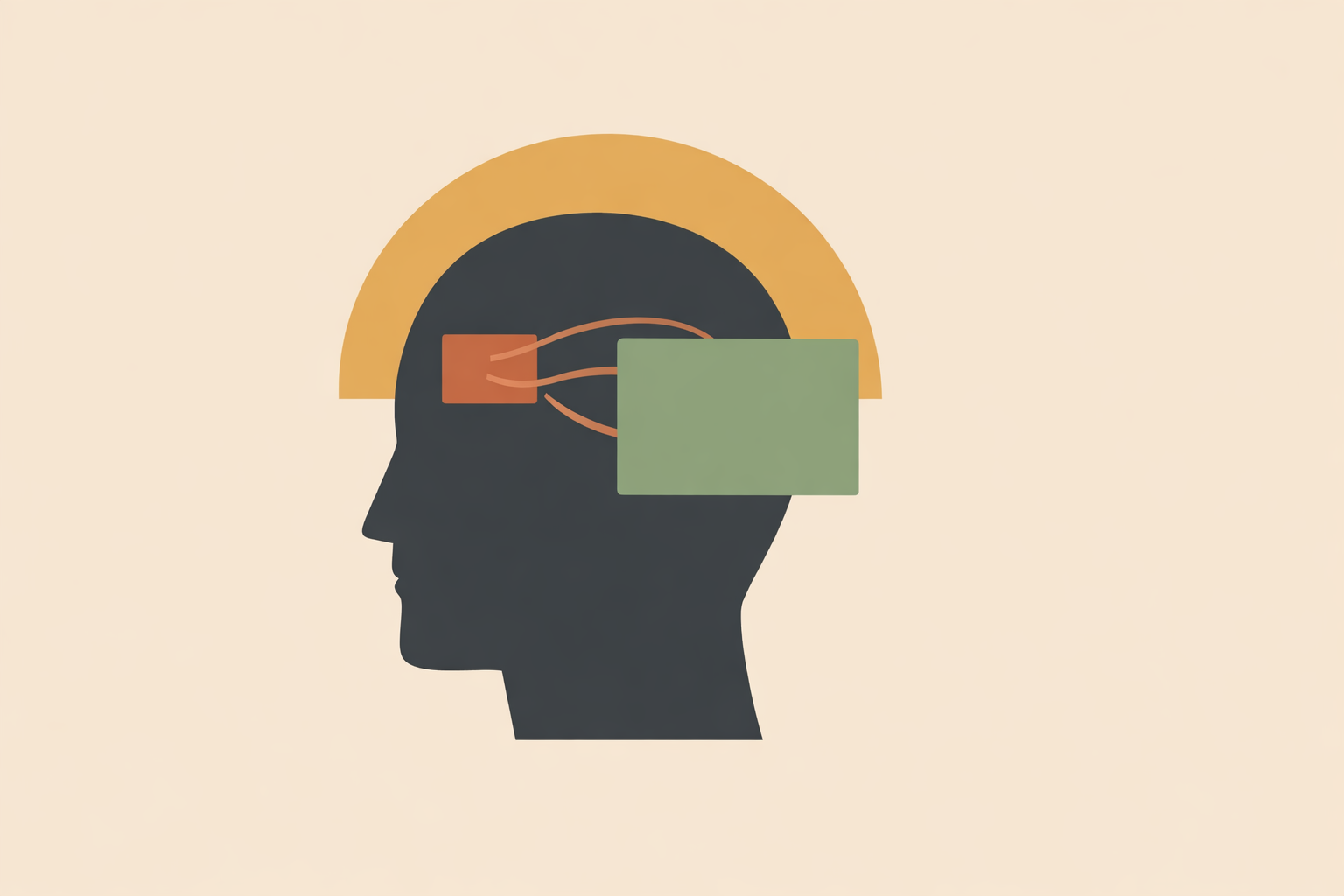
When someone stalls on a skill, the usual response is more repetition: another mock sales call, another run-through, another attempt. Sometimes that works. Other times it reinforces the same hesitation.
Often, the real leverage is the person’s inner setup right before they act: the picture they see, the voice they hear, and the sensations they brace against. When that inner pattern is working against them, extra reps can create more friction instead of more fluency.
NLP submodalities help you work with those details. They describe the fine-grain qualities of inner experience: brightness, distance, point of view, volume, tone, pressure, temperature, and movement. Practitioners have used these distinctions for decades to support steadier states, better preparation, and mental rehearsal that translates into action.
Key Takeaway: Learning often becomes smoother when mental rehearsal and action point in the same direction. NLP submodalities offer a practical way to notice and adjust the fine details of inner images, sounds, and sensations so practice feels more organized and usable. Start by choosing one concrete skill, then map your current inner pattern, and make small adjustments you can test in real life.
How your inner “movie” influences learning
Before someone speaks in a meeting, starts a lift, opens a class, or begins a difficult conversation, they usually preview the moment internally. That preview sets the tone for what happens next.
One person might picture the situation as far away, dim, and slightly threatening, with sharp inner commentary running in the background. Another might experience a close, steady, first-person sense of the same task, guided by a calmer inner rhythm.
That difference explains why two people can prepare equally yet perform very differently. The inner representation shapes readiness and affects focus, breathing, timing, and the willingness to begin.
Traditional training systems have recognized this for a long time. In many performance and contemplative lineages, inner rehearsal is considered part of practice, not separate from it. Modern research on mental imagery also supports the idea that structured imagery can help learning and performance when it matches the task.
In coaching practice, the most practical test is straightforward: when you change the inner detail, does the person enter the task differently? When you use submodalities lightly and test them in context, they become reliable levers for better rehearsal.
Try a quick experiment. Imagine the first few seconds of a skill you want to improve. Notice the image, the self-talk, and the body sensation. Then adjust just one thing (bring the image closer, shift into first-person, soften the inner voice, or lengthen the exhale) and check whether starting now feels different.
What NLP submodalities are
Submodalities are the qualities that give inner experience its texture.
In the visual channel, that can include size, distance, color, movement, focus, location, and perspective. In the auditory channel, it can include words, tone, pitch, volume, tempo, and direction. In the kinaesthetic channel, it can include pressure, warmth, tension, movement, weight, and where a sensation sits in the body.
These details are small, and they reliably change how an experience lands. A tiny image tends to feel different from a large one. A harsh inner voice organizes behavior differently than a steady one. A tightness high in the chest pulls attention in a different way than a grounded warmth in the belly.
The goal is not to treat submodalities as a fixed codebook. The value is in discovering what shifts things for this person, with this skill, right now.
People often reveal their inner structure in everyday phrases: “I can’t see my way into it,” “That voice is loud,” “It feels heavy.” When you listen closely, you can work with what is already present instead of imposing an abstract model.
Seen this way, NLP helps people get more precise about the inner experience they already have.
Start with one concrete skill
Submodality work stays practical when you choose one observable skill rather than a broad identity goal.
“Be more confident” is too vague to rehearse. “Deliver the first 90 seconds of my project update without reading my slides” is clear and testable. So is “Ask one open question before offering advice,” or “Complete two steady sets with smooth breathing and full attention.”
A clear target gives your inner rehearsal somewhere to go, and it makes real-world testing simple: you can compare one attempt to the next.
Use a short checklist:
- What exactly do you want to do?
- In what setting will it happen?
- What will count as visible evidence?
- What resources do you already have?
- What constraints need to be respected?
- What is the smallest next action?
This keeps the work grounded. You’re rehearsing a moment, not chasing a mood.
For example: “On Thursday’s stand-up, I’ll open with one clear sentence, give my update in 15 seconds, keep my eyes up, and pause once before finishing.” It’s easier to see, hear, and feel something that specific.
Map the current inner pattern before you change it
Before you adjust anything, get a baseline. You can’t refine an inner rehearsal you haven’t noticed.
Take a few quiet minutes and imagine performing your chosen skill as if it were about to happen now. Let the current pattern appear without correcting it. Observe first.
- Visual: Is the image near or far? Bright or dim? Sharp or vague? Still or moving? First-person or third-person?
- Auditory: What words are present? Is there an inner commentary? What is the tone, speed, and volume?
- Kinaesthetic: Where do you feel the experience in the body? Is it tight, warm, heavy, buzzy, lifted, still, or moving?
Write down what you notice in plain language. For example: “I see myself from the back of the room. The image is dim. I hear ‘Don’t lose your place’ in a fast tone over my left shoulder. My chest feels tight and my breath stays high.”
This isn’t a verdict on ability. It’s a snapshot of how the experience is currently organized.
It also helps to track the whole sequence:
- Before the task: What do you expect is about to happen?
- During the task: What grabs attention or pulls you off center?
- After the task: What do you replay or say to yourself?
Many common barriers show up clearly here—fear of evaluation, perfectionism, avoidance, over-monitoring, inconsistent preparation. Once the structure is visible, you have something concrete to work with.
Make small submodality shifts and test them
Once you have a baseline, change one or two variables at a time. Small, clean shifts are easier to test and keep.
You might experiment with:
- bringing the image closer
- switching from third-person to first-person
- adding movement if the image is frozen
- softening or slowing the inner voice
- changing the wording of the inner cue
- moving attention to a steadier breath
- reducing the intensity of a sensation by imagining more space around it
The aim is to build an inner pattern that supports clear action.
If someone’s rehearsal before speaking is distant and self-conscious, moving into first-person and replacing “Don’t mess this up” with “First sentence, then pause” often makes starting feel more manageable. If an athlete’s preview is rushed and noisy, slowing the inner timing and anchoring attention in breath can bring steadiness right at the start.
Research on imagery perspective also suggests that perspective and sensory “fit” influence how useful rehearsal feels and how well it carries into performance.
After each shift, test it in real action as soon as possible. Keep the change if it helps you begin, stay organized, and recover smoothly when something goes off-plan.
Listen for submodality cues in everyday language
One of the most useful ways to apply this with others is to listen closely to how they describe the challenge.
People reveal their inner coding all the time:
- “It all goes blank.”
- “I keep hearing that one comment.”
- “The pressure sits right here.”
- “I can see everyone watching me.”
- “It feels far away until the last second.”
Each phrase gives you an entry point. Blankness, repetition, pressure, distance, sharpness, speed, and location are all workable details.
This is why many practitioners find submodality work so elegant. You can start with the person’s words, reflect them back, and explore which detail carries the most charge.
It also keeps the process respectful. Rather than telling someone what their experience means, you help them explore how it’s built and what happens when one element shifts, much like careful reframing in early coaching conversations.
Keep the process simple and repeatable
Submodality work shines when it stays light, specific, and testable.
A simple rhythm works well:
- Choose one skill slice.
- Map the current image, sound, and sensation.
- Adjust one or two details.
- Rehearse briefly.
- Test in real action.
- Keep what helps and discard what does not.
This approach reflects long-standing coaching craft and an evidence-informed mindset: notice, experiment, refine.
Over time, these small adjustments make practice more coherent. Inner preparation and outer action start to match, and learning tends to feel smoother.
Conclusion
NLP submodalities offer a practical language for something experienced practitioners already recognize: the fine details of inner experience shape how a person shows up. When those details support the task, practice becomes clearer and more transferable.
Keep it straightforward. Pick one real skill, map how it’s represented inside, change one small detail, and test the result in context. Let the person’s language and pacing lead.
As with any powerful coaching tool, use it with care and consent. Individual histories and sensitivities matter, and it’s wise to work gently when strong emotions arise. Done well, submodality work turns mental rehearsal into a precise, respectful way to organize attention, prepare for action, and grow through practice, including within NLP practitioner training.
Train NLP Practitioner Skills
Build submodality and state-change precision with the NLP Practitioner Certification.
Explore NLP Practitioner →