Assessment in DMT integration coaching works best when it feels like mapping, not testing. A rigid, clipboard-style approach can make people brace, flatten rich experiences into short answers, and pull the conversation away from what matters most: whether the experience is being digested and whether life is changing in a grounded way.
Key Takeaway: In DMT integration coaching, assessment is most useful as a collaborative map. A strong process explores four core areas—intention, context, support, and practices—while staying firmly within a non-clinical scope. It helps you hear the story, notice adjustment challenges, work with unusual content without imposing meaning, turn insights into everyday actions, and track progress with simple check-ins over time.
Use a Four-Part Framework That Keeps You Grounded and in Scope
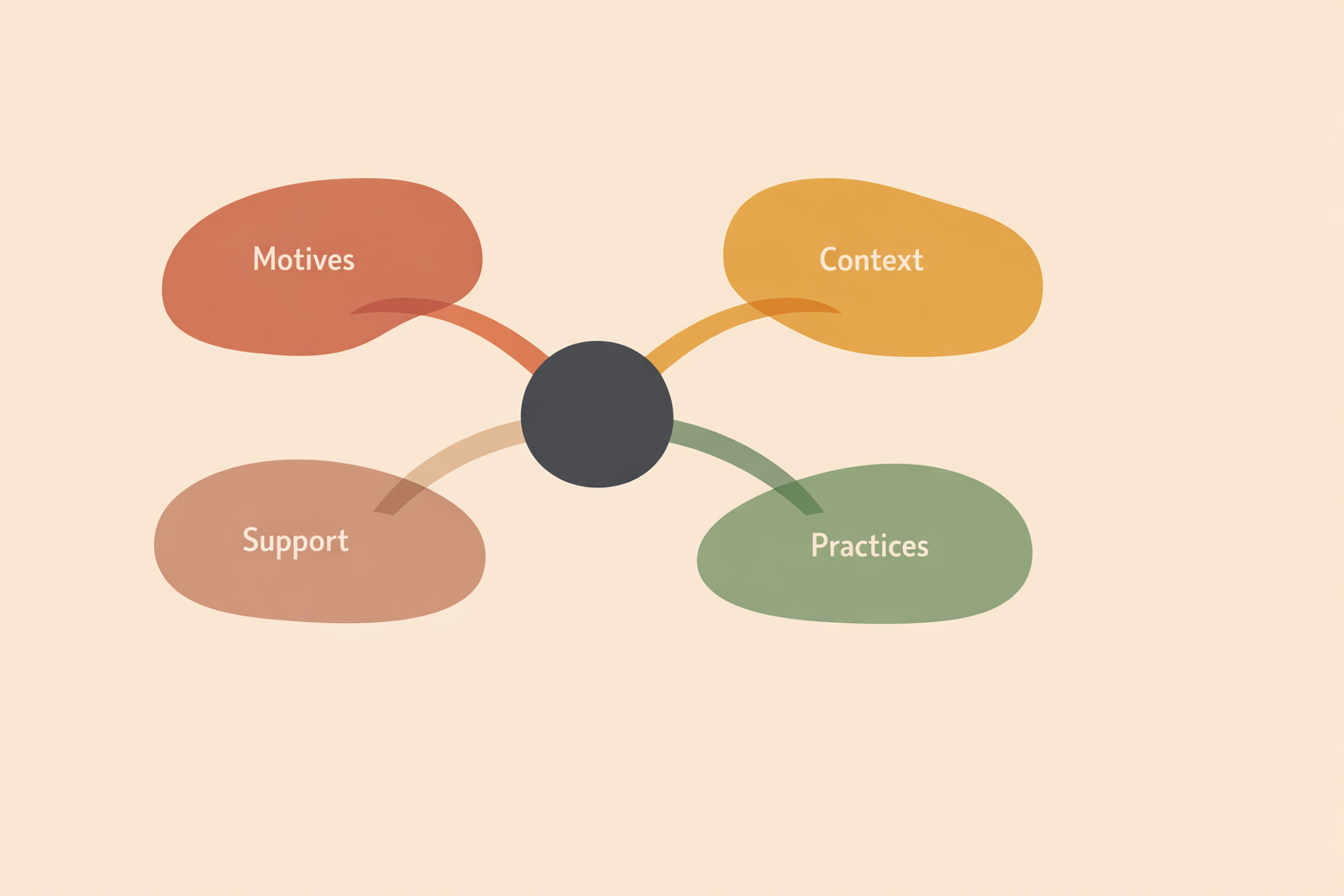
A clear structure helps you stay consistent without turning the conversation mechanical. A practical way to map assessment is through four areas:
- motives and intention
- context and culture
- support and safeguards
- resources and practices
This kind of container helps coaches remain within scope while still honoring the depth of what someone is bringing.
Start with motives and intention. What led them to the experience, and what were they hoping for? Then ask what matters now. In traditional lineages, intention is living and responsive; the way it changes after a powerful experience is often part of the teaching.
Then place the experience in context. Was it ceremonial, solitary, spontaneous, or guided? What songs, prayers, symbols, or cultural references shaped it? This is a place for care and respect: invite people to name what truly belongs to their world, and avoid borrowing loosely from traditions that aren’t theirs.
Next, ask about support and safeguards. Who knows what they’re moving through, and who can they lean on? Integration models consistently emphasize social support as a stabilizing force.
Finally, explore resources and practices. Look for what already helps them feel steady and connected: journaling, movement, prayer, time in nature, breathwork, creativity, and simple routines. The aim is real-life support, not an impressive list.
Make the First Conversation About Safety, Story, and Fit
Early assessment should help the person settle, speak, and feel met. Begin with pace and presence, then invite the story.
Gentle orienting questions are usually enough: What stands out most? What feels unresolved? What has been easiest to carry, and what has been hardest?
At the same time, track how they’re adjusting day to day. Post-experience challenges can include sleep disturbances, anxiety, derealization, depersonalization, or ongoing tension in the body. In coaching, these are not labels; they’re signals that someone needs more steadiness, pacing, and support.
Ask directly about the support around them: “Do you feel supported by family, friends, or community right now?” If support is thin, your map often starts there.
You’re also quietly assessing fit. Some experiences can be held well in coaching; others call for broader support. There’s no need to dramatize that. Notice when overwhelm or disruption is strong enough that the person would benefit from additional help beyond coaching.
- “We can go at your pace.”
- “If any part feels too intense, we can pause and come back to the present moment.”
- “I’m listening for what feels meaningful, and also for what helps you stay steady.”
Listen for Integration, Not Just Content
DMT content can be vivid, strange, beautiful, or unsettling. Assessment isn’t only about what happened; it’s about what’s happening now because of it.
Integration is often described in terms of meaning-making and values-based change in everyday life. That gives you a practical listening post: is the story becoming more coherent, and is it reshaping how they live?
Narrative tools help here. Over time, you can hear whether someone is stuck in repeating fragments or gradually building a story they can carry. Real sessions often work this way, and integration guidance supports reflective writing and narrative exploration as ways to organize psychedelic material.
Helpful prompts include:
- “What part of the experience keeps asking for your attention?”
- “What feels clear now that did not feel clear then?”
- “What, if anything, has changed in your choices since the experience?”
- “Where do you still feel confused, split, or unfinished?”
These questions tend to reveal whether the experience is becoming part of life in a constructive, steady way.
Work with Unusual DMT Content Using Ontological Neutrality
DMT experiences can include entities, hyper-real spaces, symbolic visions, and encounters that feel beyond ordinary language. Good assessment makes room for this without forcing a conclusion about what it “really” was.
Ontological neutrality is a practical stance: stay descriptive, stay respectful, and let the person’s meaning-making lead. Harm reduction and integration frameworks recommend non-judgmental exploration rather than imposed interpretation.
Instead of “Was it real?” try questions that keep the doorway open:
- “How would you describe what appeared?”
- “What qualities did you sense in that encounter?”
- “How has that moment affected you since then?”
- “What meaning feels most alive for you right now?”
Including the body also helps, especially when the memory still feels charged. Integration guidance recommends grounding practices to reduce distress and help people return to a steadier zone.
Try: “As you recall that moment, what do you notice in your body right now?” and “What helps you feel more here and settled when this memory comes up?”
Turn Assessment into a Client-Led Integration Plan
Once the story, context, and support picture are clearer, assessment should naturally become a plan. Keep it humble: one grounded next step.
The strongest plans are client-led and tied to ordinary life. If the experience highlighted tenderness, the plan might be a repair conversation. If it revealed disconnection, the plan might be a daily walk without a phone. If it awakened reverence, the plan might be a weekly practice that protects silence and reflection.
The craft is translation: turning insight into actions the person can sustain, much like integration coaching turns big moments into everyday change.
You might shape the plan around:
- one value that feels especially important now
- one small behavioral shift for the coming week
- one grounding or reflective practice
- one support person or community touchpoint
- one sign that the plan is helping
This keeps the work practical while still honoring the depth of the experience.
Track Progress with Light, Human Check-Ins
Integration unfolds over time, so assessment should return in small, human ways. It doesn’t need to become a scorecard.
Brief check-ins help maintain momentum. Many practitioners use simple self-ratings such as grounded, connected, purposeful, or aligned. These aren’t scientific measures; they’re conversational anchors that make change easier to notice.
You might ask:
- “How grounded do you feel this week, from 1 to 10?”
- “How connected do you feel to yourself or others?”
- “How close are your daily choices to what the experience showed you?”
Early memory capture also supports integration. Writing down key images, emotions, and insights soon after the experience, then revisiting them later, helps people track how meaning evolves. Integration recommendations encourage writing moments as part of organizing and reflecting.
It also helps to track which grounding or mindfulness practices are actually being used between sessions. ACT-informed integration models include mindfulness practice as support for post-experience adjustment.
A two-minute check-in can be enough:
- What is one thing from the experience that feels meaningful this week?
- What is one action that expresses that meaning?
- What practice helped you stay grounded?
- What feels easier or clearer than it did before?
Let Assessment Inform Harm Reduction and Additional Support
Assessment also helps you distinguish between a challenging but workable integration process and a situation that needs broader support.
Sometimes a person is simply unsettled and needs time, pacing, grounding, and better support around them. Sometimes the disruption is bigger. Lingering fear, major sleep disruption, ongoing disorientation, or repeated experiences without enough integration time are all signs to widen the conversation.
If repeated use is part of the picture, explore it gently and directly. The aim is not judgment. The aim is to help choices line up with intention, capacity, and support.
Useful questions include:
- “What are you hoping to receive from returning to the experience again?”
- “Have you had enough space to integrate what has already come through?”
- “How is this affecting your sleep, relationships, focus, or sense of steadiness?”
- “What kind of additional support would feel wise right now?”
Handled well, this keeps the work ethical and caring while staying true to the coaching relationship.
Build an Assessment Style That Can Evolve with Practice
A good assessment process grows with experience, feedback, and ongoing learning. Over time, you learn which questions open people up, which ones shut them down, and which ones lead to grounded action.
Treat assessment design as part of your craft. Keep what helps. Remove what feels performative. Refine your language so it stays clear, respectful, and useful, much like the integration skills coaches develop over time.
At its best, assessment doesn’t feel like assessment. It feels like careful accompaniment while someone makes sense of something powerful, then brings it into daily life with steadiness.
Train in DMT Integration Coaching
Apply these assessment maps in practice with the DMT Integration Coaching Certification.
Explore DMT Certification →