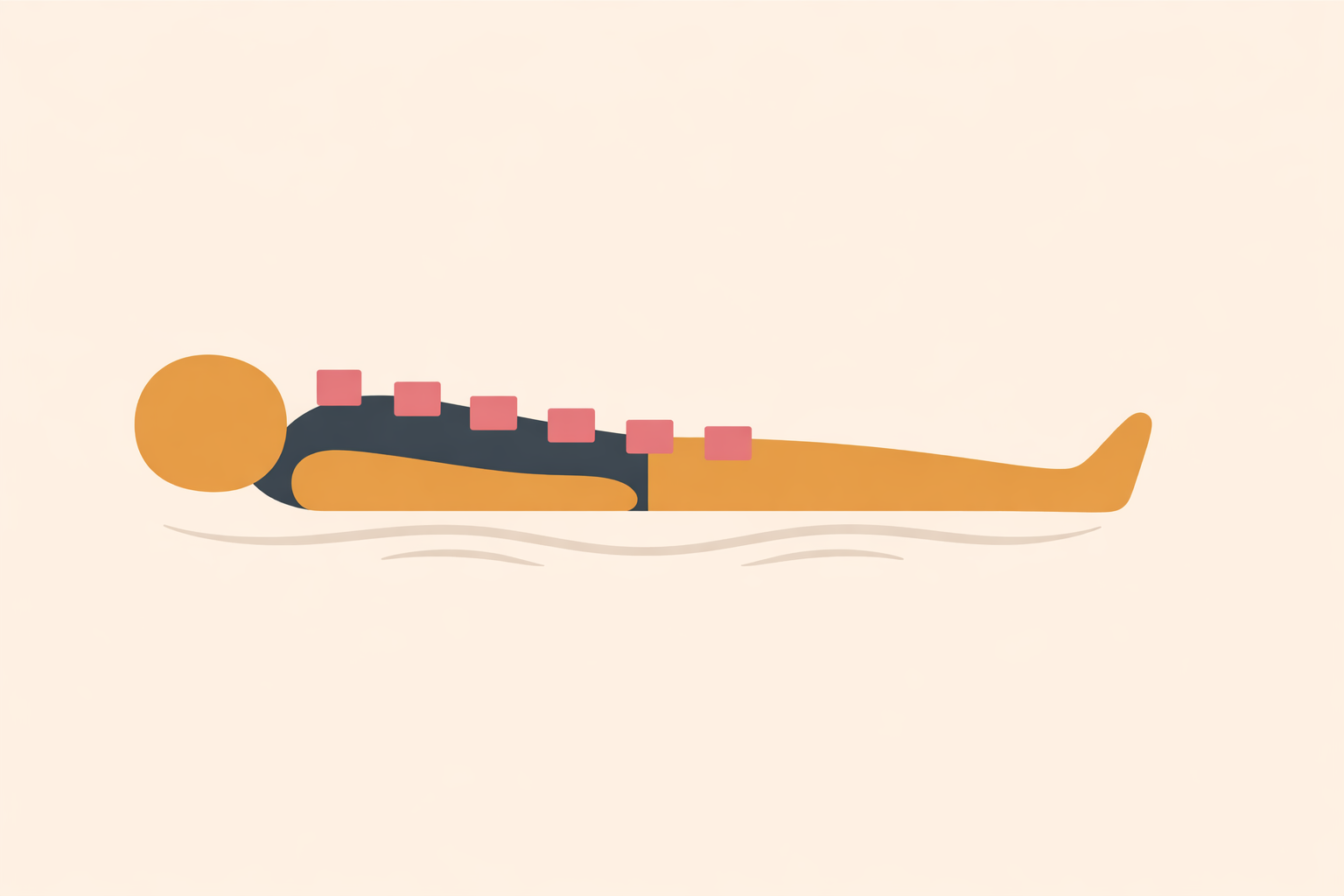
Most practitioners learn Reiki theory long before a daily self-practice feels truly natural. The sticking points are usually simple: where to place your hands first, how long to stay, what to do when a position brings up emotion, or how to keep it short enough to repeat tomorrow. Without a dependable structure, self-Reiki can feel inconsistent—and that makes it harder to trust.
A clear rhythm changes everything. This seven-session progression turns self-Reiki into a practical daily ritual: easy to remember, flexible in real life, and grounded in Level I foundations—self-practice, hand positions, and energy awareness. You’ll work with a head-to-feet map, adapt sensitive areas with hands-on, hovering, or off-body choices, and let breath and sensation set the pace rather than strict timing.
Key Takeaway: A sustainable self-Reiki routine becomes easier when you follow the same head-to-feet map each day and let breath and sensation guide how long you stay. Keep the structure simple, use touch or hovering as needed, and prioritize consistency over perfect timing.
Session 1: Prepare Your Daily Self-Reiki Practice
Make the practice easy to begin. A short session you actually do will carry you further than a longer session you keep postponing.
Most beginners feel steadier after they quiet the environment and take a few slow breaths before placing their hands. Even a brief arrival ritual can help attention settle into the body, so you start from presence instead of distraction.
In Usui Reiki Level I, the tradition largely centers on self-Reiki, basic hand positions, and energy awareness. That foundation is more than enough to build a meaningful daily rhythm.
Keep the setup simple:
- Dim the lights or choose a quiet corner.
- Silence alerts and give yourself a few uninterrupted minutes.
- Sit comfortably or lie down.
- Take 5 to 7 slow breaths before placing your hands.
- Set a clear intention such as “I welcome balance” or “I’m here to listen.”
If you enjoy gentle guidance, it can help to remember the spirit of this journey: “This course is designed to guide you through each hand position, empowering you to experience the calming and balancing effects of hands-on self-care.”
Once beginning feels simple, continuing becomes more natural. Next, you’ll give the session a clear route you can follow on any kind of day.
Session 2: Learn a Simple Head-to-Feet Reiki Map
A head-to-feet sequence gives your practice a reliable backbone. Instead of deciding anew each day, you follow one steady direction—and the body quickly learns the pattern.
Many self-Reiki guides teach starting from the top of your head and moving downwards. Think of it like following a familiar path home: you can relax into the journey because you already know the route. A sequence linked with the seven energy centers can be especially easy to remember when life feels busy.
A simple sequence to learn:
- Crown
- Brow/forehead
- Back of head
- Throat
- Heart/upper chest
- Solar plexus
- Lower abdomen
- Pelvic/root area
- Knees
- Ankles or feet
Over time, sensitivity often deepens—but the route stays steady, so your attention can go into feeling rather than planning.
Session 3: Begin at the Head for Mental Quiet
Opening with the crown, brow, and back of the head often helps the whole session settle quickly. These placements invite inward focus before you move down into the rest of the body.
Try these placements:
- Crown: Rest both hands softly on the top of the head or hover just above.
- Brow: Place hands across the forehead, or one at the forehead and one at the back of the head.
- Back of head: Cradle the occiput and let the jaw soften.
Stay until you notice a shift—slower breath, warmth, gentle softening, or a quieter mind. Put simply: let your breath be the timer.
Reiki practice can calm anxiety and support a deeper sense of ease, and many practitioners recognize this settling quality most clearly when they begin at the head.
Session 4: Work with Throat and Heart Using Choice
The throat and heart often benefit from a more sensitive approach. Choice matters here, and self-consent is part of the practice.
Reiki is commonly practiced by placing their hands on or hovering above the body. That flexibility makes it easier to stay in flow without forcing contact when an area feels tender.
Supportive options for these areas:
- Throat: Place the hands lightly below the neck in a soft “V,” hover above the area, or skip it on days when direct contact feels like too much.
- Heart: Rest the hands over the sternum or upper chest, adjusting for comfort and ease.
- Self-consent: Ask yourself what feels welcome today: touch, hover, or space.
If emotion rises here, treat it like weather—noticed, not fought. Shorter holds are often enough, and you can always move down to the legs or feet to regain steadiness, then return if it feels right, much as you would in emotional healing work.
Let this part of the session be a conversation with your body, not a test.
Session 5: Use Solar Plexus and Belly Positions for Centering
The mid-body often responds best to slower, steadier pacing. Hands over the solar plexus and lower abdomen can create a strong feeling of centering because breath, emotion, and grounded presence naturally meet here.
Try this simple pairing:
- Solar plexus: Rest the palms just below the ribs.
- Lower abdomen: Place the hands over the navel area or a little below.
Reiki may also assist with gastrointestinal issues, which is one reason these positions remain so central in practice. Essentially, they’re a steady place to meet intensity with calm presence rather than bracing against it.
If this area feels tender, hover instead of touching, reduce the time, or move lower to the legs and feet. Your body’s response matters more than completing every position.
Session 6: Close Through Root, Legs, and Feet
Ending in the lower body helps the practice land. Root, leg, and foot positions often bring a sense of closure and stability—especially if earlier positions felt emotionally charged.
Use these closing positions:
- Root/pelvic area: Place the hands over the lower belly or pelvic bowl.
- Knees or ankles: Pause here if you want to bring the energy down gradually.
- Feet: Finish with both hands on the feet or hovering just above them.
Here’s why that matters: when the session ends at the feet, many people find it easier to feel settled and present. If the throat, chest, or belly felt intense earlier, you can also use the legs and feet as a steady grounding “home base” between upper-body positions.
When you reach the feet, pause before getting up. Exhale slowly and notice the contact between your body and the ground.
Session 7: Weave It into a Daily Ritual
Once the positions feel familiar, the goal is rhythm—not perfection. This is how a practice becomes sustainable and supportive over time.
Use a longer flow on spacious days and a shorter one when life is full. What matters is keeping the map recognizable, so it becomes second nature.
Two practical ways to work:
- Standard flow: Move from crown to feet at an unhurried pace, staying a little longer where the body asks for it.
- Express flow: Touch each main position briefly so the full map stays alive even on busy days.
Guiding timing by breath and sensation (rather than rigid counting) makes the practice feel less like guesswork and more like a relationship with your own energy. If a position feels complete, move on. If it wants more time, stay.
With steady repetition, many people begin to notice the effects more clearly after a few days. Brief Reiki practice can lower perceived stress, and daily ritual tends to make those shifts easier to recognize.
A small journal can help: one line for your intention, one line for what you noticed afterward. Over time, your pattern becomes easier to trust.
From Seven Sessions to Ongoing Daily Balance
These seven sessions create a complete framework: arrive calmly, follow a head-to-feet map, meet sensitive areas with choice, center through the belly, and close at the feet. The structure is intentionally simple—enough shape to repeat, with plenty of room for intuition to mature.
Some people notice subtle shifts immediately; for others, balance becomes clearer with repetition over several days. In traditional practice, that’s no surprise: what deepens Reiki is regular contact, not force.
Reiki practiced as a daily ritual can decrease stress and support a steadier relationship with your emotions. Traditional practice would say the same thing more simply: when you return to your hands each day, awareness clears, energy settles, and presence grows kinder.
Return to this sequence whenever you need a reset. The map is simple—and with time, your hands will remember.
Explore Reiki Master Certification
Deepen your daily self-Reiki structure with the Reiki Master Certification.
Explore Reiki Master →