Metrics can be a gentle compass in sleep coaching—clear enough to guide change, soft enough to protect the soul of the work. The goal is to help clients notice what’s shifting, appreciate what’s working, and adjust what isn’t, without turning rest into a perfectionist project.
Education paired with light tracking is a steady combination. Structured programs have been shown to improve knowledge, and broader adult initiatives suggest education can support better duration and perceived quality. In practice, this matches what many practitioners see: small, repeatable nudges add up.
Sleep shapes who we are tomorrow. Insufficient sleep is linked with more lapses, cognition dips, reactions slowing, and mood shifts. Or, as Arianna Huffington loves to remind us, “The way to a more productive, more inspired, more joyful life is getting enough sleep.”
Key Takeaway: Use a small, client-centered set of sleep education metrics to turn vague complaints into shared patterns you can test. When tracking stays light, ethical, and story-led, it supports co-created experiments, protects against over-monitoring, and helps clients maintain steadier sleep across stress, seasons, and real life.
Step 1: Anchor metrics in scope, ethics, and your client’s story
Begin with scope and consent: you’re offering education, reflection, and behavior-change support—not diagnosis or promises. This frame protects the relationship and keeps the work clear.
At Naturalistico, we emphasize a coaching scope rooted in education, culturally aware accountability, and well-being outcomes. Before introducing any metric, check readiness. Educator guidance encourages pacing based on context and learning style, and bringing in tracking only when a client feels ready.
Whole-person work also includes noticing what’s outside your lane. If serious trauma, self-harm risk, or active substance challenges appear, pause the metrics and discuss options for additional support. Naturalistico’s frameworks encourage recognizing red flags and collaborating with appropriate professionals while you stay grounded in education and lifestyle skills—see our practical tools.
Then make the “assessment” human: stress load, daytime rhythm, beliefs about sleep, family patterns, and cultural context. Updated templates stress keeping plans genuinely client-centered by matching materials to background, preferences, and environment.
“Sleep is the golden chain that ties health and our bodies together.” — Thomas Dekker
Metrics should honor that chain—not replace it.
Step 2: Build a gentle starter metric set for the first month
For the first month, less is more. Choose a small set that’s sustainable, easy to explain, and unlikely to trigger over-monitoring.
Here’s a starter package many practitioners find workable:
- Sleep diary (5 lines/night). Bedtime, time trying to sleep, final wake time, awakenings, and a 1–5 quality rating. Add one or two “influences” (late caffeine, naps, movement). Traditional diaries can include food, drink, and exercise—start simple and expand only if it helps.
- Morning energy + afternoon focus (1–10 scales). These connect night changes to day experience, so progress doesn’t become a narrow obsession with a single number. We use these often in our tools.
- Perceived Stress Scale (PSS) at baseline and week 4. Sleep and stress shape each other; the PSS gives a quick snapshot of that relationship over time.
- WHO-5 Well-Being Index. Short and intuitive, and highlighted in educator templates as a quick read on overall well-being.
Set expectations: you’re collecting “just enough” to spot patterns. Ten minutes a day is plenty for most diaries and ratings, and education programs show meaningful improvements in knowledge without complex tracking.
Keep the tone friendly. A useful line is: “We’re not proving anything—we’re noticing.”
“Sleep is an investment in the energy you need to be effective tomorrow.” — Tom Roth
Metrics simply help that investment become more intentional.
Step 3: Read the day-to-night patterns with your client
Numbers don’t coach people—meaning does. Your job is to help clients translate entries into a rhythm story: what happens in the day that shapes the night, and how the night influences the next day.
Start by looking for variability. Irregular sleep–wake timing is linked with more daytime challenges across life stages: children with chronically short or irregular sleep show higher behavior challenges; toddlers with less consistent routines tend to sleep for shorter periods; and in older adults with insomnia, more variable wake times are more common than in good sleepers.
Zoom out to the household and social field too. When caregivers are under pressure, children often feel it at night; national work notes higher stress alongside child sleep challenges. For adults, simple weekly rhythm behaviors and hygiene basics can support steadier sleep without making life rigid.
With clients, it can help to say, “Let’s read this like a map.” Circle clusters—late dinners and restless nights, a morning walk and calmer evenings, a steady wake time and better afternoons—then write a one-sentence rhythm story you can test, such as: “When I anchor wake time and dim screens by 9 p.m., I fall asleep faster and feel brighter by mid-afternoon.”
Steinbeck’s “committee of sleep” meets gentle data here, and the insights feel earned rather than imposed.
Step 4: Turn metrics into co-created goals and experiments
Data is only half the journey. The other half is co-creating experiments that fit real life, culture, and capacity—so the client owns the process.
Education tends to land best when it includes practice. In university settings, applied exercises outperformed lecture-only learning on habits as well as knowledge. Adult program evidence also suggests education alone can help, while combining it with mindset and behavior skills typically strengthens results.
Three moves keep this simple and effective:
- Co-create functional goals. Fewer clock checks, calmer pre-bed rituals, a steadier midweek wake time—client-owned aims we emphasize in our tools.
- Design tiny experiments. “For seven days, I’ll dim lights by 9 p.m. and keep wake time within 20 minutes,” or “I’ll try a 10-minute sunset walk.” Think of it like a small pilot, not a life sentence.
- Offer timely feedback. Learning science consistently favors timely feedback that focuses on what was noticed and learned, not labels or judgment.
Hold the container with warmth and respect for pace.
“As a result of this coaching I am confident that I will sleep when I go to bed, and do sleep well.”
Confidence grows when experiments are collaborative, celebrations are honest, and course corrections are shame-free.
Step 5: Bring in technology and wearables without losing the human
Devices can be helpful mirrors, not judges. Bring them in when they answer a shared question, and step back if they start feeding anxiety or competition.
In community initiatives, wearables are often used to observe efficiency, time in bed, and estimated stages after education. In coaching, it’s wise to treat these as estimates and conversation starters, not verdicts. Naturalistico guidance frames estimates (including VO2 max and sleep metrics) as prompts for curious inquiry.
Some apps offer personalized, AI-informed nudges. Used thoughtfully, AI suggestions can sit alongside your experiments—so long as the client’s lived experience stays in the lead. Even REM or deep sleep estimates are best read next to the client’s own story, not above it.
A simple rule works well: if a device makes someone anxious about sleep, take a break.
Sleep, Huffington reminds us, helps us refocus on “the essence of who we are”—technology should support that return to self, not distract from it.
Step 6: Use metrics for maintenance, relapse awareness, and seasons
Good coaching thinks in seasons, not sprints. Over time, metrics can shift from problem-solving to maintenance—helping clients notice early wobble and return to center sooner.
Consistency is a long-game lever. Over years, highly variable sleep duration has been linked with higher risk of decline, which supports a practical coaching message: “mostly steady” beats “occasionally perfect.” In insomnia-focused work, reducing irregularity in time in bed and wake times is often associated with improvements in sleep and mood.
Education can also refresh motivation. Months after campus courses, many learners keep gains in knowledge and report ongoing habit changes. A simple approach is to revisit light-touch metrics occasionally—a three-day diary, a stress snapshot, or a brief well-being check once a quarter.
Naturalistico frameworks encourage introducing relapse prevention early: naming likely disruptors (travel, holidays, caregiving stretches, grief, daylight shifts) and deciding ahead of time what “getting back on track” looks like.
Finally, honor the calendar and the body. Many people do better with earlier anchors in winter and more light in spring. Tracking the weekly range of wake time can keep focus on rhythm without adding complexity.
As one client shared after a seasonal reset, “I stopped optimizing and started tending.”
That’s the spirit of maintenance work.
Step 7: Let cultural and ancestral sleep wisdom shape what you measure
Numbers catch patterns; rituals maintain them. Inviting cultural customs and ancestral practices into a metric set keeps the work grounded in what actually restores the client—not just what’s trending in apps.
Naturalistico’s whole-person approach treats evening rituals as living resources. Dusk walks, shared tea, storytelling, prayer or meditation can be understood as community-tested ways to downshift long before electric lighting. In practice, you might track “ritual minutes” weekly or simply “done: Y/N,” because consistency in dusk rituals often supports more stable rest.
Honor life stage and lineage too. Some perspectives note that early experiences can echo later in sleep—such as more intense hot flashes and poorer sleep for some women, or the way family strain shows up through stress and children’s nights. Postpartum well-being perspectives also describe the role of regulation and story in longer-term transitions, including postpartum recovery.
In sessions, a powerful question is, “What did your people do at dusk?” Then measure what matters: minutes of evening quiet, hymns or chants, screens dimmed during family storytelling, time in prayer or reflection. When clients see their traditions tracked respectfully, those practices often become easier to keep.
Conclusion: Build a metric system that fits real sleep coaching sessions
When metrics serve the person—not the other way around—they become compassionate structure. Start with scope and story. Use a light starter set. Read patterns as a shared rhythm. Turn insights into small experiments. Let technology support, not dictate. Plan for seasons. And let ancestral wisdom guide what’s worth measuring.
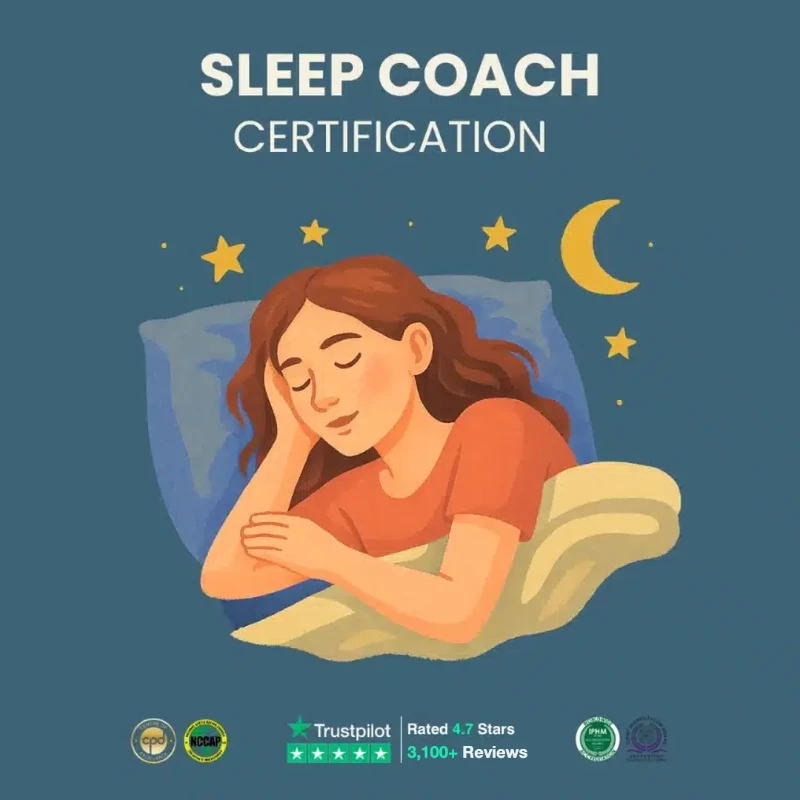
Many Naturalistico programs carry recognition from bodies such as IPHM, CMA, and CPD, and learners often highlight the blend of evidence-informed content, practical templates, and kind community in their reviews.
As Matthew Walker reminds us, “The best bridge between despair and hope is a good night’s sleep.” Build that bridge with humane metrics, one session at a time.
Train as a Sleep Coach
Apply these metrics confidently with client-centered structure in Naturalistico’s Sleep Coach course.
Explore the Sleep Coach →