Many solar plexus teachings lean heavily on color and archetype, yet Manipura can still feel oddly hard to locate in real experience. People understand the themes of will, confidence, and direction, but when attention lands in the upper abdomen, the sensations can feel vague, intense, or difficult to name.
A steadier path is body-first. Start with what can be directly sensed: breath movement, temperature, pressure, and rhythm. Then add imagery and intention as optional layers. This approach stays respectful to tradition while making the guidance practical, repeatable, and easier to adapt to different nervous systems.
Key Takeaway: Solar plexus chakra work becomes more dependable when it is guided through a whole-body scan that returns to the upper abdomen again and again. Place Manipura clearly in the body, lead with sensation, use breath and pacing to support steadiness, and treat imagery and affirmations as optional rather than essential. Over time, short, consistent practice can help people relate to this area with more clarity and less reactivity.
Solar Plexus Chakra Meaning and Location in the Body
Manipura is traditionally understood as a center of self-trust, will, and purposeful action. It is part of a long-standing yogic map that many practitioners still work with as a living practice, not a fixed theory. When it’s approached with care, it becomes a clear meeting point between symbolic language and embodied awareness.
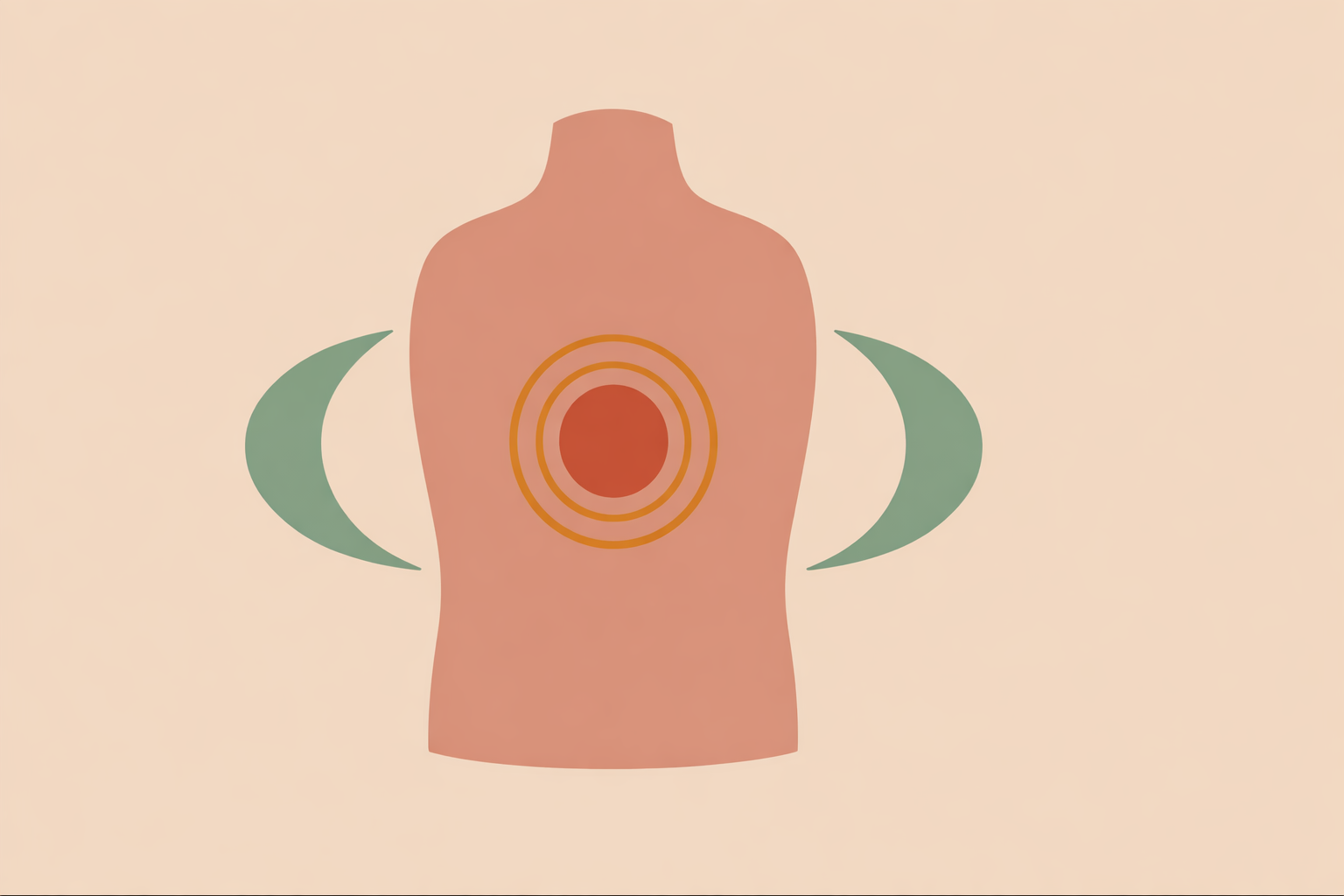
Clear placement helps people feel oriented. Many contemporary guides place the solar plexus above the navel and below the ribs, often described as the upper belly where breath and effort are easy to notice.
That same region is commonly paired with warmth and sun-like qualities. Many modern teachings use yellow imagery and breath-focused attention as natural entry points, which can help an abstract “chakra concept” become something trackable in the body.
Try language that points to experience, not performance: notice the space above the navel and under the ribs. Feel what the breath does there. Does it seem warm, guarded, spacious, fluttery, heavy, or neutral?
Why Body Scan Meditation Works Well for Solar Plexus Practice
A body scan gives structure to Manipura practice. Rather than holding attention in one potentially charged area for too long, awareness moves through the whole body and returns to the upper abdomen at steady intervals. That rhythm brings context, pacing, and choice.
It also builds skill in noticing internal signals. An eight-week daily practice was associated with improved interoceptive accuracy and greater confidence in sensing what’s happening inside. For solar plexus work, that supports a valuable shift: the upper abdomen becomes a place to listen.
This matters because the solar plexus region often speaks loudly in everyday life. Butterflies before a hard conversation, tightening around uncertainty, or warmth when something feels aligned are familiar examples. A scan frames these as meaningful signals that can be noticed, mapped, and met with steadiness.
Practically, the session doesn’t need to stay on Manipura the whole time. Often it lands better when you include the upper abdomen within a broader scan, revisit briefly, then widen awareness again, much like a simple chakra session plan keeps attention moving without losing focus.
Preparing Posture, Breath, and Safety for Solar Plexus Focus
Before guiding attention into the upper abdomen, establish a steady container. A comfortable seated or reclined position is enough. Invite a soft gaze or closed eyes, and take a few unhurried breaths before bringing in any chakra-specific language.
Because Manipura is commonly placed near the diaphragm, breath naturally supports the work. Let the inhale widen the ribcage and upper belly gently, and let the exhale soften effort. If deeper breathing helps, use it lightly; if it doesn’t, keep it natural.
- Choose a position the body can sustain comfortably for a few minutes.
- Notice the rise and fall of breath in the upper abdomen without forcing it.
- If the area feels too direct, widen attention to the whole torso, hands, or feet.
- Use simple verbs such as notice, allow, observe, and return.
This is especially important when the upper abdomen already feels activated. Choice supports agency: the person should feel free to narrow focus, widen focus, pause, or shift anchors at any point.
How to Guide a Whole-Body Scan with a Solar Plexus Anchor
Use the solar plexus as a home base rather than a single target. Settle first, visit the upper abdomen briefly, then continue through the body. As you move through larger regions, return to Manipura for a breath or two before moving on.
A simple sequence:
- Settle posture and breath.
- Spend one minute in the upper abdomen.
- Move attention to feet and legs.
- Travel through pelvis, abdomen, chest, shoulders, arms, neck, and head.
- Return briefly to the solar plexus between larger regions.
- Close with whole-body awareness.
This structure keeps Manipura central without creating strain. It also helps people compare the solar plexus with other regions, which often makes sensation easier to recognize and describe.
Each time you return to the upper abdomen, slow down. Invite awareness of ribs, diaphragm, and the tissue above the navel. Stay close to what is present: pulsing, tightness, warmth, movement, hollowness, fullness, or very little at all. Neutral experience still gives useful information.
Solar Plexus Cueing: Sensation First, Imagery Second
The strongest cueing starts with plain sensory language. Lead with what can be noticed directly, so there’s less pressure to have a “correct” chakra experience.
- Where does the sensation begin and end?
- Does the area feel warm, cool, dense, open, tight, or neutral?
- What changes on the inhale and exhale?
- Is the sensation steady, pulsing, shifting, or faint?
Example lines:
- Sense the shape of the upper abdomen from the inside.
- Notice what is here without trying to improve it.
- If words help, quietly name the sensation: warmth, flutter, pressure, stillness.
Once sensation is clear enough, imagery can be layered in if it suits the person. Many chakra lineages and modern guides associate the solar plexus with a small inner sun and golden or yellow light. You might offer: imagine a steady golden glow beneath the ribs, spreading gently with the breath.
Affirmations often land best after contact with sensation, so the words come from experience rather than covering it. Keep them short:
- steady and clear
- I can notice and return
- I trust my inner direction
When Anxiety or Intensity Shows Up in the Solar Plexus
Activation in this area is common. The aim is not to remove it immediately, but to stay in relationship with it without becoming flooded. Calm naming can help: tightness, fluttering, pressure, heat, gripping.
Then guide curiosity:
- Where is the strongest part of the sensation?
- What is its shape or boundary?
- Is it still, moving, expanding, or easing?
- What happens if you stay for just one more breath?
Keep the window short. Three breaths is often enough. Then widen attention to the whole torso, feet, or sounds in the room. This touch-and-return rhythm keeps the practice workable.
A practical rescue sequence:
- Name the sensation.
- Map its edges.
- Stay for one to three easy breaths.
- Widen to a more neutral anchor.
- Return only if it still feels manageable.
If supportive touch is appropriate in your setting, one hand over the upper abdomen can help the breath feel easier to track and the area less abstract.
Adapting Solar Plexus Body Scans for Different People
Not everyone benefits from the same depth of focus. Some people do best with brief, indirect contact with the upper abdomen, especially if that area already carries a lot of charge. Shorten the focus, alternate with neutral anchors, and keep the option to widen attention available throughout.
This approach can be especially supportive for people with digestive sensitivity, strong stress patterns in the belly, or pregnancy-related discomfort. Instead of insisting on a pinpoint center, widen the field to include the ribcage or whole torso while keeping Manipura’s themes of steadiness, agency, and direction in the background.
Gentle adaptations:
- 10 to 30 seconds at the solar plexus, then shift to hands or feet.
- Two breaths in the upper abdomen, four breaths in a neutral area.
- Use ribcage awareness instead of direct navel-centered cueing.
- Replace imagery with simple temperature or movement cues.
The work doesn’t need to be intense to be meaningful. Subtle and repeatable often builds the most trust over time, whether it sits inside a broader energy healing practice or a single focused session.
What to Expect Over Time
Solar plexus practice is usually cumulative and responds best to consistency. Many structured programs use daily sessions around 20 minutes over roughly eight weeks and report shifts in body awareness and anxiety. In one such program, daily guided practice was linked to improved confidence in sensing internal experience.
Progress rarely looks dramatic session-to-session. It often shows up as staying with the upper abdomen a little longer, noticing sensation sooner, or regaining steadiness more quickly when intensity rises.
Simple tracking helps:
- How long could I stay with the area comfortably?
- What sensations were easiest to notice?
- Did returning to the solar plexus feel harder, easier, or unchanged?
- What cue helped most today: breath, mapping, imagery, or widening out?
Those small markers point to the deeper shift: not only what is felt, but how a person relates to what is felt.
Bringing Solar Plexus Chakra Work into Ongoing Practice
Manipura work becomes most useful when it’s woven into a regular rhythm rather than saved for high-pressure moments. A brief return to the upper abdomen within an existing body scan is often enough: one to two minutes at the beginning, a few breaths midway, and a final check-in at the end.
Over time, the solar plexus moves from abstraction into lived experience. The symbolism stays meaningful, but it’s carried by direct contact with breath, sensation, pacing, and choice.
Close simply. Let the person leave with one clear impression, such as a steadier breath, a clearer internal map, or a phrase that feels honest. With that kind of grounded repetition, solar plexus chakra practice stays rooted in tradition while remaining practical and supportive, especially within chakra energy healing work.
Master Chakra Energy Healing
Deepen your Manipura practice with the Chakra Energy Healing Certification and learn structured, sensation-led chakra guidance.
Explore Chakra Energy Healing →