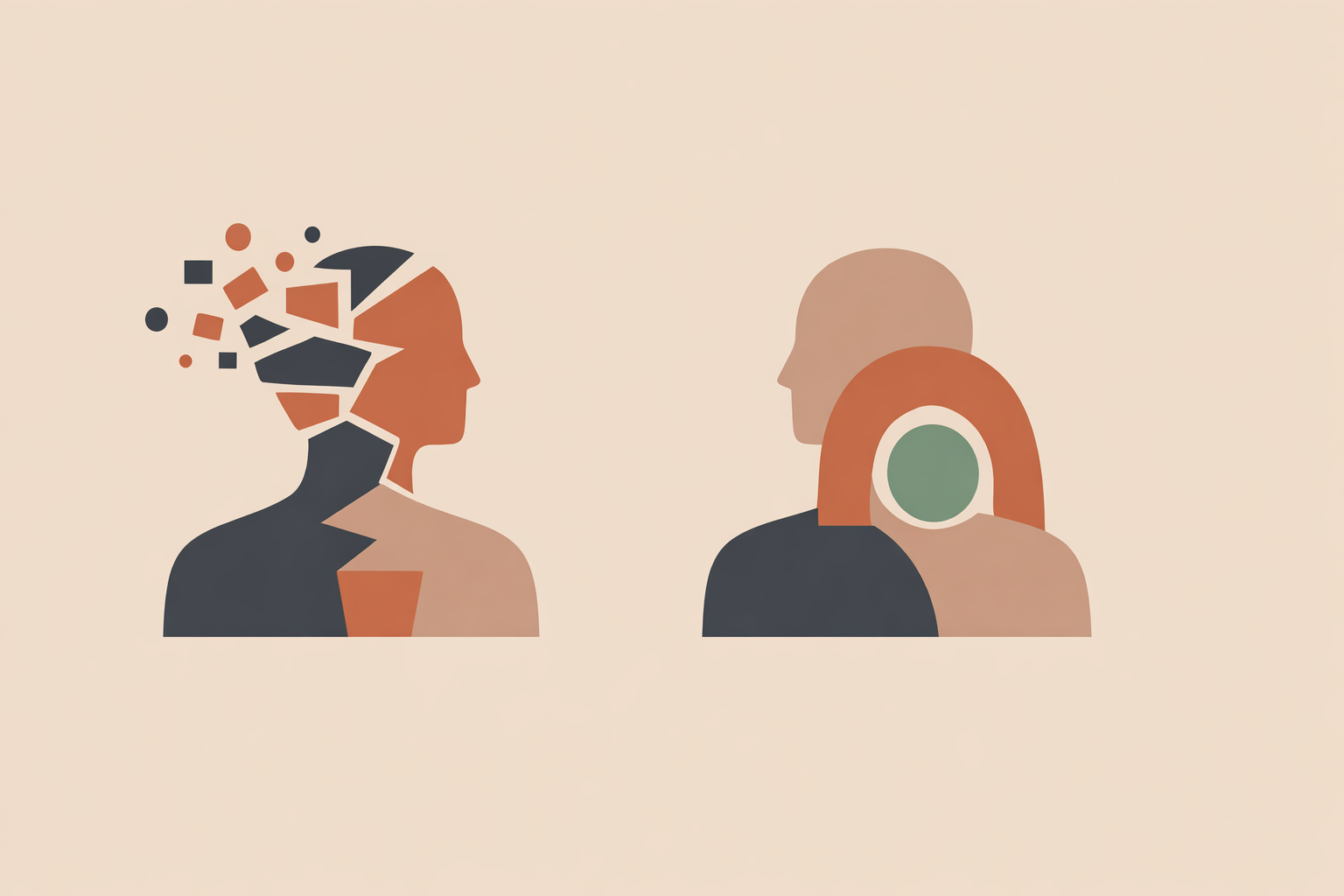
Most stress-management practitioners recognize the familiar moment: someone tries a standard 10-minute body scan and ends up feeling more wired, or a plan vanishes as soon as the week gets busy. Yet the intake often flagged the friction points from the start—racing thoughts at night, jaw tension by afternoon, no private space at lunch, or a clear preference for eyes-open practice. When the context is personal but the practice is generic, follow-through drops and discomfort becomes more likely.
A better starting point is to treat the intake as guidance for selecting the practice itself: the format, posture, anchor (what attention rests on), duration, and setting. Read the form and first conversation as a pattern map, then build a small practice that fits the person’s actual life.
Key Takeaway: Personalized mindfulness begins with fit. A good intake helps you choose a realistic starting practice, shape it around preferences and constraints, adjust quickly when something feels off, and track meaningful change rather than simply counting minutes.
Why generic mindfulness often misses what intake already reveals
Generic mindfulness scripts flatten real differences. A thoughtful intake already contains the details that matter most: how stress shows up, when it peaks, what the person wants to shift, and which conditions make practice easier or harder.
Modern research also supports what traditional teachers have practiced for centuries: results depend on the person and the setting. Reviews note that outcomes vary across individuals and contexts, and they also describe adverse effects such as panic, traumatic reexperiencing, and dissociative symptoms in some cases. That’s a strong reminder to avoid “one script fits all,” even when the script is popular.
Fit is often the difference-maker. Someone with racing thoughts at 10 p.m., limited privacy, and a dislike of closed-eye practice may do far better with five minutes of eyes-open sound awareness than with a longer body scan. The win is relevance, not complexity.
Traditional contemplative lineages have long emphasized matching practice to the person, the season of life, and the immediate need. Intake-led personalization continues that same intelligent, grounded approach.
Turn intake into a living story, not a label
A strong intake does more than collect facts. It helps you understand the person’s stress story: what’s pressuring them, how it lands in the body and mind, what has helped even a little, and what “better” would look like this week.
It helps to separate the source of pressure from the felt pattern of pressure. Workload, money strain, relationship tension, family demands, and digital overload are different from jaw clenching, restlessness, irritability, low energy, or trouble switching off. The first tells you what’s happening around the person; the second tells you what kind of practice is most likely to land well.
Simple measures can still help, but they shouldn’t replace a person’s own language. Words like “tight,” “foggy,” “buzzing,” “shut down,” and “on edge” often point more clearly toward a workable practice than a score alone.
Questions like these tend to open the conversation naturally:
- Where do you notice stress first?
- At what time of day does it build most?
- What usually makes it worse?
- What helps, even briefly?
- What would count as a small win this week?
If someone says, “I’m snappy by 4 p.m., doom-scrolling at night, and my shoulders are constantly tight,” you already have a pattern to work with. You’re no longer planning for “high stress”; you’re supporting a real, specific rhythm.
Design an intake that invites honest preferences and real-life constraints
An effective intake is clear, respectful, and minimal. Ask only for what you’ll actually use, explain why you’re asking, clarify how information is stored, and make it easy to skip any question.
Invite preferences directly instead of assuming everyone will adapt to the same style. Some people connect best with breath awareness; others engage more easily with external sound, walking, or sensory grounding. Some want quiet structure; others do better with movement or everyday anchors.
Useful areas to explore include:
- Preferred practice styles
- Time available on ordinary days
- Privacy and noise levels
- Work and family rhythms
- Physical comfort with sitting still
- Preference for eyes open or closed
- Relationship to spiritual language or symbolism
- Whether audio guidance feels supportive or distracting
This is also where cultural care matters. If you draw from an ancestral tradition, name it accurately, keep its roots visible, and avoid stripping a practice of meaning while presenting it as universal. Respectful adaptation is a craft, and it starts with honesty about origins.
Strengths-based prompts keep the intake grounded in what’s already working. Ask where awareness already appears naturally: while making tea, walking to the car, feeding the dog, or waiting for a meeting to start. These are often the easiest “entry points” for consistent practice.
Use intake to choose the first practice, duration, and context
The first plan doesn’t need to be ambitious. It needs to be workable.
Start with the smallest practice that still feels meaningful. Research suggests the amount of practice needed for behavior change remains inconclusive, so time-on-cushion is not a reliable target by itself. In coaching, a short practice repeated consistently usually produces clearer feedback than a perfect plan that rarely happens.
Personalization research in digital stress support describes tailoring by adjusting content, order, guidance, timing, and frequency based on individual information. That logic transfers cleanly to mindfulness coaching: use the intake to shape a first experiment that the person can actually run in real life.
You might loosely match patterns like this:
- Racing thoughts: breath counting or sound awareness
- Body tension: body scan or gentle mindful movement
- Low energy: standing or walking awareness
- Restlessness: eyes-open practice with an external anchor
- Time pressure: 60- to 120-second pauses linked to transitions
These pairings are practical starting points, not rules. Their job is to improve fit quickly.
A first plan can be very concrete: “For the next 7 days, try 5 minutes of eyes-open sound awareness at 9:50 p.m. in the living room. Use the fan or ambient room sounds as your anchor. If thoughts accelerate, count five out-breaths and return to listening. Note your level of mental buzz before and after on three evenings.”
Choice strengthens commitment. Offering two well-chosen options often beats assigning one, because it keeps the person actively involved and gives you cleaner information about what feels realistic.
When mindfulness feels uncomfortable: stop, adapt, and widen choice
Mindfulness is not always soothing in the moment. Stillness, closed eyes, breath focus, or strong inward attention can sometimes bring up panic, flashback-like responses, dissociation-like experiences, or other intense discomfort.
Reviews describe severe unwanted effects as rare, while also making it clear they can happen. Treat that as a cue to work skillfully, not fearfully.
A simple framework helps:
- Stop: Pause the exercise as soon as distress rises beyond what feels manageable.
- Adapt: Shift the practice. Keep the eyes open, shorten the duration, move to standing or walking, use external sounds, or orient to colors, objects, and contact with the floor.
- Refer: If the person remains unsettled or the experience feels destabilizing, encourage them to seek appropriate support beyond coaching scope.
Trauma-informed mindfulness guidance repeatedly emphasizes choice and individual agency. This matters as much as any technique. When practice starts feeling like something that’s happening to a person, widen options and return control to them.
In real sessions, that might mean swapping breath focus for a slow hallway walk while naming colors and shapes, or replacing seated silence with a brief sensory check-in during an everyday task. The aim is steadiness and usefulness, not endurance.
Track meaningful change, not just minutes completed
Minutes are easy to count, but they don’t reliably capture value. What matters is whether practice changes something the person actually cares about: reactivity, concentration, recovery time, steadiness, sleep transition, or the felt sense of having more choice under pressure.
Light-touch tracking works well when it stays close to lived experience. Pair a simple number with a short note.
- Stress level before and after practice
- How quickly they recovered after a difficult moment
- Whether the practice fit their day
- What felt supportive
- What made practice harder
A brief daily check-in often reveals what a one-time intake can’t: which evenings are hardest, which transitions create the most friction, or which format consistently feels like too much.
Try a gentle review cycle:
- Clarify the goal and the main constraints
- Choose one low-burden practice
- Try it for 5 to 7 days
- Review both outcomes and lived experience
- Change one or two variables at a time
This reframes “adherence” in a kinder, more accurate way. If bedtime shifted, the audio felt too long, or there was no quiet space at lunch, that isn’t failure. It’s design information for the next iteration.
Scale personalization with digital tools without losing the human element
Personalization scales best when it stays rooted in choice, clarity, and restraint. Digital well-being tools often tailor reminders and recommend different types of content, which can be genuinely helpful when suggestions remain transparent and optional.
People should be able to see what a practice is, why it was suggested, and how to change it easily. Digital support works best when it strengthens agency rather than nudging people into rigid compliance.
Helpful features include:
- Clear labels by style, length, and posture
- Options for eyes-open, movement-based, and audio-light practices
- Captions, transcripts, and low-bandwidth access
- Simple check-ins after each session
- Reminders that can be adjusted or turned off easily
The same principle applies in groups. You can keep a shared theme while offering multiple ways to engage. For a session on transitions, one person might choose a 2-minute standing sensory reset, another a 5-minute seated sound practice, and another a brief walking practice.
Digital support is strongest when it serves the coaching relationship rather than replacing discernment. Clicks and completions show interaction, but they don’t automatically reflect fit or genuine progress.
Personalized mindfulness is a relationship, not a script
When intake becomes a living guide rather than a formality, mindfulness turns practical and respectful. You can explain what’s being tried, why it matches the person’s pattern, what alternatives are available, and when you’ll review it together.
From there, lived experience becomes the strongest signal. The intake offers a starting hypothesis; the week of practice shows what needs adjusting.
Over time, this approach builds more than a routine. It helps people learn how to notice, choose, and adapt for themselves through positive psychology and wellbeing work. As a closing note, keep the safety basics in view: start small, prioritize choice, and adapt quickly if a practice feels destabilizing; when something persists or feels overwhelming, it’s appropriate to encourage support beyond coaching scope.
Train as a mindfulness coach
Build stronger intake-led practice design with the Mindfulness Coach Certification.
Explore Mindfulness Coach Certification →