


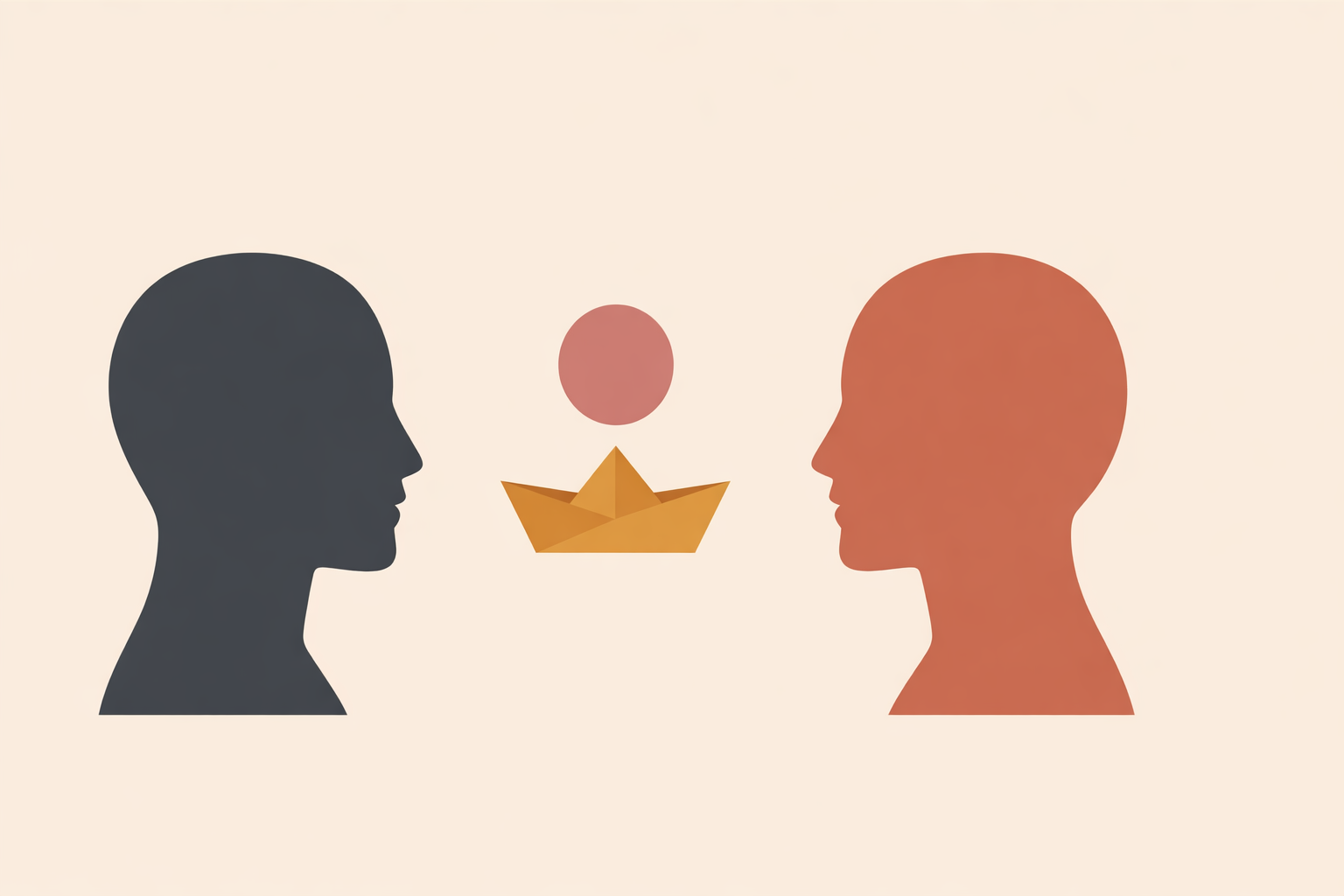
If you’ve led art-based sessions with founders, you’ve probably felt the pull to interpret a drawing on the spot: red as anger, a ladder as scaling, a storm as burnout. Yet the moment you offer your meaning, the energy can shift. The client tightens, the image becomes a test, and the session drifts away from useful choices.
With entrepreneurs especially, symbolism works best when it stays alive and owned by the person who made it. The facilitator’s role is to notice carefully, ask well, and help the client translate what emerges into grounded next steps.
Key Takeaway: Effective art-based work with entrepreneurs treats symbols as client-owned metaphors that support reflection and decision-making without facilitator decoding. A strong process keeps meaning with the maker, separates observation from interpretation, respects cultural and personal context, repairs overreading quickly, and turns insight into one small, practical action.
Use symbolism as a living language
In art life coaching, emerge spontaneously during the making process rather than through careful planning. A founder paints a paper boat in a vast sea and then says, “I didn’t mean to do that.” Often, that’s where the richest material begins.
Rather than treating symbols as a fixed code, it helps to work with them as a living language. personal metaphor tends to open when it’s explored in the moment, in the client’s own words, with room for movement and surprise.
Symbols can function as visual metaphors, carrying layered meaning that words don’t always capture. That’s one reason image-based work can be so effective for founders holding complexity around timing, partnership, visibility, risk, or direction.
Often, the significance of an image clarifies after a pause and some reflection. When someone is invited to describe what they made and what it evokes, the image gets time to “speak” before anyone tries to organize it.
Metaphor also connects inner experience to outer action. Common images like paths, ladders, bridges, seeds, and horizons can carry business relevance, but only when the founder defines the meaning.
For example, a founder paints a horizon with a thin gold line. Instead of deciding what the gold “means,” you ask, “What’s at the far edge for you?” They reply, “A partnership I keep postponing.” You ask, “And what does that gold mean in your venture?” They say, “Reciprocity.” Now the image holds a live business truth, not a borrowed interpretation.
A mini-practice that keeps symbols flexible is title, three words, and a verb. After the artwork is complete, ask the client to title the piece, choose three words it carries, and name a verb it wants. For example: “Lighthouse. Clarity. Reach. Solitude. Signal.” It creates shared language without freezing the symbol into one final meaning.
Stop decoding and invite client-led meaning
The most reliable shift in this work is to stop decoding and start eliciting. Sessions deepen when they support self-discovery rather than facilitator answers. clients interpreting their own artwork supports autonomy and keeps the process collaborative.
This matters because symbols are rarely one-dimensional. A ladder is not always growth. Red is not always anger. A storm is not always collapse. Meaning lives in the maker’s associations, their business context, their season of life, and the emotional tone of the moment.
Methods such as clean questions and symbolic modelling help because they reduce facilitator projection. In this approach, client language leads, and the facilitator follows with genuine curiosity.
- Decoder stance: “The red is clearly anger at your investors.”
- Client-led stance: “What is the red doing here?”
In the second version, the client can answer from direct experience: “It’s heat. It means urgency.” The artwork starts moving again because the meaning remains theirs.
If a facilitator jumps too quickly, people can feel investigated rather than accompanied. Because images are naturally open-ended, there’s a real risk of misinterpretation when one person claims authority over another person’s symbols.
Two prompts you can use immediately:
- “If this symbol could speak, what would it ask for in your business this quarter?”
- “Has this image shown up anywhere else in your life or work?”
Imagine a startup lead sketching a small ladder leaning on a wall. You may feel the urge to label it scaling. Instead, ask, “What kind of ladder is this?” They say, “It’s rickety. DIY.” You ask, “And what wants to happen with that ladder?” They answer, “Replace it with a partnership.” That answer is more actionable than any fast interpretation.
Use a session flow that keeps meaning with the client
A clear structure helps prevent overreading while still moving toward action. One simple flow is make, look, name, link.
- Ground: Begin with a brief settling practice or a prompt such as, “Meet the current season of your business. What shape is it?”
- Make: Invite free creation with simple materials, a thematic drawing, or expressive collage.
- Look: Start with observation, not meaning. Ask what they notice and what it was like to make.
- Name: Invite titles, repeating motifs, key words, emotional tone, or metaphor sentences.
- Link: Connect the image gently to current decisions, patterns, or priorities in the business.
- Close: Ask for one phrase they are taking away and one small next step.
This rhythm works well because description first keeps speculation from taking over too early and supports a steadier conversation.
During the observation phase, staying close to what is visible helps. Attention to formal elements such as line, shape, color, texture, and composition anchors the facilitator in the artwork itself rather than imagined stories about it.
For example, a founder points to thick, dark lines around a central circle. Rather than telling them what it means, you might say, “I notice strong dark lines around the center.” They respond, “Yes, it feels protected.” From there: “Where does that kind of protection belong in your week?” The session stays practical because it grows from observation into client-led meaning, then into action.
Throughout the process, reuse the client’s exact words where you can. If they say “stormy edges,” stay with “stormy edges.” This simple discipline reduces projection and keeps the work honest to their experience.
Respect universal, cultural, and personal symbol layers
Not all symbols operate the same way. Some appear widely across traditions. Some are rooted in a specific cultural context. Others are deeply personal and meaningful only within one person’s history. Strong practice comes from recognizing which layer you’re in.
Broadly speaking, symbol layers can be universal, cultural, or personal. The personal layer is usually the most accessible in session because you can explore it directly with the maker.
This matters because so-called universal symbols are never fully universal in lived experience. White, for example, may suggest grief, purity, distance, or celebration depending on context. An owl may signal wisdom to one person and warning to another.
When cultural imagery appears, the facilitator’s job is to avoid flattening it into a generic meaning. Best practice includes avoiding imposition, being mindful of sacred or taboo imagery, and seeking consultation when working with traditions you don’t know well.
A practical example: a founder from Lagos paints a coiled snake beside a new product name. You may be tempted to call it transformation. Instead, ask, “What kind of snake is this in your world of work?” They reply, “A guardian. It means don’t rush the launch.” The image now supports timing and pacing, rooted in their own meaning.
This same care applies to mandalas, ancestral motifs, spiritual icons, and even brand symbols. A logo sketch may look simple on the surface, but it can still carry vows, values, and memory. Ask what the symbol stands for in their language, and if they prefer not to explain it, respect that boundary.
You can make the frame explicit with a short agreement:
- “You’re welcome to include symbols that matter to you.”
- “I won’t assign meanings to cultural or sacred imagery.”
- “We’ll explore significance in your words, and you can keep any symbol private if you choose.”
Catch overreading early and repair in the moment
Even experienced practitioners overreach sometimes. What matters is noticing quickly and repairing cleanly.
Early or rigid interpretations can trigger frustration, withdrawal, or a sudden drop in engagement. When the client’s energy shifts like that, it’s often a sign the session has moved from exploration into being “read.”
When it happens, the most useful move is straightforward: step back, name the misstep, and return authority to the client.
Useful repair phrases include:
- “I think I jumped ahead. Let’s slow down.”
- “I put words on it that may not be yours. What does this image mean to you right now?”
- “If my comment doesn’t fit, leave it aside. Your meaning leads here.”
- “How would you describe this symbol in your own words?”
A brief repair can change the whole trajectory of the session. Imagine you say, “This storm looks like burnout,” and the client goes quiet. You pause and say, “I may have gone too far there. How would you describe the storm?” They answer, “It’s not exhaustion. It’s excitement. Something is moving in.” The tension lifts, and the work becomes collaborative again.
It also helps to reduce the likelihood of overreading from the start. clear intention and consent set a respectful tone. In practice, that can sound like: “I won’t read you. We’ll explore what appears together, and you decide what feels meaningful to share.”
Turn symbols into grounded action without fixing their meaning
The point of symbolic work is insight that supports motion. The skill is translating the image into action while leaving the symbol free to evolve.
Visual practices such as collage shifts can help clients notice patterns, priorities, tensions, and desires over time. Vision boards and expressive collage work best when the client defines what each cluster, absence, or contrast means for them.
Journaling alongside images can deepen the process, whether through art journaling or brief reflective notes. Lines like “This mountain feels like…” or “The blue here is…” help clients develop their own metaphor language rather than borrowing an outside interpretive system.
Many facilitators use a simple loop:
- Map what is here
- Make the image
- Narrate what it means
- Choose one action
- Create a cue
The cue matters because it carries the image into daily life. After drawing a seed in dry soil, a solo founder might say, “The seed wants shade and regular water.” One action could be: “Block 15 minutes after lunch to message one potential collaborator.” One cue could be a seed emoji in the calendar title. The action stays small and clear, while the symbol keeps its depth.
Mind maps can also help unpack a central symbol. Place the image in the middle, then branch outward into qualities, tensions, and possible moves. If the central symbol is “lighthouse,” branches might include signal, stillness, reach, and solitude, followed by actions such as refining a message, reducing noise, or contacting a key audience.
When a client is working inside a larger metaphor landscape, stay within that landscape. If the business is a garden, ask what needs pruning, feeding, staking, or space. That continuity often builds momentum without forcing the work into rigid labels.
Paying attention to symbols and archetypal imagery can sometimes reveal patterns outside immediate conscious awareness and support more grounded direction for change. Keep the pace steady, and help the client notice how the pattern shows up in their work now.
A useful closing question is: “What is the smallest next step that fits this image, takes less than 20 minutes, and can begin within the next 72 hours?”
Using symbolism with entrepreneurs without overreading
Symbolism gives entrepreneurs language for what can be hard to say directly: timing, identity shifts, appetite for risk, visibility, partnership, or the felt shape of a venture. When that language is treated as living rather than fixed, sessions become clearer and more useful.
The core stance is steady: let the image emerge, start with what’s visible, and let the founder’s words lead the meaning. Respect cultural roots, personal history, and privacy. If you overstep, repair quickly, then return to one grounded experiment at a time.
Handled this way, the artwork doesn’t become a puzzle for the facilitator to solve. It becomes a conversation the client can hear more clearly, and practical movement often follows.
Explore Art Life Coach Certification
Develop client-led symbolism skills further in the Art Life Coach Certification.
Explore Art Life Coach →










