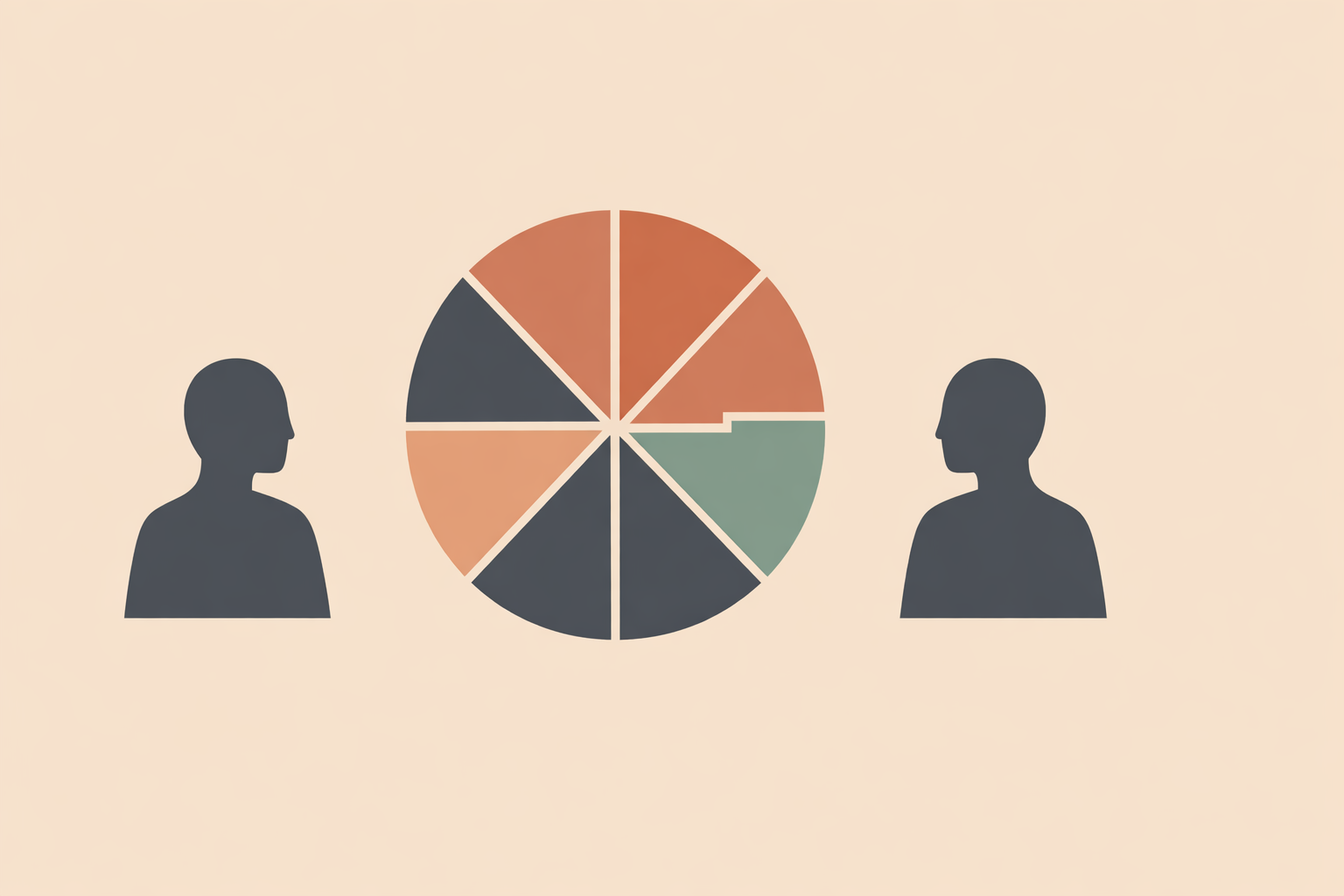
Many coaches introduce a wellness wheel, collect quick ratings, and move on before anything meaningful has time to surface. That can leave you with tidy numbers that don’t quite translate into real insight, especially if the language feels generic or out of step with what the client truly values.
Used well, an assessment becomes a shared map. It helps clients spot patterns, name what matters, and choose grounded next steps without shame or pressure.
Key Takeaway: Use wellness assessments as shared maps that support reflection and action. Choose a framework that fits the client, explain the purpose clearly, slow the rating process down, turn scores into priorities and small next steps, repeat the assessment at key moments, and respond to very low scores with clear scope and supportive referrals.
Step 1: Use wellness assessments as shared maps
The first shift is to frame the tool as a snapshot of lived experience, not something the client has to “get right.” A wheel or worksheet works best when it’s treated as a map of how life feels in this moment.
Most modern wellness wheels reflect 8 dimensions and invite self-ratings. That design matters: the wheel is built on personal perception, not external judgment.
This approach also aligns with long-held traditional views of balance across many cultures. The words vary, but the principle holds steady: well-being is multi-layered, and when one area is strained, others often feel it too.
A warm reframe changes the tone of the whole session: “This isn’t a test. It’s a way to notice where life feels supported and where it may need more care.” Once you set that tone, lower scores become useful signals rather than “failures.”
That’s why multidimensional assessments are commonly used at intake stage. They reveal patterns that can be hard to see from inside a busy week.
Step 2: Choose a wellness framework that fits the client
Not every client needs the same map. The best framework matches the person’s language, values, and current season of life.
For a broad overview, the eight-dimension wheel is often enough. It gives a quick visual and works well as a broad scan without making the process feel heavy.
Some clients prefer a positive psychology lens. PERMA can fit beautifully here, especially given its cross-cultural validation and the ease of adapting its language to local context.
If a client wants a wider, more practical view, PERMA+4 adds physical health, mindset, environment, and economic realities alongside the original domains.
Others won’t connect with institutional categories at all, and that’s fine. A co-created wheel using the client’s own terms can feel more respectful and more accurate, particularly for clients grounded in ancestral frameworks, seasonal rhythms, or place-based ways of describing balance.
- A client who resonates with PERMA may want to focus on meaning, relationships, and accomplishment.
- A client rooted in seasonal rhythms may prefer to rate energy, grounding, connection, and flow.
- A client who dislikes job-centered language may respond better to categories such as purpose, home life, contribution, and community.
Step 3: Explain the purpose before any scoring begins
A short, human introduction makes the assessment feel collaborative rather than mechanical. Before you ask for numbers, explain what the tool is for and how you’ll use it together.
A simple structure works well:
- Purpose: “We’re using this to notice patterns and choose where support would matter most.”
- Normalise: “Uneven scores are normal. Nobody feels resourced in every area all the time.”
- Consent: “Would you like to take a few minutes to rate each area, then talk through what stands out?”
This preface tends to invite more honest answers, because the client understands the goal is reflection rather than performance.
It also gives you permission to adapt in real time. If a word feels off, too abstract, or culturally mismatched, change it so the tool reflects the client’s actual life.
Step 4: Slow the self-rating process down
Guide the rating process with patience. Many wheels use 0–10 scales, but the number is only useful when it’s paired with context.
Invite a rating, then add a brief reflection. Two questions are often enough:
- What is already supporting this area?
- What would raise it by one point?
A score without reflection stays abstract. A score with context quickly reveals values, constraints, and realistic next steps.
The wheel format also helps clients spot overall patterns at a glance, including that familiar bumpy ride feeling when some areas are thriving and others are thin or strained.
Keep prompts simple and present-tense:
- “What number fits today?”
- “What helps this stay where it is?”
- “What would move it one point higher this week?”
If the client starts to feel overwhelmed, narrow the focus. You can circle the one or two most important domains and leave the rest for another session.
Step 5: Turn scores into priorities and next steps
The debrief is where the work comes alive. The numbers point you toward the story, and the story points you toward action.
A reliable flow looks like this:
- Reflect the pattern: “Work is high, energy is middling, and connection feels low.”
- Ask for meaning: “Which area feels most important to tend first?”
- Shrink the action: “What is one step that would move this from a 3 to a 4?”
Motivational interviewing tools fit naturally here, and MI micro-skills can support the same client-led tone. Importance and confidence rulers help clients name their own reasons for change and choose steps that feel genuinely doable.
You might ask:
- “How important does this feel right now, from 0 to 10?”
- “How confident do you feel about taking one step?”
- “Why that number and not lower?”
- “What would help raise it by one point?”
This keeps the process client-led, with you guiding the structure and the client shaping the direction.
It can also be encouraging to know that well-being domains are often strongly intercorrelated. Supporting one area can create lift in others, especially when the chosen step is small and sustainable.
Step 6: Repeat the assessment across the coaching journey
Assessments work best as a steady rhythm, not a one-off event. Repeating the same map helps clients see their own evolution more clearly.
A simple 11-week flow might look like this:
- Weeks 1–2: complete a full wheel and choose one or two focus domains
- Weeks 5–6: revisit selected domains or use a shorter check-in
- Week 11: reassess and reflect on what has shifted
Many coaching guides recommend a baseline, periodic check-ins, and a closing review, using reassessment to measure outcomes and strengthen reflection.
Even shorter coaching engagements benefit from a beginning snapshot and a clear return point. Consistent tracking plus follow-up assessments helps clients anchor progress and choose what to build next.
Between fuller check-ins, quick micro-reflections keep the map active:
- “How supported did you feel by your evening routine this week?”
- “Where is your energy today compared with last session?”
- “What is one sign that this area is becoming steadier?”
These brief returns often help clients notice growth they would otherwise overlook.
Step 7: Respond carefully when a score is very low
Sometimes the wheel reveals deep strain. In those moments, your role is to stay calm, protect dignity, and respond within clear professional boundaries.
Referral thresholds work best when they’re established early and applied consistently. Ethical guidance notes that referral is indicated when concerns fall outside coaching scope or strongly interfere with day-to-day functioning.
It also helps to think in levels of urgency, so you can decide whether the next step is gentle encouragement toward outside support, near-term follow-up, or immediate action.
Any suicidal thoughts, intense hopelessness, intrusive thoughts, or major changes in sleep or appetite calls for prompt outside support.
Language matters here. Supportive referral guidance recommends neutral language that avoids shame and frames extra support as a caring next step.
A grounded response might sound like this: “I’m hearing that this feels very heavy right now. What you’re describing deserves a level of support beyond what coaching alone is designed to hold. If you’re open to it, I can help you connect with that support.”
If coaching continues alongside outside support, keep sessions practical and gentle. Simple anchors like meals, walks, routines, and check-in structures can still be valuable, as long as your scope stays clear.
Let the assessment become a living conversation
You don’t need a complicated system to make wellness assessments work. One fitting framework, a clear purpose, and a steady debrief can turn a wheel into real momentum.
Over time, scoring fades into the background and pattern recognition takes the lead. The client starts to see where life is asking for attention, what’s already steady, and what kind of support would feel meaningful now within positive psychology and wellbeing practice.
When used with care, a wellness assessment becomes an ongoing conversation about balance, values, and lived reality. The power isn’t in the wheel itself; it’s in the awareness and action the map invites, which sits at the heart of health and wellness coaching.
Train as a Wellness Coach
Apply these assessment strategies in the Health and Wellness Coach Certification to guide clients with clarity and care.
Explore the Certification →