Decoding a client’s dream image can feel efficient: reach for a symbol dictionary, assign a meaning, move the session forward. In practice, it often does the opposite. Universal claims like “red equals anger” or “snakes mean danger” can compress a client’s voice, flatten culture, and push you into authority that does not serve the work. The session narrows, the client hesitates, and meaning starts to feel managed rather than discovered.
Key Takeaway: Dream–art work is strongest when practitioners refuse to decode and instead facilitate client-led meaning-making. A respectful process begins with clear agreements and intention, moves gently from recall into image-making, and stays grounded in description, neutral questions, and choice. Cultural and spiritual associations are welcomed without being generalized, and stronger material is handled through pacing, scope awareness, and appropriate pause or referral when needed.
Why dream imagery in artwork can open deeper insight
Dream imagery often reaches places ordinary conversation can’t. A single image can hold emotion, memory, tension, and possibility in the same frame, which is why it’s such a natural partner for creative exploration.
Existential art-therapy writing describes dream-image work as a shared process of creating and discovering meaning, rather than extracting one “correct” answer. That aligns with long-held traditional understandings too: symbols live inside relationship, story, and lived context, not in a fixed glossary.
Once a dream is shaped into a drawing, collage, clay form, or digital image, people often sense what matters before they can say it clearly. That early, wordless knowing is valuable, and it deserves time.
It also explains why leading can sneak in. When an image feels powerful, it’s tempting to name it quickly. Yet symbols are rarely stable across families, cultures, spiritual lineages, and personal histories. The same snake can mean danger, protection, renewal, or a childhood memory, depending on who is looking.
Artwork works best as an invitation, not a verdict. The practitioner’s role is to keep the image open long enough for meaning to show itself.
Imagine a client painting a dark sea, a red buoy, and a thin band of dawn. If you say, “The red means anger,” you close the image too soon. If you ask, “What, if anything, does that red bring to mind right now?” the image stays alive and the client stays central.
From interpreter to companion: the role that serves the work best
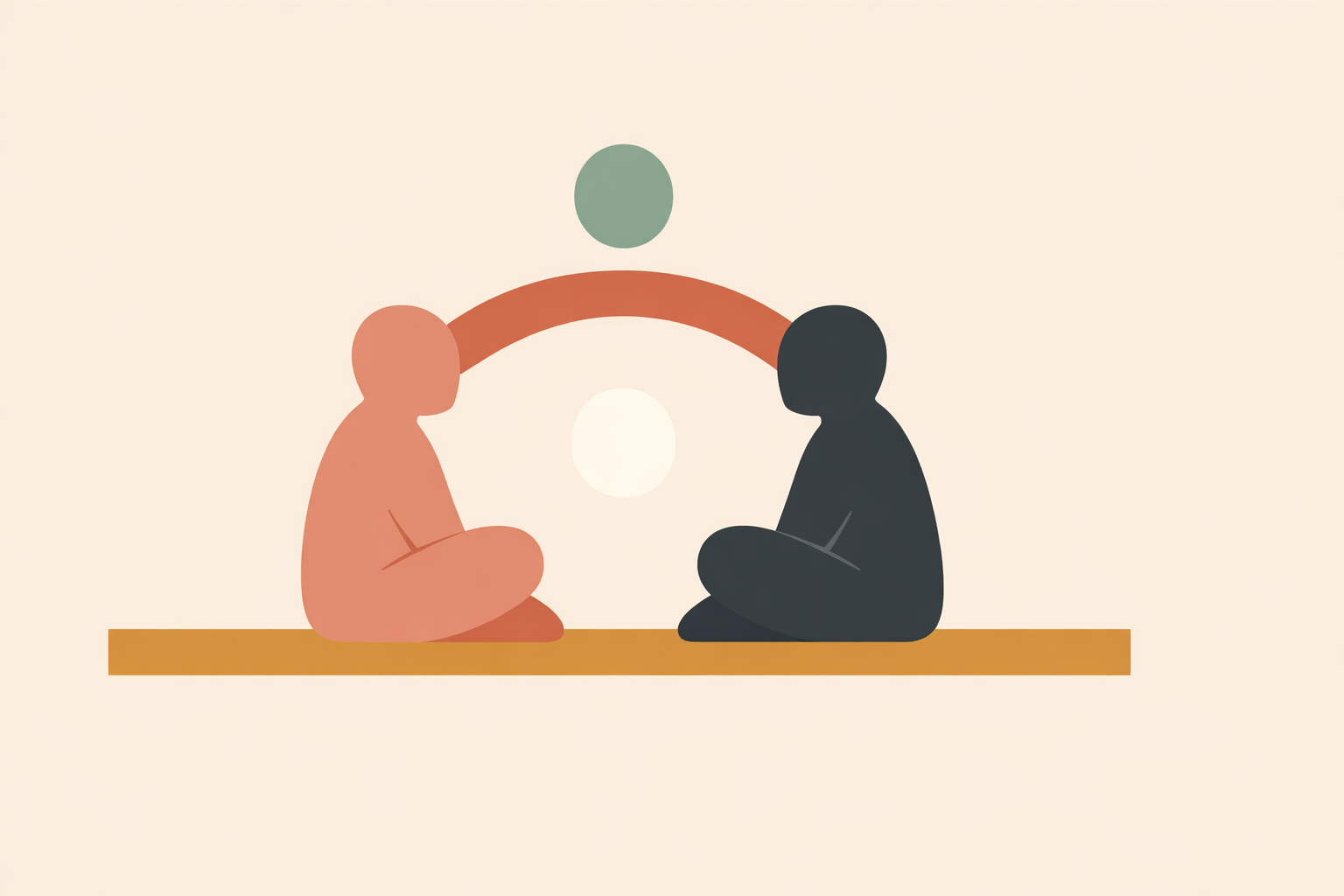
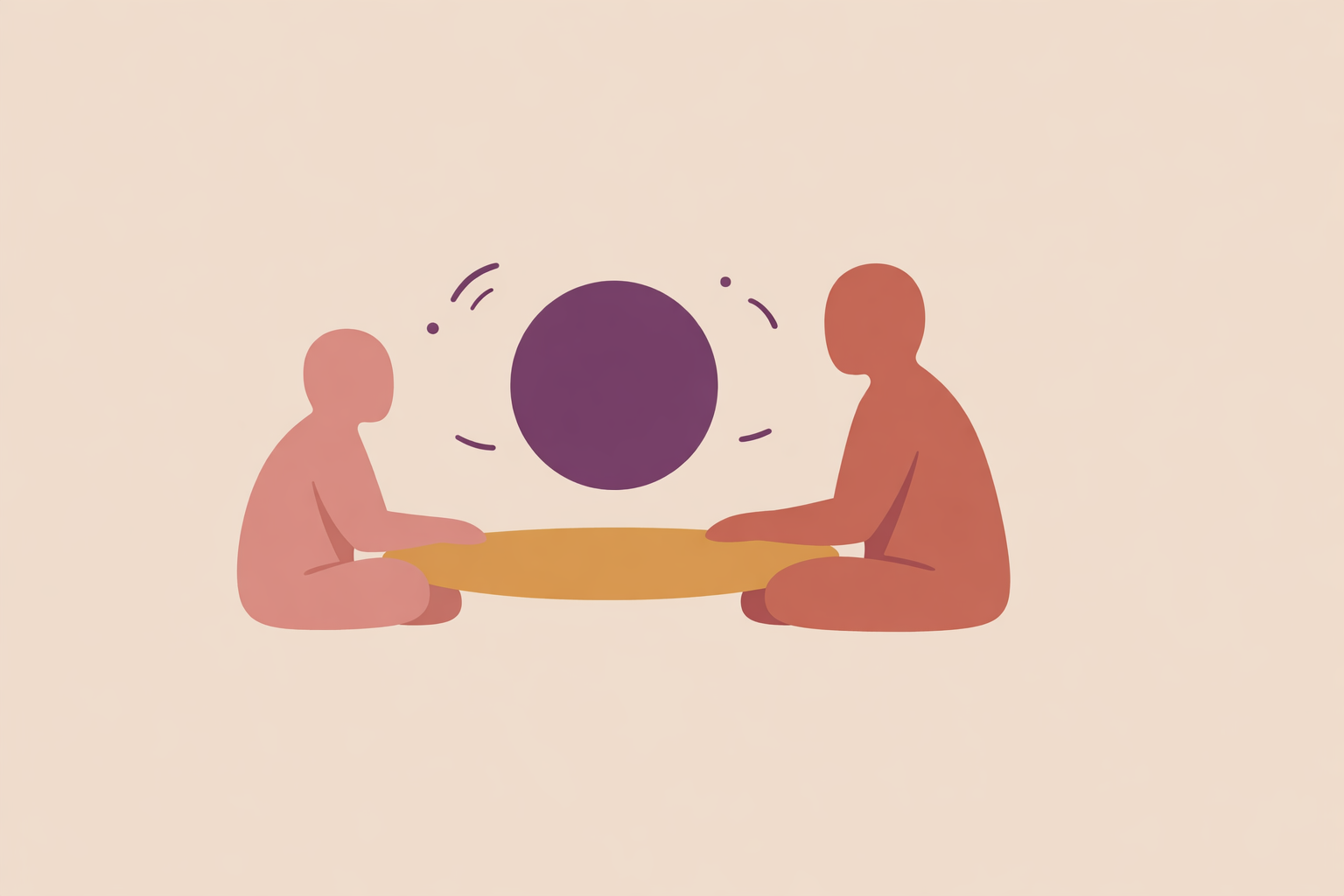
The stance that serves dream–art work best is respectful companionship. The person who made the image stays the authority on meaning, while you support them to notice, reflect, and test associations at their pace. In this approach, meaning develops through dialogue with the image.
This role is active and skilled. It takes discipline to hold back your own interpretations long enough for the client’s language, symbolism, and cultural references to surface naturally.
Helpful opening phrases include:
- “There’s no fixed meaning we need to find here.”
- “If you’d like, we can explore what this image means to you.”
- “Please correct me, disagree, or change direction at any point.”
- “This is your process, and we can go slowly.”
With that tone set, uncertainty becomes workable. A ladder reaching into clouds can stay unclear until the client connects it to a goal, a grief, a family story, a spiritual teaching, or something they’re still feeling out.
Over time, this non-decoding stance builds trust. People tend to share more honestly when they know you won’t collapse their experience into a formula, especially when cultural and ancestral associations are part of what’s present.
Creating a safe container with agreements and intention
Before the first mark is made, build a container that makes choice explicit. In coaching and creative support settings, clarity protects the relationship and the person’s autonomy. Professional ethics guidance supports clear agreements around confidentiality, consent, scope, and expectations.
Useful points to cover at the start include:
- Purpose: why you are working with a dream image today
- Voluntariness: permission to pause, skip, change direction, or stop
- Confidentiality: what is kept private and any relevant limits
- Storage and ownership: what happens to the image, photo, or notes
- Your role: facilitative, non-directive, and not based on universal symbol meanings
- Overwhelm plan: what you will do if the process feels too intense
A simple script can help: “Today we may invite a dream image into art. You decide what to share, what to change, and when to stop. I’ll ask open questions and won’t assign meanings. We can slow down or pause at any point.”
Pair agreements with intention. Ask what they want from the exercise before you begin: clarity, expression, perspective, or just staying with an image that has lingered. Intention keeps the work grounded and helps you avoid opening more than there’s capacity to hold.
In groups, shared agreements are especially important. Keep them plain: speak for yourself, ask before offering ideas, respect cultural meanings, and allow silence.
A simple flow: from dream recall to first image
Dream–art work doesn’t need elaborate steps. A steady sequence is enough: orient, recall, make, describe, reflect.
- Orient: choose whether there is a dream worth working with
- Recall: bring back only what is available right now
- Make: create from the strongest image, feeling, or fragment
- Describe: name what is present before discussing what it means
- Reflect: invite associations, links, or next steps if they arise
Dream memory is often fragmentary: a mood, a few striking images, a sensation on waking. That’s sufficient. The work can begin from what’s here, rather than forcing a complete narrative.
Neutral prompts help:
- “What part of the dream is most alive right now?”
- “If you were to capture one image, what would it be?”
- “What materials feel right for this today?”
- “Would you like to draw the whole scene or just one element?”
Light structure can support confidence without imposing meaning. A client might title the dream, note a few key elements, then choose one to explore visually, much like simple expressive arts coaching tools that help make inner material visible. Often a quick sketch carries plenty.
Brief focal work with dream imagery can be deeply effective when the container is clear and the aim is modest: one image, a few associations, and a grounded takeaway.
How to explore symbols without leading the client
Start with what can actually be seen. Description protects the process from projection. “I notice a small figure near the edge” stays open. “That figure is loneliness” closes it down.
A useful rhythm is Notice–Ask–Offer–Return:
- Notice: “I’m seeing a dark doorway and bright yellow around it.”
- Ask: “What, if anything, comes up when you look at that doorway?”
- Offer: “Would it be alright if I share one possibility to test?”
- Return: “Does that fit, or does something else feel truer?”
This keeps authority where it belongs. Any offering is a “try-on,” and the client gets the final say.
Questions that usually support depth without steering include:
- “What stands out first?”
- “Where do you feel drawn to look?”
- “Does this image connect with anything in your life right now?”
- “Is there a memory, story, or feeling that belongs with this symbol?”
- “If this image could speak in your own words, what might it say?”
Silence is part of the method. Many people need a few quiet seconds to sense what the image stirs, especially when the symbol carries layered personal or cultural meaning.
If words come slowly, mind maps, written associations, or a second quick image can help the process move without pressure. Your job is to support exploration, not to read the art like a codebook.
Honouring cultural, ancestral, and spiritual meanings with care
Dream symbols don’t arise in a vacuum. They can carry family memory, cultural teaching, spiritual significance, community experience, and personal history all at once. Respectful practice welcomes this complexity without trying to own it.
A single question can open the right door: “Is this symbol connected to a family, cultural, or spiritual meaning for you?” If the answer is yes, follow their lead. If it’s no, or they’d rather not share, let that be complete.
Restraint matters. Avoid presenting borrowed symbol systems as universal maps. Avoid using sacred images as decoration or shorthand. Avoid assuming shared heritage means shared meaning.
Often one image holds several truths at once. A river might be a migration story, a current-life transition, a beloved place, and a sensory memory of color. The work becomes richer when you let the layers sit together.
In groups, name the boundary clearly: one person’s meaning belongs to them, and it doesn’t become a rule for everyone else.
When the material is intense: pacing, limits, and when to pause
Some dream images arrive with force. They can bring fear, grief, collapse, pursuit, numbness, or a strong charge that fills the space quickly. When that happens, pacing matters more than insight.
Helpful responses include:
- Slow the process down
- Offer choices about whether to continue, soften, or stop
- Shift from detailed imagery to color, shape, or smaller scale
- Return attention to the room, the breath, and the senses
- Keep the scope narrow rather than opening every thread at once
For people with trauma histories, repeated consent and a focus on stabilization can be especially supportive. In trauma-focused art work, relaxation exercises at the end of the process have been used to help participants regain a sense of control. In a coaching setting, that can look like orienting to the room, pressing feet into the ground, lengthening the exhale, or stepping back from the image before exploring it further.
Hold the line on what an image can and can’t tell you. One drawing is not proof of a life story, a hidden event, or a specific risk. Stay with what the person is actually showing and saying.
Pausing or referring onward is appropriate when distress remains high, grounding isn’t enough, or the concerns in the space fall outside your scope. Coaching guidance recommends referral when needs move beyond coaching competence, with client safety as the priority.
Not a substitute for specialist mental-health support means exactly that: if someone is overwhelmed, dissociated, or communicating immediate danger, pause the imagery work, support regulation, and follow the safety process appropriate to your setting.
Closing the work so insight becomes choice
Dream–art work is best judged by what the person leaves with: steadier clarity, more agency, or a more grounded relationship to what showed up.
Close by returning to the body and the room. A few simple steps are often enough:
- Feel both feet on the floor
- Take one slower exhale
- Look around and name a few present-moment details
- Have a sip of water or stretch
- Decide what should happen with the artwork next
Grounding supports cleaner endings, especially after strong material. In trauma-focused art work, regaining control is treated as an important part of closing well.
From there, invite one small next step if it fits: a journal note, a second image, a boundary to test, a conversation to prepare for, or a question to carry into the week. Sometimes the most meaningful outcome is being able to say, with confidence, “That interpretation fits,” or “It doesn’t.”
Done this way, dream–art work becomes a practice of dignity. The image is met with care and curiosity, and the person who made it gets enough space to hear their own meaning clearly. Over time, that kind of choice-centered approach can support real change in how people relate to inner experience and the decisions that follow.
Train in Art Life Coaching
Build ethical, client-led meaning-making skills with the Art Life Coach Certification.
Explore Art Life Coach →