In multi-species homes, the same lesson comes up again and again: what feels mild for dogs or humans can overwhelm a bird. “Gentle first” is more than a preference here. It’s the baseline that keeps aromatic support respectful, optional, and truly species-aware.
Key Takeaway: Hydrosols are often the gentlest aromatic option for homes with birds because they offer very low-intensity plant exposure compared with essential oils. Even so, the safest approach is still minimal and optional: use true hydrosols, keep spaces well ventilated, avoid active diffusion, watch the bird closely, and be prepared to choose no aromatic input at all.
Why Hydrosols Are Often the First Choice Around Birds
In bird-inclusive homes, intensity is the whole conversation. Hydrosols carry lighter intensity than essential oils, making them a sensible starting place when you want a gentle plant presence without loading the air with scent.
That’s why many practitioners reach for hydrosols first: they keep the home feeling soft and breathable for birds, while still leaving room for plant-based support elsewhere for other animals and people.
Hydrosols also suit an animal-led approach. They make it easier to go slowly, keep exposure brief, and preserve plenty of unscented space. With birds, those details are the practice.
A good outcome often looks uneventful: a tiny amount used well away from the cage, fresh air moving through the space, and a bird that stays calm with no noticeable change.
What a True Hydrosol Is
True hydrosols are the water phase collected during steam distillation. They are not fragrance added to water.
They also have a different chemical “shape” than essential oils. A genuine hydrosol contains trace constituents from the plant—tiny amounts of aromatic molecules along with water-soluble compounds that don’t show up the same way in concentrated oils.
In day-to-day use, hydrosols are generally lower in volatility than essential oils, which helps keep their aromatic footprint softer and less persistent in the air.
For bird homes, this matters because lower concentration usually gives you more room to observe, adjust, and stop early the moment the bird seems uncomfortable.
How to Spot a Bird-Appropriate Hydrosol
Choosing well starts with reading labels. A genuine hydrosol should be free from preservatives, alcohol, and added fragrance.
This matters because many “floral waters” are actually oil mixed into water rather than true distillates. Those are not appropriate for bird-aware use.
A quick quality check:
- Look for one plant name and clear distillate wording.
- Avoid bottles listing alcohol, fragrance, parfum, or preservatives.
- Choose dark packaging when possible.
- Store cold and pay attention to freshness.
- If the scent feels sharp, heavy, or perfumey, step back.
For birds, product quality is part of safety. Even a gentle protocol can fall apart if the bottle isn’t what it claims to be.
Why Birds Are So Sensitive to Airborne Aromas
Birds experience air differently than mammals do. Their lungs and air sacs create an exceptionally efficient airflow pattern, making them highly efficient breathers.
That efficiency also helps explain why birds can be especially sensitive to airborne irritants and volatile substances. A scent level that seems subtle to you can still be too much in a bird’s space.
For this reason, many practitioners avoid active diffusion in any room a bird uses. Hydrosols can still have a role, but the guiding logic stays consistent: keep aromatic load low, keep fresh air high, and preserve distance and choice.
In practice, that usually means no room-wide scenting, no spraying near a perch, and no assumption that “just a short diffusion” is acceptable. With birds, “light enough” is a very low threshold.
When Even Hydrosols May Be Too Much
Hydrosols are gentler, and there are still moments when the best choice is to skip aroma altogether. Skilled practice includes knowing when to hold back.
Higher-caution situations often include birds who are very young, very small, or elderly, as well as birds that seem strained, depleted, or unusually sensitive.
Extra care is also sensible for birds with broader vitality challenges, and for egg-laying or breeding birds where reducing variables is the most respectful option.
Plant choice matters too. Strongly stimulating or heavily resinous plants are often approached more conservatively, even as hydrosols, because a bird’s airways can react at exposure levels that seem modest.
In these moments, scent-free support is often the wiser path. Fresh air, steady routines, good husbandry, and reduced environmental stressors can do more than adding another variable.
How to Use Hydrosols Around Birds as Gently as Possible
If hydrosols are used around birds, the principle is steady and clear: tiny amounts, brief exposure, strong ventilation, and full freedom to opt out.
Many practitioners keep things very localized and avoid active diffusion. Hydrosols can offer a soft aromatic option elsewhere in the home only when the bird is never trapped in the scented space, a cautious principle shared across animal wellness work.
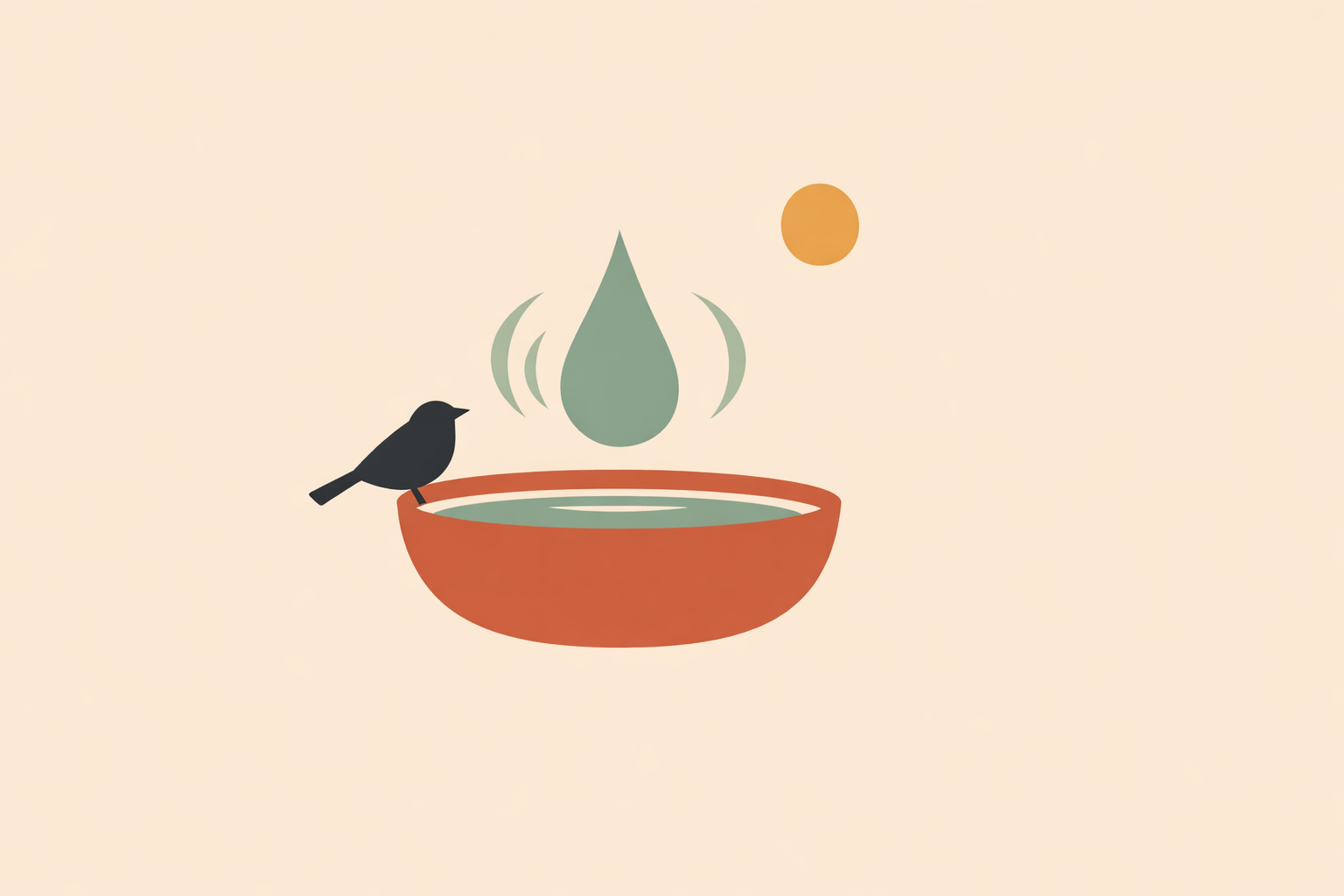
Bath offerings are one of the gentlest ways to explore this. Some practitioners use a very light bath ratio, such as 10% hydrosol and 90% water, offered in a separate dish so the bird can ignore it completely if desired. This is best understood as practitioner guidance rather than a fixed rule.
You can also go smaller. A conservative introduction might look like this:
- Keep the bird’s main area unscented.
- Open a window or improve airflow first.
- Place the hydrosol option at a distance from the cage or perch.
- Offer it for a short window only.
- Remove it immediately if the bird seems hesitant or unsettled.
The goal is never to make the bird tolerate aroma. The goal is to offer a low-intensity option and let the bird’s response lead.
What to Watch For During and After Exposure
Observation is the most reliable safety tool. If a bird shows any sign of strain or discomfort, stop immediately and return the space to neutral air.
Early warning signs can include open-mouth breathing, tail-bobbing, agitation, sudden silence, or repeated attempts to leave the area.
Sometimes the message is quiet: unusual stillness, avoiding a favored perch, or reduced engagement with the environment. Those subtle shifts count.
If you support clients, session notes help turn carefulness into real skill. Record:
- date and time
- hydrosol used
- how much was offered
- where it was placed
- ventilation conditions
- the bird’s response
- whether you would repeat, reduce, or stop
Over time, patterns inside a specific household become clearer, and those patterns are more valuable than forcing one protocol across every species and setup.
Ethics: Choice, Restraint, and Respect for the Bird
Avian aromatic work is a practice of restraint. The most skillful decisions are often the ones that reduce intensity, shorten duration, or choose no aromatic input at all.
Hydrosols have earned their place as a first choice for sensitive species because they allow very low-intensity aromatic exposure. They still deserve the same care you’d bring to any animal aromatherapy support.
Birds don’t need to “participate” to prove a plant is supportive. Refusal is information. Avoidance is information. A neutral response is information too.
Strong practice stays grounded in observation, consent, and simplicity. When there’s doubt, step back and keep the air clean.
Conclusion: Are Hydrosols Gentle Enough for Birds?
Often, yes, when used at a whisper. True hydrosols offer a far softer aromatic profile than essential oils, which is why they’re widely favored as the gentlest aromatic option in bird-aware homes.
The real standard is the method: authentic hydrosols, optional exposure, good ventilation, careful observation, and the confidence to keep things completely scent-free when that’s what the bird seems to need.
Traditional plant practice has always valued attentiveness. Around birds, that attentiveness becomes the whole art.
Train in Animal Aromatherapy
Build bird-aware aromatic decision-making in the Animal Aromatherapy Certification.
Explore Animal Aromatherapy →