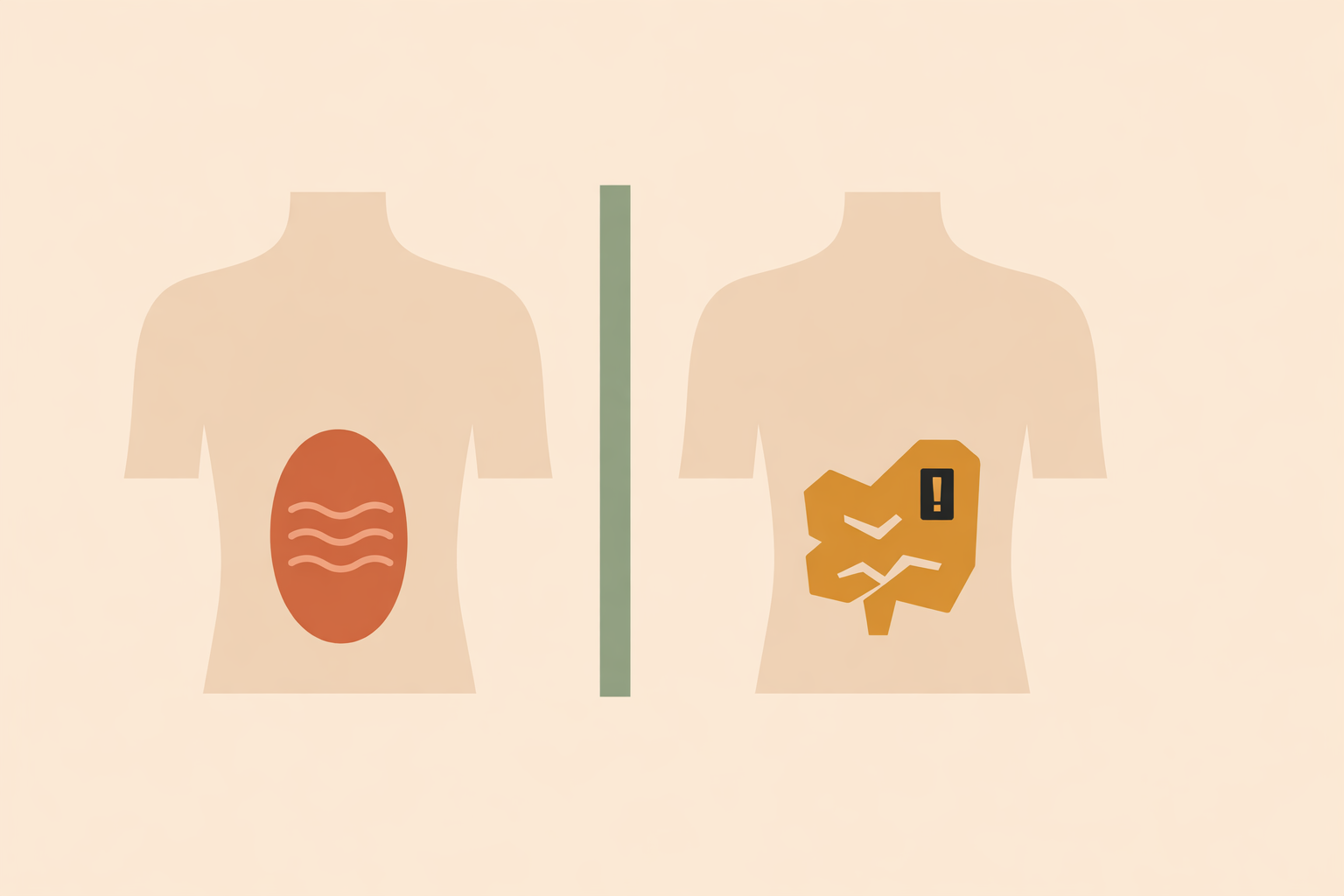
A client arrives with cramps, urgent mornings, and afternoon bloating. A steadying approach often helps: regular meals, gentler textures, and support for the stress–digestion loop. Then one more detail appears—blood in the stool, or weight dropping without trying. The surface pattern may look similar, but the next step is not.
For a gut-focused coach, the difference between IBS and IBD shapes what is appropriate to support, what needs prompt escalation, and how to stay useful and ethical.
Key Takeaway: IBS and IBD can share symptoms, but they do not call for the same next step. IBS often presents as a functional pattern involving bowel habit changes, bloating, and discomfort, while IBD brings a different level of risk and calls for oversight from a clinical team. In practice, a coach can support routine, food tolerance, and nervous-system regulation when the picture is stable and low-risk, while referring promptly when red flags appear—especially bleeding, black stool, unintended weight change, fever, or nighttime symptoms.
IBS vs IBD: why the distinction matters in practice
IBS and IBD can sound similar during intake. Both can involve pain, urgency, diarrhea, or an unpredictable bowel rhythm. The difference is the underlying pattern and the level of risk it can signal.
With IBS, clients commonly report bloating, visible abdominal distension, and incomplete movements. Symptoms often track with real-life pressures and routines that coaches regularly see: stressful weeks, late-night meals, or post-infection phases.
With IBD, overlap can still happen—pain, diarrhea, and urgency can all show up. That’s why a coach’s skill is less about “spotting the label” and more about knowing the red-flag threshold and acting early.
When the story is stable and low-risk, coaching support can be transformative. When warning signs appear, your value is in noticing them, pausing appropriately, and helping the client move toward timely assessment.
How IBS usually shows up in a coaching setting
IBS often comes through as a repeating pattern: bowel changes that wax and wane, discomfort that eases after passing stool, or “good weeks” and “bad weeks” shaped by stress, travel, sleep, meal timing, and food tolerance.
Many clients also carry frustration: routine checks can come back without clear structural findings even while their daily experience is disruptive. A solid coaching space helps them feel taken seriously while you focus on stabilising basics and reducing reactivity.
This is where traditional practice shines: steady rhythm, warm and gentle meals, and fewer abrupt dietary swings. For many people, consistency does more than intensity, especially within nutrition and diet support.
A coaching note might sound like this:
- Pain eases after a fuller bowel movement
- Mornings worse after late dinners
- Raw brassicas increase gas and distension
- Poor sleep tracks with next-day urgency
How IBD changes the picture
When IBD is part of the picture, the same headline symptoms need a different reading. Pain, loose stools, urgency, and bloating can still be present, but context and monitoring matter more than “trial-and-error” adjustments.
Symptom overlap is real: functional-type digestive symptoms can persist for people with IBD even when inflammation is better controlled. That alone is a strong reason not to try to interpret inflammatory activity based on symptoms without broader oversight.
Food tolerance, appetite, energy, and nutrient status can also shift. For coaches, this naturally steers the work toward steadier support around nourishment, hydration, rhythm, and calm decision-making.
Red flags that should change your next step
Some digestive discomfort fits well within coaching. Some doesn’t, and your job is to recognise that quickly.
Pause and encourage prompt assessment when a client reports:
- Visible blood in stool
- Black or tarry stool
- Nighttime diarrhea or waking urgently to pass stool
- Unintended weight loss
- Persistent fever
- Rapidly worsening pain
- Marked exhaustion alongside bowel changes
- Vomiting or signs of dehydration
- A clear shift in bowel pattern later in life
These aren’t details to “work around.” They are reasons to slow down and escalate.
Useful wording can stay calm and direct:
- “Because you’ve noticed blood and night waking with bowel urgency, the most supportive next step is prompt assessment. I can help you organise your notes.”
- “Let’s pause food experiments for now and make sure this is reviewed in the right setting.”
What stays within scope for IBS-type patterns
When red flags are absent and the picture is stable, coaching can focus on the foundations that help the gut feel safer and more predictable.
Start with the basics:
- Consistent meal timing
- Adequate hydration
- Warm or easier-to-digest food textures
- Slower eating and less rushed meals
- Sleep support and steadier daily rhythm
- Simple stress-regulation practices before or after meals
Fiber can also be supportive, especially when introduced gently. Many people tolerate soluble fibers better than coarse, bulky additions. Change one variable at a time so you can actually learn what helps.
If a low-FODMAP approach is being considered, keep it time-boxed and purposeful. Prolonged or aggressive eliminations can increase under-nourishment risk, so it should not drift into open-ended restriction.
Traditional food wisdom fits beautifully here: cooked meals over grazing, soups and stews over dry convenience foods, and herbs such as ginger, fennel, or mint used thoughtfully. The aim is steady support and better tolerance.
How to support clients with IBD without overstepping
If a client already has Crohn’s or ulcerative colitis, your role is practical and person-centred. You’re supporting someone living with fluctuations, fatigue, and changing tolerance over time.
That may include:
- Helping them maintain nourishment during low-energy periods
- Adjusting meal planning to suit fatigue or limited appetite
- Encouraging softer, simpler foods when tolerance is reduced
- Supporting hydration and daily rhythm
- Tracking patterns that may help them communicate clearly with their wider team
- Reducing overwhelm around food, routine, and rest
Some situations call for especially individualised nutrition guidance from the clinical team, particularly during active phases, after procedures, or when there has been significant weight change. In these moments, restriction-heavy plans are rarely the most supportive starting point.
Aggressive eliminations can also intensify food fear. That matters in real life: if someone becomes afraid of eating, the plan is no longer supporting well-being, no matter how “perfect” it looks on paper.
Microbiome testing, probiotics, and other common overreaches
Gut-focused work can drift into overconfidence, especially when tools look precise. Mature coaching keeps the human in front of you, not the printout.
Microbiome or stool testing results can vary with diet, geography, transit time, and lab methods. These tools may raise useful questions, but they rarely offer clean certainty on their own, which is why a sequenced approach to stool testing matters.
Probiotics also deserve discernment. Effects are often strain-specific and context-specific, and “more” is not automatically better. Some clients—especially those with complex digestive histories—may need clinical input before starting them, even when exploring gut health practitioner certification concepts in practice.
A simple intake-to-referral pathway for coaches
A clear process helps you stay calm, consistent, and ethically grounded.
- Step 1: Screen for red flags early.
- Step 2: Clarify whether the client has an established explanation or is self-labelling.
- Step 3: Ask whether symptoms are stable, new, progressive, or waking them at night.
- Step 4: If the picture is low-risk, use a short, time-boxed foundation plan.
- Step 5: Reassess and escalate whenever the story becomes unclear, heavier, or more concerning.
A symptom log can be genuinely helpful when it tracks meals, bowel pattern, urgency, sleep, stress, travel, menstrual cycle, and major routine shifts. The goal is pattern recognition and clearer communication, not “proving” a single cause.
Documentation can also be simple and strong:
- Main concern
- Duration and recent changes
- Any bleeding, night waking, fever, or weight change
- What support has or has not been started
- Whether referral has been advised
Common mistakes to retire
- Assuming all bloating is “just IBS”
- Pushing restrictive food plans too quickly
- Using symptom relief as proof that deeper risk is absent
- Letting food fear grow unchecked
- Treating test results as certainty rather than context
- Recommending probiotics as though all strains do the same thing
- Delaying escalation while trying one more protocol
A steadier reframe is this: your job is to support rhythm, nourishment, observation, and communication. When the pattern points beyond a functional disturbance, your job is to help the client take the next step promptly and clearly.
Closing perspective
The real skill isn’t memorising two labels. It’s recognising when a familiar digestive pattern still sits safely within coaching support, and when it has moved outside that container.
IBS-type presentations often respond well to patient, grounded work: regular meals, gentler textures, nervous-system support, and less reactivity around food. IBD asks for a different posture—steady, practical support that respects complexity and stays closely aligned with the client’s wider team, as it often does in nutrition and diet practice.
Used well, the IBS–IBD distinction becomes part of the integrity of your practice: knowing when to guide, when to pause, and when to help a client seek broader support.
Train in Gut Health
Build safer, clearer client support with the Gut Health Practitioner Certification.
Explore Gut Health Practitioner →