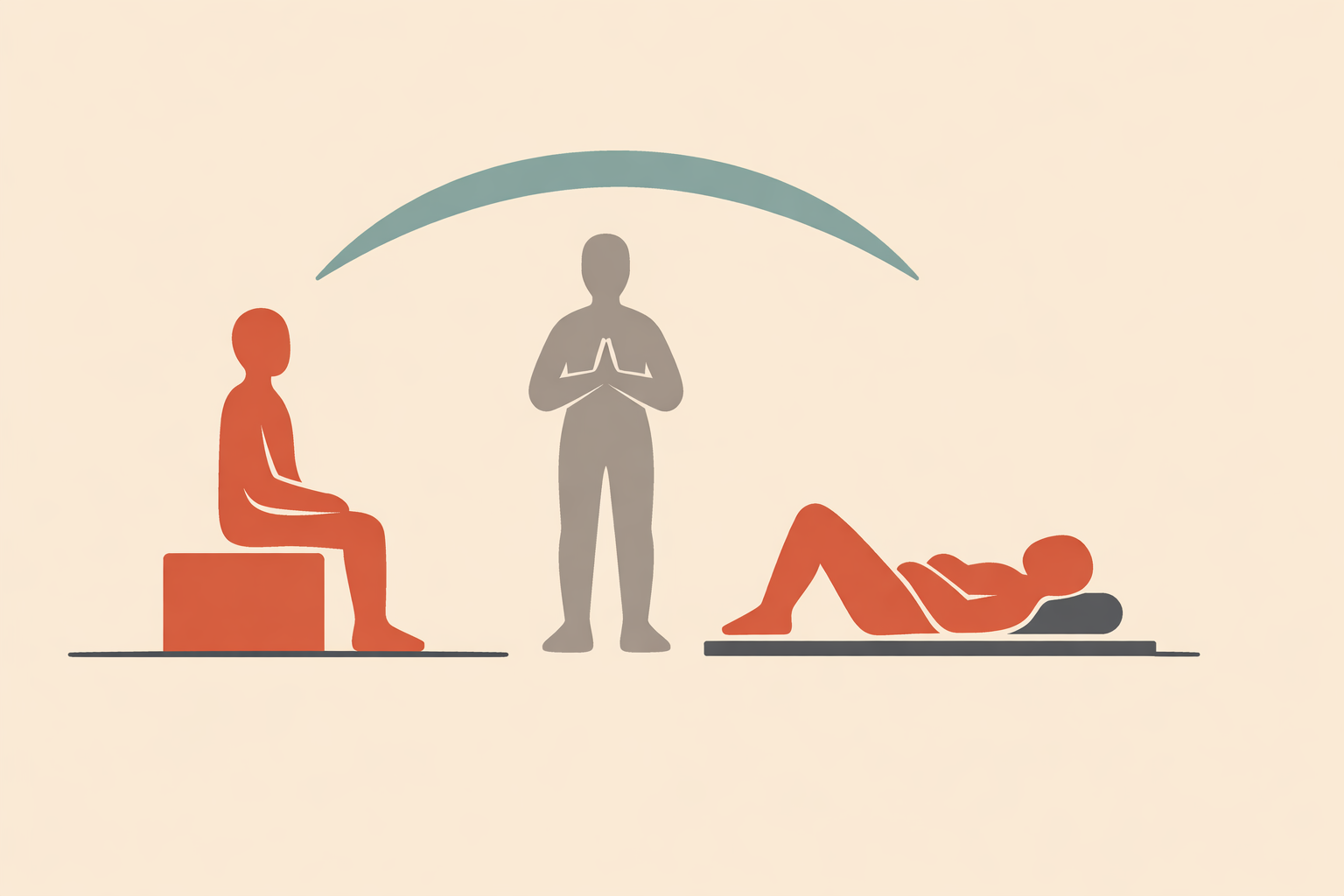
Most meditation coaches eventually meet the same truth: the default cross-legged seat and “be still” script leaves people out. Meditation opens up when posture is treated as a tool, not a test. Chair sitting or walking can be just as legitimate as floor practice.
For some people, sitting cross-legged can trigger sciatica. Others feel compressed in a low chair and notice their breath getting tight. A neurodivergent client may spend more energy trying not to move than actually practicing. A Deaf participant may strain to follow spoken cues without clear visual access. A trauma-exposed client may feel a surge of activation when asked to close their eyes.
Key Takeaway: Inclusive meditation coaching treats posture as a functional support for breath, ease, and steady attention—not a single “correct” pose. When you offer real options for sitting, standing, walking, or lying down (plus props, accessible cueing, and choice around eyes and movement), more people can practice safely and consistently.
Mobility or pain: support the practice, not the performance
When pain or mobility limits are part of the picture, the most skillful posture is usually the one that reduces extra effort. Many people become more present once discomfort is addressed, and research on mindfulness and persistent pain notes that changing position can help people stay engaged with practice.
Chair sitting is often the most sustainable place to begin. A slightly higher seat can support spinal curves, making it easier to stay alert without bracing. Aim for feet that feel grounded (floor or blocks) and hands that can rest where the shoulders naturally soften.
Floor practice can still work beautifully when it’s properly propped. A cushion, bench, or bolster under the seat creates room in the hips and reduces back strain. Think of it like building a stable tripod—height and support often matter more than forcing a deep cross-legged fold.
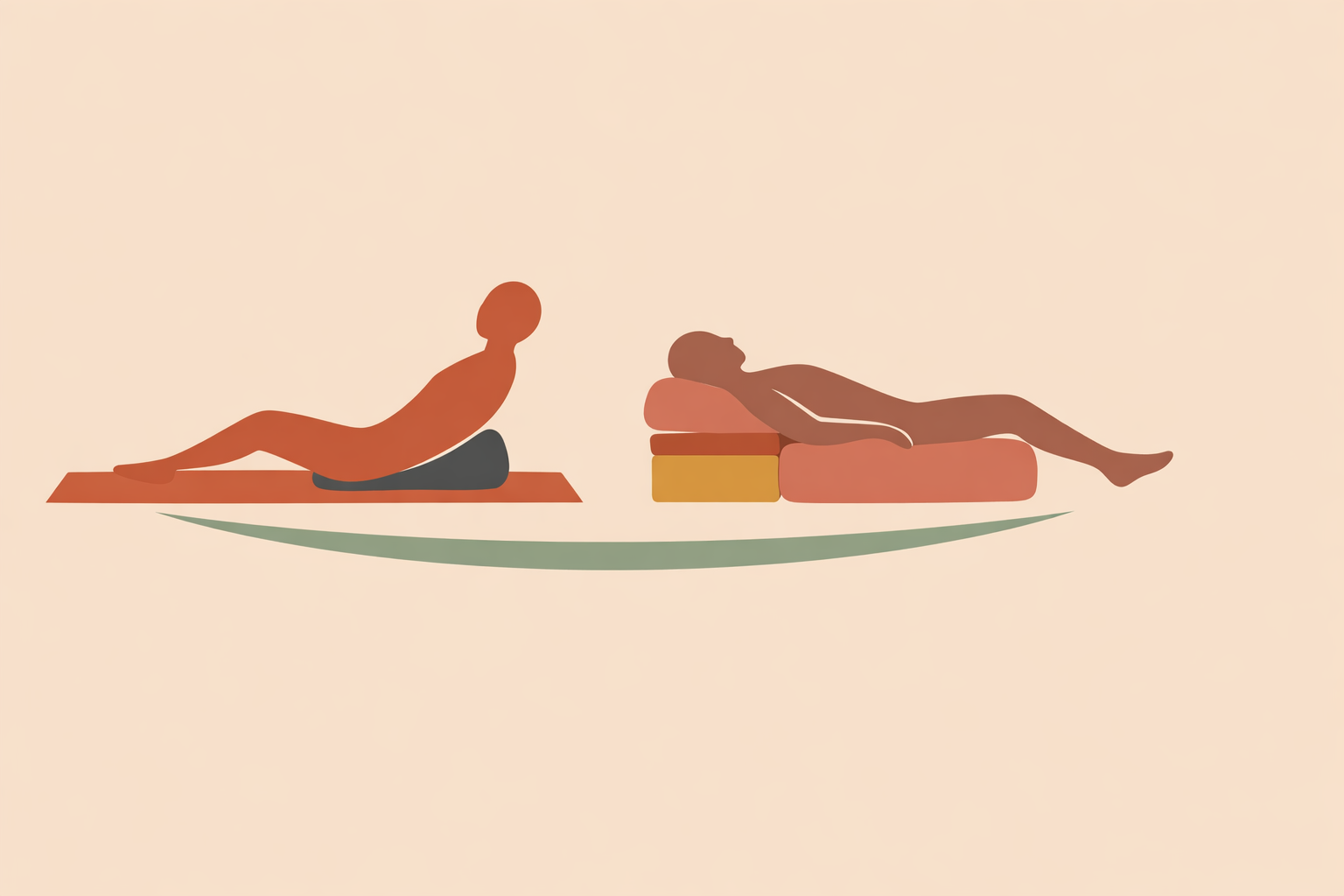
If sitting is too demanding, lying down remains an honorable posture. Supported supine or side-lying positions can reduce load; biomechanics research suggests reduced muscle activity in supported semi-reclined positions, which helps explain why some people settle more fully there. For people living with pain, adapted mindfulness practice can make meditation’s mood benefits more reachable.
- Chair setup: Hips slightly above knees, feet grounded or supported, back relaxed (not rigid), hands resting easily.
- Floor setup: Raise the pelvis, support the knees, and choose enough height that the breath stays unforced.
- Lying-down setup: Semi-reclined, on the back with knees supported, or side-lying with cushions between the legs.
Once the body stops fighting the posture, attention has a real chance to settle.
Larger bodies and diverse proportions: normalize more than one way to sit
One-size-fits-all meditation spaces quietly communicate who belongs. Inclusive coaching corrects that by making chairs, benches, blocks, and generous props part of the standard environment—not a special request.
Many people slump when their knees rise above their hips, and raising the seat can restore a more natural spine and freer breathing. Broader seats, sturdy chairs, foot support, and more space around the body can make practice feel spacious rather than cramped.
The deeper point is cultural as much as physical: every body deserves to be seen as normal in the practice room. When that happens, people are more likely to stay, return, and commit.
- Helpful options: Wider chairs, higher seats, foot blocks, blankets under the thighs, cushions under the hands.
- Floor variations: Elevated seat, one leg extended, shin support, or bench-based kneeling.
- Useful language: “Choose the shape that lets your breath move freely.” “We’re looking for ease and alertness.” “Adjust as needed.”
Here, inclusion is less about “fixing” posture and more about normalizing variation. The coach sets the tone by treating options as ordinary.
Neurodivergent attention and sensory profiles: stillness is not the only doorway
For some people, meditation becomes easier when movement, rhythm, touch, or shorter timing replaces the demand to sit still for long stretches. Essentially, the nervous system finds focus through engagement rather than suppression.
Autistic self-report research describes difficulty sitting and distress during standardized mindfulness practices for some participants. In coaching spaces, that’s not something to “push through”—it’s useful guidance for shaping the practice.
Walking meditation, standing practice, swaying, hand-based rhythm, and tactile anchors can all support steadier attention. Across many traditions, beads have long supported concentration through repetition; a cultural review notes repetitive counting across Hindu, Buddhist, Christian, and Islamic bead practices.
Shorter windows can also be more sustainable than long sits. Brief mindfulness formats have shown stress improvements, reminding us that small, structured practices can still be meaningful.
Even very brief practice can be worthwhile. One study found three minutes of mindfulness breathing supported focus and eased anxious activation. More broadly, mindfulness practice appears to support attention and memory, along with flexibility in how the mind shifts and organizes itself.
- Movement-based options: Slow walking with counted steps, standing with gentle sway, breath-synced hand movement.
- Tactile anchors: Mala beads, a textured stone, or finger counting.
- Micro-practice structures: 2 minutes sitting, 3 minutes walking, 2 minutes sitting; or three rounds of 10 breaths.
When stillness isn’t the starting point, rhythm often becomes the bridge.
Visual, auditory, and communication differences: create multiple access points
Posture is shaped by environment as much as anatomy. If the room setup creates strain or confusion, the practice becomes harder than it needs to be.
For Deaf or hard-of-hearing clients, visual access is central. Accessibility guidance recommends visual cues and clear sightlines to support participation and reduce strain. In group practice, that can look like horseshoe seating, unobstructed views of an interpreter or facilitator, visual timers, written prompts, or simple hand signals for transitions.
For low-vision practitioners, internal anchors often offer the most independence: breath movement, points of contact, temperature, pressure, and sound can all become stable meditation objects. Tactile supports like beads or stones can deepen that independence further.
Inclusive cueing also means offering more than one format for instructions—spoken, written, demonstrated—so people can choose what lands most easily.
- Visual access: Unobstructed sightlines, soft lighting, room orientation that avoids neck strain.
- Non-audio supports: Written cue cards, captions, light or vibration timers, visible transition signals.
- Low-vision anchors: Breath sensation, body scan, touch-based counting, contact with chair, floor, or blanket.
Different sensory routes can lead to the same depth of presence.
High fatigue or trauma-related activation: let safety and energy lead
Some days, the wisest posture is the one that conserves energy and helps the body feel less guarded. Think of it like saving fuel: when the system isn’t busy bracing, there’s more available for attention.
Semi-reclined, side-lying, or back-supported sitting can be especially supportive. Research on seated ergonomics suggests lower disc pressure and less muscular effort with back support compared with unsupported upright sitting.
Eye position matters too. For some trauma-exposed clients, being told to close the eyes can increase activation. Trauma-sensitive guidance recommends eyes open or partially open as an option, and trauma-sensitive yoga research notes that closing eyes can feel triggering for some survivors.
Breath should be invited, never forced. A systematic review suggests slow breathing reduces stress and supports emotional well-being. In real sessions, that usually means comfortable breathing with permission to pause, adjust, or stop at any time.
For fragile energy, shorter supported sessions are often more nourishing than longer upright ones. Five steady minutes can be more sustainable than thirty aspirational ones.
- Supportive options: Semi-reclined with knee support, side-lying body scan, chair sitting with full back support.
- Safety-first cues: Choice around eye position, permission to move, pause, or stop, neutral gaze points in the room.
- Energy-wise timing: Practice in 3- to 5-minute segments with predictable beginnings and endings.
Safety isn’t softness for its own sake. It’s what makes practice repeatable.
Consistency matters more than an “ideal” shape
The strongest posture is the one a person can return to. In practitioner experience, regular, feasible practice supports growth far more than occasional attempts to hold a “perfect” form.
Once the setup matches the body, people tend to practice more often and with less inner resistance—and those small sessions add up. An eight-week mindfulness program has been associated with better sleep and mood. Contemplative practice may also support healthier inflammation patterns and aspects of healthy aging.
Research also suggests meditation is associated with gray-matter changes linked to memory, self-regulation, and emotional balance, and neuroimaging work points to deep brain changes involved in memory and emotional regulation. These findings are best held with humility, yet they echo what traditional lineages have long emphasized: repeated practice shapes experience.
So the practical standard stays clear:
- Honor sitting, standing, walking, and lying down as equally legitimate.
- Choose setups that support breath, grounding, and alertness.
- Offer props before struggle appears.
- Use movement, touch, or short timing when they help attention settle.
- Adapt the room and the cues, not the person.
- Keep choice visible, especially around eyes, pace, and stillness.
Inclusive meditation posture isn’t a side issue. It’s part of good coaching: traditional wisdom brought into real contact with the bodies and nervous systems in front of you, so more people can build a practice they can truly keep and respond, not react.
Coach Inclusive Meditation
Build safer, more adaptable sessions with the Meditation Coach Certification.
Explore Meditation Coach Certification →