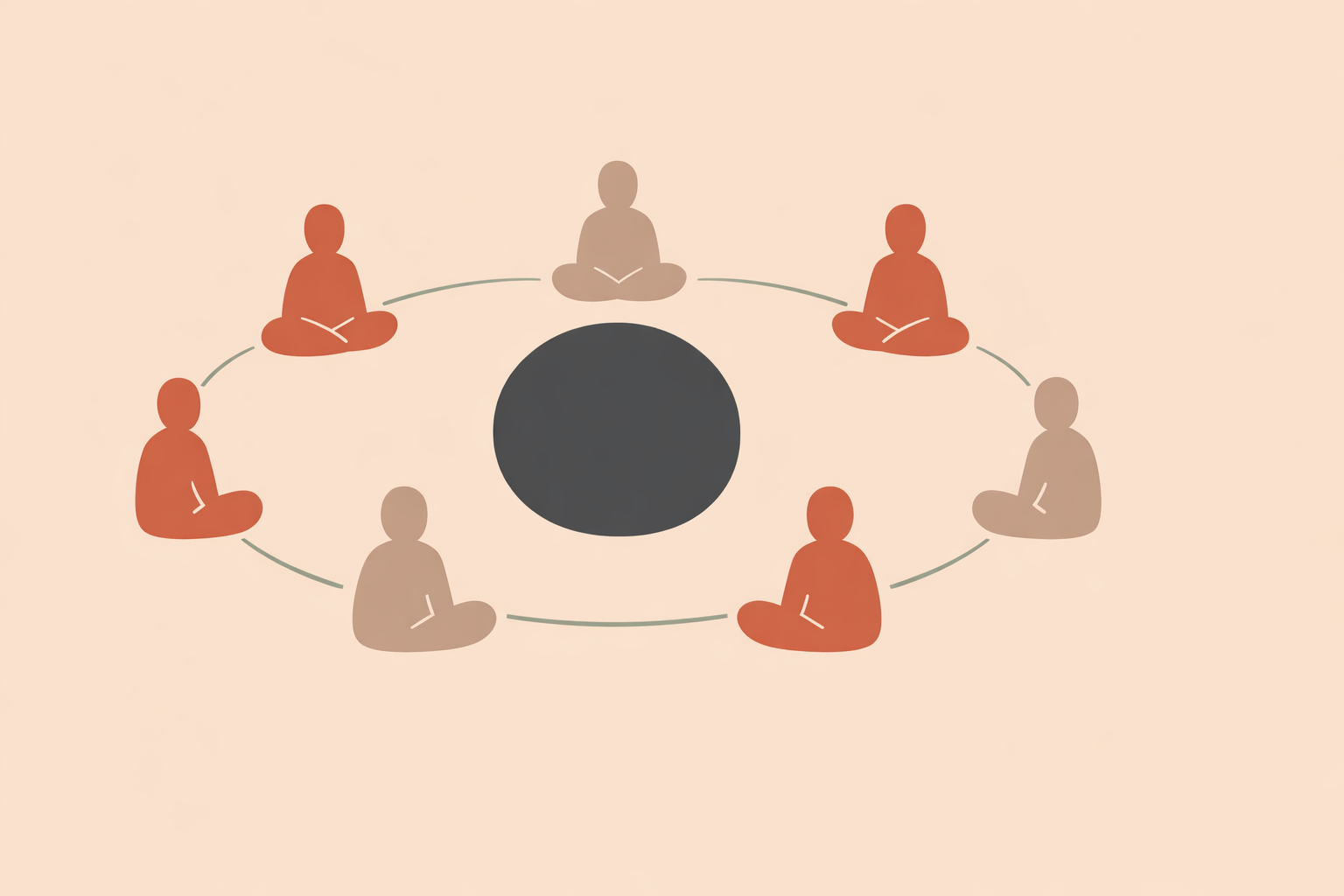
Many practitioners expand from one-to-one work into group distance aura offerings because they can support more people without travel or touch. What’s easy to overlook is that “online” and “no-touch” don’t automatically make a space simple. The practical questions matter most: does everyone know what they’re joining, what’s optional, what stays private, and what the facilitator will and won’t do?
Key Takeaway: Group distance aura work is most supportive when it is framed as a voluntary well-being practice with clear consent, realistic scope, and practical privacy boundaries. Strong facilitation does not rely on promises. It relies on honest language, repeat consent, optional participation, and group agreements that people can actually follow.
Why practitioners offer group distance aura work
Group distance aura work appeals for good reasons. It can feel welcoming, affordable, and less intense than one-to-one support. For many people, a circle is an easier first step than a private session.
It also suits the way many practitioners work today. Group distance formats are now a familiar part of evolving subtle-energy communities, especially where accessibility and shared practice matter.
Across traditions that work with subtle energy, the core idea is consistent: intention can bridge distance. Whether that’s expressed through prayer, visualization, focused attention, or ritual, people can still participate meaningfully from their own space.
Many facilitators also find that clear shared intention helps a group feel steady, even remotely. Being part of a circle can make practice feel more held, especially for people who struggle to stay present on their own.
A simple structure is often enough:
- 10 minutes to arrive and review consent
- 15 to 20 minutes of guided settling
- 15 to 20 minutes of quiet group practice
- 10 minutes of optional reflection
- 5 minutes to close clearly
That format works because expectations are set early and reinforced gently throughout.
What happens in a group distance aura session
Clear language does a lot of the safety work. When the practice is described plainly, people can make an informed choice and relax into what they agreed to.
A helpful description might sound like this: this is a guided well-being practice using subtle awareness, visualization, shared intention, and reflection. It is not a promise of a particular outcome. Participants may notice a lot, a little, or nothing obvious at all.
For most groups, grounded terms such as guided energetic reflection, aura exploration, or distance intention practice set better expectations than dramatic claims.
Consent also needs to be specific. People deserve to know:
- how long the session lasts
- what activities are included
- which parts are optional
- whether sharing is invited or not
- whether intuitive observations may be offered
- whether anything will be recorded
Even a short pre-session note can cover this: “You may keep your camera on or off, join silently, pass on sharing, or step away at any time. We will not record. If intuitive impressions arise, you are free to decline hearing them.”
When the boundaries are spoken clearly, the whole container tends to feel clearer.
What “safe” means in group aura practice
In group aura practice, “safe” doesn’t mean everyone feels calm the entire time. It means participants understand what they’re entering, keep their agency throughout, and aren’t exposed to avoidable boundary issues.
In practical terms, that looks like:
- active consent, not implied consent
- clear scope and no inflated promises
- easy opt-outs for every activity
- simple ways to pause or leave
- privacy protections that match the platform being used
A short opening statement often sets the tone: “You are welcome to participate fully, observe quietly, pause, or leave at any time. Please take only what feels supportive for you.”
This standard respects the depth of subtle-energy traditions while keeping adults firmly in charge of their own experience.
What research can and cannot say about distant healing
Distance prayer, intention, and subtle-energy practices have long histories across cultures. Modern research has explored related approaches, and the overall picture is mixed.
One review looked at 23 trials on distant-healing-intention approaches and found a blend of positive, null, and inconsistent findings. It also highlighted methodological weaknesses, which makes firm conclusions difficult.
In real-world practice, that points toward an honest, respectful frame: offer group distance aura work as a meaning-rich well-being and reflective practice, rather than something that should deliver predictable measurable results.
And lived experience still counts. Many participants describe warmth, emotional softening, spaciousness, insight, or a stronger sense of connection after a circle. Those experiences matter, and facilitators serve people best by holding them with care rather than turning them into proof of a universal mechanism.
A grounded way to name this in session is: “You may notice sensations, emotions, images, or nothing in particular. Your experience is your own, and there is no correct way to respond.”
Ethical basics for group distance aura work
Ethical clarity starts with scope. Be direct that the circle is a voluntary well-being and spiritual practice, and avoid drifting into promises, assessments, or authority you’re not actually offering.
Simple scope language works: “This circle supports reflection and well-being. It is not designed to provide answers about life crises, emergencies, or other specialist concerns. Please continue with any support structures that already help you.”
Consent also includes who the practice is directed toward. Requests to focus on someone who is not present should usually be declined unless that person has knowingly opted in.
That matters because kindness without permission can still cross a line. In many mature energy traditions, permission is part of the practice itself.
If intuitive impressions arise, offer them lightly and only with permission, much like aura color interpretation is best handled collaboratively. A gentle script works well: “Something came up that may or may not be relevant for you. Would you like to hear it?”
Group-specific risks in online circles
Remote groups remove touch-related concerns, but they introduce digital ones. Going online changes which boundaries need the most attention.
Common issues include recording, screenshots, unsolicited direct messages, attendance visibility, and people being overheard at home. Guidance for online groups highlights privacy risks like these.
It also helps to say the quiet part out loud: in group spaces, confidentiality limits exist. A facilitator can set agreements, but cannot fully control what participants do afterward.
So extended consent should include real-world digital limits: others may be nearby, devices may store information, and private comments won’t stay private if agreements are broken.
You can state expectations plainly before the circle begins:
- This session is not recorded.
- Please do not record, screenshot, or repost chat.
- Join from a private space if possible.
- Use a first name or initials if that feels better for you.
- Do not contact other participants privately unless invited.
Platform settings and privacy choices that strengthen the container
It’s easier for everyone to keep good boundaries when the technology supports them. Online-group guidance recommends practical platform controls, including limiting who can share content and preventing accidental capture.
Useful defaults for sensitive circles often include:
- password or waiting-room entry
- host-controlled screen sharing
- recording disabled
- chat limited when needed
- attendance visibility reduced where the platform allows it
- auto-transcripts and similar capture tools turned off where possible
For circles with personal sharing, choosing not to record is usually the strongest default. If a replay is genuinely needed, it’s often cleaner to record only a short teaching portion and keep group sharing off-camera.
Handling emotional intensity with steadiness
Most circles are calm, yet a facilitator still needs a steady plan for moments of intensity. Practitioner experience suggests pausing quickly when someone shows escalating fear, severe confusion, marked agitation, or mentions self-harm.
You don’t need complicated wording in that moment. A simple sequence is enough:
- pause the practice
- slow the pace of the room
- invite grounding through breath, touch, or orientation to the space
- offer the person the option to step away
- encourage immediate local support if needed
A calm script might be: “Let’s pause here. Feel your feet on the ground and look around the room. You are welcome to step away now if that feels best.”
The aim is steady support without drama, pressure, or overreach.
Practical safety checklist for facilitators
- Explain clearly what the circle is and what it is not.
- State the session length, structure, and optional elements in advance.
- Gather active consent, including consent for intuitive sharing if relevant.
- Do not include absent third parties without clear permission.
- Make camera use, sharing, and participation fully optional.
- Set and repeat no-recording and no-screenshot agreements.
- Use platform settings that support privacy.
- Provide easy pause and exit options.
- Keep language grounded and free from inflated promises.
- Review feedback and refine the container over time.
Practical safety checklist for participants
- Ask what will happen before you join.
- Check whether the session will be recorded.
- Confirm that you can pass, pause, or leave freely.
- Choose how visible you want to be on screen.
- Share only what feels appropriate for the setting.
- Be cautious with any facilitator who promises guaranteed results.
- Keep authority over your own choices during and after the circle.
Simple group agreements worth stating out loud
- You may pass on any invitation.
- You may keep your camera off.
- You may use a first name or initials.
- No recording, screenshots, or reposting chat.
- No unsolicited private messages to other participants.
- Any intuitive sharing is optional and tentative.
These agreements are simple, and they protect trust in a very practical way.
Closing perspective
Group distance aura work can be thoughtful, welcoming, and deeply supportive when the frame is honest. The strongest facilitators lean on consent, modest claims, clear digital boundaries, and respect for each person’s pace.
This is where traditional practice shines: it values relationship, responsibility, and right timing. A circle becomes steadier when participants know they can say yes, no, or not yet at any point, which is also central to energy healing work more broadly.
As with any group format, a few cautions keep the work clean: be transparent about scope, make privacy limits explicit, and have a plan for emotional intensity. When those basics are in place, the container becomes something people can genuinely trust, especially for practitioners building their aura therapy facilitation skills.
Explore Aura Therapy Certification
Build clear consent, ethical scope, and safe facilitation skills in the Aura Therapy Certification.
Explore Aura Therapy →