Many beginners in kinesiology start by running a full 14- or 42-muscle circuit, or by stacking technique after technique until something shifts. It can look thorough, but it often blurs the real goal. The office worker with neck tension ends up on the same arc as the student with test jitters, and the session loses precision.
A steadier approach is simpler: choose one clear aim, then select the style that best serves it, staying within one lineage rooted in Touch for Health. TFH offers the foundation: muscle monitoring as feedback, the 14-muscle/meridian model, and a repeatable balancing flow. From there, you can branch with purpose: Emotional Stress Release for overwhelm, muscle–meridian work for posture and movement comfort, central and governing emphasis for “tired but wired” states, and Brain Gym as structured movement for learning and coordination.
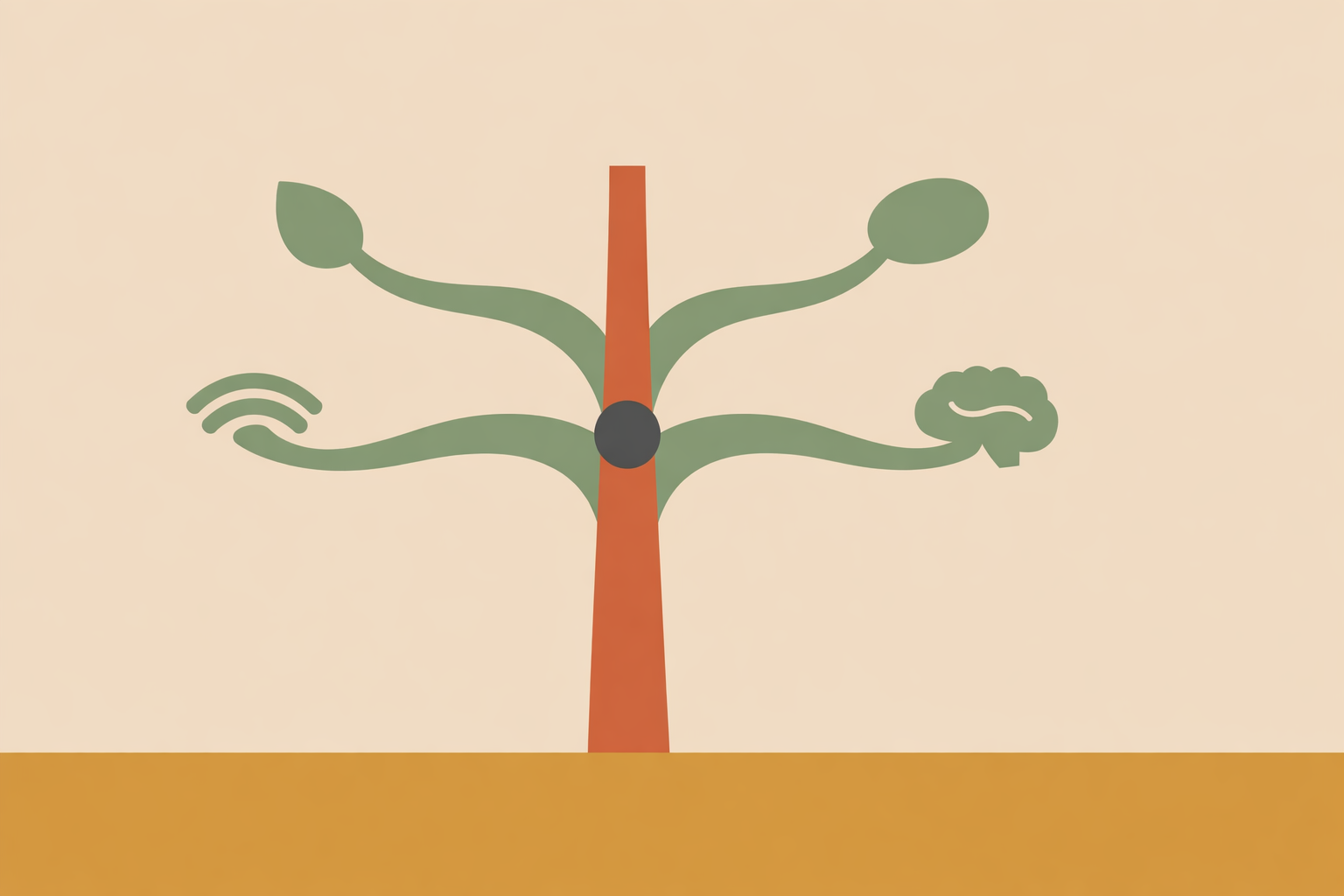
Key Takeaway: Effective kinesiology is less about doing more and more about choosing well. Touch for Health provides the trunk: a clear 14-muscle/meridian foundation, pre-checks, monitoring, and targeted correction. From there, different styles serve different aims—ESR for emotional ease, meridian balancing for movement comfort, central and governing work for settling the system, and Brain Gym for movement-based learning support. The thread running through all of it is focused, ethical, client-led balancing with simple practices people can continue at home.
Touch for Health: the foundation for most kinesiology goals
If you are choosing one style to ground your practice, Touch for Health is often the clearest place to begin. It teaches muscle monitoring as a way to notice response patterns rather than as a strength contest, and it pairs that awareness with gentle balancing methods.
In TFH descriptions, muscle monitoring functions as biofeedback for noticing energy patterns through the muscle–meridian relationship. That gives beginners a workable map instead of a loose collection of techniques.
The entry point is the 14-muscle/14-meridian model. TFH overviews present it as accessible, which helps explain why so many learners find it approachable. You do not need an overly technical background to start connecting postural muscles, meridian pathways, and balancing choices.
Before deeper work, many practitioners use simple pre-checks. TFH training materials include hydration tests and switching checks to help create a cleaner starting point for monitoring.
As skills grow, TFH stays rich. More tests, reflex points, and advanced patterns can be layered in later, while the structure still holds. The aim stays the same: listen with more precision and respond with less noise.
A simple mini-session might look like this:
- Set a positive intention such as “feel clear and steady for the next two hours.”
- Use quick pre-checks like water, cross-crawl, or a central sweep.
- Monitor a few priority muscles linked to the person’s goal today.
- Apply one or two targeted corrections.
- Re-check and teach a short self-support practice for later.
That arc—goal, monitor, balance, re-check, teach—captures why TFH works so well as a foundation. It’s easy to learn, and it keeps unfolding over time.
When the goal is emotional ease and clearer perspective
When someone feels overloaded, mentally looped, or emotionally activated, Emotional Stress Release is often the most direct branch to use. It’s gentle, immediate, and easy to explain.
In practitioner use, ESR commonly helps people feel more calm, clear, and able to gain perspective. Descriptions of the frontal neurovascular hold associate it with a deep calming effect, which matches what many practitioners see in sessions.
The flow is straightforward. First, establish a present-time intention: “Feel steadier while opening my inbox,” or “Stay composed before the conversation.” Then monitor an indicator muscle in relation to that goal. As the person brings the stressful scene to mind, the muscle response may shift. From there, invite them to lightly hold the frontal points, breathe, and stay with the scene only as far as feels manageable. After a minute or two, re-check.
Often, the person reports that the emotional charge has softened and the situation feels less overwhelming. Practitioners commonly observe changes in indicator-muscle response during this process, even when that pattern is better documented through lived practice than formal evidence.
The key is to keep the work gentle and present-time. ESR supports steadiness, perspective, and self-awareness without pushing beyond a person’s comfort.
A simple script can help:
- “Hold these two points lightly.”
- “Bring the situation to mind just enough to notice it.”
- “Watch your breath and tell me when the edge softens.”
This keeps the session practical, and it makes the technique easy to repeat before emails, meetings, study sessions, or hard conversations.
When the goal is posture, movement comfort, and body literacy
For posture and movement concerns, a helpful next step is to identify which muscles and meridians are asking for attention, then support the body in a gentler, more organized way.
TFH balancing methods commonly include meridian tracing, acupressure holds, neurolymphatic reflexes, and neurovascular points. In practice, these often leave people moving more freely and noticing less tension after a balance.
This is where the 14-muscle map shines. Instead of treating every movement discomfort the same way, you start asking clearer questions: which muscle isn’t holding clearly today, which meridian relationship is involved, and which correction changes the pattern most cleanly?
Take a simple overhead-reaching example. Someone feels a catch when lifting an arm to a high shelf. You monitor the relevant muscle, note the meridian relationship, apply a suitable correction such as tracing or reflex work, then re-check. If the movement becomes easier, the person feels the change and learns how their body organizes effort.
Over time, this builds body literacy. People begin to recognize their own patterns and learn that a brief hold, trace, or reflex point can change how a movement feels. The more specific mapping claims in this area are often held within practitioner tradition more than strong published evidence, and they still remain practically useful when approached with curiosity.
When someone feels ‘tired but wired’: central and governing support
When a person says they cannot switch off, central and governing meridian work often comes to the foreground. These midline pathways are emphasized early in TFH and are frequently used to support a more settled internal state.
In TFH mapping, supraspinatus and teres major are linked with the central and governing meridians. That gives practitioners a clear way to monitor and balance this theme within the standard TFH framework.
In practice, balancing these pathways with tracing, neurovascular holds, and sometimes ESR can leave people feeling calmer and more able to relax. Readiness steps like hydration sips and gentle switching resets, often taught in TFH, can also help the monitoring process feel cleaner and more cooperative.
A brief evening support practice might look like this:
- Place one hand lightly on the forehead in an ESR-style hold.
- With the other hand, trace central meridian downward.
- Then trace governing upward along the midline of the back body.
- Repeat for a few slow breaths and finish with a sip of water.
Variations of this routine often help people feel more settled. An ESR-style forehead hold is also associated with reduced perceived stress, which is one reason it pairs naturally with bedtime support.
It also helps to set expectations clearly: muscle monitoring is cooperative and stress-sensitive. When people understand that, sessions tend to run more smoothly and clients become better at noticing subtle shifts.
When learning, focus, and coordination are the priority
For study blocks, performance pressure, and coordination work, some practitioners bring in Brain Gym as a movement-based complement to TFH. It sits more in the realm of kinesthetic education than meridian balancing.
Honest framing matters here. While many people enjoy short movement sequences before studying or performing, broader claims about Brain Gym improving learning outcomes are not strongly supported. One critical review found no evidence for the larger neurological and academic claims often made around Brain Gym.
The ethical use is still very practical: use these sequences as structured movement breaks that may help someone settle, reset attention, or feel more ready to engage, without overstating results.
For beginners, this keeps the branches clear:
- TFH supports goal-based balancing and self-care.
- Brain Gym can serve as a movement break for focus and coordination.
A five-minute pre-study routine can be enough. Move through a short sequence, breathe, set a clear intention for the next work block, and begin from a more organized state.
Designing kinesiology sessions around real goals
The art is in listening well. Most people don’t arrive asking for a meridian balance. They say, “My shoulders keep creeping up,” “I freeze before presenting,” or “I cannot downshift at night.” Strong session design translates those words into a useful working layer, then chooses the simplest style that fits.
Touch for Health supports this approach because it offers a flexible base without losing the thread. You can shift between structural, emotional, energetic, or learning-oriented support while keeping the session coherent.
A quick mapping process can help:
- For posture or movement comfort: use the 14-muscle map, tracing, and reflex work. Teach one self-hold for daily use.
- For emotional overload: use ESR and a single clear indicator muscle tied to the intention.
- For regulation and settling: include central and governing work, plus simple pre-checks.
- For study or performance support: add a short movement sequence and keep the goal time-bound and practical.
As skills deepen, you can add circuit mapping, alarm points, or more layered meridian exploration. These work best when the basics are already solid and the extra detail clearly serves the goal.
Session hygiene matters as much as technique. Begin simply, explain what you’re doing, and remind the client that monitoring is about noticing clearer responses rather than passing or failing a test in an ethical assessment.
Leave people with something they can use on their own. A short ESR hold, a tracing pattern, a reflex point, or a one-minute movement break is often more valuable than a complex session they can’t repeat.
Bringing kinesiology styles together with integrity
What ties these styles together is relationship: with the person in front of you, with your own touch and presence, and with a lineage that values practical self-support. Techniques matter most when they’re chosen with clarity.
Touch for Health remains such a strong starting point because it was designed to be accessible, yet it still offers enough richness to support long-term growth.
From there, choices become straightforward. Use ESR when the priority is emotional ease. Use muscle–meridian balancing when the body is asking for better organization and comfort. Use central and governing support when a person feels overstimulated or unable to settle. Use movement-based learning tools with honesty and restraint.
To close with wise boundaries: keep promises grounded, stay within your scope, and encourage clients to seek appropriate professional support for persistent or severe concerns. Match the style to the goal, teach what is genuinely useful, and keep the work kind and focused.
Train in Kinesiology Certification
Build goal-led, ethical balancing skills with the Touch for Health roots taught in Kinesiology Certification.
Explore Kinesiology Certification →