You’re choosing between two degree names that often show up side by side in the same job posts. Both can lead to meaningful movement-based work. The more useful question is: what kind of support do you want your weeks to be built around—context-rich, whole-person movement, or structured programming and measurable progression?
Kinesiology and exercise science sit in the same wider movement discipline, but they train different “ways of seeing.” Kinesiology usually takes the broader view of how humans move in daily life, while exercise science focuses more tightly on exercise, performance, and tracking change over time. That lens shapes how you think, how you communicate, and what you’ll likely enjoy long term.
Key Takeaway: Kinesiology and exercise science often lead to similar roles, but they emphasize different day-to-day work: kinesiology prioritizes whole-person, context-rich movement and function, while exercise science focuses on assessment, structured programming, and measurable progression. Choose the lens that matches how you like to coach and track change.
Kinesiology and exercise science: one field, two lenses
At its core, kinesiology is the science of human movement. It looks at movement across life, work, sport, and culture. Exercise science is a more focused branch that studies how structured exercise influences the body and performance.
Because kinesiology is broad, it commonly draws from multiple perspectives—like anatomy and biomechanics (how the body moves), psychology (how people think and feel about movement), and socio-cultural context (how environment and culture shape participation). Exercise science tends to emphasize exercise-focused skills like exercise physiology, testing, and program design.
Think of it like two camera lenses on the same subject. Kinesiology often uses the wide-angle view; exercise science tends to zoom in.
A kinesiology-leaning professional often asks:
- How does this person move through daily life?
- What makes movement feel more available, more comfortable, or more sustainable?
- How do context, confidence, habits, and environment shape what’s possible?
An exercise science-leaning professional is more likely to ask:
- What should we assess first?
- Which progression is most appropriate?
- How do we track improvement clearly over time?
As one faculty voice puts it, when learners go deep in kinesiology, “they stop seeing exercise as sets and reps and start seeing it as applied science.”
What kinesiology work often looks like week to week
Kinesiology work often centers on movement literacy, inclusion, and helping people feel capable in real-life contexts. The emphasis is usually less on numbers for their own sake and more on ease, coordination, and confidence—so movement becomes something people can actually sustain.
Many kinesiology-leaning roles involve movement literacy and practical coaching in settings like schools, community programs, private coaching, activity promotion, and corporate well-being. Human variation isn’t a side-note here—it’s the work.
A typical week might include observational movement work such as gait, posture, and coordination assessments, then collaborative planning around mobility, steadiness, and everyday function. Put simply: you’re often helping someone move better where it matters most—walking, lifting, climbing stairs, playing with kids, or returning to activities they miss.
In many roles, kinesiology also includes adapting activities for different ages, cultures, access needs, and experience levels. If you care about making movement spaces more welcoming (not just more intense), this is a natural fit.
Many programs also include research methods, which can help you translate evidence into coaching choices while still honoring lived experience and the person in front of you.
The heart of the approach often shows up in practitioner reflections. As coach and bodywork practitioner Justin Solace shares, “the more I studied kinesiology, the more I realized that … how the whole system moves” matters more than chasing the spot that complains.
And because many people learn while working, flexible formats can help. Online or hybrid study formats can make it realistic to keep building hands-on hours while you study. As Mandi Carlson puts it, “Being able to discuss current movement science while still working full time in the field accelerated my growth as a coach.”
What exercise science work often looks like week to week
Exercise science work often revolves around assessment, structured programming, and clear progress tracking. It tends to suit people who like systems: gather information, build a plan, review results, and refine.
Exercise science-leaning roles typically focus on assessment and progressive tracking. In day-to-day practice, that might look like a rhythm of sessions, program updates, and regular check-ins on progress markers.
You may start with screenings and baseline information, then adjust variables like intensity, volume, exercise selection, and rest. Exercise science professionals commonly collect baseline data to guide those decisions.
The workflow is often straightforward:
- assess current ability
- set goals
- build a progression
- coach technique and consistency
- review outcomes and adjust
This lens also commonly tracks key fitness measures such as strength, endurance, body composition, and cardiorespiratory fitness. If you enjoy benchmarks and seeing change show up in repeatable ways, this can feel deeply satisfying.
At its best, it’s still human work. Plans don’t create buy-in—relationships do. Clear explanations, ethical coaching, and realistic pacing are what make progress feel doable.
As one mentor frames it, the goal is to build “a robust, confident understanding of human performance that will form a rock-solid foundation for your entire career.”
How people usually experience the difference
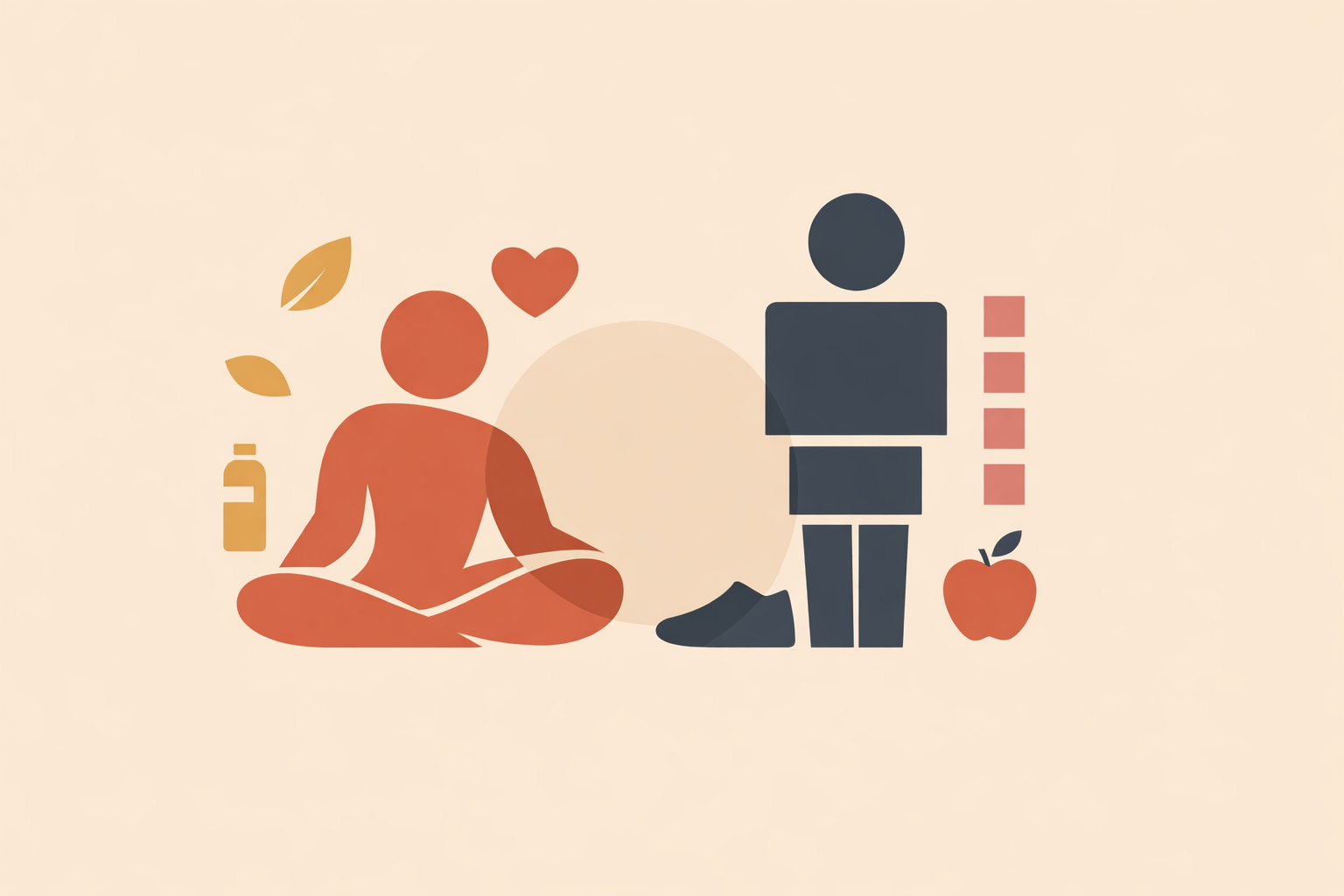
From the client side, the contrast often feels simple: kinesiology-leaning support emphasizes comfort, function, confidence, and movement quality, while exercise science-leaning support emphasizes structured progress and measurable change.
That line isn’t rigid—strong practitioners borrow from both. Still, the “felt sense” of the work can be different.
Kinesiology-leaning programs often aim to make daily life easier by improving movement quality. Research suggests guided programs can improve functional capacity, which matches the practical goal many practitioners hold: help everyday movement feel less taxing and more available.
For people who have felt overlooked in conventional fitness spaces, inclusion and context matter. Community-rooted, inclusive movement support has been linked with greater self-efficacy and confidence—an outcome that often becomes the foundation for consistency.
Community settings can also support stress relief, mood, and social ties alongside physical progress. Here’s why that matters: when movement is connected to belonging, people are more likely to keep showing up.
Exercise science-leaning work often shines when someone wants a clearer performance arc—stronger lifts, better conditioning, greater endurance, or more visible progression. The process tends to feel more explicit and metric-led.
Clients often summarize it as “comfort and function” on one side and “performance metrics” on the other. It’s not a strict rule—just a helpful way to describe the difference in emphasis.
As Justin Solace notes, his path “led to dealing with people with pain… started studying things about how they move, how they function, and how that contributes to their symptoms”—a lived example of how movement quality and measurement can strengthen one another when used well.
Which path fits you best?
If you’re choosing between these routes, start with temperament, not prestige. The best fit is usually the one that matches how you naturally think—and what kinds of support conversations you find energizing.
You may be better suited to kinesiology if you:
- like broad, whole-person views of movement
- care about inclusion, education, and participation
- enjoy adapting movement for different contexts and communities
- want room to blend movement work with other holistic approaches over time
You may be better suited to exercise science if you:
- enjoy structured plans and measurable progress
- like assessment, tracking, and refinement
- feel motivated by physiology and performance questions
- want your work to center on systematic progression
Either path can evolve. Many practitioners start with one foundation and build a niche through further learning, mentorship, and lived experience. Some move toward community-centered coaching, some toward performance support, and many create blended approaches that integrate movement science with traditional movement arts and awareness-based practices—grounded, respectful, and appropriate to the setting.
Nick Pratap’s advice is simple and useful here: “test the waters… spend as much time with mentors and people that have actually gone through it as you can.” That kind of proximity often reveals your fit faster than course descriptions ever will.
Building a future-ready movement practice
The most adaptable practitioners tend to be versatile: strong coaching communication, comfort with digital delivery, and the ability to work respectfully with both modern evidence and long-established traditional practices.
Hybrid and remote services make it easier to offer blended approaches. In real sessions, that can look like structured programming alongside breath-led work, mobility education, embodiment practices, or traditional movement systems—woven together ethically and with cultural respect.
Many practitioners find their confidence grows fastest when they stop trying to collect “the perfect set” of credentials and instead learn to see movement through more than one frame, then apply it clearly with real people.
Studying while actively coaching often speeds that up. It keeps learning close to lived experience, so theory becomes usable sooner—and your coaching voice becomes steadier through repetition, reflection, and refinement.
Conclusion
Kinesiology and exercise science aren’t opposites. They’re two related ways of understanding movement work. Kinesiology tends to be broader, more contextual, and oriented toward real-life movement. Exercise science tends to be more assessment-driven and centered on structured progression and measurable outcomes.
If your work is pulled toward inclusion, daily function, movement quality, and the meaning of movement in people’s lives, kinesiology may feel like home. If you’re drawn to testing, progression, and performance-focused programming, exercise science may be the clearer fit.
Whichever route you choose, build it around real practice: supervised hours, good mentors, and a coaching style that’s grounded, adaptable, and respectful. As with any movement-based work, progress comes fastest when you match the plan to the person, keep expectations realistic, and stay within appropriate professional boundaries.
Ready to deepen a kinesiology-based approach?
Explore the Kinesiology Certification to build practical skills you can integrate into modern, client-centered movement work.
Master Kinesiology Certification Skills
Build a context-rich movement lens with the Kinesiology Certification for client-centered coaching decisions.
Explore the Certification →