Crystal meditation tends to work best when the structure stays simple, steady, and easy to adjust in real time. When someone arrives overstimulated, long explanations or elaborate layouts can add more noise than support. Clear cues, grounded language, and visible choice points help you create a calm container from the start.
Key Takeaway: Effective crystal meditation in client work starts with regulation, choice, and repeatable structure. These six scripts move from a short grounding reset into heart-led work, a full chakra journey, a focused confidence-and-voice practice, a brief evening wind-down, and a scalable group format. Used thoughtfully, they help you stay present, keep the experience client-led, and adapt the session without losing coherence.
Script 1: 5-Minute Grounding Crystal Meditation for New Clients
Start with the smallest reliable container: one grounding stone, natural breathing, and language that asks very little. It orients the person quickly, and it also gives you a clean way to pause or end if needed.
For first sessions, highly sensitive people, or unsettled arrivals, keep the practice short. Many practitioners find that 5–10 minutes is enough to help someone settle without making the experience feel intense or overbuilt.
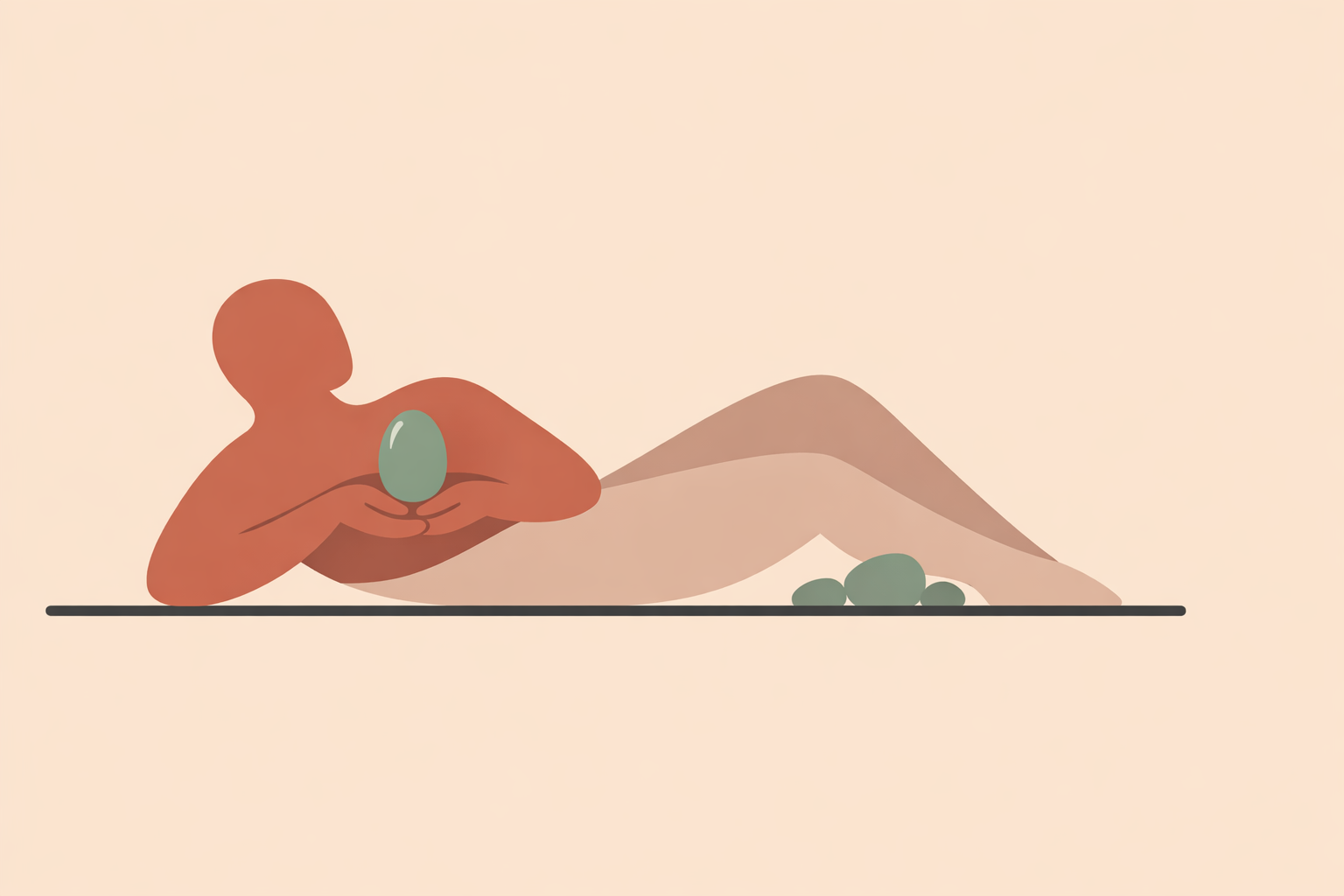
Use one anchor stone rather than a full layout. Smoky quartz, hematite, or black tourmaline are common choices. Offer agency from the beginning: the stone can be held, placed nearby, or set aside.
Step-by-step grounding script
- Invite a seated or reclined position: “Let the chair, mat, or cushion hold your weight.”
- Offer one stone in the hand or beside the body.
- Guide three slow breaths, with the exhale slightly longer than the inhale.
- Bring attention to simple sensations: weight, texture, temperature, contact with the floor.
- Close with a brief scan from feet to head and the choice to keep or set down the stone.
Sample cue
“Feel the weight of the stone in your palm. Notice the ground beneath you. Nothing to force, nothing to reach for. Just breath, support, and sensation.”
Composite scenario
A new client arrives rushed and scattered after traffic. You place smoky quartz in their hand and guide three longer exhales. Five minutes later, their breathing is slower and their attention is more present. Only then do you decide whether to continue.
Script 2: Heart-Softening Rose Quartz Meditation
After grounding, rose quartz supports a gentle heart-focused practice. The intention is to create enough steadiness for warmth, self-kindness, and feeling to emerge in their own timing.
In chakra-informed practice, rose quartz is commonly paired with the heart center for compassion, tenderness, and balance. Many practitioners keep heart work anchored by adding a grounding stone at the feet or in the hands.
Lead with sensation before interpretation. Invite the client to notice pressure, warmth, breath movement, or spaciousness around the chest. Then introduce a few simple inward phrases that support self-contact without pushing for emotion.
Preparing the space
- Ask whether the client would like the stone over clothing, nearby, or in the hand.
- Add a grounding stone at the feet or in one palm if needed.
- Name the pause option clearly: “If anything feels too strong, we stop and ground.”
Guided script
- “Notice the rise and fall in the chest.”
- “Feel the gentle presence of the stone, whether on the body or nearby.”
- “With each exhale, soften around the heart space.”
- “If it feels supportive, repeat inwardly: ‘May I meet myself kindly.’”
- “Let any color, memory, or feeling come and go without chasing it.”
Composite scenario
A client arrives carrying the residue of a difficult week. You use rose quartz at the heart and hematite at the feet. After several slow breaths and a few rounds of self-compassion language, their posture softens and they say they feel more room in the chest.
Script 3: Full Root-to-Crown Chakra Journey With Seven Crystals
This longer chakra journey tends to land best once a client already knows how to settle, pause, and ground. With that foundation, the sequence feels coherent and steady.
A classic layout uses seven stones aligned with the main chakra centers: root, sacral, solar plexus, heart, throat, third eye, and crown. Common pairings include red jasper or hematite for the root, carnelian for the sacral, citrine for the solar plexus, rose quartz or green aventurine for the heart, lapis or aquamarine for the throat, amethyst for the third eye, and clear quartz for the crown.
Prepare every stone before the session begins so your pacing stays smooth and your attention stays with the client. A root-to-crown sequence often takes 20 to 30 minutes and can build a strong sense of continuity from base to crown.
Guided sequence
- Root: “Feel support beneath you. Let your base become steady.”
- Sacral: “Soften the lower belly and pelvis. Let the breath move.”
- Solar plexus: “Notice your center. Invite warmth and self-trust.”
- Heart: “Let the chest widen gently, with no need to force openness.”
- Throat: “Soften the jaw and throat. Make room for clear expression.”
- Third eye: “Let the forehead smooth. Notice inner spaciousness.”
- Crown: “Rest in quiet, light, and stillness above the head.”
Finish with a unifying sweep from feet to crown, then guide the client back slowly with a longer exhale, movement in the fingers and toes, and a gradual return to upright posture.
Composite scenario
By a later session, a client is ready for a deeper format. You arrange all seven stones before they arrive, then guide the sequence in a measured rhythm. At the end, they describe feeling more connected and internally ordered.
Script 4: Confidence and Voice Meditation
When someone wants support around boundaries, self-trust, or expression, a focused solar-plexus-and-throat practice often serves them better than a full layout. Keep it grounded, clear, and short.
Within energy healing practice, the solar plexus is associated with confidence and personal power, while the throat is linked with voice, truthfulness, and communication. Citrine or tiger’s eye are often chosen for the solar plexus, and lapis, aquamarine, or blue lace agate for the throat.
Because confidence and expression can feel activating, build in choice from the beginning. If a stone feels too strong, shorten the round, switch to a gentler option, or return to grounding right away.
Safety structure
- Begin with a grounding stone in the hand or at the feet.
- Offer options rather than fixed placements.
- Keep the first round short.
- Use a clear opt-out phrase such as “pause” or “nearby instead.”
Guided script
- “At the center of the body, notice warmth, breath, and steadiness.”
- “If it feels supportive, repeat: ‘I know what matters to me.’”
- “At the throat, invite ease rather than effort.”
- “Repeat inwardly: ‘My voice can be clear and kind.’”
- “Imagine steadiness rising from the center into expression.”
Composite scenario
A client is preparing for a difficult conversation at work. You use tiger’s eye briefly at the solar plexus and blue lace agate at the throat, then return to grounding. The client leaves feeling more centered and more able to speak from clarity rather than tension.
It can also help to name that expectation and association influence how people experience crystal meditation. Framed well, that strengthens agency, because clients learn the inner cues they can revisit with or without stones.
Script 5: Evening Crystal Wind-Down for Rest
For home practice, keep it simple and repeatable. A short evening ritual with one calming stone, slower breath, and a soft body scan is easier to sustain than an elaborate sequence.
Position this as a wind-down practice, focused on settling the system and closing the day. The value comes from repetition, familiarity, and the steady pairing of attention with ritual.
If someone is sensitive at night, it is usually wiser to keep crystals near the body rather than directly on it. A nightstand placement often works well, and if a stone feels too stimulating, it should simply be removed.
Simple evening routine
- Choose one stone, such as amethyst or rose quartz.
- Dim lights and set aside devices.
- Take a few longer exhales.
- Move through a slow body scan from feet to face.
- Set the stone down before sleep if that feels more comfortable.
Sample cue
“Let the day settle behind you. Soften the feet, the belly, the jaw, the eyes. Let the stone be a quiet marker that the day is complete.”
Composite scenario
A client keeps rose quartz on the nightstand and holds it for a few minutes before bed while scanning through the body. Over time, the ritual itself becomes a reliable signal for unwinding.
Research discussing crystal healing suggests that meaning, expectation, and ritual shape the experience. In traditional practice, that’s not a problem to explain away; it’s part of how symbolic tools support real shifts in attention and state.
Script 6: Group Crystal Chakra Journey With Grid and Sound
Group work benefits from extra simplicity. The goal is an inclusive shared space where people with different beliefs, comfort levels, and sensitivities can participate without pressure.
A group format often works well with a central crystal grid rather than individual body placements. You might place grounding stones around the perimeter, chakra-colored stones through the center, and a clear quartz point or cluster as the visual focal point.
If you include sound, keep it optional and unobtrusive. Bowls, chimes, or light tonal layers can support atmosphere, and participants should still feel free to engage in their own way.
Set-up checklist
- Name consent boundaries clearly at the start.
- Offer chairs, cushions, and reclined options.
- Invite participants to use a pocket stone or keep no stone at all.
- Offer a one-word intention, spoken or silent.
Guided group script
- “Let the breath settle into a shared, unhurried rhythm.”
- “Imagine the colors of the grid rising from root to crown.”
- “Take only what feels supportive and let the rest pass by.”
- “If sound is present, receive it lightly.”
Close with quiet journaling, silent reflection, or a brief sharing round. Gathering the stones together at the end helps mark completion and brings the group back to ordinary awareness.
Composite scenario
In a community circle, participants sit around a simple crystal grid while you guide a root-to-crown visualization. Some hold stones, some do not. Afterward, each person writes down one word that captures what they noticed and places it near the center before leaving.
Bringing Crystal Meditation Scripts Into Real Practice
These six formats work best as living structures rather than rigid recipes. Start with regulation, then build according to the person in front of you and what the moment calls for.
Keep the session client-led in the practical details: where a stone is placed, how long it stays there, whether imagery is welcome, and when to pause. That protects consent and supports people across different beliefs and sensitivities.
Crystal meditation is shaped by the stone and the relationship built around it: attention, pacing, memory, ritual, and meaning. With time, your language and timing will get cleaner, and your sessions will feel more natural. The strongest scripts are usually the ones that stay simple, grounded, and responsive.
Conclusion and cautions: As with any contemplative practice, sensitivities vary. When someone feels activated or overwhelmed, shorten the practice, move the stone farther away, return to grounding, or stop for the day. Crystal work is well-suited to supportive coaching and well-being contexts, and it should always be offered with clear consent and without promising specific outcomes.
Go Deeper with Lithotherapy
Build confident, client-led crystal sessions with the Naturalistico Lithotherapy Certification.
Explore Lithotherapy Certification →