Menopause anxiety often arrives in practice as late-night messages, mid-session surges of worry, or a client who has barely slept for days. In those moments, it’s easy to overextend, pile on techniques, or rush to reassure. That usually adds weight without bringing clarity.
A steadier path is to slow the moment down, listen well, and help the client turn a diffuse experience into something they can observe. Rather than trying to fix everything at once, you support them to notice what’s happening, test one small change, and work within clear support boundaries. That keeps the work kind, practical, and sustainable.
Key Takeaway: Coaching menopause-related anxiety works best when grounded listening is paired with small, testable experiments and clear scope. First, listen without absorbing the urgency. Next, track patterns and choose one manageable change. Finally, hold firm boundaries and widen support when the intensity, duration, or safety picture calls for it.
Move 1: Listen Without Absorbing the Anxiety
When a client says, “My heart won’t stop racing. I’m terrified this is my new normal,” the first task isn’t to solve the whole experience. It’s to create enough steadiness that the experience can be described clearly.
During perimenopause and beyond, hormone shifts often intersect with sleep disturbance, long-standing sensitivities, and the everyday pressure of midlife responsibilities. That bigger picture helps you avoid chasing a single cause too soon, while still taking the client’s distress seriously.
From fixing to witnessing
Lead with curiosity. Ask what the anxiety feels like, when it tends to rise, what intensifies it, and what brings even slight relief. Then ask what kind of support the client wants from the session, because that alone can bring direction and relief.
Early on, active listening is powerful. Reflective loops keep the work anchored: “From what I’m hearing, evenings are the hardest. Your chest tightens after dinner, and once you get into bed your mind speeds up. Did I capture that well?”
This supports the client while also confirming you’re working with their lived reality, not your assumptions.
Many anxiety narratives blend direct experience with fearful prediction. A client might say, “I slept four hours” and “I’ll never feel normal again” in the same breath. Both deserve respect, but they’re different kinds of information. A grounding question separates them without dismissing either: “What did you notice in your body last night, and what did your mind say about it?”
To stay steady yourself, a short pre-session ritual can help: both feet on the floor, two slower breaths, and a reminder that you’re here to witness, not absorb. Containment isn’t coldness. It’s how you make the space reliable.
- In-session boundary: “I may pause every few minutes to reflect back what I’m hearing so we stay close to what matters most.”
- Between-session boundary: “I’m available during working hours. If anxiety rises later, return to the grounding practice we chose, and we’ll review what happened in our next session.”
Handled this way, listening becomes an intervention. It turns urgency into a pattern that can be named and worked with.
Move 2: Turn Menopause Anxiety Into a Small Experiment
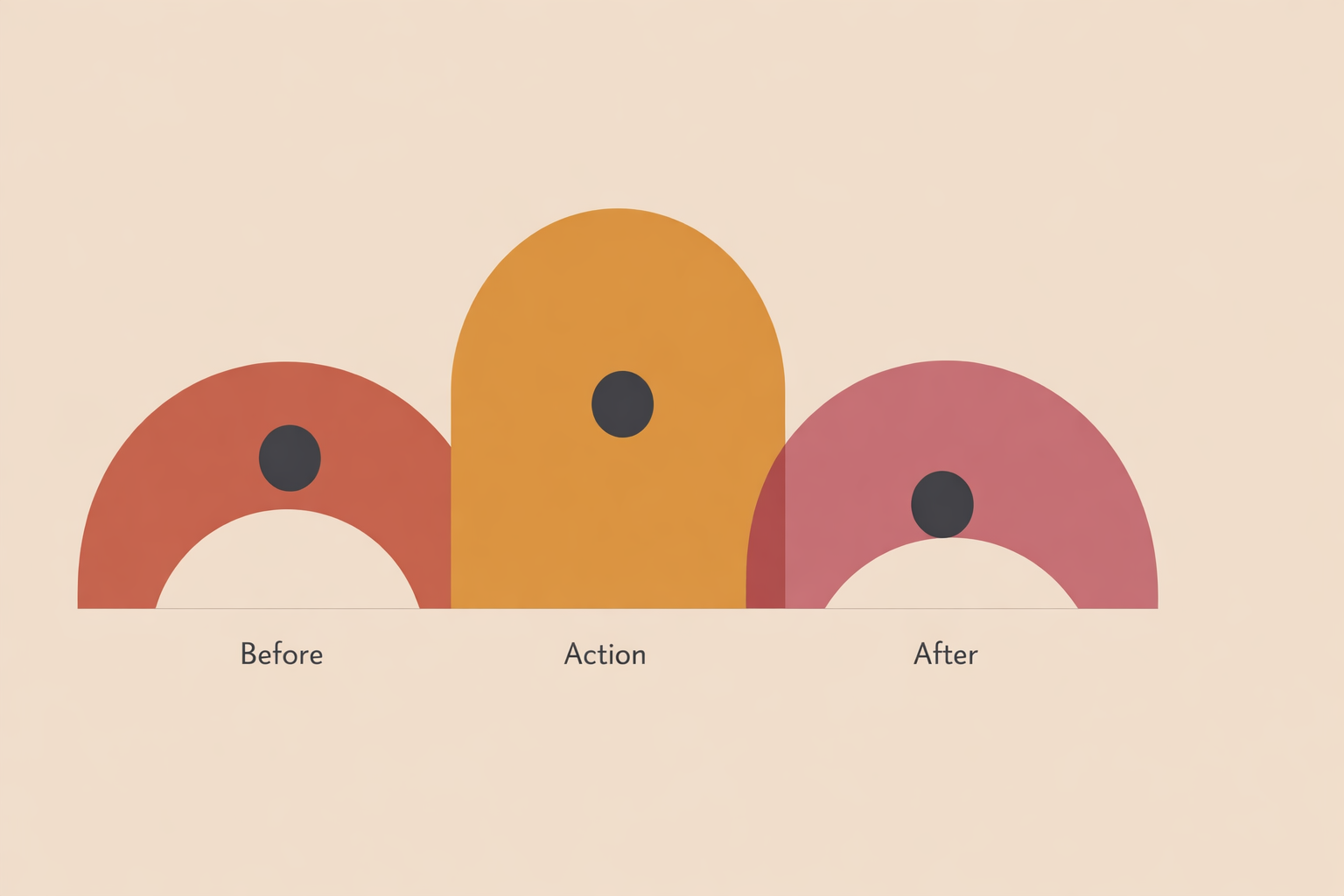
Once the client feels genuinely heard, the next step is to make the pattern visible. Anxiety becomes far more workable when it shifts from “everything is spiraling” to “this tends to happen at this time, under these conditions, and this sometimes eases it.”
During the menopause transition, anxiety can co-occur with hot flushes and disrupted sleep. That connection doesn’t mean every client has the same driver; it’s a strong reason to track what’s happening with care and consistency.
Mapping patterns clearly
A seven-day snapshot is often enough to reveal useful clues. Keep it simple so the client will actually do it. You might track:
- sleep timing and sleep quality
- night sweats or hot flushes
- caffeine and alcohol timing
- evening workload or screen use
- movement
- anxiety intensity
- morning energy
Examples keep the task concrete:
- “Mon: Slept 4.5h, woke twice sweating, anxiety 4/5 at 10 pm after emails, coffee at 3 pm.”
- “Thu: Slept 6.5h, anxiety 2/5, did 10 minutes of breathing before bed, screens off at 9:30.”
The goal isn’t perfect data. It’s finding leverage points where the client regains a sense of choice and the work becomes more specific.
Choose one culturally attuned change
Once patterns emerge, choose one experiment for one week. Keep it modest and realistic. The best experiment is the one the client will actually follow through on.
You might work with a plan like this:
- no caffeine after noon
- a 10-minute walk in late afternoon
- five minutes of paced breathing at 9:30 pm
- a cooler bedroom
- replacing doom-scrolling with music, prayer, journaling, or another evening ritual that feels meaningful
When it fits, invite the client’s own cultural or family practices with respect. A warm evening infusion, a remembered song, quiet handwork, or a prayer practice can become a grounding ritual that signals continuity and safety.
CBT-aligned skills can also support this work. Research suggests better sleep and less interference from hot flushes when these skills are used well. In sessions, that can look like a practical reframe: “When the thought ‘I’ll never sleep’ appears, I’ll label it ‘the 3 a.m. storyteller’ and come back to my breathing.”
Evaluate gently. You’re not aiming for zero anxiety in a week. You’re looking for small shifts like an easier bedtime, less evening rev-up, a steadier morning, or a stronger sense of agency.
A quick confidence check helps: “On a scale from 0 to 10, how doable does this feel for the next seven days?” If it’s below 7, make the plan smaller.
Move 3: Hold Clear Boundaries and Widen Support When Needed
Boundaries don’t weaken this work. They make it more trustworthy. Clients usually feel safer when they can sense you know what you’re here to do, what you’re not here to do, and when the circle of support needs to widen.
Define your role clearly
Your role may include pattern tracking, reflective support, nervous-system regulation practices, routine building, and helping clients prepare thoughtful questions for other professionals. It does not include promising outcomes, interpreting lab results, or taking responsibility for every part of a complex experience.
Say that plainly. A simple scope statement is often enough: “I help you notice patterns, strengthen supportive routines, and practice skills that can make this transition feel more manageable. If decisions about hormones, supplements, testing, or deeper mental health support are needed, we bring in the right additional support.”
When scope is clear, the work becomes predictable. That predictability itself often helps settle anxiety.
Know when to widen support
Menopause-related anxiety deserves additional support when it becomes intense, prolonged, or disruptive to daily life, especially when it comes with major sleep disruption or persistently low mood. In practice, widening support earlier is often the kindest choice when anxiety is new, escalating, or clearly affecting day-to-day functioning.
This is especially true when you hear about repeated panic spikes, severe or continuing insomnia, marked avoidance, or significant mood shifts. Reviews of menopause-related sleep disruption also note the importance of considering anxiety and depressive disorders when the picture is more severe or persistent.
If someone expresses suicidal thoughts, intent, inability to stay safe, or severe behavioral change, routine coaching is no longer the right container. Immediate crisis pathways are needed.
Clients may also ask whether hormone support will help anxiety. A balanced answer is best: for some people it may help, and for others it may not. The evidence is mixed, so your role is to help the client ask informed questions and track what changes if they choose to explore that route.
A warm handoff can sound like this: “I believe what you’re describing, and I also think you deserve wider support around the intensity of it. Let’s get you the right help while continuing the parts of our work that are supporting your day-to-day steadiness.”
- Summarize patterns briefly and clearly.
- Name what you have already tried.
- Clarify what kind of added support is being sought.
- Stay available within your agreed scope.
This keeps the transition collaborative rather than abrupt.
Boundaries Make This Work Kinder
The most reliable structure for menopause anxiety coaching is simple: listen deeply, choose one bounded experiment, and keep support boundaries clear. That approach respects lived experience, makes room for traditional practices, and stays grounded in what can be observed and supported.
You don’t need an answer for every symptom. You need presence, discernment, and a process you can repeat session after session, whether in focused menopause support or broader women's health coaching.
Over time, progress often looks like steadier evenings, clearer pattern awareness, stronger self-trust, and a growing willingness to reach for the right support at the right time. That is meaningful work, and it is enough.
Explore Menopause Coaching Certification
Build a repeatable coaching process for menopause anxiety with the Menopause Coaching Certification.
Explore Menopause Coaching →